



Overview
Trip Overview
Explore Stunning Langtang Valley Trek 11 Days Package
The Langtang Valley Trek is one of Nepal's most accessible and beautiful Himalayan adventures. It offers trekkers a perfect combination of stunning mountain scenery, rich cultural experiences, and diverse landscapes, all within easy reach of Kathmandu. It is located to the north of the capital. This 11-day journey takes one wandering through pristine rhododendron forests, traditional Tamang villages, ancient Buddhist monasteries, and one spectacular high-altitude valley dominated by the majestic Lirung.
Why Choose the 11-Day Langtang Valley Trek?
Langtang Valley is less crowded than the famous Everest and Annapurna regions. It retains much of its genuine Himalayan feel with fewer trekkers. This makes the going much more culturally real and mountain quiet for the traveller. This incredible biodiversity trek lies within Langtang National Park, Nepal's first Himalayan national park. It is home to red pandas, Himalayan black bears, snow leopards, and over 250 bird species.
Key Highlights of the 11-Day Langtang Valley Trek:
- Spectacular Mountain Views: You can enjoy close-up views of Langtang Lirung, the Ganesh Himal range, Dorje Lakpa, as well as numerous 6,000m peaks
- Cultural Immersion: You get to experience authentic Tamang culture, see ancient Buddhist monasteries, and observe traditional ways of living in far-flung mountain villages.
- Diverse Landscape: You can go trekking through subtropical forests, bamboo groves, meadows, glacial moraines, and valleys located at high altitude.
- Wildlife Encounters: You will be able to spot the red pandas, the Himalayan langur monkey, the musk deer, and various species of birds.
- Kyangjin Gompa: You may explore and visit the sacred Buddhist monastery and the yak cheese factory.
- Acclimatisation Day: You get a day solely for acclimatisation, with day hikes along routes such as Kyangjin Ri and Tserko Ri.
- Manageable Difficulty: This is a suitable trekking route for fit trekkers without any experience in technical climbing.
- Quick access: Only a 7-8 hour drive from Kathmandu, maximising trekking time
Trek Difficulty & Physical Requirements
The Langtang Valley Trek falls under the moderate category of trek difficulty. This trek is suitable for trekkers in good physical condition with hiking experience. For the Langtang Valley Trek, the daily hike includes 5-7 hours on challenging trails with steep ups and downs and some flat valley walks. The maximum altitude of the Langtang Valley Trek is reached at Kyangjin Gompa, at 3,870m. The day hike can extend up to heights of 4,350m from Kyangjin Ri and 5,000m from Tserko Ri.
Physical Preparation Recommendations:
- To increase cardiovascular endurance, hiking, jogging, cycling, or swimming can be performed 3 to 4 times a week for 2 to 3 months.
- Practice hiking with a loaded backpack weighing 4 to 5 kg on varied terrain and varying inclines.
- Strengthen leg, core, and ankle muscles through targeted exercises.
- Consider altitude training if available in your area.
- Consult a doctor, particularly if you have existing medical conditions.
Best Time to Trek Langtang Valley
Peak Seasons:
- Spring: It is the peak season when the weather is good. The rhododendrons bloom when temperatures are moderate, and mountain views are clear. It is the peak season, and peak visibility is offered. The daytime temperature can range from 10°C to 20°C, while at higher altitudes it can range from -5°C to 10°C.
- Autumn: This time of year is post-monsoon, where clarity provides spectacular mountain panoramas, stable weather, and comfortable temperatures. This is considered the best season for Langtang trekking with crisp air, minimal precipitation, and vibrant festival celebrations in local villages.
Off-Peak Seasons:
- Winter: This is a season of extreme cold, especially at higher altitudes, where temperatures can drop to -20°C. On the other hand, clear weather enables one to see the mountains of the ranges without obstruction, and one is alone on the trails.
- Monsoon: This season brings heavy rainfall, leeches on trails, obscured mountain views due to clouds, and an increased risk of landslides. Generally not recommended, though the valleys are lush and green with fewer trekkers.
Accommodation and Meals During Trek
- Accommodation: Tea houses are rustic mountain lodges that offer basic, yet comfortable, accommodation along the entire Langtang Valley trekking route. Rooms are equipped with two single beds and mattresses, pillows, and blankets. The bathrooms are shared and have either western-style or squat toilets. Hot shower facilities are available in all tea houses, though this is subject to an additional charge.
- Meals: Tea houses provide a range of meals. These include Nepali foods like dal bhat, rice, lentils, and vegetables; Tibetan foods like thukpa, momo, etc.; western foods like pasta, pizzas, pancakes, etc.; and Chinese foods like fried rice, noodles, etc. Breakfast can include porridge, eggs, toast, pancakes, etc., with unlimited refills, making it the cheapest and most nourishing option.
Langtang Valley Trek Cost for 11 Days
The 11-day Langtang Valley Trek package with Hop Nepal starts at USD 900 per person. This price includes Kathmandu hotel accommodation, transportation to and from Syabru Bensi, Langtang National Park permit, TIMS card, licensed guide, porter support, tea house accommodation, meals during the trek, airport transfers, and farewell dinner.
TOP TREK MOMENTS
Highlights
- Magnificent views of the Langtang Ri, Langtang Lirung, and Dorje Lakpa
- Exploration of dense vegetation and forests
- Climbing Kyangjin Ri can be an experience of a lifetime
- Experience what it feels like to live in Langtang Village
DAY BY DAY
Detailed Itinerary
Day 1
Day 2
Day 3
Day 4
Day 5
Day 6
Day 7
Day 8
Day 9
Day 10
Day 11
ROUTE VISUAL
Google Map
ELEVATION PROFILE
Altitude Map
Highest point: Kyangjin Gompa (3870 m)
WHAT'S INCLUDED
Detailed Inclusions
- Pick-up and drop-off at airports via private car/van/bus.
- Deluxe accommodation for three nights in Kathmandu (on the day of arrival and after hiking).
- Guided tour of the city by private tourist vehicle in Kathmandu.
- Entrance fees for museums, monasteries and other historical places inside the valley
- Your standard meals during the trek (breakfast, lunch, and dinner).
- Availability of ground transportation to Syabru Bensi from Kathmandu and vice versa by a drive
- All accommodations during trekking in lodges/tea houses, and so on.
- A skilled, co-operative, pleasant and helpful guide and porters (one for two people).
- Guide and porters' wages, meals, drinks, lodging, travel and insurance.
- Emergency Helicopter Service Arrangement to be paid for by your Travel Insurance
- Reliable Insurance Company
- Permit to Langtang National Park
- Card fees for the Trekker Information Management System (TIMS).
- Availability of a duffel bag if necessary
- Farewell dinner with a cultural dance show in a typical Nepali restaurant
- All taxes, VAT and service charges for our government
WHAT'S EXCLUDED
Detailed Exclusions
- Nepal entry visa fee (on arrival at Tribhuvan International Airport in Kathmandu, you can easily obtain a visa). To issue a permit, you will need two passport-sized photos
- Travel insurance from the company
- Food that is not mentioned in the itinerary during your stay in Kathmandu
- All the beverages
- Tips to porters and guides (expected, but it is not compulsory)
ESSENTIAL TREK INFO
Good to Know
What to Pack for the 11-Day Langtang Valley Trek
It is necessary to pack items properly so that the trekking experience is both safe and comfortable. This packing list covers all necessary items to pack and organises them by body region.
Head & Face
Sun Protection:
- Sun hat or baseball cap for daytime protection
- Warm woollen or fleece beanies for early morning and evening wear
- Balaclava or neck gaiter for wind protection at high altitudes
- Glacier sunglasses with UV400 protection and side shields
- High SPF sunscreen for face and lips
- SPF lip balm to prevent lip cracking and sunburn
Personal care:
- Headlamp with extra batteries (required for early morning starts and use at tea houses)
- Prescription Eyeglasses with Retaining Strap
- Contact lenses, along with solution if needed
- Moisturising face cream for mountain air that's dry
Upper Body
Base Layers:
- 2-3 moisture-wicking synthetic or merino wool t-shirts
- 2 long-sleeve base layer tops (thermal underwear)
- 1 lightweight fleece or synthetic insulated jacket
- 1 heavy fleece or down jacket for high altitudes and evenings
Outer Layers:
- Waterproof and windproof shell jacket (Gore-Tex or equivalent)
- Down jacket or synthetic insulated jacket (for Kyangjin Gompa)
- Soft-shell jacket (optional but recommended)
Accessories:
- 2-3 pairs of thin synthetic or wool liner gloves
- 1 pair of warm insulated gloves or mittens
- Lightweight scarf or buff
Lower Body
- 2 pairs of comfortable trekking pants
- 1 set thermal leggings or base layer bottoms
- 1 set of waterproof rain pants or shell pants
- 1 pair of casual pants for Kathmandu and evening wear
- 5-7 pairs of quick-dry synthetic Underwear
Feet & Legs
Footwear (Most Important Items):
- 1 pair of well-broken-in trekking boots
- 1 pair of lightweight camp shoes or sandals for tea houses
- 4-6 pairs of trekking socks
- 2-3 pairs of liner socks for blister prevention
- Gaiters
Foot Care:
- Blister treatment kit (moleskin, band-aids, tape)
- Foot powder to prevent moisture and blisters
Hands
Gloves (Multi-Layer System):
- Lightweight liner gloves for moderate temperatures
- Warm insulated gloves or mittens for high altitude
- Waterproof shell gloves or mitts for wet conditions
- Hand warmers (chemical heat packs) for extreme cold
Backpack & Bags
Daypack:
- 30-40 litre backpack for daily trekking (carry essentials yourself)
- Rain cover for backpack
- Dry bags or plastic bags for organising and waterproofing contents
- Large duffel bag (60-80 litres) for porter-carried items
Packing Organisation:
- Stuff sacks in various colours to facilitate identification
- Compression sacks for sleeping bags and clothing
- Ziplock bags for electronic devices, documents, etc.
Sleeping & Comfort
Sleeping Gear:
- Sleeping bag rated between -10°C and -15°C
- Sleeping bag liner for extra warmth and hygiene
- Inflatable or foam sleeping pad
- Small pillow or pillowcase
Items:
- Earplugs
- Eye mask for early morning light
- Travel towel
- Wet wipes are used to maintain personal hygiene when a shower facility is not available.
Trekking Equipment
Essential Gear:
- Trekking poles
- Water bottles, which are 2 litres or a hydration bladder system
- Water purification tablets or a filter
- Headlamp with extra batteries and backup
- Multi-tool or knife
- Whistle for emergency signalling.
- Lighter or waterproof matches
Navigation:
- Trekking map of the Langtang region
- Compass
- GPS device or smartphone with offline maps (battery backup essential)
Electronics & Photography
Devices:
- Smartphone with a Nepal SIM card
- A camera with extra batteries and memory sticks
- Power bank
- Universal power adapter
- Solar charger
Protection:
- Waterproof electronics pouches or cases
- Moisture packets, such as silica gel, to protect against moisture damage
Documents & Money
Documents:
- A valid passport with at least 6 months' validity period
- Nepal Entry Visa
- Travel Insurance documents, including emergency contact numbers
- Trekking permits
- Passport-size photographs
- Emergency contact list
Medical & First Aid
First Aid Kit:
- Altitude sickness medication prescribed by a doctor
- Pain relievers
- Anti-diarrheal medication
- Antibiotics
- Antihistamines for allergic reactions
- Motion sickness medication
- Throat lozenges
- Rehydration salts
- Personal prescription medications
- Adhesive bandages in various sizes
- Medical tape and gauze
- Antibiotic ointment
- Moleskin or blister pads
- Elastic bandage or compression wrap
- Digital thermometer
- Hand sanitiser
Toiletries:
- Toothbrush and toothpaste
- Biodegradable soap and shampoo
- Toilet paper
- Feminine hygiene products
- Quick-dry towel
- Sunscreen
- Lip balm with SPF
- Moisturiser for dry skin
- Nail clippers
- Mirror
Miscellaneous
Useful Items:
- Notebook and pen for journaling
- Book or e-reader for evening entertainment
- Playing cards or travel games
- Sewing kit for emergency repairs
- Duct tape
- Zip ties and safety pins
- Clothes washing powder
- Laundry line or cord
- Stuff sacks or dry bags
What NOT to Pack
- Excessive clothing changes
- Hair dryers and styling tools
- Valuable jewellery
- Heavy books
- Cotton clothing
- Non-essential electronics
- Bulky items that add unnecessary weight
Daypack Essentials:
- Water bottles
- Snacks and energy bars
- Sun protection
- Rain jacket and warm layer
- Camera and electronics
- First aid kit and medications
- Toilet paper and hand sanitiser
- Trekking permits and money
- Headlamp
- Map and navigation tools
Rental Options in Kathmandu
Quality trekking equipment can be rented in Thamel, Kathmandu, saving baggage space and costs:
- Sleeping bags: USD 1-2 per day
- Down jackets: USD 1-2 per day
- Trekking poles: USD 0.50-1 per day
- Duffel bags: USD 0.50-1 per day
- Boots (limited sizes): USD 2-3 per day
- Rental gear quality varies; inspect carefully before accepting. You can buy items like socks, base layers, and smaller accessories in Kathmandu at reasonable prices.
Travel Insurance
- Comprehensive travel and trekking insurance is not covered by this package. It is mandatory to get trekking insurance.
- The travel or trekking insurance covers medical expenses, emergency evacuation, trip cancellation, lost luggage, and high-altitude trekking up to 4,000 meters minimum
Tips & Gratuities
- We do not provide extra tips for trekking guides, porters, and drivers. It is not compulsory to tip them but they are often preferred.
- You should provide tip collectively at the end of the trek.
Miscellaneous
- Emergency evacuation costs are not covered in this package but are mostly covered by insurance.
- We do not provide any extra-night accommodation in Kathmandu before or after the trek.
- We do not provide meals that are not specified in the itinerary.
- This trek does not provide you with any personal trekking equipment and clothing.
- Personal medical and first aid supplies are not included.
- We do not cover expenses incurred due to unforeseen circumstances, such as flight delays, natural disasters, or political unrest.
Important Travel Tips for Langtang Valley Trek
Pre-Trek Preparation
- Physical Conditioning: You must begin training 8 to 12 weeks prior to travel, including cardiovascular exercise, strength conditioning, and backpacking.
- Gear Investment: Invest in trekking boots and wear them in before the trek to avoid blisters and other foot problems.
- Travel Insurance Verification: You must verify your policy includes coverage for high-altitude trekking activities, emergency helicopter services, and medical expenses before leaving your home country.
- Visa Arrangements: Nepal tourist visas can be obtained upon arrival at Kathmandu airport for most nationalities. The cost is $30 for a 15-day visa and $50 for a 30-day visa. Visas also can be obtained online from Nepal Immigration.
During the Trek
- Hydration Priority: Drink 3-4 litres of water per day to prevent altitude sickness and stay energised. Bring refillable containers with water purification tablets instead of buying bottled water.
- Steady Pace: The Himalayan mantra, slow and steady, prevents exhaustion and reduces altitude sickness risk.
- Acclimatisation Principles: The golden rule is to climb high, sleep low. Take the acclimatisation day at Kyangjin Gompa seriously, and do not skip it just to hurry up with your itinerary.
- Layer System: Use the three-layer clothing system. Wear these layers throughout the day, adjusting your layers based on temperature changes.
- Recognise Altitude Sickness: Never ignore any symptoms or continue to ascend if experiencing headaches, nausea, or extreme fatigue. Always inform the guide.
- Food Strategy: The dish will provide good nutrition, energy, and refills. Eating frequently is essential, especially when appetite is low at high altitude. Avoid excessive meat consumption as it is difficult to digest.
- Sun Protection: The sun in the Himalayas can be unforgiving, especially with sunlight reflected off the snow. SPF 50+ sunscreen must be reapplied multiple times during the day, and glacier sunglasses must be worn. Clothing to cover exposed skin
- Foot Care: Blisters and hot spots are common. Deal with them immediately by applying moleskin, bandages, and tape. Dry socks and boots can eliminate foot care problems.
Cultural Sensitivity
- Photography Etiquette: Always ask permission before photographing local people, especially villagers or monks in monasteries. Some people may ask you for money; you can give them NPR 20-NPR 50.
- Modest Dress: Dress modestly. Wear clothes that cover shoulders and knees when passing through villages. Remove shoes and hats when entering buildings, temples, monasteries, and similar places.
- Buddhist Customs: When walking around monasteries, chortens, and mani walls, always move clockwise. Avoid touching and moving prayer flags, wheels, and religious items. While walking, always try to sit on the left side so you can pass each other on the right.
- Waste Management: "Leave no trace" may be an advertising slogan, but in the mountains it's quite important. Bring down all your non-biodegradable items, such as wrappers, batteries, and toiletries, to Kathmandu itself.
- Help the Local Economy: Purchase local supplies and snacks from local tea houses instead of buying everything from Kathmandu. Fair trade is essential for the local community that lives off the tourist population.
Health & Safety
- Hand Hygiene: This is achieved by regularly washing hands with soap and water or using a hand sanitiser, especially before meals. This is one of the main causes of gastrointestinal infections.
- Water Purification: Use boiled water provided by tea houses, purification tablets, or UV sterilisation devices. Avoid ice in drinks.
- Bathroom Etiquette: Tea house bathrooms are basic in the area. You must bring your own toilet paper, hand sanitiser, and headlamp for nighttime bathroom trips. Some tea houses charge NPR 20-30 for bathroom use by non-guests.
- Sleep Quality: Generally, sleeping at altitude is difficult. Don't worry about mild insomnia or restlessness; this is normal. Resist taking sleep medications that depress breathing, increasing risk of altitude sickness.
- Medication Awareness. Carry sufficient medication, with spares for any delays. Inform your guides about your medications. Don't take sedatives or sleeping pills at altitude.
Environmental Responsibility
- Plastic-Free Trekking: Refrain from using plastic water bottles. Instead, use a refillable water bottle. Tea houses usually have boiled water available for refills.
- Eco-friendly Products: Use eco-friendly soap, shampoo, and similar products. Also, avoid using hot showers as they require firewood. Solar chargers can also be considered.
- Wildlife Respect: Watch wildlife from a distance. Do not feed wildlife, nor disturb them with loud voices. Since red pandas are rare and shy creatures, if you are lucky to spot any, be quiet.
- Trail Discipline: Always stay on existing trails to avoid erosion. Never cut any switchbacks. Refrain from picking flowers or damaging any plants.
Practical Wisdom
- Battery Management: Electricity on the trek is very limited. Charging is cheap in lower villages, so one can charge devices at places like Syabru Bensi and Lama Hotel. Bring power banks and regulate usage that could drain a phone's battery.
- Money Planning: Draw enough cash in Kathmandu. There are no ATMs on the trail. Have small-denomination NPR 100 and 500 notes as change for daily miscellaneous expenses, not NPR 1000 bills, which many teahouses have difficulty making change for.
- Teahouse Selection: The guide will normally recommend tea houses. You may have your own preference. New lodges have better facilities but are characterless. Old lodges have better character, but facilities are basic.
- Weather Considerations: Mountain weather is quite unpredictable and can change very suddenly. No matter the morning weather, always take a rain jacket and warm clothes along in the daypack because afternoon clouds and rain are frequent even in the dry seasons.
- Flexibility Mindset: Maintain flexible expectations regarding conditions, accommodations, and daily plans. Mountain trekking is all about uncertainties: weather, trail conditions, and personal health.
Useful Information About Langtang Valley
Geography & Landscape
Situated at an altitude of approximately 51 kilometres north of Kathmandu, in the Rasuwa district of central Nepal, is the Langtang Valley. The Langtang Valley is part of Langtang National Park, Nepal's first Himalayan national park, established in 1976 and covering 1,710 square kilometres. To the north of Langtang is Tibet, with its border formed by the highest peaks of the Himalayas.
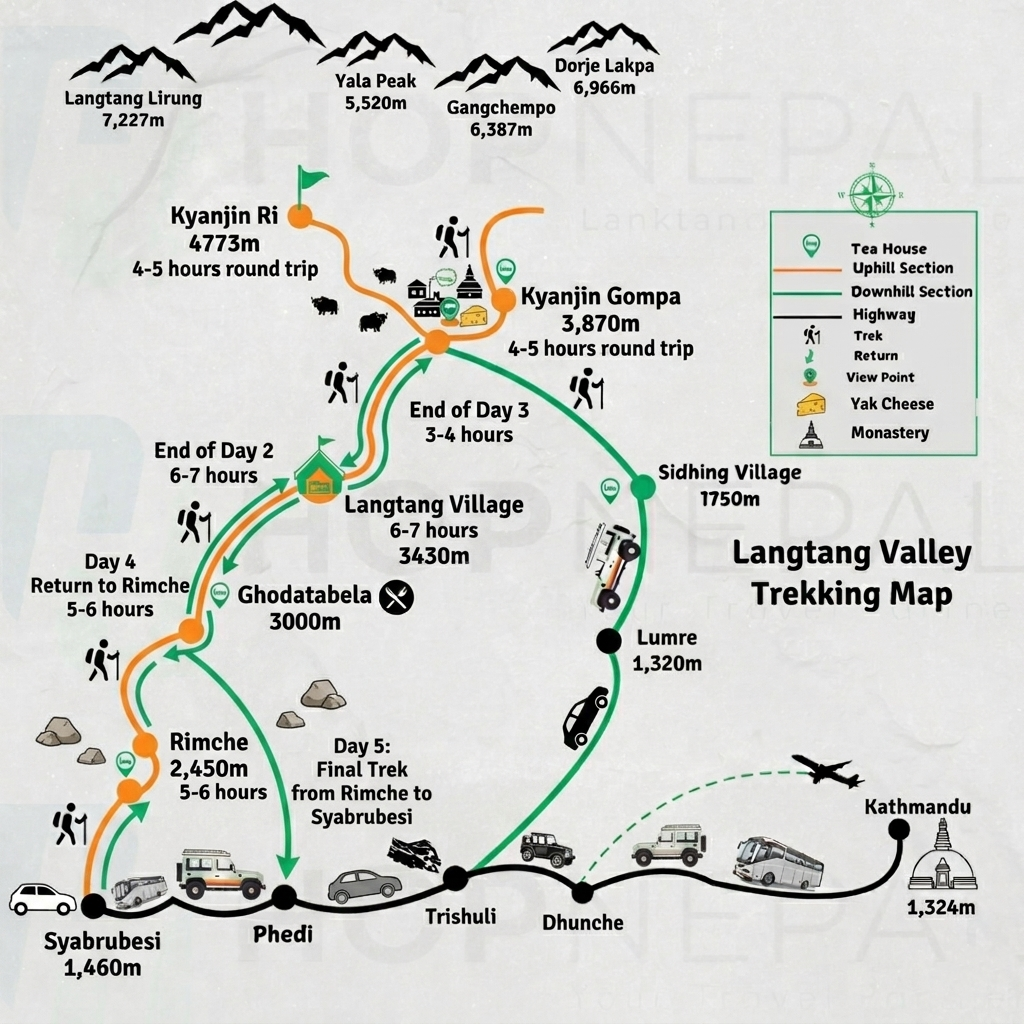
Elevation Profile:
- Syabru Bensi : 2,581m
- Lama Hotel: 2,470m
- Ghora Tabela: 3,000m
- Langtang Village: 3,430m
- Kyangjin Gompa: 3,870m
- Kyangjin Ri: 4,350m
- Tserko Ri: 5,000m
Climate & Weather Patterns
There are four seasons in Langtang, with large temperature variations.
Spring:
- Daytime: 10-20°C in lower elevations and 5-15°C
- Nighttime: 5-10°C in lower villages, -5 to 5°C at higher altitudes
- Characteristics: Warming temperatures, blooming rhododendrons (peak April), increasing clouds toward monsoon, occasional afternoon rain/snow
Summer / Monsoon:
- Heavy rainfall
- Lush green vegetation but obscured mountain views
- Leeches on lower trails
- Landslide risks on access roads
- Not recommended for trekking
Autumn:
- Daytime: 10-20°C lower elevations, 5-10°C Kyangjin Gompa
- Nighttime: 5-10°C lower, -5 to 5°C higher altitudes
- Characteristics: Crystal clear skies post-monsoon, stable weather patterns, excellent visibility, comfortable temperatures
Winter:
- Daytime: 5-15°C lower elevations, 0-5°C Kyangjin Gompa
- Nighttime: -5 to 5°C lower, -15 to -20°C higher altitudes
- Characteristics: Extreme cold, especially nights; clear skies and views, snow possible throughout trek, fewer trekkers, may be impassable
Flora & Fauna
Vegetation Zones:
- Subtropical Forest: Oak, rhododendron, bamboo, ferns
- Temperate Forest: Hemlock, maple, birch, juniper
- Subalpine: Rhododendron, birch scrub, alpine meadows
- Alpine: Sparse vegetation, lichens, hardy grasses
Langtang National Park protects diverse fauna including:
- Mammals: Red panda, Himalayan black bear, musk deer, Himalayan tahr, snow leopard, yellow-throated marten, various rodent species
- Birds: Over 250 species including Impeyan pheasant, blood pheasant, snow partridge, lammergeier, golden eagle, various songbirds
- Reptiles & Amphibians: Limited species due to altitude and climate
Cultural Heritage
- Tamang People: Langtang is the area where the Tamang people, of Tibetan cultural origin, mainly reside. Their culture includes Tibetan Buddhism, traditional stone buildings with slate roofs, yak herding, yak cheese production, traditional clothing and ornaments, and the Tamang language. The people have a strong sense of cultural identity despite their relatively modernised lifestyle, with the youth speaking Nepali and English.
- Buddhist Traditions: Physical signs of Buddhist culture include monasteries called gompas, monks, chortens or stupas marking holy places, mani walls with carved stones to hold prayers, prayer flags carrying blessings, prayer wheels at monastery gates, holy mountains, etc. Etiquette to be followed: While at holy sites, observe proper etiquette.
Sustainable Tourism Practices
Support responsible tourism through:
- Choosing Ethical Agencies: Select trekking companies ensuring fair porter wages, providing proper equipment and insurance, being environmentally responsible, and contributing to community development.
- Cultural respect: To know and respect local customs and traditions.
- Care for the environment: Pack out all trash when leaving, avoid excessive plastic use, and conserve resources. In particular, this means saving water, firewood, and electricity.
Community support: Buy local, tip appropriately, support local initiatives, and treat locals with respect.
Langtang Valley Trek Map
COMMON QUESTIONS
FAQ
Q 1
Q 2
Q 3
Q 4
Q 5
Q 6
Q 7
Q 8
Q 9
Q 10
Q 11
Q 12
Q 13
Q 14
Q 15
Q 16
Q 17
Q 18
Q 19
Q 20
Q 21
Q 22
Q 23
Q 24
Q 25
Q 26
Q 27
Q 28
Q 29
Q 30
Q 31
Q 32
Q 33
Q 34
Q 35
Q 36
Q 37
Q 38
Q 39