Tindhare Waterfall- The Viral Jharna in Nepal
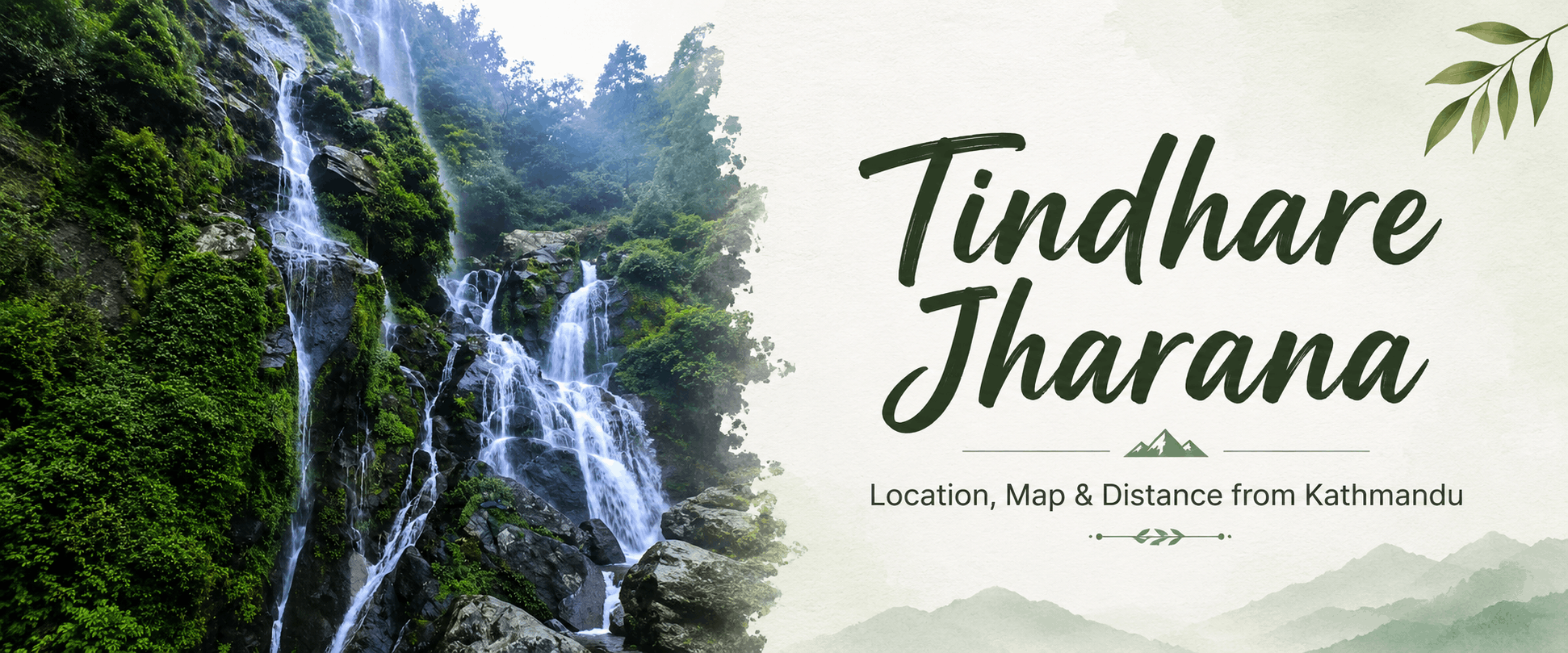
Tindhare Jharana is a spectacular three-stream waterfall situated near Kafaldanda in Ward No. 2 of Roshi Rural Municipality, Kavrepalanchok District. Located approximately 60–75 kilometres from Kathmandu, depending on the route, it has become a popular destination for day trips, countryside drives, short hikes and nature photography.
Tindhare Jharana (Bahubali Jharana) Day Trip Price: NPR 2,000 per person. The package includes round-trip reserved bus transportation, a packed breakfast, a veg lunch, and a Trail Team Leader/Guide.
The waterfall descends approximately 300 metres across the cliffs of the Mahabharat Range. It became widely known after photographs and videos circulated on social media in 2020. Visitors also call it “Bahubali Jharana” because its dramatic landscape resembles the waterfall scenes in the film Baahubali. However, Tindhare Jharana retains its original and locally recognised name.
Quick Facts About Tindhare Jharana
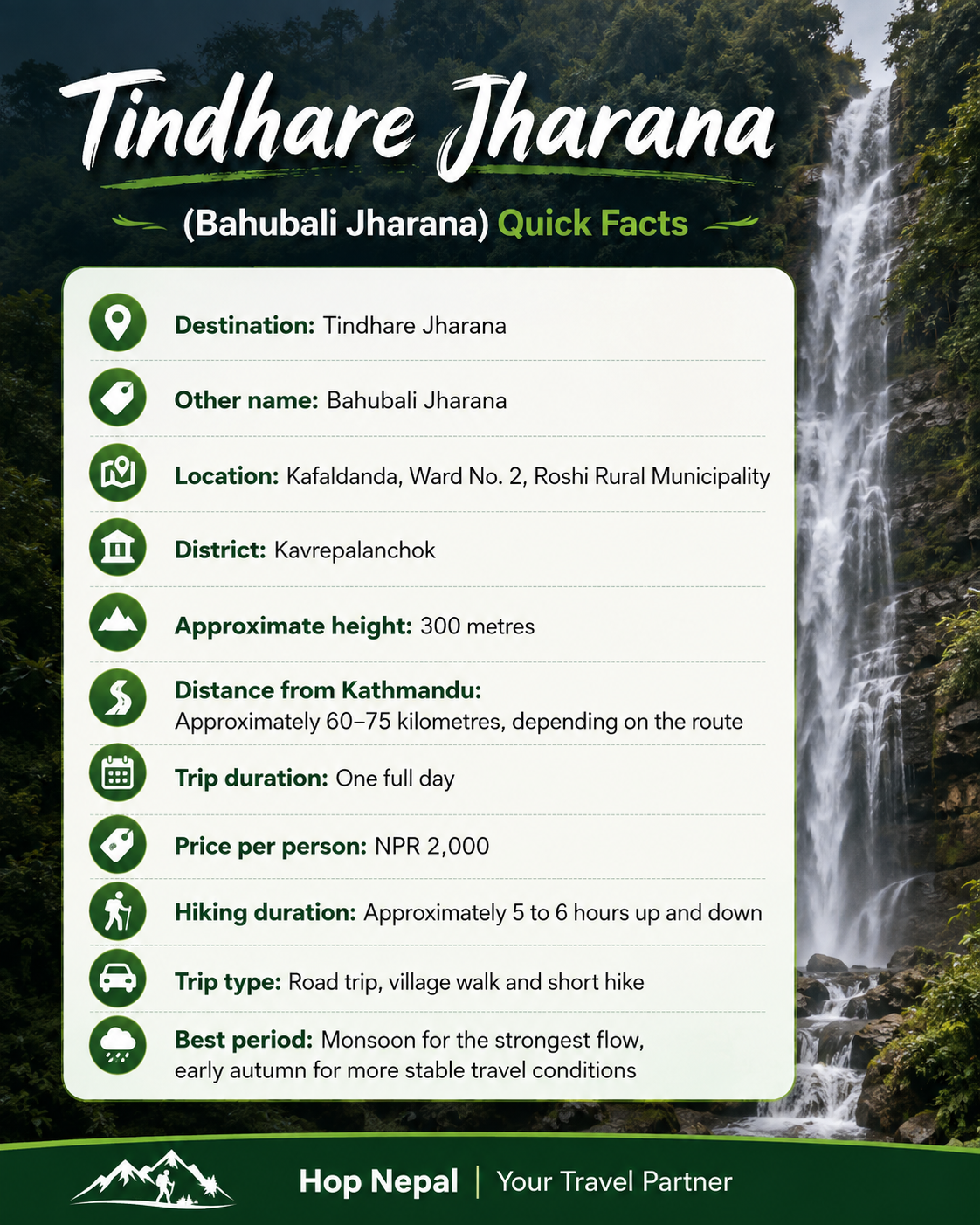
- Destination: Tindhare Jharana
- Other name: Bahubali Jharana
- Location: Kafaldanda, Ward No. 2, Roshi Rural Municipality
- District: Kavrepalanchok
- Approximate height: 300 metres
- Distance from Kathmandu: Approximately 60–75 kilometres, depending on the route
- Trip duration: One full day
- Price per person: NPR 2,000
- Hiking duration: Approximately 5 to 6 hours up and down
- Trip type: Road trip, village walk and short hike
- Best period: Monsoon for the strongest flow; early autumn for more stable travel conditions
Where Is Tindhare Jharana Located?
Tindhare Jharana is situated near Kafaldanda village in Ward No. 2 of Roshi Rural Municipality, Kavrepalanchok. It lies southeast of Kathmandu in the green hills beyond Dhulikhel, Namobuddha and Dapcha.
The setting is distinctly rural, surrounded by terraced farmland, traditional settlements, forested ridges and winding hill roads. Unlike waterfalls located beside major highways, reaching this attraction involves travelling along countryside roads and completing a short walk from the nearest vehicle-accessible point.
For travellers searching for the Tindhare Jharana location or Tindhare Jharana Kavre location, the waterfall is in the Kafaldanda area of Roshi Rural Municipality, Kavrepalanchok. When checking a Tindhare Jharana location map, use Kafaldanda and Roshi Rural Municipality as the main location references.
Why Is It Called Tindhare Jharana?
The waterfall takes its name from the three principal streams visible as the water descends from the hillside. In Nepali, “Tin Dhara” literally means “three streams”.
It's multiple channels spread across the dark rock face, creating a broad, layered and dramatic appearance during periods of heavy flow. Smaller sections divide again as they strike rocks and natural ledges, producing layers of white water against the surrounding greenery.
How to Reach Tindhare Jharana from Kathmandu
The Tindhare Jharana distance from Kathmandu is approximately 60–75 kilometres, depending on the route and current road conditions. The exact Tindhare Jharana distance or Tin Dhare Jharna distance can vary because different navigation routes may use different countryside roads. For travellers checking the distance to Tindhare Jharana from my location, a live navigation app can provide a more accurate estimate based on my current starting point.
One commonly used route is:
Kathmandu → Bhaktapur → Banepa → Dhulikhel → Kavre Bhanjyang → Namobuddha → Dapcha → Falame Sanghu → Kafaldanda → Tindhare Jharana
Begin by following the Araniko Highway towards Banepa and Dhulikhel. From the Kavre Bhanjyang area, continue towards Namobuddha and Dapcha. The road then passes through smaller rural settlements before reaching Falame Sanghu and Kafaldanda.

From the nearest parking or drop-off point, visitors continue on foot towards the main waterfall.
An alternative approach may connect through the BP Highway and the Jaruwakhola area. The most suitable route can change because of roadworks and seasonal conditions, so travellers should confirm the final section with a local driver or residents before departure.
Road Conditions to Tindhare Jharana
The road is relatively straightforward up to Dhulikhel and the main settlements. Conditions become more rural after leaving the established highway.
Travellers may encounter:
- Narrow hill roads
- Gravel and loose stones
- Muddy sections
- Sharp bends
- Potholes
- Ongoing roadworks
- Limited roadside barriers
- Slippery surfaces during rainfall
Access infrastructure has gradually improved. Reports published in 2024 described road upgrades, pedestrian paths, railings, rest areas, toilets and changing facilities around the destination. However, rural road conditions can change quickly, particularly during the monsoon.
A high-clearance jeep is generally the more dependable option in wet weather. Cars may reach the area when the road is dry and properly maintained, but travellers should confirm current conditions before departure.
Motorcyclists should use a properly maintained bike with reliable tyres and brakes. Riders without off-road experience should avoid attempting the route during continuous rainfall.
Tindhare Jharana Hike
The walking section begins near Kafaldanda or the closest available parking area. The exact trail length depends on how far vehicles can travel at the time of your visit.
The Tindhare Jharana hike distance is therefore not fixed for every visitor. For Hop Nepal's day-trip itinerary, the hike starts from Narayantar and the total hiking duration is approximately 5 to 6 hours up and down.
The path passes through a rural landscape of hills, cultivated land, vegetation and rocky sections. Some areas may include constructed steps or railings, while others retain a natural surface.
The walk is usually considered easy to moderate in dry weather. It becomes more demanding when rain makes the ground muddy and the rocks slippery.
Sturdy walking shoes are essential. Sandals, smooth-soled trainers and formal footwear are unsuitable for the final approach.
What Makes Tindhare Jharana Special?
The Three-Stream Formation
Its most recognisable feature is the way the waterfall divides into three main sections. This creates a broad, layered appearance rather than a single narrow drop.
Impressive Height
With a commonly reported height of approximately 300 metres, the waterfall appears especially dramatic when viewed from below or across the neighbouring hillside.
Green Monsoon Landscape
Rain transforms the surrounding slopes into a lush environment filled with dense vegetation, moss-covered rocks and flowing streams.
A Short Adventure Near Kathmandu
The destination combines driving, walking and nature exploration without requiring a multi-day trek. It is suitable for travellers seeking a countryside escape within a single day.
Rural Kavre Experience
The journey passes through areas such as Namobuddha, Dapcha, and Kafaldanda, offering opportunities to experience traditional settlements and agricultural landscapes.
Best Time to Visit Tindhare Jharana
June to September: Strongest Water Flow
The monsoon produces the strongest and most impressive flow. The hills are green, the smaller channels are active, and the natural surroundings appear especially vibrant. However, this period also brings slippery trails, muddy roads, swollen streams, fog and possible landslides. Avoid travelling during continuous heavy rainfall.
Late September to November: Best Balance
The early post-monsoon season is often the most comfortable period to visit. The waterfall may still carry a good volume of water, while rainfall becomes less frequent and visibility improves.
March to May: Pleasant Hiking Weather
Spring offers warmer conditions and easier walking. Forests and hills remain attractive, although the cascade may not be as powerful as it is during the rainy months.
December to February: Clear Weather but Lower Flow
Winter generally offers clear views and drier paths. However, mornings can be cold, vegetation may be less vibrant, and the water volume is usually reduced. For a combination of strong flow and manageable travel conditions, the end of the monsoon and the beginning of autumn can be an excellent choice.
Tindhare Jharana (Bahubali Jharana) Day Trip with Hike
Itinerary
- 06:00 AM – Departure from Thapathali
- 08:30–09:00 AM – Reach Narayantar via the Banepa road route and begin the hike
- 12:30 PM – Reach the viewpoint and enjoy lunch
- 01:00 PM – Hike to Tindhare Jharana and enjoy your time at the waterfall
- 02:30 PM – Begin the return hike to the bus pickup point
- 06:00–08:00 PM – Arrive back in Kathmandu
Hiking duration: 5 to 6 hours up and down
Highlights
- Tindhare Jharana
- Beautiful natural trails
- Scenic villages with fields and traditional houses
- Scenic road trip
- Great hiking experience
- Stunning natural scenery
Price per Person
NPR 2,000
Package Includes
- Round-trip reserved bus transportation
- Packed Breakfast
- Veg Lunch
- Trail Team Leader/Guide
Package Excludes
- Travel insurance
- Extra food and beverages
- Anything not mentioned above
Things to Do Around the Waterfall
- Enjoy the main viewpoint: Observe the entire formation from a safe distance to appreciate the three major streams and the scale of the rock face.
- Take landscape photographs: Wide-angle photographs are ideal for capturing the waterfall’s height and surrounding greenery.
- Walk through Kafaldanda: Explore the rural setting and enjoy the village's peaceful atmosphere.
- Try local food: Small hotels, homestays and local eateries may provide simple Nepali meals. Groups should arrange food in advance during quieter periods.
- Tindhare Jharana homestay options: Travellers looking for a Tindhare Jharana homestay should confirm local availability in advance. Hop Nepal's NPR 2,000 package is a day trip and does not include overnight accommodation.
- Combine the journey with Namobuddha: Namobuddha is one of Nepal’s most important Buddhist pilgrimage destinations and lies along a commonly used route to the waterfall.
- Explore Dapcha: Dapcha is known for its traditional settlement, historic character and peaceful hill environment. It can be included as a short stop when time allows.
Responsible Travel Guidelines
Increasing visitor numbers can place pressure on this delicate natural environment. Every traveller should help preserve the destination.
- Carry plastic bottles, food wrappers and other rubbish back to an appropriate disposal point.
- Do not leave clothing, shoes, religious objects or packaging beside the water.
- Avoid loud music that may disturb residents, wildlife and other visitors.
- Respect private farmland, local homes and cultural practices.
- Ask permission before photographing residents.
- Purchase food and services locally so tourism benefits the surrounding community.
Why Visit Tindhare Jharana with Hop Nepal?
A properly coordinated trip allows travellers to focus on the experience rather than worrying about transport and navigation.
Hop Nepal can arrange:
- Pickup and drop-off in Kathmandu
- Suitable transport
- Route coordination
- Group management
- Local guidance
- Meal arrangements
- Safety support
- Customised private departures
Professional trip coordination is particularly valuable during the rainy season, when road and walking conditions can change unexpectedly.
Final Verdict
Tindhare Jharana is one of the most rewarding short nature trips from Kathmandu. Its three-stream formation, impressive height, green surroundings and peaceful rural location distinguish it from more accessible roadside waterfalls.
The destination is especially attractive for travellers who enjoy scenic drives, village landscapes, short hikes and nature photography. Although the road and trail require proper preparation, the sight of water descending across the vast rock face makes the journey worthwhile.
With suitable footwear, an early departure, responsible behaviour and reliable transport, a Tindhare Jharana day trip can become a memorable escape into the countryside of Kavrepalanchok.
Frequently Asked Questions
Where is Tindhare Jharana located?
Tindhare Jharana is located near Kafaldanda in Ward No. 2 of Roshi Rural Municipality, Kavrepalanchok District, Bagmati Province.
Why is it called Tindhare Jharana?
The waterfall is named after the three main streams that descend from the hillside. “Tin Dhara” means “three streams” in Nepali.
Is the road suitable for a car?
Cars may reach the area under dry, stable conditions. A high-clearance jeep is more reliable in rural sections that are muddy, rough, or damaged.
Is swimming allowed?
Pools may form near the waterfall, but entering the water can be dangerous during periods of strong flow. Follow local safety instructions and avoid deep, slippery or fast-moving sections.
Why should travellers avoid littering at Tindhare Jharana?
The area is a fragile natural attraction supported by the local community. Carrying waste back helps protect the water, the village environment, and the overall visitor experience.
Are leeches common during the monsoon?
Leeches may be found on damp forest and village trails during the rainy season. Wear closed shoes and long trousers, and carry salt or a suitable repellent.
Is Tindhare Jharana crowded on weekends?
The destination can become busy on Saturdays, public holidays and during the monsoon. Visiting early in the morning generally provides a quieter experience.
Is there an entry fee at Tindhare Jharana?
There is generally no entry fee to access Tindhare Jharana and its walking trail. However, local charges or access arrangements may change, so confirm the latest information before travelling.
What is the Tindhare Jharana distance from Kathmandu?
The Tindhare Jharana distance from Kathmandu is approximately 60–75 kilometres, depending on the road route used. Travel time can vary with traffic, weather and rural road conditions.
What is the Tindhare Jharana hike distance?
The exact hiking distance can vary according to the vehicle drop-off point and trail access. On Hop Nepal's day-trip route from Narayantar, travellers should expect approximately 5 to 6 hours of hiking in total, including the up-and-down journey.
How can I check the distance to Tindhare Jharana from my location?
Use a live map or navigation application with Kafaldanda, Roshi Rural Municipality, Kavrepalanchok as the destination reference. The result will vary depending on your starting point and the available route on the day of travel.
Is Tindhare Jharana in Lalitpur or Tindhara Chowk Kathmandu?
No. Search terms such as Tindhara Lalitpur or Tindhara Chowk Kathmandu can refer to other places. The Tindhare Jharana (Bahubali Jharana) covered in this guide is located in Roshi Rural Municipality, Kavrepalanchok District.
Is Tindhare Jharana suitable for a weekend trip?
Yes. It is a good weekend destination for travellers seeking a short road trip, countryside views and a refreshing nature experience near Kathmandu.