
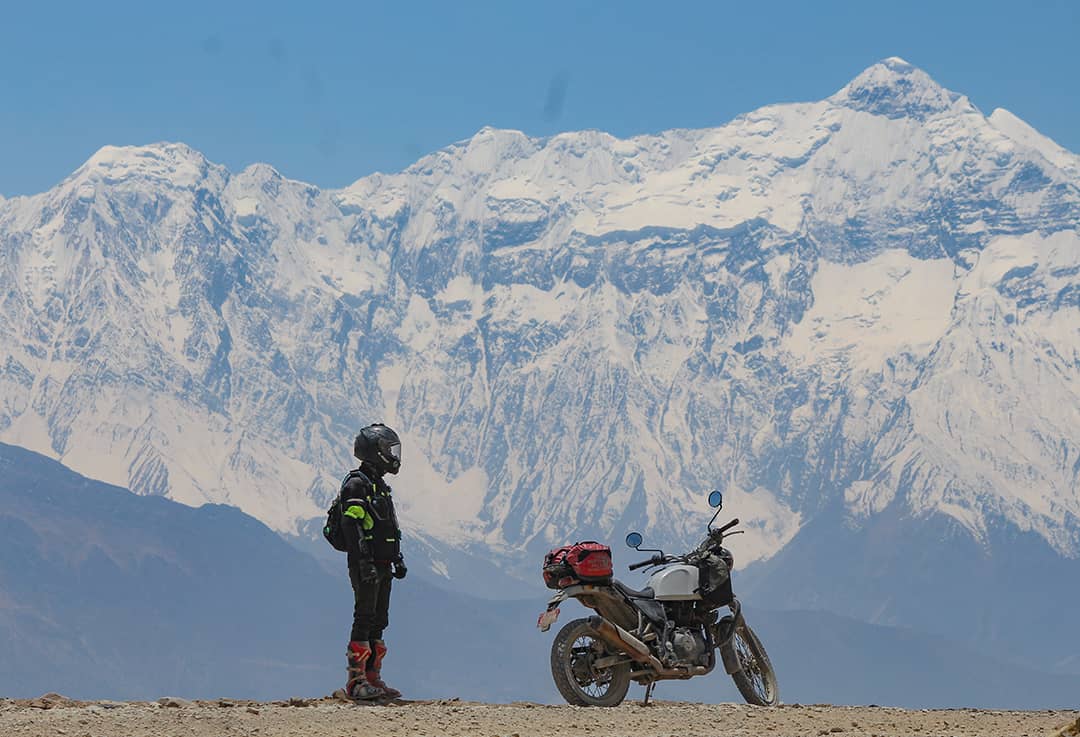
The Upper Mustang trek is a very beautiful place where you get to experience one of Nepal’s most extraordinary destinations, including the ancient walled city of Lo Manthang and the remote Tibetan Buddhist culture thriving in this high-altitude desert landscape. You need a restricted area special permit, as Upper Mustang is a restricted area.
This comprehensive 2026 guide clarifies everything about the Upper Mustang permit. Here we provide information on permits, additional costs, and where to obtain them. Whether you are a Nepali citizen, from a SAARC country, or an international visitor, you will find updated regulations and clear answers.
What Is the Upper Mustang Permit?
The Upper Mustang Restricted Area Permit is a special government-issued document required to trek in the restricted zones of Mustang beyond Kagbeni. This permit system was established to manage tourism in this sensitive border area adjacent to Tibet.
Areas Covered by the Permit:
- Lo Manthang
- Charang village and monastery
- Ghami village
- Tsarang
- Chhoser caves
- The entire restricted area north of Kagbeni
You need permits to trek beyond Kagbeni. It is the entry point to the restricted zone.
Upper Mustang vs Lower Mustang Permits:
The Lower Mustang area, which includes Jomsom, Muktinath, and Kagbeni, requires only the standard Annapurna Conservation Area Permit. It costs NPR 3,000 for foreigners, NPR 1,000 for SAARC nationals, and NPR 100 for Nepali citizens.
Upper Mustang, which refers to the ancient kingdom of Lo beyond Kagbeni, requires the more expensive Restricted Area Permit plus ACAP. You need both permits for the complete Upper Mustang trek.
Why Independent Trekking Is Not Allowed:
The Nepal government has clearly stated that every Upper Mustang trekker must travel with a licensed guide and a registered trekking agency. This requirement ensures visitor safety in remote areas. This helps preserve cultural sensitivity and local traditions. This rule also provides economic benefits to local communities. Solo independent trekking is strictly prohibited.
Who Needs an Upper Mustang Permit?
Permit requirements vary significantly by nationality, creating different rules for Nepali citizens, SAARC nationals, and foreign visitors.
Upper Mustang Permit for Nepali Citizens
Do Nepali Citizens Need a Permit?
Yes, even Nepali citizens require permits to trek in the Upper Mustang region. However, the requirements differ for foreigners. Nepali citizens need special permission from the Department of Immigration or the local administration to enter the Upper Mustang restricted area. They do not pay the high permit fees that foreigners pay.
Local Access Rules:
Locals who are permanent residents from the Mustang district can move freely within Upper Mustang without special permits. Those from other districts of Nepal need permission documents, but typically at minimal or no cost. The process is simpler and faster than for foreigners.
When Additional Permissions Apply:
Nepali citizens planning organised treks with foreign nationals may need to follow standard trekking regulations. Those conducting research or commercial activities need separate permits from the relevant authorities.
Upper Mustang Permit for SAARC Countries
SAARC Country Eligibility:
Citizens from SAARC nations include Bangladesh, Bhutan, India, Maldives, Pakistan, and Sri Lanka. If you are from any SAARC country, you should provide proof by using a valid passport to enjoy the reduced fees.
Permit Rules Compared to Foreigners:
SAARC nationals pay significantly lower permit fees compared to other foreign nationals. They follow the same trekking regulations, where a minimum of 2 people must trek together, and a licensed guide is required.
Required Documentation:
- Passport with a minimum of 6 months of validity
- 4 to 5 passport-size photographs
- Travel insurance
- Confirmation of agency booking
Upper Mustang Permit for Foreigners
Mandatory Permit Requirement:
Before going on a trek in the Upper Mustang restricted area, all foreign nationals must obtain an Upper Mustang Restricted Area Permit. There are no exceptions to this rule. If you attempt to trek without proper permits, you can get heavily fined, deported, and trekking bans.
Guide and Agency Requirement:
Foreign trekkers cannot apply for the permit themselves. You must book through a registered Nepali trekking agency. The travel or trekking agency will arrange the permit and provide you with a licensed guide throughout your trek.
Upper Mustang Permit Cost
You must understand the permit costs, as it is crucial for budgeting your Upper Mustang trek. The fees are set by the Nepal government and vary dramatically by nationality.
Why Permit Costs Are Fixed:
The Nepal Department of Immigration sets standard rates that all agencies must follow. No agency can offer discounts on the official government permit fees, though they may vary their service charges.
Currency Used for Payment:
Permit fees are officially charged in USD; however, payments are usually collected in NPR at the prevailing exchange rates. Agencies may allow the payment in any of the major currencies.
Minimum Duration Rules:
The standard Upper Mustang permit is valid for 10 days. However, if your trek is more than 10 days, extra charges apply.
Upper Mustang Permit Cost for Nepali Citizens
Permit Fee Clarification:
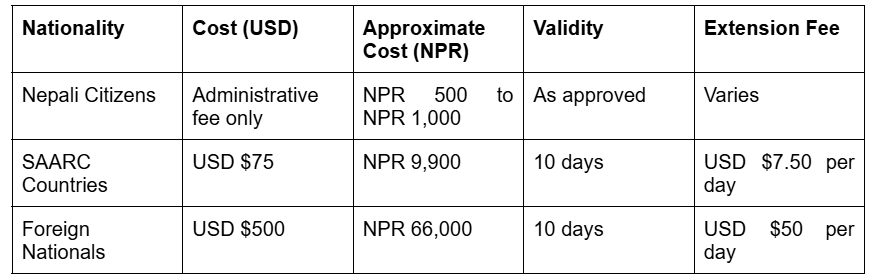
Nepali citizens do not have to pay the high fees for restricted-area permits that foreign nationals do. What Nepali citizens have to do is obtain permission from the immigration or local administration offices, for which a relatively low processing fee applies. The fees vary from NPR500 to NPR1,000.
Situations where costs may apply:
- Joining organised treks with foreign nationals
- Conducting commercial activities
- Special Research Permissions
Required Documents:
- Nepali Citizenship Certificate
- Recent passport-size photographs
- Permission application form
- Trekking itinerary
Upper Mustang Permit Cost for SAARC Countries
Standard Permit Fee:
SAARC country nationals pay USD $75 per person for 10 days.
Validity Period:
The permit is valid for only 10 days from the date of your entry into the restricted area. If you need additional days beyond 10, you will have to pay extra charges.
Payment Method:
Payment is typically made through your trekking agency in Nepali rupees. The agency includes the permit fee in your total trek package cost.
Additional Required Permits:
In addition to the requirements of the RAP, SAARC nationals require:
- Annapurna Conservation Area Permit: NPR 1,000
- Trekkers' Information Management System Card: NPR 1,000
Upper Mustang Permit Cost for Foreigners
Fixed Government Rate:
Foreign nationals who are not part of SAARC pay $500 per person to trek in Nepal for 10 days (approximately NPR 66,000). The permit to trek in this region is among the most expensive trekking permits, as Upper Mustang is a restricted trekking area.
Validity:
The permit covers 10 days in the restricted area. Most Upper Mustang treks are only designed for 10-14 days total, where you can spend 7-10 days in the restricted zone.
Additional Daily Charges:
If you need to extend your stay in the restricted area, you must pay additional fees:
- USD $50 per person per day
Other Required Permits:
- Annapurna Conservation Area Permit: NPR 3,000
- TIMS Card: NPR 2,000
Upper Mustang Permit Cost in NPR & USD
Here's a clear breakdown of permit costs in both currencies for easy budgeting.
Upper Mustang Permit Cost Breakdown Based on Nepali, Indian and Foreign Travellers
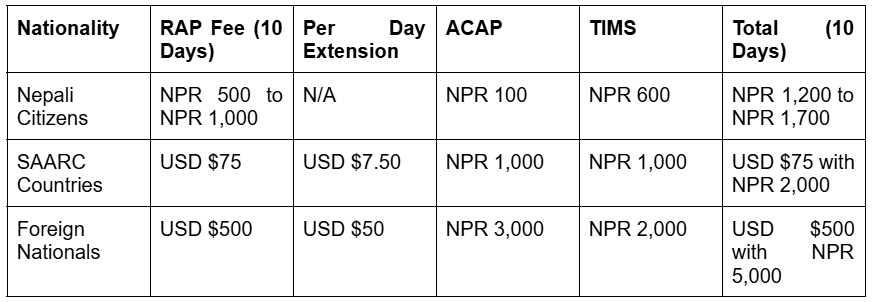
Approximate NPR Conversion

Why USD Is Often Required
The fees collected for the government permit are officially recorded as USD to maintain price consistency despite any fluctuations in NPR. However, most agencies prefer to convert them to NPR for convenience’s sake.
Upper Mustang Permit Cost Comparison Table
Where & How to Get the Upper Mustang Permit
Kathmandu Permit Offices:
Upper Mustang permits are issued by the Department of Immigration in Kathmandu, located in Kalikasthan, Dillibazar. If you are an individual trekker, you cannot apply for the permit directly.
Why Permits Must Be Issued Through Agencies:
As per the government policy, all permits for Upper Mustang be provided through registered trekking agencies. This way, trekkers will be well supported where the guides are licensed, and rules and regulations are followed.
Required Documents:
- A passport copy, which must have at least 6 months of validity
- 4 passport-size photographs
- Details of travel insurance
- Itinerary of trekking
- Recommendation letter for agency
Processing Time:
Processing the permits in Kathmandu usually takes 2 to 3 business days after you submit all required documents. In peak season, it is best to plan some extra time for permit processing in advance. It is best to plan your arrival in Kathmandu at least 3 to 4 days in advance of your trek.
Application Process:
- Book a registered trekking agency
- Submit the required documents to the agency.
- The agency applies for permit processing to the Department of Immigration
- Permit processed
- Permit is collected by the agency
- You receive a permit copy before the trek
Important: You must always carry your original permit during the trek. Checkpoints verify permits at Kagbeni and various points throughout Upper Mustang.
Important Upper Mustang Permit Rules You Must Know
Minimum 2 Trekkers Rule:
Solo trekking is prohibited in Upper Mustang. You must trek in groups of at least 2 people. Your agency can either pair you with another solo trekker if you are travelling solo. If it is not possible to pair up, you will need to pay for a guide and porter to meet the minimum requirement.
Mandatory Licensed Guide:
You must be accompanied by a government-licensed trekking guide for the entire trek in the restricted area. The guide must carry proper licensing documents and must be registered with your trekking agency.
Restricted Trekking Zones:
There are limited areas where you are permitted to enter with your permit. Some areas in the Upper Mustang trekking region might still be restricted or require a further special permit. Your guide should help you stay within the permitted areas for your safety.
Permit Non-Transferability:
These permits are issued to an individual and cannot be transferred, sold, or shared in any way. If there is a difference in the names on your permit and your passport, you could face serious legal consequences by attempting to use another person's permit.
Additional Important Rules:
- Permits must be presented at all checkpoints.
- Photography restrictions apply at some religious sites.
- Camping is permitted only in specified areas.
- Environmental regulations should be strictly adhered to.
- Cultural sensitivity is a must (dress modestly, ask permission before taking pictures)
Conclusion
The permit system in place for Upper Mustang is in place to protect one of the most culturally rich areas in Nepal, as well as to enable tourists to access its unique natural beauty and rich Tibetan Buddhist history. After being aware of all costs, requirements, and rules, a smooth trek is guaranteed, free of complications.
If you are a foreign national, you must budget USD $500 plus ACAP and TIMS fees for the standard 10-day permit. SAARC country citizens enjoy significantly reduced rates at USD $75.
If you are a Nepali citizen, you must pay only the minimal administrative fees. All permits must be arranged through registered trekking agencies. Solo independent trekking is not permitted.
Start planning your Upper Mustang trek by booking with a reputable agency at least 2-3 months in advance. The permit process might take 2-3 days, so you must arrive in Kathmandu early. With proper permits and preparation, you will experience one of the world's most remarkable trekking destinations.
Frequently Asked Questions (FAQs)
Can I trek Upper Mustang without a permit?
No, trekking in Upper Mustang without a proper Restricted Area Permit is illegal and results in heavy fines which might be up to USD $5,000 with immediate deportation, and potential bans from future trekking in Nepal. Checkpoints at Kagbeni verify all permits before entry.
Can Nepali citizens trek to Upper Mustang freely?
Nepali citizens from the Mustang district can move freely. Citizens from other districts need permission from immigration or local administration, but don't pay the high fees foreigners pay. The process is simpler and costs only minimal administrative fees.
Is the Upper Mustang permit refundable?
No, once issued, permits are non-refundable. However, if permits haven't been issued yet and you cancel your trek, your agency may refund the permit fee. You must carefully review your agency's cancellation policy before booking.
Can the permit duration be extended?
Yes, but extensions must be arranged through your trekking agency before your initial 10 days expire. Your extensions cost USD $50 per day for foreigners and USD $7.50 per day for SAARC nationals. The extension process takes 1 to 2 days, so you must plan accordingly.
Is Upper Mustang open all year?
The permit office issues permits year-round. The best trekking seasons are March-May, spring and September-November, autumn. Winter brings extreme cold and snow, blocking high passes. Monsoon is actually good for Upper Mustang due to its rain-shadow location, though access roads can be challenging.
Do children need permits?
Yes, children need individual permits regardless of age. The same fees apply to children as adults; there are no child discounts for Upper Mustang permits.
Can I extend my trek beyond the restricted area without additional permits?
Once you exit the Upper Mustang restricted area back through Kagbeni, you can continue trekking in the lower Mustang areas with just your ACAP and TIMS. Many trekkers combine the Upper Mustang with visits to Muktinath or other destinations in the Annapurna region.