
The word "Amazon" refers to the mother of a wide range of flora and fauna, which is aptly suitable to describe the exclusive and astonishing biodiversity found in this region. Still, well-built Nepal is a federal democratic republic. More than 80% of all Nepalese follow Hinduism, followed by Buddhism, Islam, Kiratism, Christianity and Animism, contributing to the worldly environment of this stunning land.

Beautiful sovereign of Nepal
Some Reasons Behind Nepal Being Known As The Amazon Of Asia
Despite occupying a minuscule exterior region equivalent to only 0.3% of Asia's land area, Nepal can proudly showcase more than 900 strong varieties of extraordinary and multi-coloured species of birds, which account for approximately 9% of the entire bird species on the planet. Therefore, it is ideal for the enthusiastic birdwatcher.
There are approximately 650 types of butterflies in Nepal, which account for around 4.2% of all butterflies in the world. They offer an appeal to draw all environmental lovers here. At the same time, the Nepalese national greeting of 'Namaste' also means greeting God in you, making every tourist feel welcome in this vibrant Himalayan nation.
Nepal also boasts an impressive assortment of approximately 5,980 types of flowering plants, which accounts for 2.4% of comparable plants globally. Among these, a minimum of 250 species of blossoming plants are widespread or exclusive to Nepal alone.
An additional unique point is the Nepalese calendar, which differs from the Western calendar dates and is marked as the Bikram Sambat. The Nepalese New Year is celebrated in mid-April.
Aside from the one-horned rhino, snow leopard, and swamp deer, which are widespread in this Amazonian countryside, there are over 360 types of orchids in Nepal, which offer company to 6 per cent of the world's rhododendron species.
The natural reproduction ground of the extensive snouted Gharial crocodile is situated in this Nepalese wonderland, and some of the major moths and wild honeybees are recognized in human evolution. The blue poppy plant, once exceptional to Nepal, grows here at a ground-level altitude of 5,400 m.
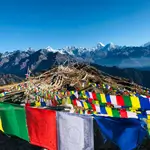
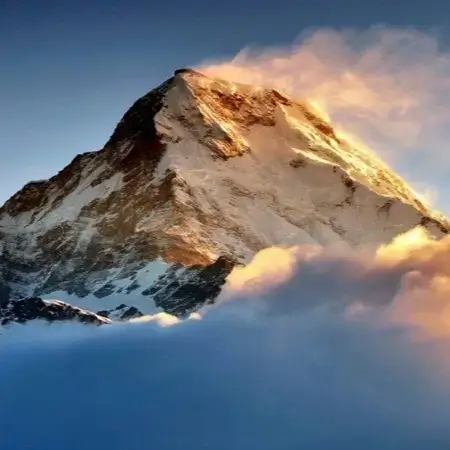
In addition to the renowned Mt. Everest, Nepal can boast of having 8 out of the 14 peaks in the world, with an altitudinal difference that ranges from 70m to 8848m, encompassing both the immense altitude and the low points, all within a single ecological sweep.
Kathmandu, the capital city of Nepal, boasts 7 UNESCO World Heritage sites. These landmarks are within a radius of more than 15 km, yet they provide Kathmandu with a unique place on the planet that boasts such prosperity and diversity.
The royal Bengal tiger attains an overwhelming position here, and the Nepalese Cows are treated as holy. Nepal is also home to Lumbini, the birthplace of Lord Gautama Buddha. Therefore, it is a cultural museum of a type that showcases a vast variety of heritage, plants, animals, and traditional cultural artifacts.
The enchanted peak Yeti, which was initially marked long back in the Nepalese Himalayas, has acquired as much attention all over the world, together with the survival of ‘The only living’ Goddess Kumari, who is highly regarded in the remote but Amazonian peak country.
The geological statistics of Nepal are also favourable for the main trek destination and various types of extreme sports, ranging from bungee jumping, marathons, rafting, and paragliding to intense mountain biking, skiing, and kayaking.
Finally,
In ancient times, a sage known as ‘Ne’ was the guardian (referred to as ‘pala’ in the Pali dialect) of this varied mountain vale. Thus, the name Nepal stuck on. Edmund Hillary and Tenzing Norgay initially explored Mt Everest in 1953, and subsequently, many other attractive facets have come to the fore, contributing to making Nepal the Amazon of Asia.