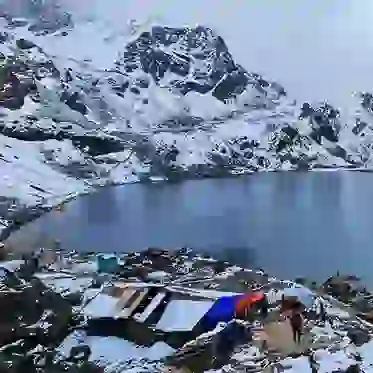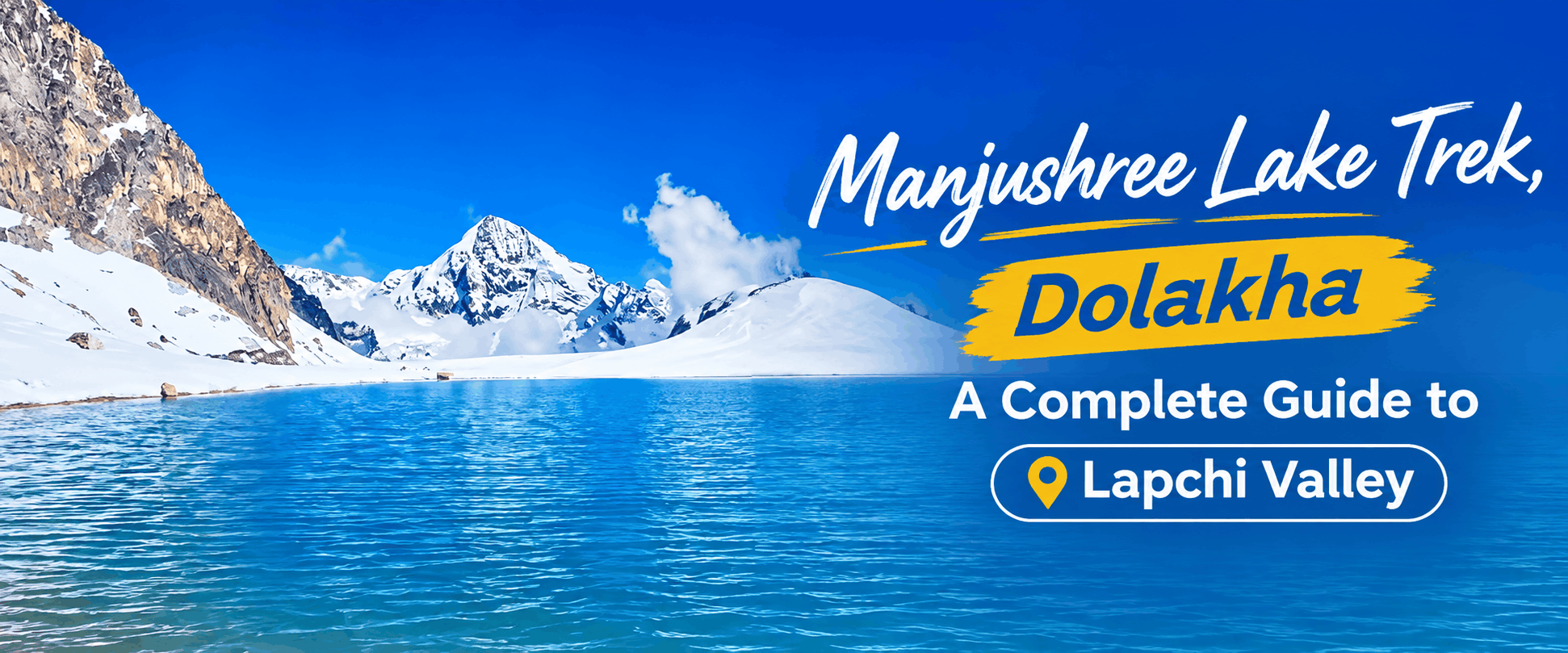
Hidden among the mountains of northern Dolakha, Manjushree Lake is a remote high-altitude lake in the Lapchi region of Nepal. Surrounded by rocky slopes and Himalayan scenery, it attracts experienced trekkers looking for a quieter route beyond Nepal’s established trekking circuits.
The lake is commonly described as lying at approximately 4,850 metres above sea level. Its exact elevation has not been independently verified against an authoritative survey, so this figure should be treated as an estimate. The journey also passes through a landscape associated with Tibetan Buddhist traditions, monasteries and meditation caves.
This guide covers the Manjushree Lake trek route from Kathmandu, an illustrative eight-day itinerary, difficulty, acclimatisation, permits, accommodation, estimated cost considerations and the best time to visit Lapchi Valley.
Manjushree Lake Trek: Quick Facts
- • Location: Lapchi region, Bigu Rural Municipality, Dolakha District, Bagmati Province, Nepal.
- • Lake altitude: Approximately 4,850 m (reported estimate; confirm with a reliable map and local guide).
- • Protected area: Gaurishankar Conservation Area.
- • Main approach: Kathmandu – Charikot – Singati – Lamabagar – Lumnang – Lapchi Valley – Manjushree Lake.
- • Suggested duration: Approximately eight days for the sample route, with extra days where required for safe acclimatisation and delays.
- • Difficulty: Challenging, particularly the high-altitude lake excursion.
- • Accommodation: Basic local stays where available; camping may be needed.
- • Best trekking periods: Generally spring (March–May) and autumn (September–November), subject to conditions.
- • Guide and permits: Check applicable conservation-area entry, registration and guide requirements before travel.
Where Is Manjushree Lake Located?
Manjushree Lake lies in the remote Lapchi area of Bigu Rural Municipality in northern Dolakha, within Nepal’s Gaurishankar Conservation Area and near the Nepal–Tibet border. Dolakha is part of Bagmati Province, northeast of Kathmandu. The protected landscape includes deep river valleys, forests, alpine terrain and high Himalayan mountains.
Most descriptions of the approach to the lake pass through Lamabagar and Lapchi Valley. Road access and the precise walking trail can change after landslides, construction or seasonal damage, so travellers should confirm the current trailhead, map and overnight stops locally rather than relying on a fixed online route.
For background on the protected area, see the Gaurishankar Conservation Area Project managed by the National Trust for Nature Conservation (NTNC).
Why Is Manjushree Lake Special?
Manjushree Lake combines an alpine landscape, quiet mountain trails and the cultural heritage of Lapchi Valley. The limited tourist infrastructure makes this a very different experience from popular teahouse treks.
A Turquoise Alpine Lake
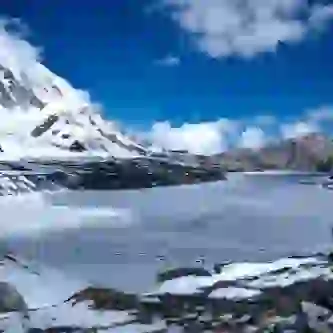
The lake is noted for its blue-green water against a backdrop of rugged rock and high mountains. Its colour varies with sunlight, cloud cover and season. The setting offers photographic opportunities, but the final approach is a serious mountain walk rather than a casual sightseeing stop.
A Remote Trekking Experience
Compared with well-established routes such as Hop Nepal’s Everest Base Camp Trek or Annapurna Base Camp Trek, the Lapchi route has fewer accommodation and resupply options. Trekkers should expect basic facilities, changing trail conditions and the need to organise meals and overnight stays in advance.
Views of the Gaurishankar Himal
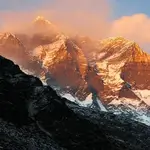
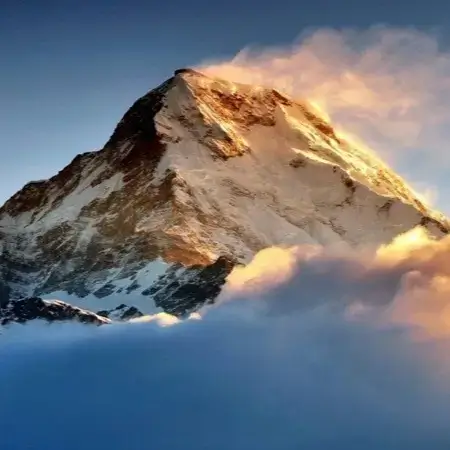
Parts of the Lapchi region look towards the Gaurishankar and Melungtse mountain areas. Mount Gaurishankar, commonly listed at about 7,134 metres, is an important landmark of the wider Dolakha region. The mountains visible on a particular day depend on the exact viewpoint and weather.
Buddhist Culture and Meditation Sites
Lapchi has a longstanding place in Tibetan Buddhist tradition and is associated with the yogi Milarepa. The valley contains religious sites and places of meditation that remain meaningful to practitioners. Visitors should approach them respectfully and check access arrangements before visiting.
How to Reach Manjushree Lake from Kathmandu
A commonly described approach follows Kathmandu, Charikot, Singati, and Lamabagar by road, then a trek through Lumnang and Lapchi Valley. There is no road leading directly to the lake. Travel times depend on the condition of the roads, the availability of vehicles, walking pace, and weather.
Kathmandu to Charikot
Begin with an overland journey from Kathmandu towards Charikot, the administrative centre of Dolakha. The route passes hill settlements and river valleys. Allow flexibility for traffic, roadworks and changing weather conditions.
Charikot to Singati and Lamabagar
Continue through Singati towards Lamabagar in the Upper Tamakoshi River valley. Narrow roads, steep hillsides and landslide-prone sections can make this journey unpredictable, especially during the monsoon. Confirm whether a local vehicle or suitable four-wheel drive is needed for the final road section.
Lamabagar to Lumnang and Lapchi Valley
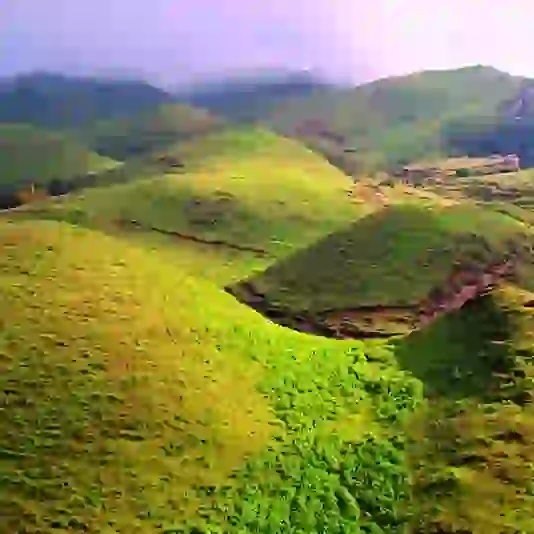
The trekking portion typically starts in the Lamabagar area and continues through river valleys, forested slopes and mountain paths towards Lumnang and Lapchi. Local route knowledge matters because access points, river crossings and shelter options can change. Arrange an experienced guide and accommodation before setting off.
Lapchi Valley to Manjushree Lake
The final ascent leaves the settled valley for more exposed alpine terrain, including rocky slopes and potentially slippery or snow-covered ground. Because the lake is reported to be around 4,850 metres, this section requires good fitness, weather awareness and sufficient altitude acclimatisation. Make the decision to continue or turn back with your guide on the day.
Manjushree Lake Trek Itinerary: An Illustrative 8-Day Route
The following is a planning example, not a confirmed Hop Nepal departure or a guaranteed safe schedule for every trekker. Overnight altitudes, the Day 3 ascent into Lapchi and the lake-day effort must be checked against current conditions and individual acclimatisation needs. An extra overnight stop or additional acclimatisation day may be necessary.
Day 1: Drive from Kathmandu to Lamabagar
Leave Kathmandu and travel through Charikot and Singati towards Lamabagar. Enjoy views of the Upper Tamakoshi valley along the way. Confirm the road is open and that your planned accommodation is available before departure. Overnight near Lamabagar.
Day 2: Trek from Lamabagar to Lumnang
Begin walking along forested hillsides and valley trails in the Gaurishankar Conservation Area. Expect uneven ground and changing river conditions. Stay in a locally arranged homestay, basic shelter or tent, depending on availability.
Day 3: Trek from Lumnang to Lapchi Village
Continue towards Lapchi as the scenery becomes more open and alpine. The increase in sleeping altitude on this stage can be substantial, so do not treat the day as compulsory if anyone is unwell or insufficiently acclimatised. Your guide may recommend a shorter day and an additional overnight stop.
Day 4: Explore Lapchi Valley and Acclimatise
Spend time resting and adjusting to the altitude. Depending on the weather, access, and your health, take a gentle walk around Lapchi or visit religious sites associated with Milarepa. Return to the same sleeping location. A single rest day does not eliminate the risk of altitude illness.
Day 5: Hike to Manjushree Lake and Return to Lapchi
Make an early start only if the weather and trail are suitable and everyone is symptom-free and properly acclimatised. Follow the upper alpine trail towards Manjushree Lake, at an elevation of approximately 4,850 metres, according to commonly reported estimates. Allow adequate time for the return and agree on a firm turn-around time with the guide. If conditions deteriorate, abandon the attempt on the lake and descend safely.
Day 6: Trek from Lapchi to Lumnang
Retrace the valley route towards Lumnang, passing alpine slopes and forested sections. Watch your footing on steep descents and river crossings. Overnight in the Lumnang area, subject to available accommodation.
Day 7: Trek to Lamabagar and Continue to Charikot
Return to the road-access point near Lamabagar. If walking time, road conditions and vehicle availability allow, continue by road to Charikot. Otherwise, adjust the overnight stop and return schedule.
Day 8: Drive from Charikot to Kathmandu
Travel back to Kathmandu through Dolakha’s hills and settlements. Keep a buffer in your wider travel plan for road delays or any earlier itinerary changes.
How Difficult Is the Manjushree Lake Trek?
The Manjushree Lake Trek is best considered a challenging, remote high-altitude trek. Although the lower valley trails may feel manageable to regular hikers, the approach to the lake involves steep ascents, rocky footing and potentially exposed sections. Emergency support and places to rest are limited.
Trekkers should be comfortable walking for several hours on consecutive days, carrying a daypack and managing cold or wet conditions. Previous multi-day trekking experience is strongly recommended. The lake excursion is not a suitable first high-altitude hike for someone with no mountain-walking experience.
Altitude Sickness and Safety on the Manjushree Lake Trek
The reported lake altitude of approximately 4,850 metres is high enough that acute mountain sickness (AMS) and more serious altitude illnesses are a concern. Symptoms can include headache, nausea, dizziness, unusual fatigue and loss of appetite. Severe breathlessness at rest, confusion or difficulty walking normally may indicate an emergency.
Once above 3,000 metres, widely used guidance recommends increasing sleeping altitude by no more than approximately 500 metres per day and adding rest nights during further ascent. The sample Lumnang-to-Lapchi stage may exceed that guideline. A knowledgeable guide should adapt the itinerary to the group, and trekkers should never continue ascending if they experience symptoms of altitude illness. Seek prompt descent and medical assistance if symptoms worsen.
Carry suitable clothing, a first-aid kit, emergency food and a means of contacting help. Arrange travel insurance covering trekking above the planned maximum altitude and emergency evacuation, and understand that a rapid rescue may not be possible in poor weather. See the CDC guidance on high-altitude travel for further safety information.
Lapchi Valley: Religious and Cultural Significance
Lapchi Valley is traditionally regarded as a sacred landscape in Tibetan Buddhism. The region is associated with meditation retreats, monasteries and the spiritual legacy of Milarepa. Cultural visits should be planned as respectfully as the trekking component.
Milarepa and the Meditation Caves
Milarepa was a Tibetan Buddhist yogi and poet associated with the 11th and 12th centuries. Religious traditions connect several caves in the broader Himalayan region, including Lapchi, with his meditation practice. Access to specific caves may depend on local guidance, community customs and trail conditions.
Monasteries and Sacred Sites
Choro Gephel Ling Monastery is among the sites associated with Lapchi Valley. Ask permission before entering private or restricted spaces, photographing people or interrupting religious activities. Dress respectfully and follow the instructions of local residents and religious caretakers.
Best Time to Visit Manjushree Lake
Spring and autumn generally offer more suitable trekking windows than monsoon and midwinter. Even during these seasons, snow, rain, strong wind and changes in visibility can prevent safe access to the upper lake.
Spring (March to May)
Spring can bring greener forests and flowering rhododendrons at lower elevations. Upper trails may still be snow-covered in March or early April. Confirm whether the high lake route is passable rather than assuming spring conditions are clear throughout the valley.
Autumn (September to November)
After the summer monsoon, autumn often brings clearer mountain views. October and November can provide favourable conditions, but temperatures fall sharply at higher elevations and early snow remains possible. September may still see residual monsoon rain.
Winter (December to February)
Winter brings very cold weather, shorter daylight hours and a greater likelihood of snow or ice on the upper route. Attempting the lake excursion may be unsafe or impractical without specialist local assessment.
Monsoon (June to August)
Heavy rain can lead to landslides, difficult river crossings, muddy trails and road closures in Dolakha. Low visibility and transport disruption make the monsoon a less reliable period for this journey.
Accommodation and Food During the Trek
Accommodation is considerably more limited than on established routes such as the Everest Base Camp route. In lower settlements, simple local lodges or homestays may be available. Further into Lapchi Valley, travellers may need pre-arranged community accommodation, permission-based monastery stays or tents. Do not rely on walk-in rooms or a hotel at Manjushree Lake itself.
Meals depend on the host settlement and available supplies. Basic dishes such as dal bhat, noodles, soup or tea may be available in inhabited places, but menus are unlikely to be extensive. Carry sufficient snacks and emergency food, arrange drinking water treatment, and check how meals will be provided on camping nights.
Permits Required for the Manjushree Lake Trek
The Lapchi approach is within the Gaurishankar Conservation Area, so trekkers need the applicable conservation-area entry permit. NTNC provides official conservation-area permit information, including fees and application arrangements. Carry your permit during the trek and follow the requirements at local checkpoints.
International travellers should also verify the current TIMS registration and licensed-guide rules with their trekking operator and the Nepal Tourism Board. The lake’s proximity to the Nepal–Tibet border does not, by itself, establish that a restricted-area permit is needed. Any additional authorisation depends on the precise route and current regulations; check the Department of Immigration’s designated trekking routes before travel.
How Much Does the Manjushree Lake Trek Cost?
There is no single reliable price for the Manjushree Lake Trek because group size, vehicle arrangements, guide services, accommodation, camping equipment and route duration can vary. The illustrative eight-day route in this article is not a priced Hop Nepal package, and no fixed selling price is being advertised here.
When comparing quotes, ask whether the following are included:
- • Transport: Return road journeys between Kathmandu, Dolakha and the confirmed trailhead, including any local four-wheel-drive hire.
- • Guide and support: Licensed-guide services where required, porter support, local wages and relevant insurance.
- • Meals and overnight stays: Homestay or lodging charges, food and any camping equipment or kitchen support.
- • Permits: Conservation-area entry and any additional documents applicable to the final route.
- • Contingencies: Extra nights, weather delays, route changes, personal insurance and emergency evacuation costs.
For a meaningful cost estimate, share your travel month, group size and preferred arrangements with Hop Nepal’s team. A customised quote should state what is included and excluded.
Mobile Network, Electricity and Drinking Water
Phone coverage and mobile data may be unreliable or unavailable once you leave the main road and larger settlements. Download offline maps, agree on regular check-ins and do not depend on a mobile phone as the only emergency communication method. A satellite communication option may be appropriate for a remote group.
Electricity, charging points and hot showers are not guaranteed. Bring a charged power bank and a headlamp. For drinking water, carry a reliable purification system and refill only where safe sources are available; untreated stream water should not be assumed safe to drink.
What to Pack for the Manjushree Lake Trek
Pack for long walking days, cold temperatures and limited services. Your exact equipment should reflect the season, the guide's advice, and whether camping is part of the route.
- • Clothing: Thermal base layers, fleece, insulated jacket, waterproof outer shell, warm trousers, gloves and a hat.
- • Footwear: Well-fitting trekking boots with reliable grip, spare socks and gaiters where appropriate.
- • On the trail: Trekking poles, sun protection, sunglasses, headlamp, refillable water bottles and purification equipment.
- • Safety essentials: Personal medication, first-aid kit, emergency snacks, offline maps, power bank and insurance details.
- • For overnight stops: A suitable sleeping bag and, if required, a tent or other camping equipment arranged in advance.
Carry sufficient Nepali rupees in cash for expenses in areas where digital payments or cash machines may not be available. Avoid unnecessary baggage, but do not compromise on warm or protective clothing.
Responsible Trekking in Lapchi Valley
Travel quietly around sacred sites, ask before taking photographs and respect the privacy of local communities. Remain on established trails where possible, bring non-biodegradable rubbish back with you and avoid polluting water sources. Supporting local hosts and guides helps ensure that tourism benefits the communities along the route.
Why Visit Manjushree Lake in Dolakha?
Manjushree Lake offers a different side of trekking in Nepal: a remote alpine lake, quiet mountain terrain and the living religious heritage of Lapchi Valley. For experienced trekkers who value cultural encounters and solitude, the journey can be rewarding, provided that access, permits and acclimatisation are carefully planned.
Travellers seeking a more established network of lodges may prefer a route such as Hop Nepal’s Langtang Valley Trek, while those interested in comparing other regions can browse Nepal trekking packages.
Plan Your Manjushree Lake Trek with Hop Nepal
Interested in visiting Manjushree Lake and Lapchi Valley? Hop Nepal can discuss your travel dates, group size, transport, local guide arrangements, accommodation needs and route feasibility. Because facilities are limited and the lake sits at high altitude, the final itinerary should be agreed only after current access and safety conditions have been checked.
For a route-specific enquiry and quotation, contact Hop Nepal. Let us know your trekking experience, preferred month and whether you need camping support. Hop Nepal has been serving travellers since 2017.
Frequently Asked Questions About Manjushree Lake
Where is Manjushree Lake located?
Manjushree Lake is in the Lapchi region of Bigu Rural Municipality, northern Dolakha, Bagmati Province, Nepal, within the Gaurishankar Conservation Area near the Nepal–Tibet border.
What is the altitude of Manjushree Lake?
The lake is commonly reported at approximately 4,850 metres above sea level. Treat this as an estimated figure until a reliable official survey or map confirms the exact elevation.
How many days does the Manjushree Lake Trek take?
The example in this guide covers eight days from Kathmandu and back. Actual duration may be longer due to acclimatisation, road access, weather, or walking pace. Do not reduce rest days simply to fit a fixed schedule.
Is the Manjushree Lake Trek difficult?
Yes. It is a challenging trek because the lake approach is high, steep and remote. Previous multi-day hiking experience, appropriate fitness and careful preparation are recommended.
Can beginners trek to Manjushree Lake?
It is not an ideal first high-altitude trek. A beginner without mountain experience may be better suited to a lower or more established trekking route before attempting the upper Lapchi trail.
When is the best time to visit Manjushree Lake?
Spring (March–May) and autumn (September–November) are generally the better seasons, but conditions at the lake can remain cold, snowy or unpredictable even then.
Is Manjushree Lake a sacred lake?
The lake lies within the culturally significant Lapchi landscape, which is associated with Tibetan Buddhist pilgrimage and meditation. Visitors should respect local religious traditions and any site-specific rules.
Are hotels available near Manjushree Lake?
Do not expect a conventional hotel at the lake. The approach may involve basic homestays, limited community accommodation or camping, all of which should be confirmed in advance.
Do I need a guide for the Manjushree Lake Trek?
An experienced local guide is strongly recommended for navigation, altitude management and emergencies. Foreign trekkers should confirm any mandatory licensed-guide requirements for their planned route before departure.
What permits are required for the trek?
An applicable Gaurishankar Conservation Area entry permit is required. TIMS, guide or additional authorisation requirements should be checked against current official rules and the exact route.
Is drinking water available along the trek?
Water may be available in settlements and natural sources, but the safety of drinking water cannot be assumed. Carry adequate water and a reliable purification system.
Can I trek to Manjushree Lake without camping?
Possibly, if suitable overnight accommodation can be arranged along the chosen route. However, camping should remain an option until the local availability of beds, meals and shelter is confirmed.
Will my mobile phone work in Lapchi Valley?
Network reception can be unreliable in remote valleys. Carry offline navigation tools and agree on an emergency communication plan before trekking.
How much does the Manjushree Lake Trek cost?
The cost depends on transport, group size, guide services, accommodation and any camping requirements. Ask for a route-specific quotation rather than relying on an unverified fixed price.
Why is Lapchi Valley famous?
Lapchi Valley is known for its Tibetan Buddhist heritage, meditation sites associated with Milarepa and remote Himalayan scenery. It is both a culturally significant place and a demanding trekking destination.