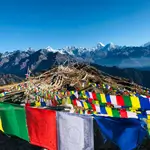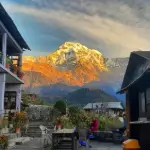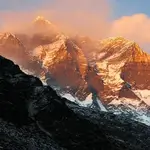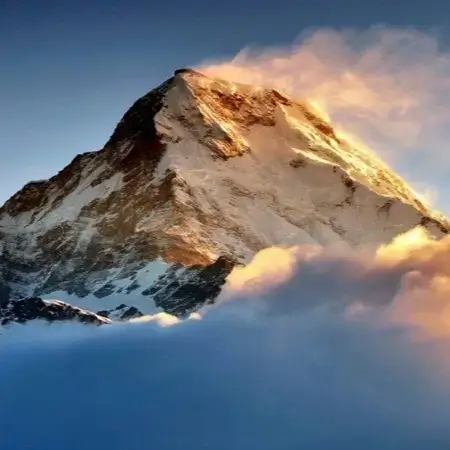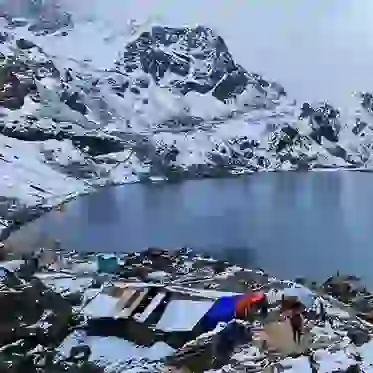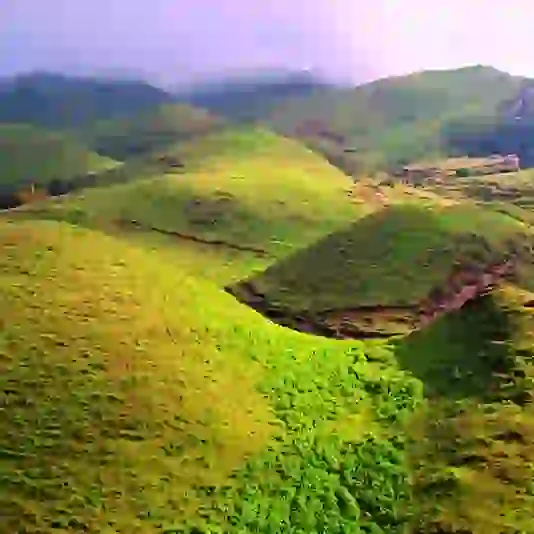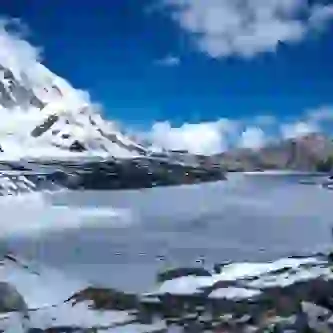

Hidden in northern Gorkha close to the Nepal–Tibet border, Tsum Valley offers a very different trekking experience from Nepal's busier Everest and Annapurna trails. Ancient Buddhist monasteries, traditional stone settlements, mani walls, chortens and dramatic Himalayan landscapes have helped the valley preserve a distinct cultural identity.
Tsum Valley was opened to foreign trekkers in 2008 and remains within one of Nepal's regulated trekking zones. That means international visitors cannot simply arrive at the trailhead and start trekking. The required trekking permits must be arranged before entering the restricted section of the route.
For travellers planning the trek in 2026, understanding the permit system is particularly important because Tsum Valley and the neighbouring Manaslu Circuit have separate restricted-area permits with different prices.
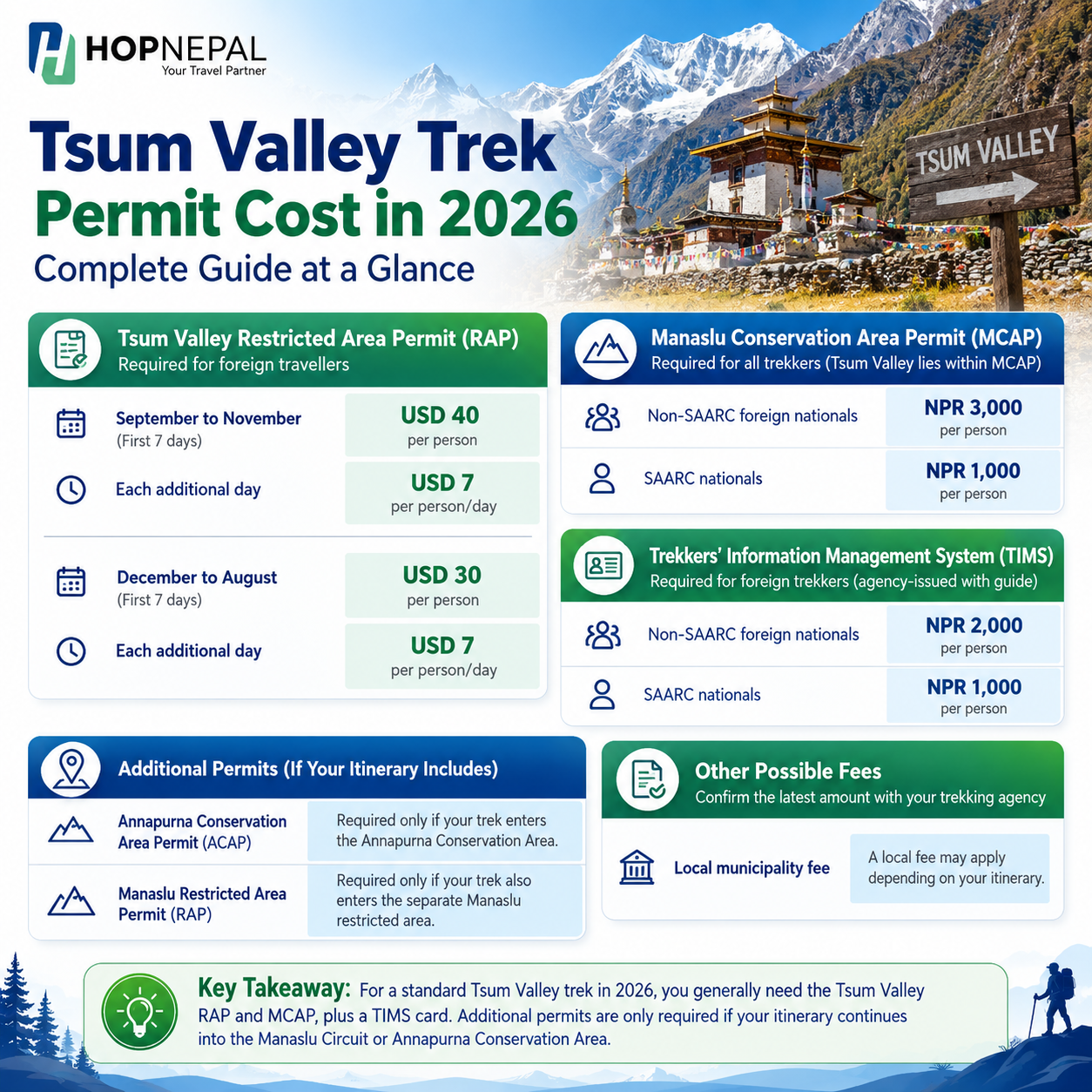
A standard Tsum Valley trek generally requires a Tsum Valley Restricted Area Permit (RAP) and Manaslu Conservation Area Permit (MCAP). Nepal Tourism Board also currently lists the Tsum Valley Trek among routes that require an agency-issued TIMS Card and a licensed trekking guide. Additional permits are required if your itinerary extends into the Manaslu Circuit or the Annapurna Conservation Area.
Quick Answer: How Much Does the Tsum Valley Trek Permit Cost in 2026?
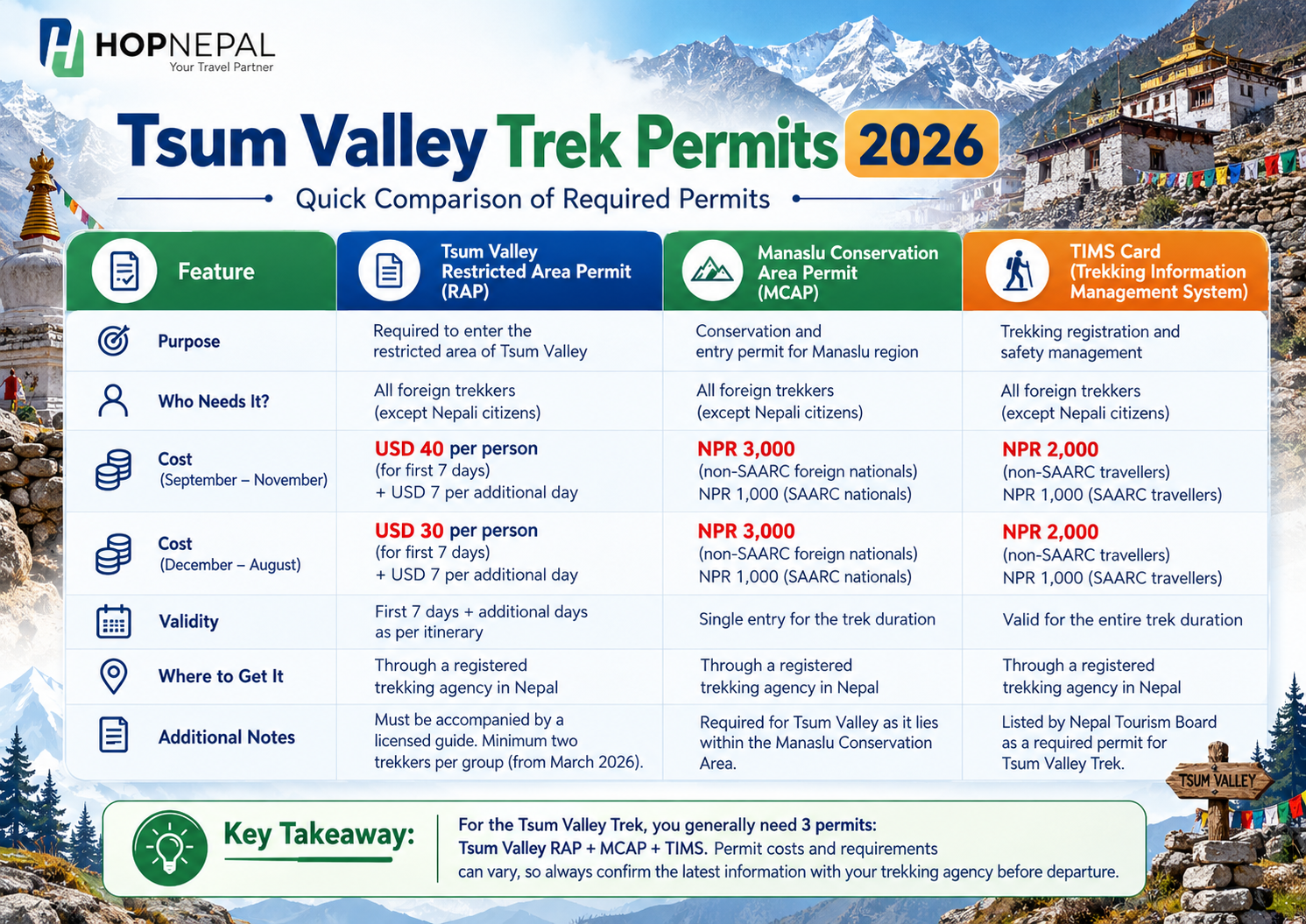
The official Tsum Valley Restricted Area Permit cost for 2026 is:
September to November: USD 40 per person for the first 7 days; USD 7 per person for each additional day.
December to August: USD 30 per person for the first 7 days; USD 7 per person for each additional day.
These rates apply specifically to the Gorkha Tsum Valley restricted area, covering Sirdibas, Lokpa, Chumling, Chekampar, Nile, and Chule within the designated wards of Chumnubri Rural Municipality.
In addition to the Restricted Area Permit, foreign trekkers should budget for:
- MCAP: NPR 3,000 for non-SAARC foreign nationals; NPR 1,000 for SAARC nationals.
- TIMS: NPR 2,000 for non-SAARC travellers; NPR 1,000 for SAARC travellers.
- Possible local municipality fee: confirm the latest amount with your trekking agency before departure.
- ACAP: only where your itinerary actually enters the Annapurna Conservation Area.
- Manaslu RAP: only when the trek also enters the separate Manaslu restricted area.
Current Nepal Tourism Board conservation-area rates list MCAP at NPR 3,000 for foreign visitors and NPR 1,000 for SAARC nationals.
Which Permits Are Required for the Tsum Valley Trek?
One of the biggest sources of confusion online is the assumption that every trek in the wider Manaslu region requires exactly the same permits.
It does not. The permits you need depend on where your itinerary actually goes.
Tsum Valley Restricted Area Permit – Mandatory
The Tsum Valley Restricted Area Permit, often abbreviated as Tsum Valley RAP or Special Trekking Permit, is the principal permit required for foreign travellers entering the restricted area of Tsum Valley.
The Department of Immigration currently identifies the restricted Tsum Valley route as:
Sirdibas – Lokpa – Chumling – Chekampar – Nile – Chule
Covering specified wards of Chumnubri Rural Municipality in Gorkha.
Tsum Valley RAP Cost from September to November
September, October and November fall under the higher permit-fee period.
The cost is:
- USD 40 per person for the first seven days
- USD 7 per person per additional day after seven days
Tsum Valley RAP Cost from December to August
From December through August, the first-week fee is lower:
- USD 30 per person for the first seven days
- USD 7 per person per additional day
The Department of Immigration's current published tariff confirms these rates.
Important: Tsum Valley RAP Is Not the Manaslu RAP
This distinction deserves special attention. You may see websites quoting:
USD 100 for seven days from September to November, or USD 75 for seven days from December to August
as the Tsum Valley permit price. Those are the rates for the Gorkha Manaslu restricted area, not the Tsum Valley RAP. The Government of Nepal lists Manaslu and Tsum Valley separately, with different geographic coverage and permit charges.
If you are trekking only into Tsum Valley and returning along a Tsum itinerary, you should therefore not automatically calculate your restricted-area permit using the more expensive Manaslu RAP rate.
Manaslu Conservation Area Permit – MCAP
Tsum Valley lies within the wider Manaslu Conservation Area, so trekkers also require the Manaslu Conservation Area Permit.
The current entry fees published by Nepal Tourism Board are:
- Non-SAARC foreign nationals: NPR 3,000
- SAARC nationals: NPR 1,000
- Nepali citizens: NPR 100
Children under 10 are exempt from the conservation-area entry fee under the current NTB schedule.
Unlike the Restricted Area Permit, the MCAP fee does not increase according to the number of trekking days.
Revenue from conservation-area entry fees supports the management of Nepal's protected areas, including conservation and visitor infrastructure.
Do You Need a TIMS Card for Tsum Valley in 2026?
This is another area where information online is inconsistent.
The official Nepal Tourism Board TIMS page specifically lists the “Tsum Valley Trek” under the Manaslu Region routes, which require a licensed guide and an agency-issued TIMS Card.
The current TIMS charges published by Nepal Tourism Board are:
- Non-SAARC foreign travellers: NPR 2,000 per person
- SAARC travellers: NPR 1,000 per person
Therefore, we recommend following the current Nepal Tourism Board guidance rather than relying on older blogs claiming that a Restricted Area Permit automatically removes the TIMS requirement. Permit systems can change, so your agency should reconfirm the requirement when processing the trek.
Do You Need an Annapurna Conservation Area Permit for Tsum Valley?
Not necessarily. An Annapurna Conservation Area Permit (ACAP) becomes relevant if your itinerary enters the Annapurna Conservation Area, such as when a longer Manaslu route continues towards Dharapani and into the Annapurna trekking network.
For a Tsum Valley itinerary that enters the valley and returns without travelling through the Annapurna Conservation Area, ACAP should not be added automatically, even if other Manaslu itineraries include it.
Current ACAP fees are:
- Foreign nationals: NPR 3,000
- SAARC nationals: NPR 1,000
- Nepali citizens: NPR 100
This is why the itinerary should be finalised before the trekking agency calculates your permit cost.
Can You Trek Tsum Valley Solo in 2026?
There was an important rule change on 22 March 2026.
Previously, restricted-area permits generally required at least two foreign trekkers. Nepal’s Department of Immigration changed that rule on 22 March 2026 and now allows an individual foreign traveller to receive a restricted-area trekking permit.
However, "solo" does not mean "independently". A single traveller may now obtain a Tsum Valley permit, but the trek must still be arranged through an authorised trekking agency and accompanied by a licensed trekking guide.
The Department of Immigration’s 2026 notice states that a permit can now be issued to one trekker, provided the application is submitted through an agency, a licensed trekking guide is assigned and the agency takes responsibility for emergency rescue arrangements.
So the correct 2026 explanation is:
- One traveller: Yes.
- Trekking without a licensed guide: No.
This is an important update for an older Tsum Valley article that still says two tourists are compulsory.
Is a Licensed Guide Mandatory for the Tsum Valley Trek?
Yes. Tsum Valley is a restricted trekking region, and foreign travellers must trek under the regulated system.
Nepal Tourism Board also includes the Tsum Valley Trek among routes requiring travellers to use a licensed trekking guide and an agency-arranged TIMS Card. The 2026 restricted-area rule change has made it easier for a single traveller to obtain a permit, but it has not removed the requirement for a guide.
For travellers, this means you can book a private Tsum Valley as one person without needing another foreign trekker simply to satisfy the old permit rule.
Documents Required for a Tsum Valley Trek Permit
Trekkers submit their personal documents to the registered trekking agency, which then completes the formal restricted-area permit application.
Traveller-side documents normally include:
- Valid passport
- Passport details and passport scan
- Valid Nepal visa or applicable visa/application information
- Recent photograph
- Confirmed trekking dates
- Complete Tsum Valley itinerary
- Travel/trekking insurance information
- Details required for the permit application
- Licensed guide information arranged through the trekking agency
The Department of Immigration's current permit procedure also requires the agency to provide documents including the trekking programme, traveller list, agency guarantee, insurance documents, trekking licence, tax documentation and other regulatory records.
Travel insurance is particularly important for Tsum Valley because of the region's remoteness. Your policy should be carefully reviewed for trekking altitude, medical treatment, and emergency evacuation coverage.
How Do You Get a Tsum Valley Trek Permit?
You should arrange the restricted-area documentation through a government-registered trekking agency in Nepal rather than arriving at the trailhead expecting to purchase everything there.
The basic process is straightforward.
First, choose your Tsum Valley itinerary and confirm your trekking dates. The exact number of days inside the restricted zone affects the RAP charge. Next, provide your passport, visa/application details, photograph, insurance information and other required documents to your trekking agency.
The agency then prepares the official itinerary, guide details, traveller application and supporting company documentation before submitting the restricted-area permit application.
The Department of Immigration’s citizen charter states that complete trekking-permit applications may be processed on the same day they are submitted within the specified working timeframe, although travellers should provide their documents well before departure rather than relying on last-minute processing.
Finally, the agency arranges the relevant conservation and trekking documents, and you carry the required permits during the trek.
Where Are Tsum Valley Permits Checked?
Restricted-area permits should remain with you throughout your trek.
Nepal Tourism Board states that trekking permits must be carried while travelling through restricted areas and shown to immigration officials or police when requested. Travelling outside the route stated on the permit can also constitute a violation of the permit conditions.
Permit inspection is particularly important at the entry point to the Tsum Valley restricted zone.
Your guide will normally manage the checkpoint procedure, but every trekker should still ensure that the name, passport details, dates and approved itinerary shown on the permit are correct before leaving Kathmandu.
Tsum Valley Permit Cost for Indian Travellers
Indian nationals are SAARC nationals, which affects some Nepal trekking fees.
For the Manaslu Conservation Area Permit, SAARC nationals currently pay:
NPR 1,000 per person
For TIMS, the current SAARC rate is:
NPR 1,000 per person.
However, the Department of Immigration's official Tsum Valley Restricted Area Permit schedule lists the RAP as a per-person charge in USD and does not list a separate discounted SAARC tariff for Tsum Valley. Therefore, Indian travellers should not assume that the SAARC discount applying to MCAP automatically applies to the Tsum Valley RAP.
Tsum Valley Permit Cost for Nepali Citizens
The Restricted Area Permit system is primarily applicable to foreign trekkers entering Nepal's regulated trekking areas. For the Manaslu Conservation Area, the current Nepal Tourism Board fee schedule lists:
Nepali citizens: NPR 100 per person per entry.
Nepali travellers should nevertheless check any current local entry or municipality requirements before travelling into the upper valley.
Is There a Chumnubri Rural Municipality Fee?
Travellers may encounter a separate local tourism or municipality charge within Chumnubri Rural Municipality.
This fee warrants careful wording because current trekking operators publish inconsistent figures, typically ranging from NPR 1,000 to NPR 2,000, and I could not verify a current 2026 Chumnubri municipal notice that establishes a definitive online rate.
A separate local municipality fee may apply within Chumnubri Rural Municipality. As local charges can be revised independently of national trekking permit fees, confirm the current amount with Hop Nepal before departure.
That is safer than publishing an unverified NPR 1,000 or NPR 2,000 as a fixed government rate.
Common Tsum Valley Permit Mistakes to Avoid
One of the most common mistakes is using the Manaslu Circuit RAP fee when calculating a Tsum-only itinerary. The official Tsum RAP begins at USD 40 or USD 30 per week depending on the season, while Manaslu uses the higher USD 100/75 structure.
Another mistake is assuming ACAP is mandatory for every Tsum Valley trek. It depends on whether your route actually enters the Annapurna Conservation Area.
Travellers should also avoid relying on pre-March 2026 articles saying that at least two foreign trekkers are still needed. An individual traveller can now receive a restricted-area permit, although a licensed guide and registered agency remain mandatory.
Finally, check current official guidance on TIMS. Nepal Tourism Board's current page specifically lists the Tsum Valley Trek among routes requiring agency-issued TIMS.
Why Are Permits Required for Tsum Valley?
Tsum Valley lies close to Nepal’s northern international border and is classified as a restricted trekking area.
Restricted-area permits allow authorities to regulate access, record visitor movements and control trekking within approved routes. Conservation fees also contribute to management of the wider protected area.
For travellers, the permit system means a little more preparation before the trek, but it also helps regulate tourism in one of Nepal’s more remote Himalayan regions.
Final Thoughts
The Tsum Valley Trek permit system in 2026 is easier to understand once the Tsum Valley RAP is separated from the neighbouring Manaslu RAP.
For a standard Tsum Valley trek, the key government costs begin with the Tsum Valley Restricted Area Permit at USD 40 for the first week, from September to November, or USD 30 for the first week from December to August, followed by USD 7 for each additional restricted-area day. Trekkers also need to account for MCAP and the current TIMS requirement, while ACAP and the separate Manaslu RAP depend on the route being followed.
Another major change for 2026 is that a single foreign traveller can now obtain a restricted-area permit. However, Tsum Valley remains a regulated trekking destination, meaning a licensed guide and registered trekking agency are still part of the journey.
Before leaving Kathmandu, confirm your exact itinerary, permit dates and any current local charges. Hop Nepal can arrange the necessary trekking permits, a licensed guide and route planning so your documents match the trail you intend to follow.
Frequently Asked Questions About Tsum Valley Trek Permits
How much does the Tsum Valley Trek permit cost in 2026?
The official Tsum Valley Restricted Area Permit (RAP) costs USD 40 per person for the first seven days from September to November and USD 30 per person for the first seven days from December to August. After the first seven days, the fee is USD 7 per person for each additional day throughout the year.
Can I trek Tsum Valley alone in 2026?
Yes. Under Nepal's 22 March 2026 rule change, a restricted-area permit can be issued to a single foreign trekker; previously, at least two foreign trekkers were generally required.
However, this does not mean you can trek independently. Your trip must still be arranged through a registered trekking agency and you must be accompanied by a licensed trekking guide. The revised rules specifically apply to Tsum Valley and other restricted regions.
Can I get a Tsum Valley permit myself after arriving in Kathmandu?
Not directly as an independent traveller. Restricted-area trekking permits are processed through authorised trekking agencies in Nepal rather than being issued directly to individual tourists. Your agency submits your details, itinerary and supporting documentation through the official permit system and arranges the applicable restricted-area permit for your trek.
Can I buy the Tsum Valley permit at the trailhead?
You should not travel to the trailhead expecting to arrange the Restricted Area Permit there. The Tsum Valley RAP must be organised through the official restricted-area permit system before entering the controlled zone.
Have your trekking agency complete the necessary permits before departing Kathmandu to avoid issues at the permit checkpoints.
Do I need a TIMS Card if I already have a Tsum Valley Restricted Area Permit?
According to the Nepal Tourism Board's current guidance, yes. NTB specifically lists the Tsum Valley Trek among the routes covered by the revised TIMS system, which requires an agency-issued TIMS Card and a licensed trekking guide.
Do I need both MCAP and the Tsum Valley Restricted Area Permit?
Yes, for the normal Tsum Valley trekking route, these permits serve different purposes.
The Tsum Valley Restricted Area Permit authorises entry into the designated restricted zone, while the Manaslu Conservation Area Permit (MCAP) covers entry into the Manaslu Conservation Area.
Current MCAP charges are NPR 3,000 for non-SAARC foreign nationals and NPR 1,000 for SAARC nationals. Nepal Tourism Board lists the Nepali entry fee as NPR 100, with children below ten exempt from the conservation-area charge.
Do I need a Manaslu Restricted Area Permit for a Tsum Valley-only trek?
Not automatically. The government treats Gorkha Manaslu and Gorkha Tsum Valley as separate restricted areas, each with its own boundaries and permit fee.
If your itinerary enters Tsum Valley and then returns without continuing through the restricted Manaslu Circuit section, you should not automatically be charged the Manaslu RAP simply because Tsum Valley lies within the broader Manaslu region.
What permits do I need if I combine Tsum Valley with the Manaslu Circuit?
A combined Tsum Valley and Manaslu Circuit Trek can require more documentation than a Tsum-only itinerary because you enter two separately regulated restricted zones. Depending on the precise route, you should expect to arrange:
- Tsum Valley Restricted Area Permit
- Manaslu Restricted Area Permit
- Manaslu Conservation Area Permit (MCAP)
- TIMS Card
An Annapurna Conservation Area Permit may also become relevant when the route continues into the Annapurna Conservation Area.
Does the Tsum Valley permit cover unlimited trekking days?
No. The restricted-area permit is issued according to the approved trekking duration.
The first seven days are covered by the initial USD 40 or USD 30 seasonal fee. After seven days, the official charge becomes USD 7 per person for each additional day.
Is the Tsum Valley permit cheaper in winter?
Yes. The seasonal difference applies to the initial seven-day Restricted Area Permit. From September to November, the first seven days cost USD 40 per person. From December to August, the first seven days cost USD 30 per person.
The additional-day fee remains USD 7 per person per day after the first week in either period.