
Nepal is a country of remarkable cultural diversity, and traditional clothing varies considerably between ethnic groups, communities, regions and occasions. The country's 2021 National Population and Housing Census recorded 142 caste and ethnic groups and 124 mother tongues, which helps explain why there is no single style of Nepali traditional clothing that represents every community in Nepal.
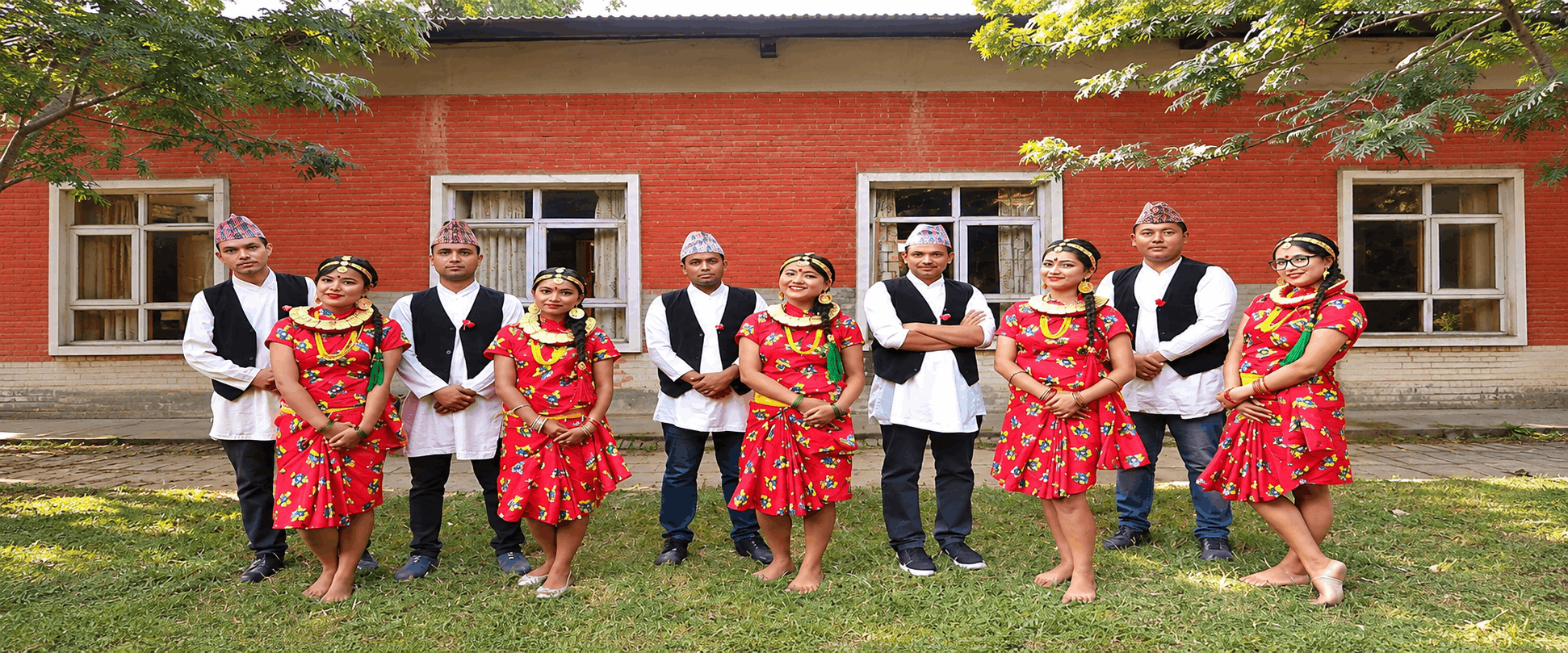
Among the best-known forms of traditional dress in Nepal are Daura Suruwal, traditionally worn by men, and Gunyu Cholo, traditionally associated with women. Together with the Dhaka Topi, sari and the distinctive clothing of Nepal's many ethnic communities, these garments form an important part of the country's cultural identity and history.
Daura Suruwal and Gunyu Cholo are still commonly described as the national costume of Nepal because of their long historical association with official ceremonies and national identity. However, Nepal no longer has a single legally prescribed national dress. The government removed Daura Suruwal and Gunyu Cholo from their formal national-dress status in 2011 in recognition of Nepal's cultural diversity, although both continue to be widely worn at weddings, festivals, ceremonies and formal events.
History of Daura Suruwal: Traditional Dress of Nepali Men
Daura Suruwal, also known as Labeda Suruwal, is one of the most recognisable examples of Nepal's traditional men's clothing. The outfit consists of two main pieces: the Daura, an upper garment with a closed neck and ties, and the Suruwal, loose-fitting trousers that taper towards the ankles.
Several cultural and religious meanings are traditionally associated with the design of the Daura. It has eight ties, commonly linked with the Ashtamatrika, or eight mother goddesses. These are traditionally identified as Byagini, Barahi, Maheshwari, Indrayani, Kumari, Vaishnavi, Brahmayani and Mahalaxmi.
The number eight also has symbolic significance in Nepali Hindu traditions. The Daura traditionally features five pleats or kallis, often associated with the Pancha Buddha or Pancha Ratna, while its closed, round neck is popularly linked to the serpent around Lord Shiva's neck.
These interpretations have been passed down through generations and remain an important part of the cultural story surrounding Daura Suruwal.
How Daura Suruwal Became Associated with Nepal's National Dress
Daura Suruwal was worn in Nepal long before the modern state adopted formal dress codes. Its association with government and national identity became particularly strong during the twentieth century.
During the Panchayat period, beginning around 2017 B.S. (1960/61 AD), Daura Suruwal was promoted as a formal dress code for men working in government offices and attending national programmes. Its visibility in government, politics and formal events helped establish it as one of the most recognisable forms of Nepalese national dress.
The outfit also has an earlier connection with Nepal's Rana period. Prime Minister Jung Bahadur Rana travelled to Britain and Europe in 1850, and historical accounts commonly connect this journey with the later practice of wearing a Western-style coat or waistcoat over Daura Suruwal. The exact story differs between historical accounts, so it is better understood as part of the garment's evolving history rather than a single confirmed origin story.
Today, people continue to wear Daura Suruwal during weddings, religious ceremonies, cultural programmes, festivals in Nepal and other formal occasions.
Daura Suruwal and Dhaka Topi
Wearing a Dhaka Topi with Daura Suruwal is another well-known part of traditional Nepali men's clothing.
The Dhaka Topi is a brimless cap traditionally made from patterned Dhaka fabric. It became especially prominent during the reign of King Mahendra, who ruled Nepal from 1955 to 1972. During the Panchayat period, the topi became strongly associated with government offices, official photographs and national identity.
 Beautiful smile with a Dhaka Topi
The origin of the term and fabric known as Dhaka has several historical explanations. Rather than linking the tradition to one particular journey or person, it is more accurate to say that Dhaka weaving gradually became established in Nepal, with Palpa developing into one of the country's best-known centres for Dhaka production during the twentieth century.
Today, the Dhaka Topi remains closely associated with Nepali identity. It may be worn with Daura Suruwal, a waistcoat and a coat for weddings, celebrations, cultural events and formal occasions.
Women's Traditional Dress: Gunyu Cholo
Gunyu Cholo is one of the best-known forms of traditional Nepali women's dress. It generally consists of a gunyu, a traditional lower garment, and a cholo, a blouse.
Although it is no longer an official national dress, Gunyu Cholo remains culturally important and is commonly seen during traditional ceremonies, cultural programmes, festivals and community events.
 Former President of Nepal Bidya Devi Bhandari with girls dressed in Gunyu Cholo. Image credit: The Himalayan Times.
Gunyu Cholo is also associated with a traditional coming-of-age ceremony practised by some Nepali communities. Traditionally, a young girl may receive a Gunyu Cholo, jewellery and other gifts from her family before adolescence. The exact age and manner of the ceremony differ between families and communities, so it should not be treated as a practice followed identically throughout Nepal.
The ceremony symbolises an important stage in a girl's life and demonstrates how clothing in Nepal often carries meaning beyond appearance alone.
At the same time, Gunyu Cholo represents only one part of women's traditional clothing in Nepal. Different communities have their own garments, jewellery, fabrics and methods of wearing them, while the sari is also widely worn by Nepali women for weddings, religious ceremonies and formal occasions.
Culture of Nepal and Traditional Clothing
Nepal's traditional clothing makes more sense when viewed alongside the country's demographic diversity.
According to the 2021 National Population and Housing Census, Nepal has a population of 29,164,578 and recognises 142 caste and ethnic groups. The census also recorded 124 mother tongues, compared with 123 reported in the 2011 census.
Nepali itself was reported as the mother tongue of 44.86% of the population, followed by Maithili at 11.05%, Bhojpuri at 6.24%, Tharu at 5.88% and Tamang at 4.88%. These figures show just how varied Nepal's cultural and linguistic landscape is.
That diversity is also visible in the traditional clothes of Nepal.
Different ethnic groups and communities have developed clothing influenced by their geography, climate, religion, occupation, cultural practices and family traditions. Clothing worn in the Himalayan region can therefore be very different from the traditional attire found in Kathmandu Valley, the hills or the Terai.
Daura Suruwal, Gunyu Cholo and Dhaka Topi remain nationally recognisable symbols, but they should not be presented as the only forms of Nepal's traditional dress. Nepal's cultural identity also includes the distinctive clothing of Newar, Tamang, Gurung, Magar, Tharu, Sherpa, Rai, Limbu and many other communities.
This distinction is especially important today. Nepal's modern identity reflects its many communities rather than one single ethnic tradition.
For travellers, traditional clothing provides an interesting way to understand the country's history and culture. A Kathmandu Valley Cultural Tour is also a practical way to experience Nepalese heritage, temples, architecture and living traditions firsthand. Daura Suruwal, Dhaka Topi, traditional saris and locally produced clothing can be found in markets and clothing stores throughout Nepal, particularly in Kathmandu and other major towns. Travellers planning time in the capital can also read Hop Nepal's guide to Kathmandu for more cultural and destination context.
Rather than thinking of one garment as the complete national costume of Nepal, it is more accurate to see Nepali traditional clothing as a collection of styles developed over generations. Daura Suruwal and Gunyu Cholo remain among the country's most recognisable outfits, while the clothing worn by Nepal's many ethnic communities tells a much broader story about the people, geography and cultural history of Nepal.
Explore More About Nepal
- Culture of Nepal
- Languages of Nepal
- People of Nepal
- Religion in Nepal
- Festivals in Nepal
- Kathmandu Valley Cultural Tour
Frequently Asked Questions
What is the traditional dress of Nepal?
Daura Suruwal for men and Gunyu Cholo for women are among the best-known traditional dresses of Nepal. However, Nepal has 142 caste and ethnic groups, so traditional clothing varies considerably between communities and regions.
What is the national costume of Nepal?
Daura Suruwal and Gunyu Cholo are widely recognised as symbols of Nepalese national dress, although Nepal no longer has one legally prescribed national dress. Different ethnic communities have their own distinctive traditional clothing.
What is Daura Suruwal?
Daura Suruwal is a traditional Nepali men's outfit. The Daura is the upper garment, while the Suruwal is a pair of loose-fitting trousers that taper towards the ankles.
What is Gunyu Cholo?
Gunyu Cholo is a traditional Nepali women's outfit consisting of a lower garment known as the Gunyu and a blouse called the Cholo. It is still worn during cultural events, ceremonies and traditional celebrations.
What is a Dhaka Topi?
A Dhaka Topi is a traditional brimless Nepali cap made from patterned Dhaka fabric. It is commonly worn with Daura Suruwal during formal occasions, weddings, festivals and cultural events.
How many ethnic groups are there in Nepal?
Nepal's 2021 National Population and Housing Census recorded 142 caste and ethnic groups.
How many languages are spoken in Nepal?
The 2021 National Population and Housing Census recorded 124 mother tongues in Nepal.
Do all Nepalese people wear Daura Suruwal and Gunyu Cholo?
No. Nepal is culturally diverse, and clothing differs by ethnicity, region, religion, climate and occasion. Daura Suruwal and Gunyu Cholo are nationally recognised, but they represent only part of Nepal's broader traditional clothing heritage.
When is traditional Nepali clothing worn?
Traditional Nepali clothing is commonly worn during weddings, religious ceremonies, festivals, cultural programmes, family events and other formal or special occasions.
Where can travellers buy traditional Nepali clothes?
Travellers can find Daura Suruwal, Dhaka Topi, saris and other traditional clothing in markets and clothing shops throughout Nepal, especially in Kathmandu and other major towns.