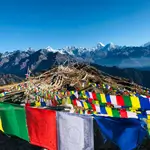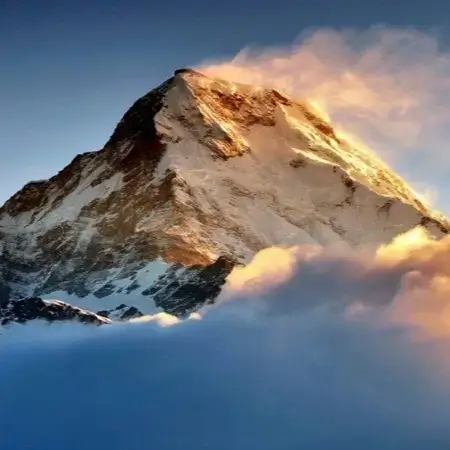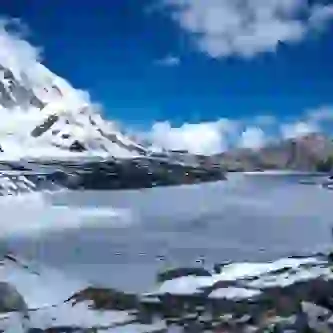

Annapurna I is one of the most famous and feared mountains in Himalayan mountaineering. At 8,091 metres, it is the 10th-highest mountain in the world and the highest peak in the Annapurna massif of north-central Nepal. Its reputation does not come simply from altitude. Avalanche exposure, unstable snow and ice, steep terrain, rapidly changing weather, limited rescue options and the enormous physical stress of climbing above 8,000 metres combine to make Annapurna I an exceptionally serious objective.
The statistics also need to be understood correctly. Older articles often repeat claims that Annapurna has a 30-40% “fatality rate” or that one in every three climbers dies. Those figures are now outdated and, more importantly, often mix different ways of measuring risk. Current Himalayan Database figures show 557 recorded summits, 75 deaths and 2,059 expedition members for Annapurna I. That equals 13.46 deaths per 100 recorded summits and 3.64 deaths per 100 expedition members. Neither figure means that an individual climber has exactly a 13.46% or 3.64% chance of dying; they are historical ratios, not personal probability estimates.
Annapurna I Quick Facts
- Elevation: 8,091 m (26,545 ft).
- World height ranking: 10th.
- Location: Annapurna massif, north-central Nepal.
- First successful ascent: 3 June 1950 by Maurice Herzog and Louis Lachenal of France.
- Historical significance: the first confirmed successful ascent of any mountain above 8,000 metres.
- Himalayan Database records: 271 expeditions, 2,059 expedition members, 557 summits and 75 deaths.
- Deaths per summits ratio: 13.46%.
- Deaths per expedition members ratio: 3.64%.
- 2024 Nepal government permits: 4 expedition teams with 31 members on Annapurna I.
Important: Annapurna I expedition climbing is not the same activity as trekking to Annapurna Base Camp. The summit is an extreme technical mountaineering objective; the ABC trail is a non-technical trekking route that reaches base camp rather than attempting to climb Annapurna I.
Is Annapurna I Really the Deadliest Mountain in the World?
It is safer to say that Annapurna I is one of the deadliest and most hazardous 8,000-metre mountains rather than giving it an absolute “deadliest mountain in the world” label. The answer changes depending on the metric used, the period being measured and whether smaller peaks are included.
The Himalayan Database currently records the following deaths-to-summits ratios for several major Himalayan 8,000ers:
- Annapurna I: 75 deaths, 557 summits — 13.46 deaths per 100 summits.
- Dhaulagiri I: 92 deaths, 706 summits — 13.03 deaths per 100 summits.
- Kangchenjunga: 54 deaths, 682 summits — 7.92 deaths per 100 summits.
- Makalu: 51 deaths, 886 summits — 5.76 deaths per 100 summits.
- Everest: 344 deaths, 13,550 summits — 2.54 deaths per 100 summits.
This is why Annapurna I still stands out, even though the historic 30-40% figure is no longer representative of the current record. Advances in forecasting, equipment, route knowledge, fixed-rope systems, communications and expedition logistics have improved mountaineering safety, but they have not removed the mountain’s objective hazards.
Why Is Annapurna I So Dangerous?
1. Avalanche Exposure
Avalanches are one of the defining hazards on Annapurna I. Large parts of the mountain involve snow-loaded slopes, glaciers and terrain beneath hanging ice. Fresh snowfall, wind loading, temperature changes, and unstable snow layers can quickly alter conditions. Climbers may be exposed not only while ascending but also while descending or moving between camps, where time spent in hazardous terrain increases cumulative risk.
2. Seracs and Falling Ice
Seracs are unstable towers or blocks of glacial ice. They can collapse with little or no warning, sending ice debris onto slopes below. Route selection can reduce exposure, but it cannot always eliminate it. This is an important distinction between subjective risk — decisions and mistakes a climber may control — and objective risk, such as a serac collapse that may occur regardless of experience.
3. Steep and Technical Terrain
Annapurna I is not dangerous simply because it is high. The mountain requires serious Himalayan climbing skills, including movement on steep snow and ice, glacier travel, rope systems, climbing in crampons and managing exposure in complex terrain. The combination of technical difficulty and extreme altitude leaves little margin for error.
4. Extreme Altitude and the Death Zone
Above 8,000 metres, climbers enter what mountaineers commonly call the death zone. Oxygen availability is drastically reduced, and the body cannot properly recover even with acclimatisation. Judgement, coordination, strength and speed can deteriorate. Frostbite, exhaustion, acute mountain sickness, high-altitude cerebral oedema and high-altitude pulmonary oedema can become life-threatening emergencies.
For readers planning a trek rather than an expedition, Hop Nepal’s High-Altitude Trekking in Nepal: Preparation & Safety Guide explains acclimatisation, altitude illness and safer trekking practices in more detail.
5. Fast-Changing Himalayan Weather
Weather windows on high Himalayan peaks can be short. Strong winds, snowfall, cloud cover, whiteout conditions, and rapid temperature drops can stop progress or trap climbers high on the mountain. Forecasting is far better than it was during early expeditions, but forecasts cannot remove localised mountain weather or guarantee that conditions will remain stable throughout a summit push and descent.
6. The Descent Is Still Dangerous
Reaching the summit does not end the risk. Climbers descend while fatigued, dehydrated and oxygen-deprived after the most demanding part of the expedition. Concentration can decline precisely when careful rope work, route finding and foot placement are still essential. Many Himalayan accidents occur during descent, which is one reason a summit should never be treated as the finish line.
7. Rescue Is Difficult at Extreme Altitude
Annapurna I is not supported by the same level of climbing traffic and infrastructure as Everest’s normal route. At extreme altitude, helicopter rescue may be restricted by weather, terrain, aircraft performance and the exact location of a casualty. High-altitude rescues can also place rescuers at serious risk. Expedition teams therefore need strong self-rescue capability, communications, medical planning and evacuation insurance rather than assuming outside help will arrive quickly.
8. Lower Traffic Means Less Margin for Support
A less crowded mountain can be appealing, but low traffic also means fewer teams nearby, less route redundancy and fewer people immediately available when an emergency develops. Nepal Tourism Statistics 2024 recorded only four permitted Annapurna I expedition teams with 31 members. That is a small number compared with Nepal’s busiest expedition peaks.
Why Annapurna I Matters in Mountaineering History
On 3 June 1950, Maurice Herzog and Louis Lachenal reached the summit of Annapurna I. The Himalayan Database records this as the first confirmed successful ascent of an 8,000-metre mountain. The achievement came three years before the first confirmed ascent of Everest.
The expedition became famous not only for reaching the summit but also for the brutal descent and severe frostbite suffered by the climbers. That history helped establish Annapurna’s reputation early, but today the mountain should be judged using current expedition records rather than decades-old fatality percentages.
Annapurna I Expedition vs Annapurna Base Camp Trek
This is one of the biggest gaps in older articles about Annapurna. They often conflate “climbing Annapurna” and “trekking Annapurna,” as though they were the same activity. They are not.
Annapurna I expedition: an extreme 8,091-metre mountaineering expedition requiring technical climbing ability, acclimatisation, specialised equipment, expedition logistics and professional high-altitude support.
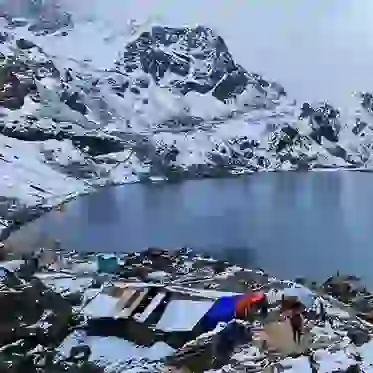
Annapurna Base Camp trek: a journey through the Annapurna Sanctuary that reaches an elevation of roughly 4,130 metres. Trekkers walk established trails and do not attempt the summit of Annapurna I.
If your goal is to experience the Annapurna massif without technical climbing, consider Hop Nepal’s 17-Day Annapurna Base Camp Trek for a guided trekking itinerary.
For a detailed look at trail difficulty, walking hours, fitness and altitude challenges, read Annapurna Base Camp Trek Difficulty.
Is Annapurna Base Camp Dangerous?
ABC should not be described with the same risk profile as an Annapurna I summit expedition. It is a non-technical high-altitude trek, but it is not risk-free. The main concerns for ordinary trekkers include altitude illness, cold, snow, slippery trails, avalanches in certain sections and seasons, landslides during periods of heavy rain, fatigue and delayed evacuation in bad weather.
Good acclimatisation, weather awareness, suitable clothing, travel insurance, a realistic itinerary and an experienced guide can significantly reduce avoidable risk. Conditions vary by season, so trekkers should not assume that a route is safe simply because it is popular.
For seasonal planning, see Best Time for Annapurna Base Camp Trek. For a wider regional context, Hop Nepal’s Annapurna Conservation Area guide explains the protected area and the surrounding landscapes of the massif.
What About North Annapurna Base Camp?
North Annapurna Base Camp approaches the massif from the Myagdi side and is much less developed than the classic southern ABC route. It is still trekking rather than an Annapurna I summit climb, but limited infrastructure, remoteness and changing weather mean preparation and local support matter even more.
Travellers interested in the quieter side of the massif can compare the routes in Hop Nepal’s North vs South Annapurna Base Camp Trek comparison or review the North Annapurna Base Camp Trek – 7 Days.
Annapurna I Statistics: What the Numbers Actually Tell Us
The most useful way to discuss Annapurna’s danger is to show the underlying data and explain the denominator. Based on the current Himalayan Database record:
- 271 recorded expeditions.
- 2,059 expedition members.
- 557 recorded summits.
- 75 recorded deaths.
- Summit rate: 27.1% of expedition members in the database have recorded summits.
- Deaths/summits: 13.46%.
- Deaths/members: 3.64%.
Why the distinction matters: “75 deaths divided by 557 summits” measures deaths relative to successful summit records. “75 deaths divided by 2,059 members” measures deaths per member. Neither is identical to the chance that a specific modern climber will die. Personal risk changes with route, season, conditions, experience, expedition quality, use of supplemental oxygen, acclimatisation and decision-making.
How Climbers Reduce Risk on Annapurna I
No strategy makes Annapurna I safe, but professional expeditions try to reduce controllable risk through disciplined planning. Common measures include:
Choosing experienced expedition leadership and high-altitude climbing support.
Building a conservative acclimatisation schedule rather than rushing to high camps.
Using current weather forecasting and turning around when conditions deteriorate.
Minimising time beneath seracs, avalanche paths and other objective hazards where route options allow.
Maintaining strict turnaround times, even when the summit is close.
Carrying reliable communications, oxygen systems where planned, medical supplies and emergency equipment.
Having evacuation insurance and a realistic rescue plan, rather than relying on helicopter access.
Treating the descent as part of the summit strategy, not as an afterthought.
Frequently Asked Questions
Why is Annapurna I so dangerous?
Because several serious hazards overlap: avalanches, unstable snow and ice, seracs, steep technical terrain, extreme altitude, rapidly changing weather, difficult rescue conditions and severe fatigue during descent.
What is the current Annapurna I fatality rate?
There is no single “fatality rate” that answers every question. The current Himalayan Database records 75 deaths, 557 summits and 2,059 expedition members. That is 13.46 deaths per 100 summits and 3.64 deaths per 100 expedition members.
Is Annapurna more dangerous than Everest?
Using the Himalayan Database deaths-to-summits ratio, Annapurna I has a much higher ratio: 13.46%, compared with Everest at 2.54%. But this is a historical ratio, not a prediction of an individual climber’s personal risk.
Is Annapurna I harder than K2?
Both are extreme technical 8,000-metre objectives, but their hazards and routes differ. It is more useful to compare route conditions, technical terrain, objective hazards, and expedition logistics than to declare one universally harder across all seasons.
Is the Annapurna Base Camp trek dangerous?
ABC is not comparable to climbing Annapurna I. It is a non-technical high-altitude trek, though altitude illness, cold, snow, avalanche exposure in some sections, landslides, weather and remoteness still require preparation.
When was Annapurna I first climbed?
Maurice Herzog and Louis Lachenal reached the summit on 3 June 1950, making Annapurna I the first confirmed 8,000-metre mountain to be successfully climbed.
How many people climbed Annapurna I in 2024?
Nepal Tourism Statistics 2024 recorded four permitted expedition teams with 31 members for Annapurna I. This government figure refers to expedition members permitted that year, not necessarily successful summits.
Final Thoughts: Dangerous Does Not Mean Impossible, but It Demands Respect
Annapurna I deserves its reputation as one of the most serious mountains in high-altitude mountaineering, but the story should be told with current data rather than recycled claims from decades ago. The mountain’s danger comes from the combination of objective hazards and extreme altitude, not from a single statistic.
For most travellers, the safer and more realistic way to experience the massif is through trekking in the Annapurna region. Base camp treks offer extraordinary close-up Himalayan scenery without attempting the technical summit. Anyone considering an actual Annapurna I expedition should already have extensive high-altitude and technical mountaineering experience and should work with a properly equipped professional expedition team.