Last fact-check: 28 October 2026 (Nepal time). Forecast risks for 29–31 October may change; consult official advisories before travelling.
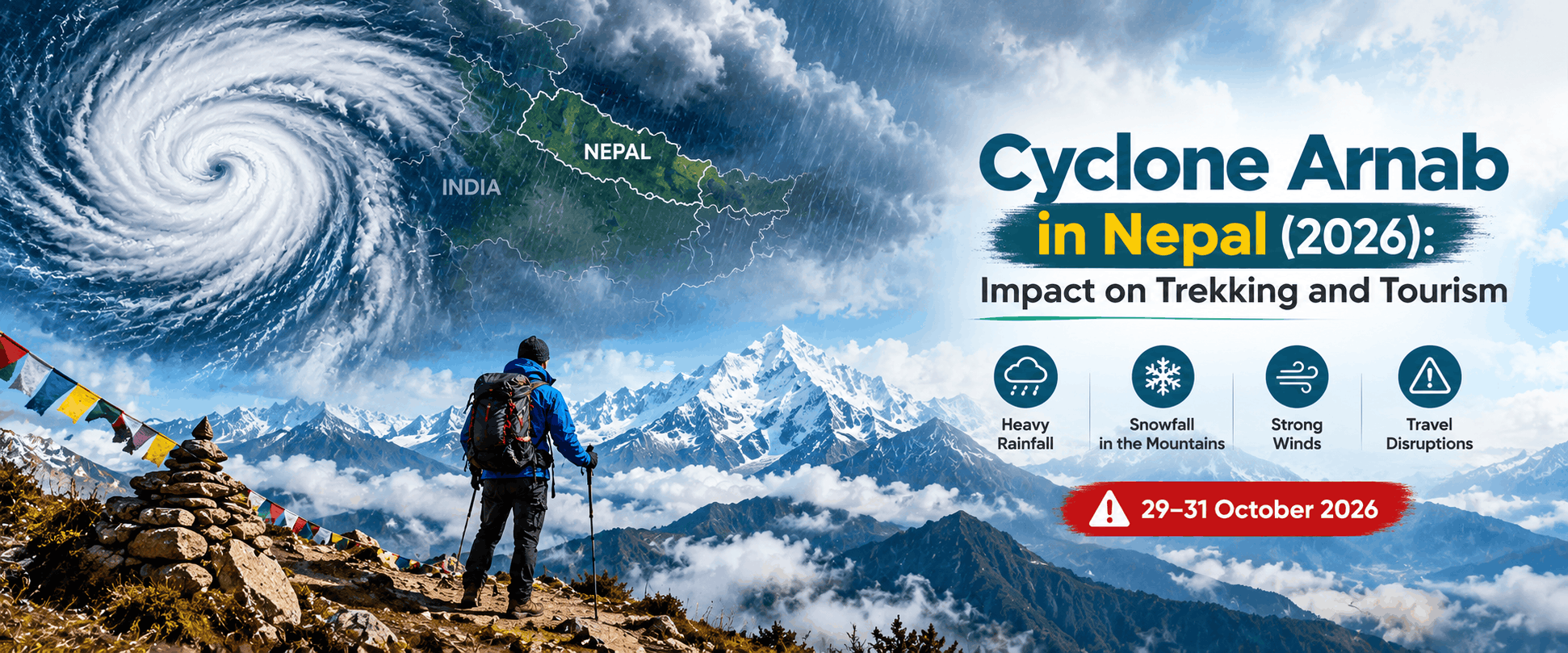
Cyclonic Storm Arnab, which developed over the Bay of Bengal in October 2026, became a significant weather concern for India and Nepal. After intensifying into a very severe cyclonic storm, Arnab crossed the coasts of Andhra Pradesh and Yanam on 28 October. Its associated weather system is expected to influence Nepal from the evening of 29 October, bringing the possibility of heavy rainfall, Himalayan snowfall, strong winds and travel disruptions.
Although Nepal is not directly in the cyclone's landfall path, the associated weather system could affect some of the country's most popular trekking destinations, including the Everest, Annapurna, Manaslu and Langtang regions.
The warnings come during Nepal's autumn trekking season, when international visitors travel to the Himalayas for generally stable weather and clear mountain views.
Nepal's Department of Hydrology and Meteorology (DHM), National Disaster Risk Reduction and Management Authority (NDRRMA) and Trekking Agencies' Association of Nepal (TAAN) have advised heightened precautions, particularly for travellers heading into high-altitude regions between 29 and 31 October 2026.
Where Did Cyclonic Storm Arnab Start?
Cyclone Arnab originated over the Bay of Bengal, part of the north-eastern Indian Ocean bordered by India, Bangladesh, Myanmar and the Andaman and Nicobar Islands.
Its development began with an area of low atmospheric pressure over warm ocean waters. Such systems can intensify when the sea supplies heat and moisture, the atmosphere remains sufficiently humid, and upper-level winds allow organised thunderstorms to develop.
As the low-pressure system strengthened, its circulation became more organised, eventually reaching cyclonic storm intensity and later developing into a very severe cyclonic storm. The India Meteorological Department tracked Arnab over the west-central Bay of Bengal as it travelled towards India’s eastern coastline.
Timeline: From the Bay of Bengal to India and Nepal
24–26 October 2026 — Developing weather threat
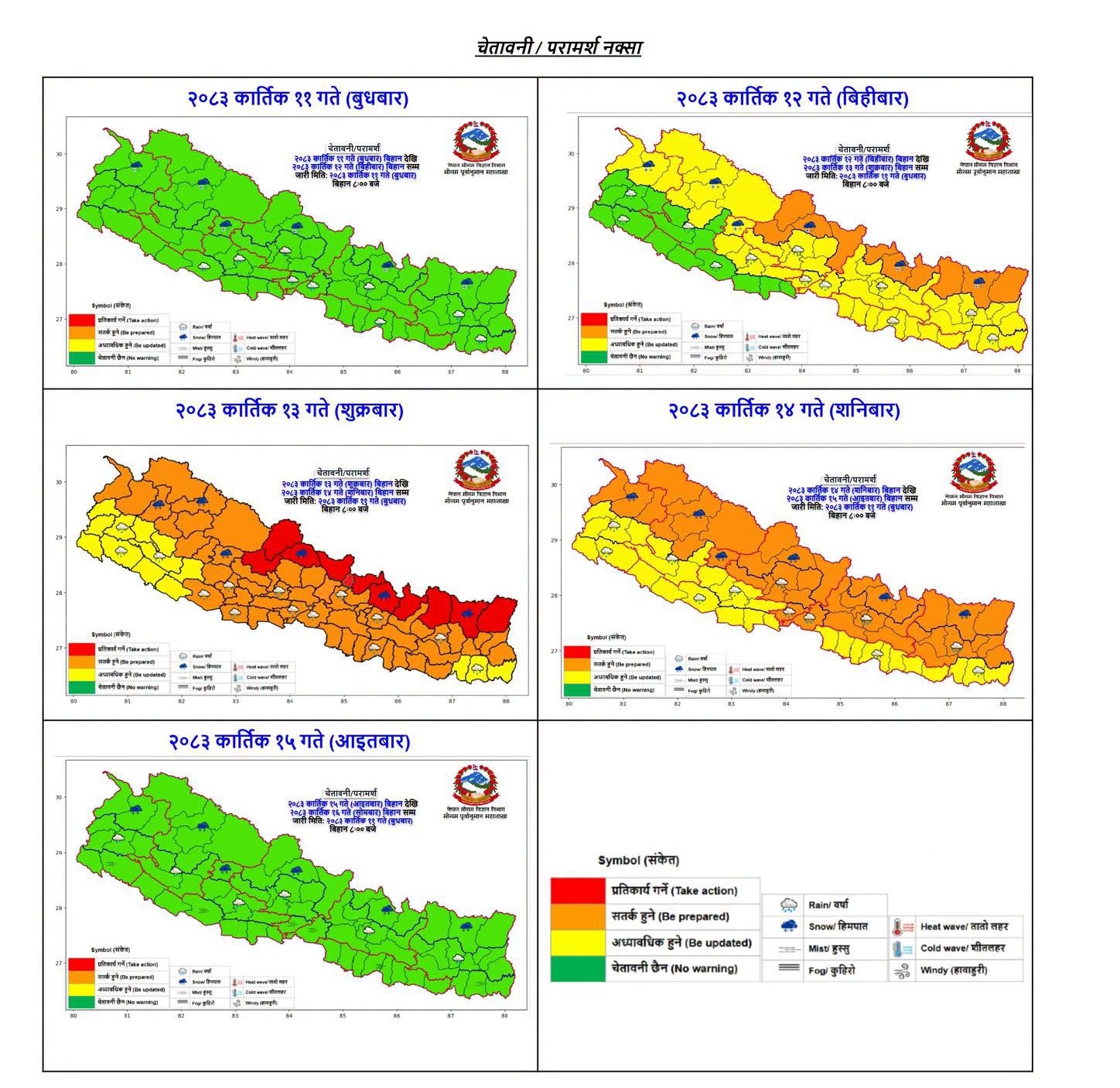
Nepalese meteorologists and authorities began warning that the strengthening Bay of Bengal weather system could influence Nepal in the final days of October. On 26 October, DHM issued a special post-monsoon bulletin forecasting significant risks of rain and snowfall.
27 October — Arnab approaches India
The cyclone intensified into a very severe cyclonic storm and approached the Andhra Pradesh coast. Nepal's authorities and trekking industry issued precautionary notices.
28 October — Landfall in Andhra Pradesh
Arnab crossed the Andhra Pradesh and Yanam coasts, south-west of Yanam and near Narsapur, between 2 am and 8 am IST on Wednesday. According to the India Meteorological Department, sustained winds at landfall reached 125–135 km/h, with gusts of up to 150 km/h. Strong winds, heavy rainfall, uprooted trees and disruptions to electricity and transport were reported.
29 October — Forecast influence reaches Nepal
Moisture associated with the storm is expected to begin affecting Nepal, especially from Thursday evening or night.
30–31 October — Main forecast risk period
Parts of Nepal may experience moderate to heavy rain, thunderstorms, wind and significant snowfall at higher elevations. Authorities recommend avoiding high-risk Himalayan journeys.
Cyclone Arnab's International and Regional Impact
India: The country directly affected by landfall
India experienced the most immediate and direct effects of Cyclone Arnab. The cyclone reached the eastern state of Andhra Pradesh, particularly the coastal districts around Narsapur, Kakinada, Visakhapatnam and nearby communities.
According to Reuters reporting on 28 October, more than 180,000 people were evacuated across Andhra Pradesh and neighbouring Odisha ahead of Cyclone Arnab.
The storm also caused or threatened:
- Uprooted trees and damaged electricity infrastructure.
- Heavy rainfall and flooding in vulnerable coastal districts.
- Flight cancellations, airport disruptions and interrupted train services.
- Temporary school closures.
- Coastal inundation associated with storm surge.
- Damage to agricultural crops, fishing activities and vulnerable housing.
Early reports indicated no confirmed deaths at the time of publication, although damage assessments were continuing.
Did Cyclone Arnab affect the entire world?
No. Cyclone Arnab is a regional weather event, not a worldwide storm. Its principal direct effects are concentrated around the Bay of Bengal and eastern India, with indirect weather consequences forecast for Nepal.
International tourism, aviation and travel planning may nevertheless be affected where itineraries involve the impacted regions. Any broader economic losses or international disruptions will require verified post-storm assessments.
How Will Cyclone Arnab Affect Nepal?
As a landlocked country, Nepal is not in the cyclone’s direct path of coastal landfall. However, tropical cyclones can influence weather far from their centres by transporting large amounts of atmospheric moisture inland.
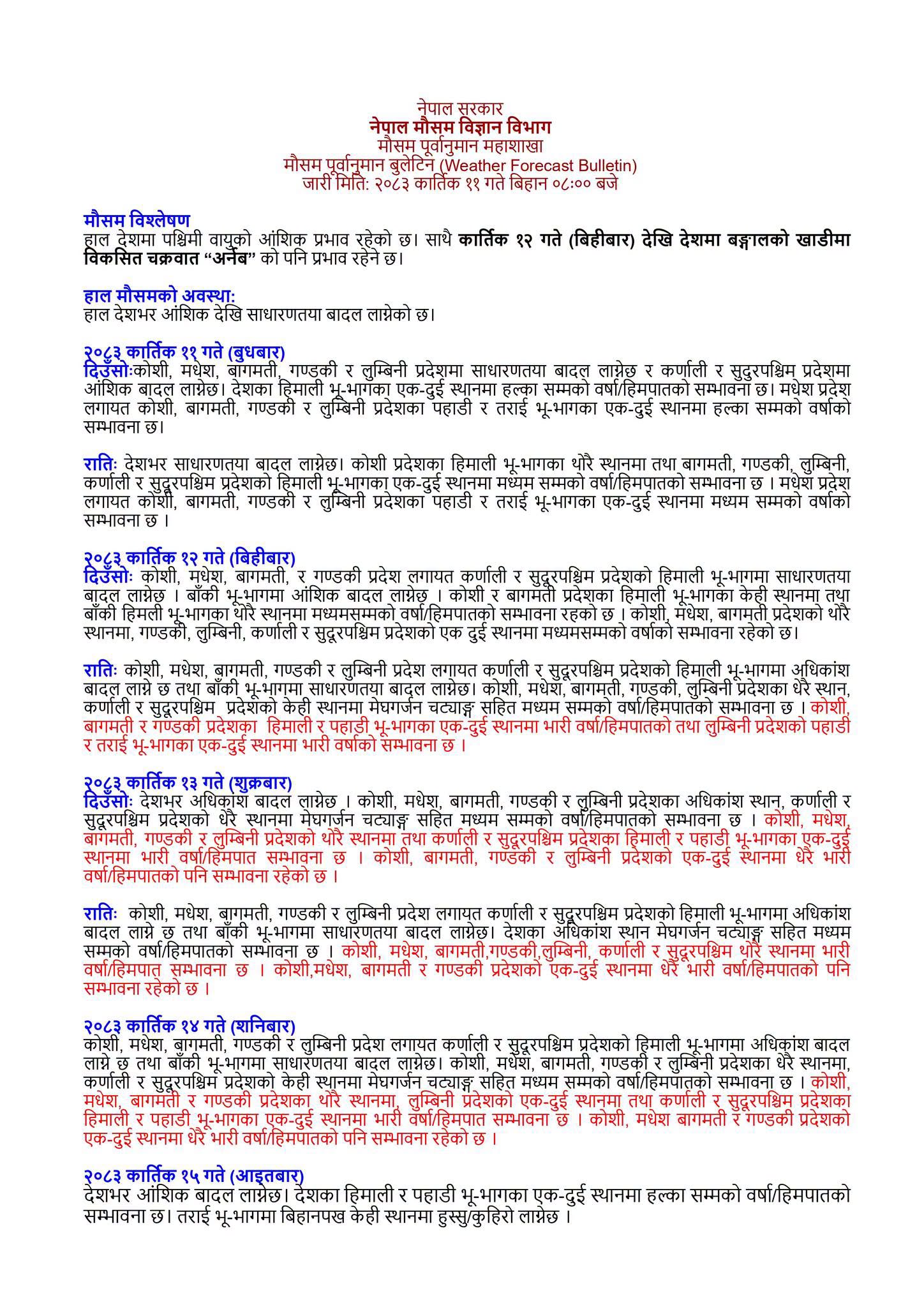
As Arnab moves over India and weakens, moisture associated with the storm may contribute to rainfall across Nepal. When moist air encounters the Himalayan landscape and colder conditions at higher elevations, precipitation may fall as snow.
An interacting upper-level weather system could further enhance precipitation, although the precise amount and location will depend on atmospheric conditions.
Nepal provinces under the weather advisory
- Koshi: Moderate to heavy rain, thunderstorms and Himalayan snowfall.
- Madhesh: Rainfall, lightning and possible local flooding.
- Bagmati: Rain, landslide risks and snowfall at higher elevations.
- Gandaki: Heavy rainfall in some areas and a significant risk of high-altitude snow.
- Lumbini: Moderate rain with heavy rain possible in some areas.
- Karnali: Rainfall in some locations and snow-related hazards in the mountains.
- Sudurpaschim: Rainfall in some locations and potential localised heavy precipitation.
DHM's advisory identifies 30 and 31 October as important dates for weather-related hazards, with the greatest concern focused on high hills and Himalayan areas. The forecast does not mean every district will receive heavy rainfall or snowfall.
Impact of Cyclone Arnab on Nepal's Major Trekking Destinations
Nepal’s mountain tourism industry could experience temporary disruptions as the associated weather systems bring moisture and unstable conditions into the Himalayas. The principal concerns are heavy snowfall, poor visibility, avalanches, landslides, blocked trails, hazardous mountain passes and interruptions to road and air transport.
Everest Base Camp and the Everest Region
Elevation: 5,364 m at Everest Base Camp
Heavy snow and reduced visibility could affect the higher sections of the Everest Base Camp Trek, including Lobuche, Gorak Shep and Kala Patthar. High passes such as Cho La and Kongma La may become especially dangerous during snowstorms.
Flights serving Lukla could also face weather-related disruptions, potentially delaying arrivals and departures.
Annapurna Base Camp and the Annapurna Region
Elevation: 4,130 m at Annapurna Base Camp
The Annapurna region in Gandaki Province is an important area of concern. Snowfall could affect higher sections of the Annapurna Base Camp route, particularly Deurali, Machhapuchhre Base Camp and ABC.
The narrow mountain corridors and avalanche-exposed areas above Deurali require particular caution. Heavy rainfall may also affect road access and lower trekking trails.
Manaslu Circuit
Highest major crossing: Larkya La, approximately 5,106 m (elevation figures vary by source)
The Manaslu Circuit could be affected by snowfall, landslides, damaged trails and dangerous conditions around Larkya La. Remote terrain and limited emergency access increase the importance of shelter and communication.
TAAN has specifically warned trekking operators to exercise caution in Manaslu and other mountain regions during the forecast period.
Langtang Valley
Kyanjin Gompa elevation: approximately 3,870 m
Langtang Valley trekkers may encounter snowfall at higher elevations, reduced visibility and slippery trails. Optional climbs towards Kyanjin Ri or Tserko Ri could become particularly hazardous. Rainfall may also increase landslide risks along roads connecting Kathmandu with the Langtang region.
Annapurna Circuit and Thorong La Pass
Thorong La elevation: 5,416 m
The Annapurna Circuit crosses some of Nepal's most exposed high-altitude terrain. Snow accumulation, strong winds and freezing conditions could make crossing Thorong La unsafe. Travellers in Manang, Mustang and neighbouring districts should consider the official advisories before continuing to higher elevations.
Mardi Himal and Other Short Treks
Mardi Himal Viewpoint: approximately 4,200 m
Shorter treks are not automatically safe during a severe weather advisory. The exposed sections around Mardi Himal High Camp and Viewpoint could become difficult due to snow, wind, and poor visibility. Other elevated destinations, including Poon Hill and Khopra Ridge, may experience adverse weather depending on their location and elevation.
These are potential route-specific hazards, not confirmed reports of storm damage at each destination. The situation will depend on actual precipitation, local trail conditions and subsequent official assessments.
Nepal Suspends Trekking Permits in High-Risk Mountain Areas
One of the most significant tourism-related responses to Cyclone Arnab came on 27 October 2026, when Nepal’s Department of Immigration announced temporary restrictions on trekking in high-altitude Himalayan regions.
The department advised travellers to avoid trekking in affected, restricted high-altitude areas from 29 to 31 October due to the forecast risk of heavy snowfall, blizzards and avalanches.
It also suspended the issuance of new trekking permits for affected restricted areas and advised tourists already in the mountains to remain in safe locations. This precautionary decision is important for international tourists planning treks in restricted areas, particularly in remote regions where rescue operations and access to shelter can be challenging.
The announcement should not be interpreted as a nationwide closure of all trekking trails or tourism destinations. Travellers should confirm the latest restrictions with the Department of Immigration and their trekking operators.
How Cyclone Arnab Could Affect Nepal's Tourism Industry
Trekking bookings and itinerary changes
October and November are important parts of Nepal’s autumn trekking season. Weather disruptions during this period can create logistical challenges for trekking agencies, tourists, guides, porters and mountain lodges.
Potential consequences include postponed departures, additional accommodation nights, changes to trekking routes and delayed mountain-pass crossings.
Domestic flights and helicopter operations
Mountain aviation depends heavily on visibility, cloud conditions and wind speed. The weather system could create delays or cancellations on routes serving Lukla, Pokhara, Jomsom and other mountain destinations.
Everest helicopter tours, mountain sightseeing flights and emergency helicopter operations may also be affected when conditions fall below safe operating limits. These are potential disruptions; they should not be presented as confirmed nationwide flight cancellations in Nepal.
Hotels, teahouses and local tourism businesses
Trekking tourism supports a wide range of mountain communities through accommodation, meals, transportation, guiding and porter services.
Weather-related itinerary interruptions could lead to extended hotel stays in some locations while reducing visitor movement towards more remote destinations. Businesses may need to adjust bookings, arrange emergency accommodation or assist with transport changes.
Note: Actual financial losses cannot be reliably calculated until visitor and business data are confirmed.
Road transportation and access to trekking routes
Heavy rainfall can increase the risk of landslides, road blockages and damage to temporary bridges, particularly in mountainous terrain. Tourist movements between Kathmandu, Pokhara, and major trailheads may be delayed when roads become unsafe.
The Trekking Agencies' Association of Nepal (TAAN) has highlighted specific concerns regarding Manaslu, Myagdi, and Mustang, including vulnerable roads and trekking infrastructure.
Cultural tourism and lower-altitude destinations
Popular tourism destinations such as Kathmandu, Pokhara, Chitwan and Lumbini may experience rainfall or temporary disruptions to outdoor activities. However, lower-altitude tourism generally faces different risks from those affecting snowbound Himalayan passes.
Why Is Cyclone Arnab Particularly Concerning During Nepal's Autumn Trekking Season?
Nepal’s autumn trekking season generally benefits from clearer skies and relatively stable weather following the summer monsoon. The 2026 summer monsoon officially withdrew from Nepal on 14 October. The arrival of a powerful Bay of Bengal weather system later that month therefore presents an unusual post-monsoon challenge for travellers and the tourism industry.
The concern is not simply that snow may fall in the mountains. It is that changing weather conditions can catch trekking groups during demanding sections of their itineraries. High-altitude snowstorms can create multiple problems simultaneously: trails become difficult to follow, visibility declines, temperatures drop, and avalanche hazards may increase.
In remote areas, poor weather can also delay helicopter rescues and make communication more difficult. Consequently, even experienced trekkers should not rely solely on their previous experience or an itinerary prepared before the weather warning.
What Precautions Should Trekkers and Tourists Take?
Safety advisory for 29–31 October 2026
- Avoid undertaking high-altitude treks or crossing exposed mountain passes during the period of warning.
- If already trekking, seek secure accommodation and follow official instructions and guidance from experienced local professionals.
- Do not enter avalanche-prone slopes, unstable river crossings or landslide-affected trails.
- Check weather updates before road journeys, domestic flights or helicopter tours.
- Carry warm clothing, adequate food, drinking water, essential medicines and communication equipment.
- Allow flexibility in accommodation bookings, transport and travel plans.
- Resume trekking only after conditions and route safety have been reassessed.
These precautions are consistent with guidance from Nepal’s disaster management authorities and the trekking industry.
Emergency Contact Numbers in Nepal
- Weather information (DHM): 1155
- Disaster Assistance (NEOC/DEOC): 1234
- Nepal Police: 100
- Armed Police Force: 1114
- Tourist Police: 1144
Does Cyclone Arnab Mean Tourists Should Cancel Their Trips to Nepal?
Not necessarily. The storm is expected to influence different parts of Nepal in different ways. High-altitude trekking requires particular caution, while some lower-altitude sightseeing activities may remain possible depending on local conditions.
Rather than immediately cancelling an entire Nepal holiday, travellers should consult their tour operator, consider rescheduling unsafe activities and monitor forecasts. Safety should remain the deciding factor, particularly for mountain passes, base camp routes and remote trekking regions.
Conclusion: Cyclone Arnab Highlights the Importance of Weather Awareness in Nepal Tourism
Cyclonic Storm Arnab demonstrates how a tropical weather system developing over the Bay of Bengal can influence destinations hundreds of kilometres inland, including the Himalayan regions of Nepal. While India faces the storm’s direct coastal effects, Nepal is preparing for heavy rainfall, Himalayan snowfall, avalanches, landslides, and temporary travel disruptions.
The impact on trekking destinations and tourism will depend on the severity of the actual weather conditions during the coming days. For international travellers, the most important message is to remain informed, follow official warnings and prioritise safety over fixed travel schedules.
At Hop Nepal, we encourage travellers, trekking guides, tour operators and mountain communities to take necessary precautions and plan journeys responsibly.
Frequently Asked Questions About Cyclone Arnab in Nepal
Where did Cyclone Arnab originate?
Cyclone Arnab developed over the Bay of Bengal in the north-eastern Indian Ocean. It originated as a low-pressure weather system and intensified as it moved towards India’s east coast.
When did Cyclone Arnab hit India?
Cyclone Arnab crossed the Andhra Pradesh and Yanam coasts, near Narsapur, between 2 am and 8 am IST on 28 October 2026.
Is Cyclone Arnab directly hitting Nepal?
No. Nepal is landlocked and is not in the cyclone’s direct coastal landfall path. However, moisture and associated weather systems are forecast to bring rainfall, snowfall and other hazards to parts of the country.
When will Cyclone Arnab affect Nepal?
Advisories issued on 28 October indicate that the cyclone-associated weather is expected to affect Nepal from the evening or night of 29 October, with substantial risks on 30 and 31 October 2026.
Which trekking destinations are at risk?
High-altitude sections of the Everest, Annapurna, Manaslu and Langtang trekking regions may be affected. The seriousness of the conditions will vary by location, elevation, and actual weather conditions.
Has Nepal banned trekking because of Cyclone Arnab?
Nepal's Department of Immigration has suspended the issuance of new permits for affected restricted high-altitude trekking areas and advised against travel to high-risk Himalayan regions during 29–31 October. It has not announced a nationwide closure of tourism.
Can tourists still travel to Kathmandu and Pokhara?
Travel may still be possible, depending on local weather and transport conditions. However, rainfall may disrupt road journeys, flights and outdoor sightseeing. Travellers should check updated weather forecasts before travelling.
Will the cyclone affect trekking at Everest Base Camp?
Snowfall, poor visibility and other hazardous conditions may affect high-altitude sections of the Everest Base Camp Trek. Travellers should avoid proceeding into exposed areas during severe weather warnings.
Can helicopter tours operate during Cyclone Arnab?
Helicopter flights depend on safe visibility, wind conditions and other operational requirements. Tours may be postponed or cancelled if the weather becomes unsuitable.
Will Nepal's trekking routes reopen after 31 October?
The official warning period gives an initial time-frame, but reopening and safe travel depend on later weather and trail conditions. Tourists should not assume that all high-altitude routes are safe once the advisory is over.
Official sources and further updates
- Nepal Department of Hydrology and Meteorology (DHM) — current weather forecasts
- National Disaster Risk Reduction and Management Authority (NDRRMA) — disaster advisories
- India Meteorological Department (IMD) — Cyclone Arnab sea-area bulletin
- Nepal Department of Immigration — restricted-area trekking permits
- Reuters — Cyclone Arnab landfall and evacuation reporting