

Overview
Trip Overview
The Manaslu Circuit Trek emerges as one of the most spectacular yet less-travelled trekking routes in Nepal, encircling the world’s eighth-highest mountain, Manaslu. The extraordinary trek route takes you through the Manaslu Conservation Area, with the unique promise of gaining an authentic Himalayan experience of great mountain scenery, Tibetan Buddhist culture, and the adventure of negotiating one of Nepal’s tougher high passes.
Compared to other popular trekking routes, such as those in the Everest and Annapurna regions, the Manaslu Circuit is relatively unspoiled and far less crowded, offering trekkers a true sense of wilderness exploration. The trekking trail is part of the old salt trading routes between Nepal and Tibet, and there are villages that remain largely untouched by modern development.
Major Insights
Why Choose Manaslu Over Everest or Annapurna
The Manaslu Circuit offers many advantages for trekkers seeking a genuine glimpse of the Himalayas without the throngs found on some of the more popular treks.
The trail also retains its raw, adventurous character with less development than the well-known trails. It has a simpler teahouse arrangement, more rural and traditional villages in terms of architecture and way of life, and you'll see more locals going about their business than other trekkers.
Cultural Uniqueness of the Nubri Region
The Nubri Valley, through which the upper part of the trek passes, is one of the most culturally distinct parts of Nepal. The people are mostly of Tibetan origin, having migrated from Tibet many centuries back, and they are attached to Tibetan culture more closely than many other communities in the Himalayas of Nepal.
The spoken language, Nubri, resembles a Tibetan dialect, which differs from the standard Nepali language. Their architecture is also a blend of Tibetan traditions, such as the flat roofs of stone-built houses, wooden windows decorated with intricate carvings, and Buddhist motifs on the doors. Their agriculture includes activities such as producing barley, buckwheat, and potatoes, as well as rearing yaks.
Restricted Area Trekking Experience
The Manaslu region has been designated a restricted area due to its proximity to the Tibetan border and the Nepalese government's desire to preserve cultural and environmental integrity. This means trekkers must be accompanied by a licensed guide and trek in groups of two or more people.
Even though all these restrictions and regulations might seem limiting, they ultimately add a positive dimension to the trekker's experience. This includes the fact that the fee directly benefits locals and the environment, the requirement to hire a hiking guide, and the fact that minimising group size has kept the trekking experience within limits.
Altitude Progression Strategy
The itinerary for the Manaslu Circuit has been carefully designed and implemented to ensure sufficient acclimatisation alongside a steady rate of forward progress. This trek observes the Golden Rule of Altitude Gains: Climb High, Sleep Low.
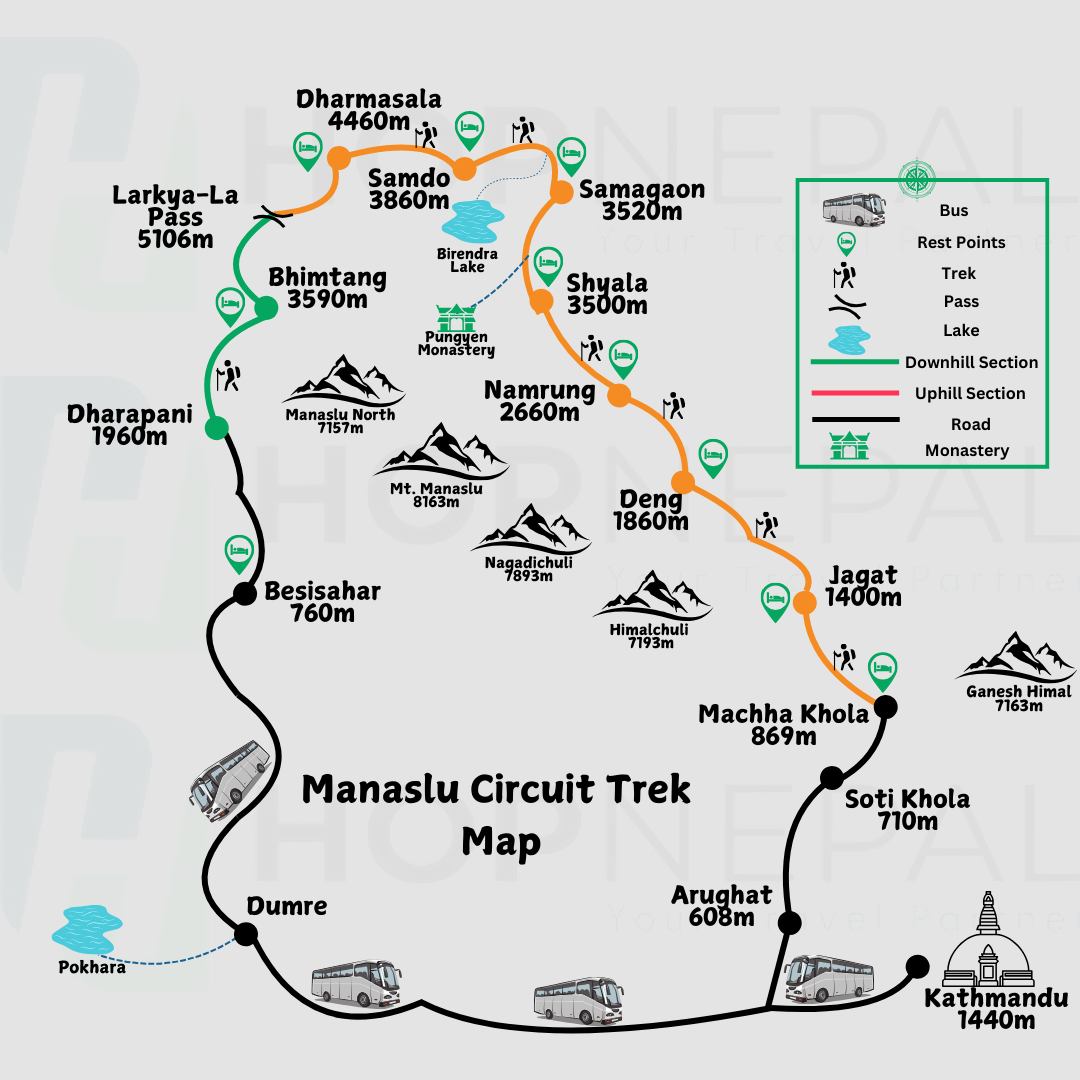
The first several days of trekking involve moderate altitude gain as you ascend from Machha Khola through increasingly high villages. The middle section gets a bit faster, but the important acclimatisation day at Samagaon (3,530m) allows crucial rest before reaching higher elevations.
This strategic rest day will give your body a chance to produce additional red blood cells and acclimatise to this lower oxygen level. The optional day hikes on this rest day to Manaslu Base Camp, Birendra Lake, and Pungyen Monastery are examples of the ‘climb high, sleep low’ strategy for acclimatisation and keeping the body active.
After Samagaon, the climb continues to Samdo (3,860m) and then Dharamsala (4,460m), with the final push to Larkya La Pass (5,160m) only after your body has had enough time to acclimatise. This considerate progression considerably reduces the risk of altitude sickness and improves summit success rates.
Remoteness and Experience
The remoteness of the Manaslu Circuit, though it poses the biggest challenge of the trek, is arguably its biggest draw. Beyond the initial few days of trekking, you are removed from the trappings of the modern age altogether. There are no roads, no vehicles, and no ATMs. Contact with the outside world is limited to weak and expensive internet access, assuming the former is available at all.
Disconnected from the trappings of modern conveniences, it creates a special atmosphere for digital detox and complete immersion in the present moment. The silence of the mountains, unmarred by the din of traffic or industrial noise, offers an opportunity for deep reflection and appreciation of nature's grandeur. The nighttime skies are free of pollution, continuing to offer spectacular displays of stars that are rarely appreciated.
Map for Manaslu Circuit Trek
TOP TREK MOMENTS
Highlights
- Scenic Drive from Kathmandu: Take a drive along the winding mountain roads through the rolling hillsides and villages on the way to the trek starting point from the capital.
- Trek Through Manaslu Conservation Area: Venture into the 1,663-square-kilometre wilderness area that is home to a variety of wildlife, including the snow leopard, red panda, and Himalayan tahr.
- Tibetan-Influenced Culture and Monasteries: Immerse yourself in authentic Tibetan Buddhist culture at ancient monasteries, mani walls, and villages lined with rows of prayer flags, all situated in the high Nubri Valley.
- Acclimatisation at Samagaon: Spend a vital rest day in a lovely village and choose from day hikes to the Manaslu Base Camp, Birendra Lake, or the historic Pungyen Monastery.
- Crossing Larkya La Pass: The most difficult section of the trek, at an altitude of 5,160 metres, offers an unparalleled sunrise view and a thrilling passage through diverse terrain.
- Panoramic Himalayan Views: Enjoy the close-up views of Mount Manaslu, Ganesh Himal, Himalchuli, and other mountains during the trek, with the most spectacular views from the top of Larkya La Pass.
DAY BY DAY
Detailed Itinerary
Day 1
Day 2
Day 3
Day 4
Day 5
Day 6
Day 7
Day 8
Day 9
Day 10
Day 11
Day 12
Day 13
ROUTE VISUAL
Google Map
ELEVATION PROFILE
Altitude Map
Highest point: Dharamsala / Larkya Phedi to Bimthang via Larkya La Pass (5160 m)
WHAT'S INCLUDED
Detailed Inclusions
- Ground Transportation
- Teahouse Accommodation
- Three Meals Per Day During Trekking
- Licensed Trekking Guide
- Manaslu Restricted Area Permit
- MCAP (Manaslu Conservation Area Permit)
- ACAP (Annapurna Conservation Area Permit)
- Insurance for Guides and Porters
- First Aid Kit
WHAT'S EXCLUDED
Detailed Exclusions
- International Airfare
- Nepal Visa Fees
- Travel Insurance
- Personal Trekking Equipment
- Hot Showers, Wi-Fi, and Charging
- Personal Expenses
- Tips for Guide and Porter
- Extra Meals
- Additional Accommodation
- Emergency Evacuation Costs
- Expenses Arising from Unforeseen Circumstances
ESSENTIAL TREK INFO
Good to Know
Permits
On the Manaslu Circuit, several permits are required due to the region's restricted nature and the presence of two conservation areas. Understanding the permit system will give you an appreciation for the rules in this unique region.
- Manaslu Restricted Area Permit (RAP): This is the primary permit required to visit the Manaslu region. The fee varies by season. It is $100 per person, valid for the first seven days, and $15 per day for September-November. The fee for December to August is $75 per person for the first 7 days, then $10 per day.
- Manaslu Conservation Area Permit (MCAP): The cost of this permit is approximately $30 per person and supports environmental conservation and development within the protected area.
- Annapurna Conservation Area Permit (ACAP): As the trek ends in the Annapurna Conservation Area, we also need an ACAP permit, costing about $30 per person.
- Minimum Two Trekkers Rule: It is compulsory to trek in groups of at least two people in the Manaslu region.
- Entry and Exit Checkpoints: Please note that your permits will be checked at several locations during your trek. Please ensure they are in a good and accessible state.
Guides and Porters
- Guide Mandatory Rule: The restricted area regulations require all trekkers to hire a guide.
- Porter Weight Limits: There are regulations that limit the weight each porter carries to 20-25 kg, distributed between two trekkers. This ensures the health and proper working conditions of the porters.
- Insurance and Safety: Reliable trekking companies offer adequate insurance for their guides and porters. This includes coverage for medical situations, emergency evacuations, and accidents.
- Ethical Considerations: It is rather challenging for guides and porters, especially at high altitudes and in difficult conditions, with insufficient facilities. So, it is important that you treat them well, provide them with sufficient clothing, especially when climbing, and never pressure or force them into any adverse situation.
Accommodation
- Teahouse System: The Manaslu Circuit follows the teahouse trekking model, where you sleep in lodges rather than under canvas. This model contributes to local economies and has a lower environmental impact than camping, while offering cultural interaction.
- Room Types: Most teahouses offer twin-sharing rooms with two single beds.
- Accommodation at altitude: The type of accommodation also decreases as altitude increases. The low-altitude lodges may have attached bathrooms with flushing toilets and showering facilities. The mid-altitude lodges may have shared squat toilets, while the high-altitude lodges above 4,000 metres may have only pit toilets.
- Heating: Most teahouses at higher altitudes have a central dining room with a yak-dung-fueled stove. Sleeping rooms are not heated.
- Electricity: Lower villages have electricity from hydropower or solar panels, but the supply is unreliable and often available only in the evening. At higher altitudes, power is generated entirely from solar power when available.
Food
- Typical Nepali and Western Meals: The food served in teahouses is surprisingly varied considering their remote location. Dal bhat is the regular Nepali meal accompanied by as much as you desire. Western dishes include pasta, pizza, fried rice, noodles, soups, pancakes, porridge, toast, and eggs. In remote, high-altitude areas, options are limited.
- Drinking Water Options: It is very important to avoid drinking untreated water at all times. There are reliable alternatives including boiling water, water purification tablets, water filter bottles, and/or UV sterilisation sets. It is important to stay hydrated when adjusting to the altitude.
- Vegetarian Availability: Vegetarian food is readily available on this trek. Nepal has a large Hindu population. Hence, vegetarian food is readily available everywhere.
- Food Safety Considerations: Stick to well-cooked food, avoid meat at high altitudes where refrigeration is unavailable, and choose reputable teahouses.
Fitness Requirement
- Physical Preparation Tips: The trek to the Manaslu Circuit requires good cardiovascular and strong leg muscles. Training should start at least 2 to 3 months before the intended trip date. This training should involve long-term hikes with a weighted backpack and cardiovascular training at least 4 to 5 times a week.
- Recommended Experience Level: The Manaslu Circuit is not a technically difficult trek, and no special mountaineering experience is required. However, the circuit is not advisable for first-time trekkers with no hiking experience.
- Age Consideration: There is no particular age consideration. Physical fitness is essential, and age is secondary. We successfully managed trekkers aged 12 to 75 who completed the circuit.
Insurance and Emergency Rescue
- Requirement for Travel Insurance: Travel insurance is essential. Your insurance has to cover up to 6,000 metres. Most insurance covers up to 4,000-5,000 metres. At 6,000 metres, helicopter evacuation is sometimes necessary. In addition, trip cancellation, interruptions, and stolen baggage must also be covered. The insurance also has to cover emergencies and hospitals. In addition, repatriation may be required.
- Helicopter Evacuation: In the event of serious altitude sickness, injury, or a medical emergency, helicopter evacuation may be required. Because rescue helicopters can usually access any point along the Manaslu Circuit in good weather, evacuation may be possible. However, helicopter evacuation is prohibitively expensive ($3,000 to $5,000+) and requires payment in advance.
- Acute Mountain Sickness Management: Acute Mountain Sickness is the biggest health problem on high-altitude treks, and the symptoms include headaches, nausea, dizziness, tiredness, and sleep problems.
- Emergency Communication: Satellite phones or emergency communication devices, such as SPOT or Garmin, are also useful for emergency communication. However, these are costly devices. The guide will include emergency communication equipment and established procedures.
Required Equipment
Adequate gear is necessary for safety, comfort, and enjoyment on the Manaslu Circuit Trek. Although you can buy or rent gear in Kathmandu, the quality is not consistent.
Clothing Layers:
- Base layers: Moisture-wicking thermal underwear
- Mid layers: Fleece jacket or insulated jacket for warmth
- Outer layer: Waterproof, breathable jacket and pants
- Insulation layer: Down jacket for high altitude and evenings
- Trekking pants: Lightweight, quick-drying, comfortable for long days
- Trekking shirts: Long-sleeve and short-sleeve moisture-wicking options
- Warm hat and sun hat
- Gloves: Liner gloves and warm insulated gloves or mittens
- Socks: Several pairs of moisture-wicking trekking socks
Trekking Boots: Buy good quality, well-broken-in trekking boots. They should be waterproof, provide strong ankle support, be worn in before the trek, be suitable for different terrains ranging from jungle to snow, and be properly fitted to accommodate thick socks. Camp shoes should be carried for evening wear.
Sleeping Bag: The essential gear, as teahouses do not provide sleeping accommodations you'd care to use without your own sleeping bag. Select one rated for -10°C to -15°C for spring and autumn hikes, or -20°C for winter. Down-filled bags offer the best warmth-to-weight ratio but do not insulate when wet. Synthetic bags are more effective when wet but are heavier.
Trekking Poles: These are highly recommended, especially for the support they provide to the knees during descents. Trekking poles help reduce knee strain by up to 25% and improve balance while walking on uneven terrain.
Additional Essential Equipment:
- Headlamp with extra batteries
- Sunglasses with UV protection
- Sunscreen and lip balm with SPF
- Water bottles or hydration system
- Daypack for items needed during trekking days
- Basic first aid kit with personal medications
- Toiletries and quick-dry towel
- Camera with extra batteries and memory cards
- Power bank for charging devices
- Altitude sickness medication
- Water purification method
Packing List
Essential Clothing:
- Thermal base layers
- Fleece or insulated mid-layer jacket
- Down jacket
- Waterproof jacket and pants
- Trekking pants
- Trekking shorts
- Long-sleeve and short-sleeve shirts
- Warm hat and sun hat
- Neck gaiter or balaclava
- Liner gloves and insulated gloves or mittens
- Trekking socks
- Underwear
- Sports bras
- Camp shoes or sandals
Toiletries:
- Toothbrush and toothpaste
- Biodegradable soap
- Quick-dry towel
- Wet wipes or hand sanitiser
- Toilet paper
- Feminine hygiene products
- Sunscreen and lip balm
- Moisturizer
- Small mirror
- Nail clippers
- Prescription medications
First Aid:
- Blister treatment
- Pain relievers
- Altitude sickness medication
- Antibiotic ointment
- Bandages and gauze
- Elastic bandage for sprains
- Anti-diarrheal medication
- Rehydration salts
- Personal prescription medications
- Anti-nausea medication
Documents:
- Passport
- Nepal visa
- Travel insurance documents
- Passport photos
- Emergency contact information
- Digital copies of all important documents
- Cash
- Credit card
Electronics and Accessories:
- Camera with extra batteries and memory cards
- Smartphone
- Headlamp with extra batteries
- Power bank
- Charging cables
- Universal adapter
- Waterproof bags or dry sacks for electronics
COMMON QUESTIONS
FAQ
Q 1
Q 2
Q 3
Q 4
Q 5
Q 6
Q 7
Q 8
Q 9
Q 10
Q 11
Q 12
Q 13
Q 14
Q 15
Q 16
Q 17
Q 18
Q 19
Q 20
Q 21
Q 22
Q 23
Q 24
Q 25
Q 26
Q 27
Q 28
Q 29
Q 30
Q 31
Q 32
Q 33
Q 34
Q 35