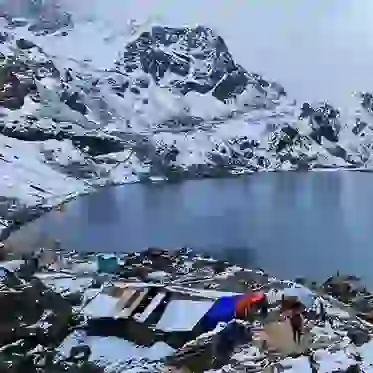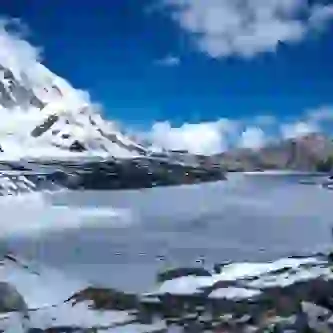
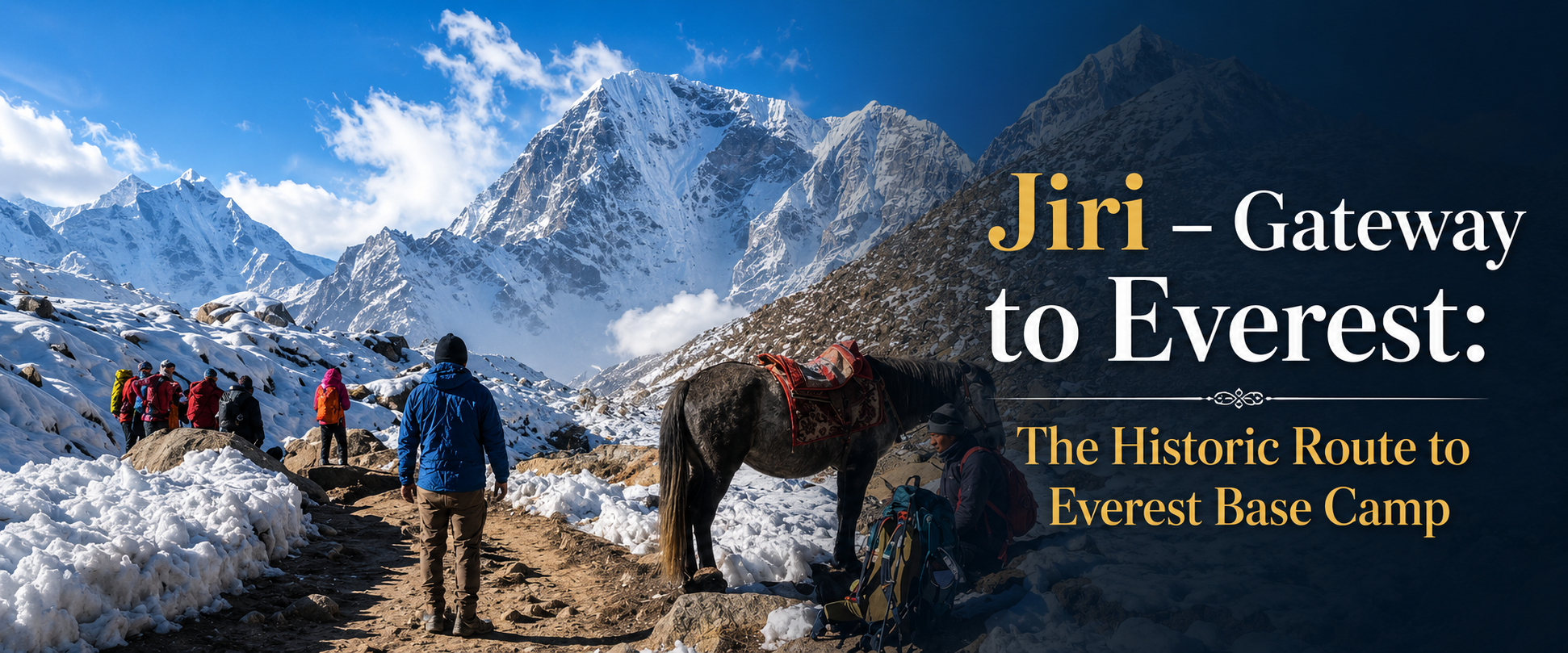
Long before flights to Lukla became the standard starting point for an Everest trek, the Jiri to Everest Base Camp trek formed part of the classic approach into Nepal’s Everest region. Trekkers, mountaineers, expedition teams and porters travelled for days across Nepal’s middle hills before entering the high mountains of the Khumbu.
One of the most important places on this old approach was Jiri, a beautiful hill town in Dolakha District. Because of its connection with the traditional route towards Mount Everest, Jiri became widely known as the Gateway to Everest.
Today, most travellers fly from Kathmandu to Lukla and begin trekking from there. However, the journey to Everest via Jiri remains the classic way to access the region. Instead of suddenly arriving in the mountains, travellers move gradually from green hills and farming villages to forests, Sherpa settlements and eventually the dramatic landscapes surrounding Mount Everest.
For those interested in Nepal’s trekking history, rural culture and a longer Himalayan adventure, the Jiri to Everest route tells a story that the shorter Lukla journey cannot fully recreate.
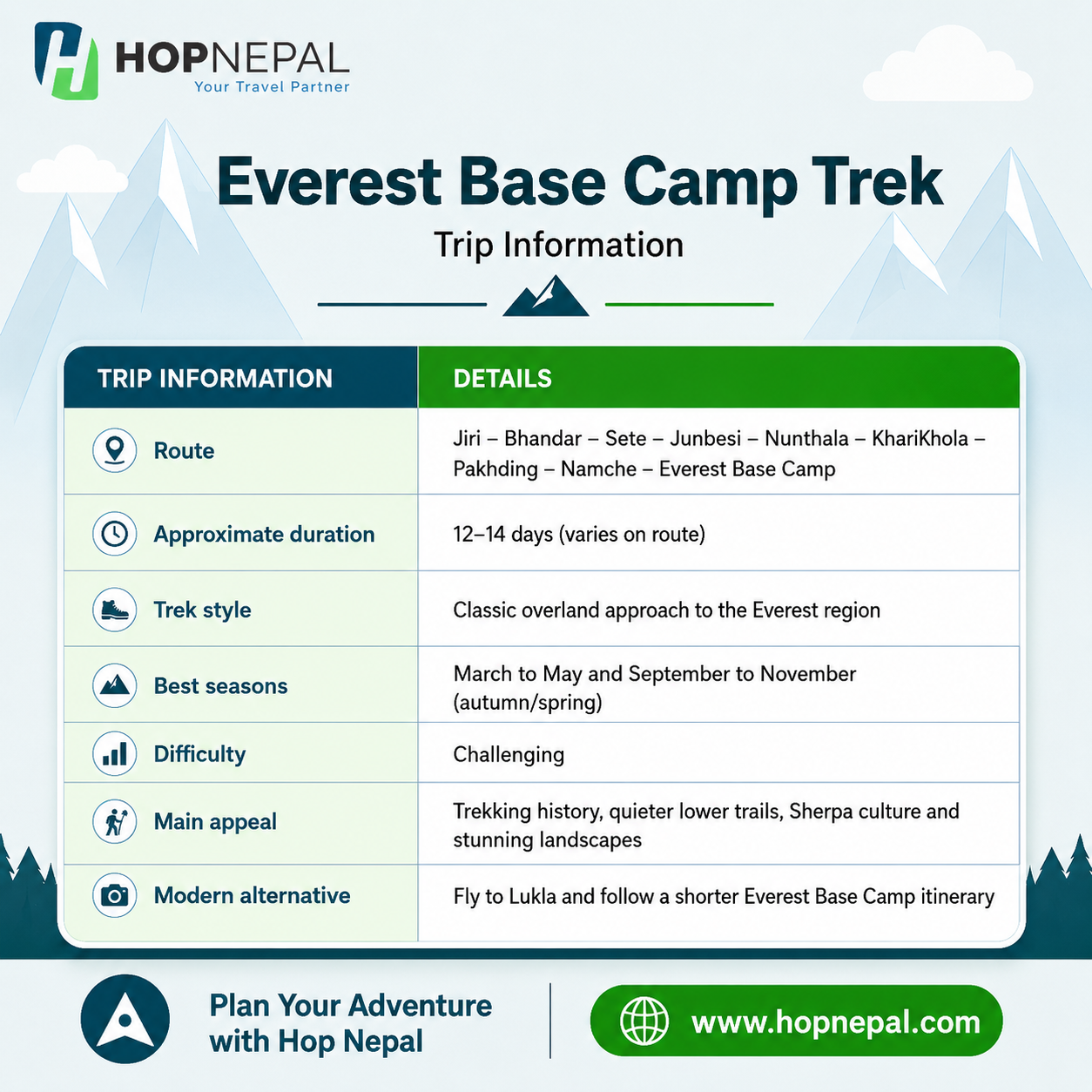
Jiri to Everest Base Camp Trek at a Glance
Why Is Jiri Called the Gateway to Everest?
Jiri’s connection with Everest goes back to the early days of Himalayan exploration. Before Lukla Airport became the main entry point to the Everest region, expedition teams had to approach the Himalayas overland. They travelled east from Kathmandu and then continued on foot through the hills towards Solukhumbu.
The historic approach passed through the wider Jiri region before continuing towards settlements such as Bhandar, Junbesi, Nunthala and other villages on the way towards what is now the main Everest trekking trail.
This route became especially famous because the early Mount Everest expeditions followed the long approach through Nepal’s hills. The 1953 British Everest expedition, during which Sir Edmund Hillary and Tenzing Norgay Sherpa made the first confirmed ascent of Mount Everest, followed this broader traditional approach to the mountain.
For this reason, Jiri became more than a stopping point. It became associated with the beginning of the journey to Everest. Even though Lukla now handles most trekkers, Jiri remains the historic Gateway to Everest.
How Did People Travel to Everest Through Jiri?
Travelling to Everest through Jiri was very different from the modern trekking experience. There was no short flight placing trekkers directly near the high mountains. The journey began much lower and required travellers to cross a series of hills and valleys before gradually reaching the Everest region.
Today, travellers can reach Jiri from Kathmandu by road before beginning the trek eastwards. Historically, early Everest expedition teams approached the region on foot from Kathmandu, passing through the wider Jiri route on their way towards the Khumbu.
A traditional route could broadly follow:
Kathmandu - Jiri - Bhandar - Sete - Junbesi - Nunthala - Kharikhola - Surke/Lukla area - Phakding - Namche Bazaar - Tengboche - Dingboche - Lobuche - Gorak Shep - Everest Base Camp
Routes and overnight stops can vary depending on road access, itinerary, trekking pace and the operator arranging the journey. The important difference is that travellers starting from Jiri spend several additional days walking through the lower hills before joining the Everest trail used by trekkers arriving from Lukla.
The Journey Begins in Jiri
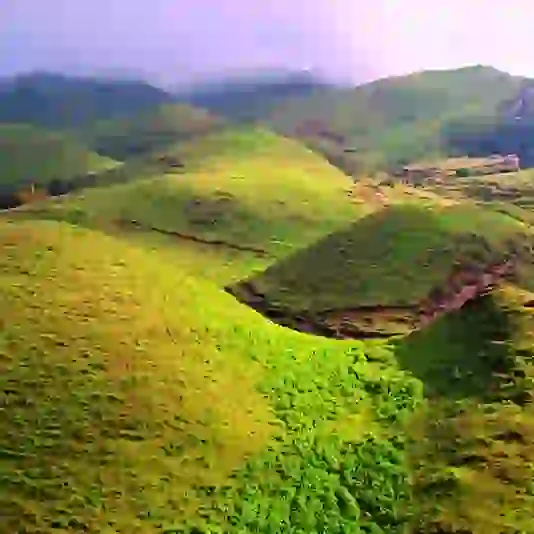
Jiri lies in the green hill country of Dolakha, very different from the rocky, glaciated landscapes that visitors eventually encounter near Everest Base Camp.
The journey begins among forests, terraced farmland, rivers, traditional villages and rolling ridges. This gradual transition is one of the strongest reasons for choosing the classic Everest route.
Instead of seeing only the famous high-altitude section of the trek, travellers experience how Nepal’s geography changes step by step.
The green middle hills slowly give way to higher settlements. Temperatures become cooler. Forests change. Mountain views become increasingly dramatic, and eventually the trail enters the heart of the Khumbu.
For travellers following the Jiri route, Everest feels like a destination they have genuinely travelled towards rather than a place they have quickly flown into.
Jiri to Bhandar
From Jiri, the traditional trail leads through the hills towards Bhandar, one of the early settlements along the classic route. The lower section of the trek involves frequent ascents and descents. Although the elevations are lower than Everest Base Camp, the terrain should not be underestimated.
Trekkers walk through rural communities, forested slopes, and agricultural areas, gaining an early introduction to the rhythm of long-distance trekking in Nepal. Unlike the busier trail after Lukla, this section generally provides more opportunities to experience everyday village life.
Bhandar to Sete and the Lower Hills
Continuing eastwards, trekkers move through valleys and villages towards Sete.
The route repeatedly climbs and descends across Nepal’s middle hills. These sections can be physically demanding because a typical day may involve climbing to a ridge and then descending into another valley. However, this is also what makes the Jiri route unique.
Rather than simply gaining elevation every day, travellers cross entire landscapes. Tea houses, farms, suspension bridges, forests and small settlements become part of the journey.
Crossing Towards Junbesi
One of the most memorable parts of the traditional route is the journey towards Junbesi. Junbesi is an important Sherpa settlement in the lower Solu region and provides travellers with a deeper introduction to Sherpa culture before reaching the heavily visited Khumbu.
The surrounding area features monasteries, traditional houses, farmland and mountain scenery. For early Everest expeditions, settlements such as these were not tourist attractions. They were part of the long journey towards the mountain.
Walking through them today allows trekkers to understand how communities along the route were connected with the growth of Himalayan trekking and mountaineering.
From Junbesi Towards Nunthala
From Junbesi, the trail continues across more hills and valleys towards areas such as Nunthala. This section offers changing views and, in favourable weather, the journey begins to feel increasingly connected with the high Himalayas.
Travellers continue through settlements that receive far fewer visitors than Namche Bazaar, Tengboche or other well-known places in the upper Everest region. The quieter atmosphere is one reason some trekkers still choose the old route.
Continuing Towards Kharikhola and Lukla
The classic trail eventually continues towards Kharikhola and the lower areas below Lukla. Once trekkers reach the Surke or Lukla area, they begin to connect with the route followed by travellers arriving by air.
From this point onwards, the journey becomes much more familiar.
The trail continues towards:
Phakding - Namche Bazaar - Tengboche - Dingboche - Lobuche - Gorak Shep - Everest Base Camp. This means that a trek beginning from Jiri essentially adds the historic lower approach to the standard Everest Base Camp journey.
Joining the Main Everest Trail
After reaching the Lukla area, trekkers continue towards Phakding, following the Dudh Koshi River and crossing several suspension bridges. Beyond Phakding, the trail enters the National Park before climbing towards Namche Bazaar, one of the most important towns in the Everest region.
Namche marks a major transition in the trek. The landscapes become increasingly alpine, mountain views become more dramatic, and trekkers begin spending time at elevations where acclimatisation becomes essential.
From Namche, the route proceeds towards Tengboche, Dingboche, Lobuche and finally Gorak Shep. Everest Base Camp is then reached from Gorak Shep, while many trekkers also hike to Kala Patthar for panoramic views of Mount Everest and the surrounding peaks.
Why Was the Jiri Route Important for Early Everest Expeditions?
Early Everest expeditions involved enormous logistical operations.
Teams needed food, climbing equipment, tents, communication materials and other supplies. These had to be transported towards the mountain with the support of porters and local communities. The approach journey itself could take many days.
As expedition teams travelled through Nepal’s hills, places along the route became important staging points between Kathmandu and the Everest region. Jiri became particularly well known as one of the major access points to this historic approach.
The long journey also explains why older Everest expeditions had such a different relationship with the landscape. They did not simply arrive at the foot of the Himalayas. They crossed Nepal to reach them.
How Did Lukla Change the Everest Journey?
The development of air access to Lukla completely changed trekking and mountaineering in the Everest region. Travellers could now avoid many days of walking through the lower hills.
Instead of beginning from Jiri, trekkers could fly from Kathmandu to Lukla and start walking almost immediately towards Phakding and Namche Bazaar. The shorter itinerary made Everest Base Camp accessible to far more international visitors. As a result, the Lukla route gradually became the standard Everest trekking itinerary.
Today, trekkers can complete a typical Everest Base Camp trek in around two weeks, whereas following the longer historical approach requires significantly more time. Jiri therefore lost its role as the main practical gateway, but it never lost its historical importance.
Jiri Route vs Lukla Route
For modern trekkers, choosing between Jiri and Lukla largely depends on time and the type of experience they want.
Starting From Lukla
The Lukla route is ideal for travellers who have limited time. A flight takes trekkers directly into the Everest region, after which they begin the familiar route towards Namche Bazaar and Everest Base Camp. It is faster, more convenient and remains the most popular option.
Starting From Jiri
The Jiri route suits travellers who want a longer and more immersive journey.
It offers:
- More days of trekking
- Quieter lower trails
- Traditional villages
- Changing landscapes
- A historical connection with early Everest expeditions
- Deeper exposure to rural Nepal
- A gradual journey towards the high Himalayas
The Jiri route should therefore not be viewed simply as a longer route to Everest. It is a different trekking experience altogether.
Is the Jiri to Everest Route Still Possible Today?
Yes. Trekkers can still approach the Everest region via the traditional lower route, although road development has altered some of the original starting points and trekking routes.
Depending on the itinerary, travellers may begin directly from Jiri or travel further by road before joining sections of the historic trail.
Hop Nepal trekking note: Road development has changed how trekkers approach the historic trail. Depending on road conditions and the chosen itinerary, the walking start may be in Jiri or farther east. Confirm the current trailhead, transport plan and Everest Base Camp permit requirements before booking.
How Long Does Jiri to Everest Base Camp Take?
The total duration depends on the starting point, acclimatisation days, side trips and return route. In general, a Jiri-to-Everest Base Camp trek may take around three weeks or more.
By comparison, the standard Lukla-to-Everest Base Camp itinerary typically takes 12–14 days.
Travellers following the Jiri route should therefore plan the trek because they want the full journey, not simply because they want another way of reaching Everest Base Camp.
Best Time for the Jiri to Everest Trek
The most popular seasons are generally spring and autumn.
March to May
Spring offers relatively comfortable trekking temperatures, colourful vegetation in the lower hills and good opportunities for Himalayan views.
Rhododendron forests can make the lower sections especially beautiful.
September to November
Autumn is another excellent season.
After the summer monsoon, conditions are generally clearer and the visibility of the Himalayan ranges can be excellent.
For a fuller month-by-month comparison, see Hop Nepal’s guide to the best time for the Everest Base Camp trek.
Winter
The lower Jiri region can still be explored during winter, but conditions become much colder as trekkers travel towards Everest.
Monsoon
The lower hills become extremely green during the monsoon, but rain, muddy trails, clouds, landslides and transport disruption can make a long trek more challenging.
Walking in the Footsteps of Everest History
Modern trekking has made reaching Everest faster than ever. Flights, improved trails, lodges and communication have transformed the way we approach Everest. But the historic route through Jiri reminds us that Everest was once approached very differently.
Expedition teams travelled slowly across Nepal’s hills. Porters carried equipment over mountain passes. Villages along the route became part of the expedition, and the transition from Kathmandu to the world’s highest mountains unfolded over many days.
Following the Jiri route today offers a glimpse into that earlier era. You may ultimately reach the same Everest Base Camp visited by thousands of trekkers each year, but the story of how you arrive there is completely different.
Final Thoughts: Why Jiri Remains the Historic Gateway to Everest
Jiri may no longer be the busiest gateway to Mount Everest, but its place in Nepal’s mountaineering history remains significant. The rise of Lukla transformed the Everest trekking industry by shortening the approach, yet the classic Jiri-to-Everest route still offers one of the most complete Himalayan journeys available in Nepal.
Travellers pass through green hills, farms, forests, traditional settlements and Sherpa communities before gradually entering the dramatic landscapes of the Khumbu. The route connects the history of early Everest exploration with the experience of modern trekking.
For travellers who have enough time and want to discover more than just Everest Base Camp, starting the journey in Jiri can turn an already extraordinary trek into a journey through the history, landscapes, and communities that have helped shape Nepal’s relationship with the world’s highest mountain.
Frequently Asked Questions
Why is Jiri called the Gateway to Everest?
Jiri is known as the historic Gateway to Everest because it was an important point on the traditional overland route to the Everest region. Before flights to Lukla became common, mountaineers, trekkers and expedition teams travelled through Jiri and the lower Solu region on their way towards Mount Everest.
Can you still trek to Everest Base Camp through Jiri?
Yes. It is still possible to trek towards Everest Base Camp through Jiri, although fewer travellers choose this route today. The journey passes through the lower hills and villages of the Solu region before eventually joining the main Everest trail around the Lukla area.
What is the traditional route from Jiri to Everest Base Camp?
A classic route broadly follows Jiri, Bhandar, Sete, Junbesi, Nunthala, Kharikhola and the Surke/Lukla area before continuing towards Phakding, Namche Bazaar, Tengboche, Dingboche, Lobuche, Gorak Shep and Everest Base Camp. The exact itinerary may vary depending on current road access and the trekking plan.
How long does the Jiri to Everest Base Camp trek take?
The complete journey generally requires around three weeks or more, depending on the starting point, trekking pace, acclimatisation schedule, side trips and return route. It is considerably longer than the standard Everest Base Camp trek that begins in Lukla.
Is Jiri still the main gateway to Mount Everest?
No. Lukla is now the main gateway for most Everest trekkers because flights allow travellers to reach the region much faster. Jiri is better described as the historic or classic gateway to Everest because of its importance during the early years of Everest exploration and trekking.
Did Edmund Hillary and Tenzing Norgay travel through the Jiri route?
The historic approach through Nepal’s lower hills formed part of the route used by early Everest expeditions, including the 1953 expedition during which Tenzing Norgay Sherpa and Sir Edmund Hillary made the first confirmed ascent of Mount Everest. This history is an important reason Jiri became closely associated with the journey to Everest.
Why should trekkers choose Jiri instead of Lukla?
The Jiri route is ideal for travellers who want a longer and more immersive trekking experience. It offers quieter trails, traditional villages, forests, farmland, Sherpa culture and a gradual transition from Nepal’s middle hills into the high Himalayas. Lukla is more suitable for travellers with limited time.
Is the Jiri-to-Everest trek difficult?
Yes. The route can be physically demanding because trekkers cross numerous hills and valleys before even reaching the main Everest trail. There are frequent ascents and descents, followed later by the high-altitude challenges of the Everest region. Good fitness and proper preparation are recommended. Read Hop Nepal’s Everest Base Camp trek difficulty guide for more detail on terrain, daily walking and altitude.
Does starting from Jiri help with altitude acclimatisation?
Starting from a lower elevation gives trekkers more time before reaching the high-altitude areas of the Khumbu. However, it does not remove the risk of altitude sickness. Proper acclimatisation days and a gradual ascent remain necessary once trekkers reach higher elevations.
How do you reach Jiri from Kathmandu?
Jiri can be reached from Kathmandu by road. Travellers can use a local bus, shared vehicle or private transport. Travel time can vary considerably depending on traffic, road conditions, weather and the type of vehicle used.
Where is Jiri located in Nepal?
Jiri is located in Dolakha District of Bagmati Province, east of Kathmandu. It lies in Nepal’s green middle hills and is historically connected to the traditional trekking route to the Everest region.
Why is Jiri called the Switzerland of Nepal?
Jiri is sometimes called the Switzerland of Nepal because of its green hills, valleys, cool climate and scenic rural landscapes. The region also has historical links with Swiss-supported development projects, which further strengthened the association.