
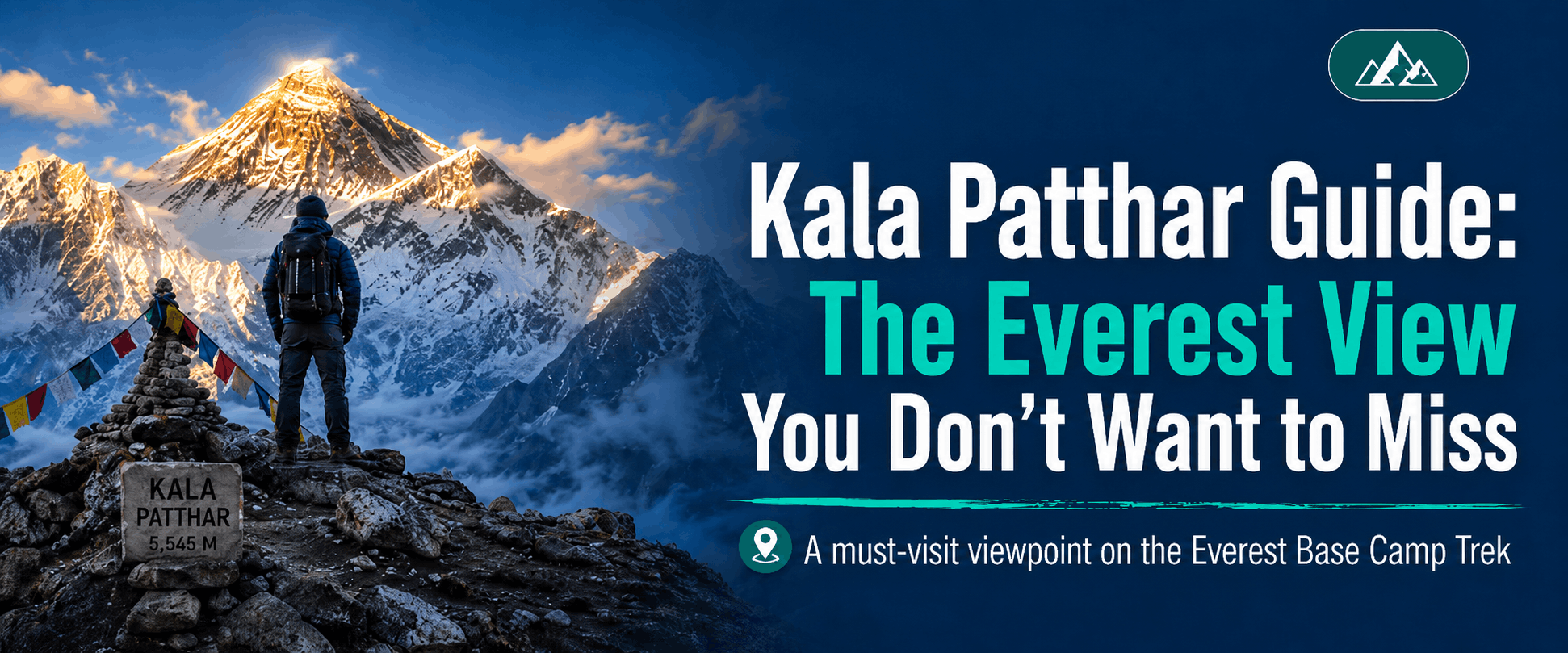
Kala Patthar is one of the most famous viewpoints in the Everest region of Nepal. For many trekkers, it is the place where Mount Everest finally appears in its most powerful and unforgettable form during the Everest Base Camp Trek .
Many travellers dream of reaching Everest Base Camp, but they are often surprised to learn that the clearest view of Everest is not from Base Camp itself. The summit of Everest is partly blocked from the base camp area by surrounding mountains. Kala Patthar offers trekkers a more expansive and dramatic view of Mount Everest, Nuptse, Lhotse, Pumori, and the Khumbu Glacier.
That is why Kala Patthar is more than just a side hike. It is one of the biggest highlights of the Everest Base Camp Trek. If you want the classic Everest view that stays in your memory forever, Kala Patthar is the viewpoint you do not want to miss.
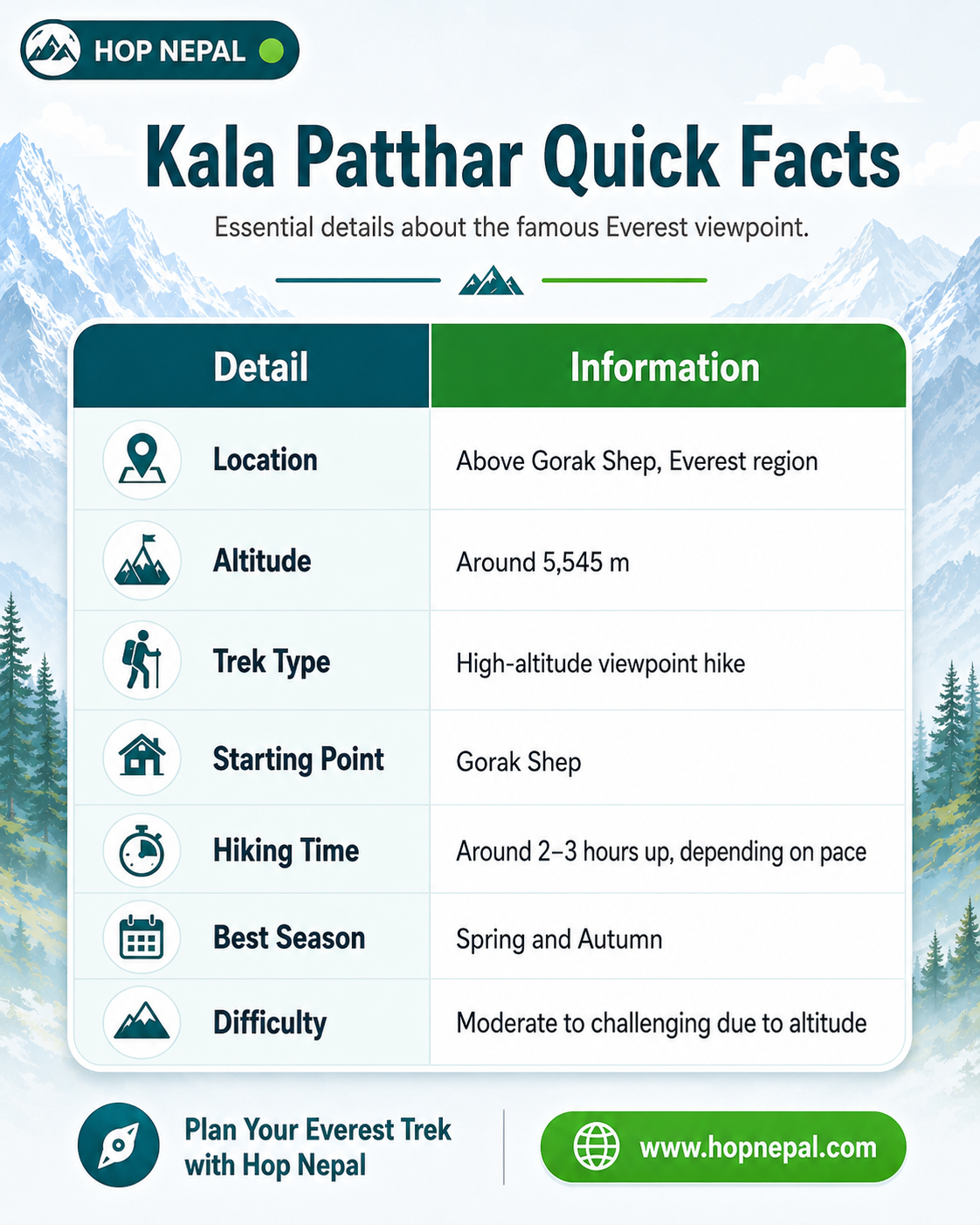
Kala Patthar Quick Facts
What is Kala Patthar?
Kala Patthar, also written as Kalapatthar, means “black rock” in Nepali. It is a rocky viewpoint located above Gorak Shep in the Everest region. Trekkers usually hike to Kala Patthar during the final part of the Everest Base Camp Trek.
Kala Patthar is not a technical climbing peak. It does not require mountaineering skills, ropes or climbing equipment. However, it is a high-altitude hike, so it can feel very challenging, especially since trekkers are already tired after several days of walking.
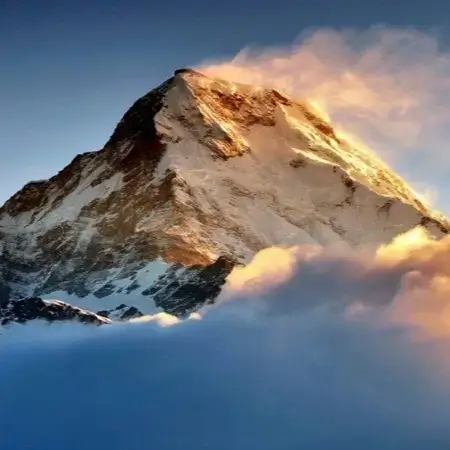
The main reason people hike to Kala Patthar is the view. From the top or higher viewpoints of Kala Patthar, trekkers can enjoy one of the best ground-level views of Mount Everest.
Why is Kala Patthar so Famous?
Kala Patthar is famous for offering one of the clearest and most complete views of Mount Everest along the trekking route. While Everest Base Camp is an important destination, it does not always offer the best view of Everest’s summit.
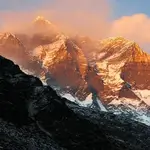
From Kala Patthar, the view opens beautifully. Trekkers can see Everest rising behind Nuptse, with Lhotse, Pumori, Changtse and other Himalayan giants around the skyline. The Khumbu Glacier and surrounding rocky landscapes also make the view more dramatic.
For photographers, trekkers and mountain lovers, Kala Patthar is one of the most rewarding places in the Everest region. Many people consider it the real visual climax of the Everest Base Camp Trek.
Where is Kala Patthar Located?
Kala Patthar is located near Gorak Shep in the Everest region of Nepal. Gorak Shep is the last main overnight stop for trekkers heading to Everest Base Camp and Kala Patthar.
Most trekkers reach Gorak Shep after walking from Lobuche. From Gorak Shep, they usually visit Everest Base Camp and then hike to Kala Patthar either early the next morning or late in the afternoon, depending on weather, fitness, and itinerary.
Kala Patthar is part of the classic Everest Base Camp Trek and lies within the Sagarmatha National Park.
Kala Patthar Altitude
Kala Patthar is commonly listed at around 5,545 metres above sea level. Some sources mention higher points on the ridge at around 5,643-5,644 metres, depending on the exact point trekkers reach.
Many trekking itineraries describe Kala Patthar as a high-altitude viewpoint. At this height, the air is thin, walking becomes slower, and even a short climb can feel demanding. Trekkers should not rush and should always listen to their guide.
How to Reach Kala Patthar?
The most common way to reach Kala Patthar is through the Everest Base Camp route. The journey usually begins with a flight to Lukla, followed by trekking days through Phakding, Namche Bazaar, Tengboche, Dingboche and Gorak Shep. For a complete day-by-day plan, read our Everest Base Camp Trek Itinerary.
A common route looks like this:
- Kathmandu or Ramechhap to Lukla
- Lukla to Phakding
- Phakding to Namche Bazaar
- Namche Bazaar to Tengboche
- Dingboche to Lobuche
- Lobuche to Gorak Shep
- Gorak Shep to Everest Base Camp
- Gorak Shep to Kala Patthar
- Return trek to Lukla
The Kala Patthar hike usually starts from Gorak Shep. The trail is short but steep and tiring due to the high altitude. Many trekkers take around 2 to 3 hours to reach the top or the main viewpoint, depending on their pace and condition.
Kala Patthar vs Everest Base Camp
Everest Base Camp and Kala Patthar are both important, but they offer different experiences.
Everest Base Camp is special because it takes you to the foot of the world’s highest mountain. It is a dream destination for trekkers and a symbolic place connected with Everest expeditions.
Kala Patthar is special because it gives you the best view of Everest. From Everest Base Camp, the view of the summit is limited by nearby mountains. From Kala Patthar, the view is more open and visually powerful.
In simple words, Everest Base Camp is the destination, but Kala Patthar is the viewpoint. If you want to stand where Everest expeditions begin, go to Base Camp. If you want the best Everest photo and panorama, hike to Kala Patthar.
Best Time to Visit Kala Patthar
Spring, from March to May, is one of the most popular seasons for the Everest region. The weather is usually more stable, the days are longer, and the trail becomes active with trekkers and climbers heading toward Everest Base Camp. For more details on seasonal planning, check our guide to the Best Time for Everest Base Camp Trek.
Autumn, from September to November, is another excellent season. The sky is often clearer after the monsoon, and the mountain views can be very sharp. This is one of the best times for photography and panoramic views.
Winter can also offer clear views, but temperatures are extremely cold, especially in the morning and at higher altitudes. It can make walking difficult for trekkers due to extreme cold and snow.
The monsoon is generally not ideal because of clouds, rain, flight delays, and poor visibility. During the monsoon, roads may be blocked by landslides, and views are often obscured.
The best time to visit Kala Patthar is during spring and autumn.
How Difficult is the Kala Patthar Hike?
The Kala Patthar hike is short but physically demanding. The trail is steep, rocky and exposed in some sections. The biggest challenge is not the distance but the altitude.
By the time trekkers reach Gorak Shep, they have already walked for many days and are sleeping above 5,000 metres. At this altitude, oxygen levels are lower, the body tires more easily, and every step can feel heavier.
Trekkers with good fitness and proper acclimatisation can complete the hike, but they should walk slowly and avoid rushing. Warm layers, good shoes, gloves and wind protection are important, so review our Nepal Trekking Packing List before starting the trek.
Altitude Sickness and Safety Measures
Altitude sickness is a significant concern during the Everest Base Camp Trek and the Kala Patthar hike. Since Kala Patthar is above 5,500 metres, trekkers should take safety seriously. For more preparation advice, read our Altitude Sickness Guide.
Here are the safety tips you need to follow:
- Walk slowly and maintain a steady pace.
- Do not skip acclimatisation days.
- Drink enough water throughout the day.
- Avoid alcohol and smoking during the trek.
- Eat properly, even if your appetite is low.
- Inform your guide immediately if you feel unwell.
- Do not push to the top if symptoms worsen.
- Wear warm layers, gloves and a windproof jacket.
- Follow your guide’s advice about weather, timing and altitude conditions.
Some trekkers may carry altitude-related medicines after consulting a doctor before the trip. However, medicine should not be used as a reason to rush the trek or ignore symptoms. The safest response to worsening altitude sickness is to stop ascending and, when needed, descend to a lower altitude.
Permits Required for Kala Patthar
Since Kala Patthar is part of the Everest Base Camp Trek route, trekkers need the required permits for the Everest region. These commonly include the Sagarmatha National Park Entry Permit and the Khumbu Pasang Lhamu Rural Municipality Entry Permit.
Permit rules, fees and requirements can change, so travellers should confirm the latest information before starting the trek. You can also review our Everest Base Camp Trek Cost guide for broader budget planning. Hop Nepal can help with updated permit guidance, route planning and trekking arrangements.
Final Remarks
Kala Patthar is one of the most important viewpoints in Nepal’s Everest region. While Everest Base Camp gives you the feeling of reaching a world-famous destination, Kala Patthar offers the view that completes the journey.
The hike is challenging because of the altitude, cold, and fatigue, but the reward is one of the best views of Mount Everest. If you are planning the Everest Base Camp Trek, you should not miss Kala Patthar unless health or weather conditions make it unsafe.
With proper acclimatisation, the right gear, a good guide and careful planning, Kala Patthar can become one of the most unforgettable parts of your Nepal trekking journey.
Book Everest Base Camp and Kala Patthar Trek With Hop Nepal
Hop Nepal can help you plan your Everest Base Camp and Kala Patthar Trek with proper guidance, route planning, permit support, guide arrangement, accommodation coordination and complete trekking assistance.
Whether you are a first-time trekker or an experienced mountain lover, our team can help you prepare for the journey safely and confidently. Contact Hop Nepal to plan your Everest Base Camp Trek and experience an unforgettable view of Everest from Kala Patthar.
FAQs
Is Kala Patthar Harder Than Everest Base Camp?
Kala Patthar can feel harder than Everest Base Camp because it involves a steep climb at very high altitude. The trail is shorter, but the altitude makes it challenging.
Is Kala Patthar Suitable for Beginners?
Kala Patthar can be suitable for fit beginners with proper training, acclimatisation and guidance. However, it is not an easy hike and should be taken seriously.
Do I Need a Guide for Kala Patthar?
Yes, a guide is highly recommended for the Kala Patthar trek for route safety, altitude monitoring, weather decisions, and overall trekking support.
Is Wi-Fi and Mobile Network Available During the Kala Patthar Trek?
Yes, Wi-Fi and mobile networks are available during the Everest Base Camp and Kala Patthar Trek, but connectivity becomes slower as you reach higher elevations.