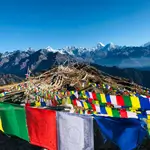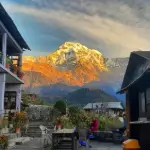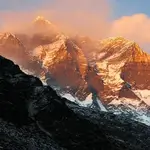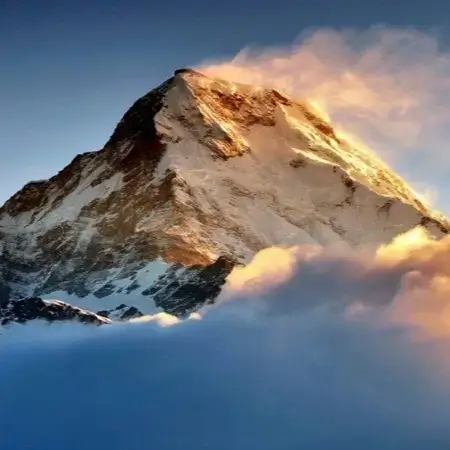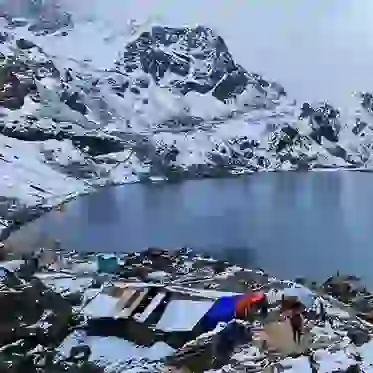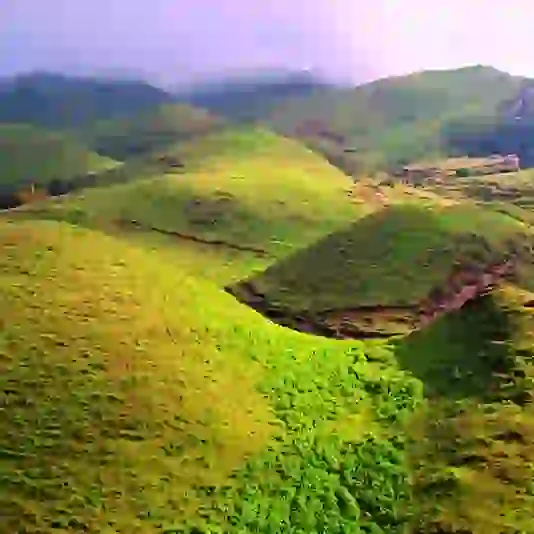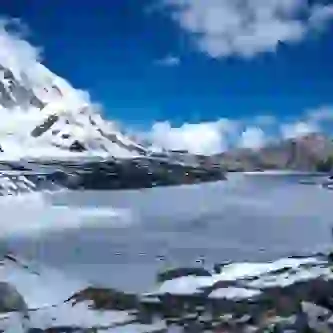
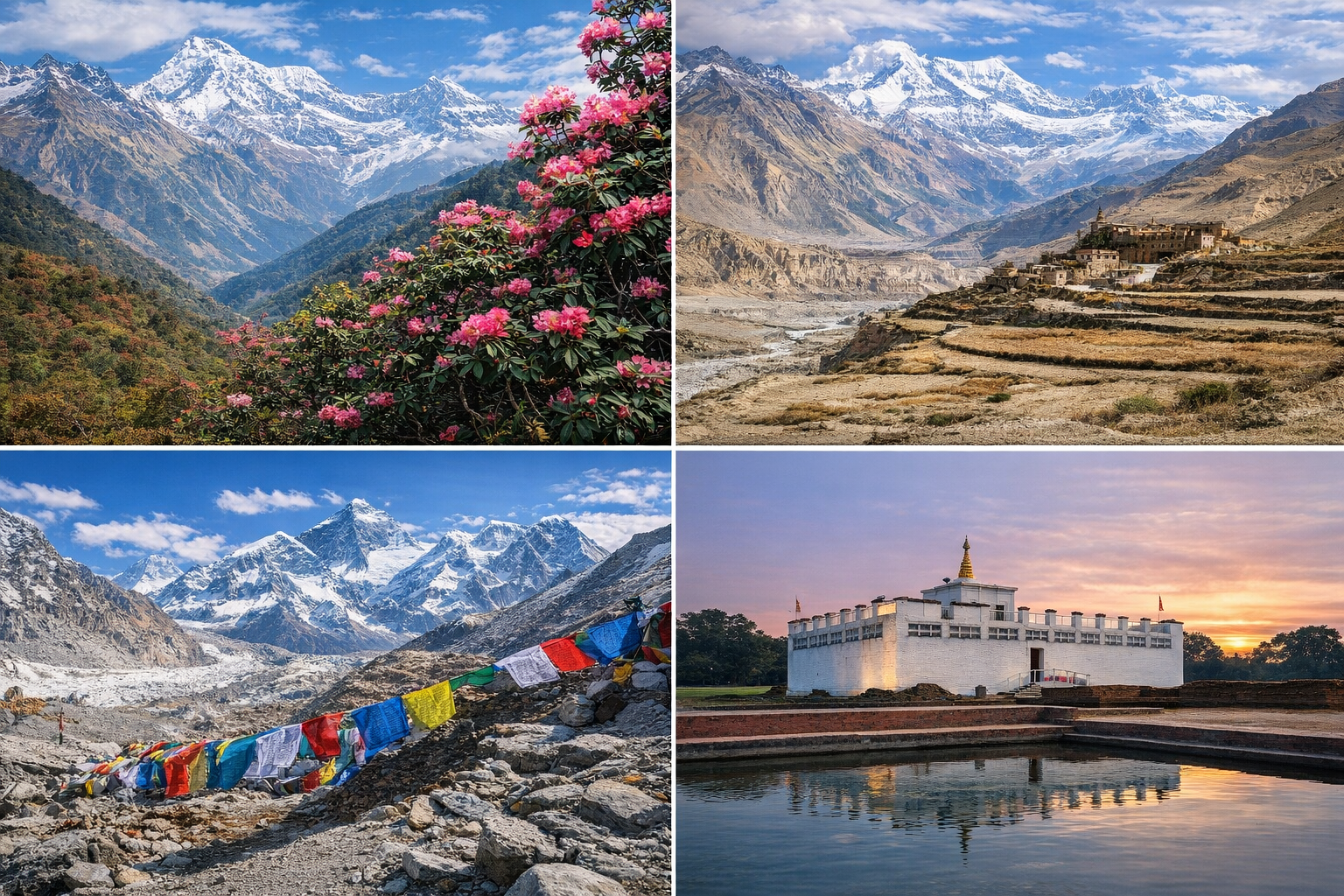
Weather-wise, October and November are probably ideal for most tourists, offering the crystal-clear Himalayas and temperatures ranging from 10 to 20 degrees Celsius. Yet, Nepal is one of those destinations that can be visited at different times to experience varying aspects: spring to witness rhododendrons growing along the mountain trails, monsoon to experience green valley scenery, and winter for quiet, empty temples and mountain treks.
Each season offers opportunities in Nepal. If your travel destination is the popular Annapurna Circuit, the UNESCO World Heritage Sites of Kathmandu, the Bengal tigers of Chitwan National Park, or the paragliding adventures of the beautiful lakes of Pokhara, understanding the weather of Nepal will ensure your visit is the absolute best the country has to offer.
Quick Summary:
- Best Overall Months: October & November
- Best for Budget: June-August
- Best for Festivals: September-November
- Worst Months: Late June-August
- Peak Tourist Season: October-November, March-April
Understanding Nepal's Seasons
There are four major seasons in Nepal, each with a significant impact on the travel climate and conditions, which vary across the diverse geography from the tropical Terai at an elevation of only 60 meters to the high mountain regions above 5,000 meters.
Nepal Weather by Season
Spring (March to May): The spring season in Nepal is the most vibrant of the year, as rhododendron forests bloom on mid-mountain treks across various parts of the country. Temperatures range from 15-25°C in areas around Kathmandu and Pokhara Valleys, making sightseeing an absolute delight. The season is quite good for Everest Base Camp and Annapurna treks in March and April, though the heat starts to rise in May before the onset of pre-monsoon rain in June.
Summer / Monsoon (June to August): The Nepalese are greatly affected during the monsoon season, especially in southern Nepal. The weather is cool, especially in these regions, with rainfall high, averaging 300-400 mm per month during the peak monsoon season. Even though the mountains are veiled, Nepal’s landscape is extremely beautiful during the monsoon season, especially in rural regions. The rain-shadow regions, such as Upper Mustang, are also beautiful during the monsoon season.
Autumn (September to November): It offers the best guarantee of a stable weather regime suitable for both mountain vistas and treks. The aftermath of the monsoon season offers clear views of the Himalayas. Although October and November are the best months for the number of tourists, the weather looks its best throughout the year. Festivals like Dashain and Tihar also fall within this period.
Winter (December to February): During winter, Nepal is usually cold but clear. For places such as Kathmandu and Pokhara, daytime temperatures will range between 10-18°C, while nights will be chilly, between 2-8°C. Treks to very high elevations will also be very cold, with temperatures dropping as low as -20°C. Therefore, possible treks will only be to low elevations. Places such as Chitwan will experience very good weather.
Best Time to Visit Nepal
 The best time to visit Nepal depends on your priorities, but according to the weather conditions and other factors, below are the details on which month is the best for travelling:
Best Overall Months: October & November
- Crystal-clear mountain views with post-monsoon atmospheric clarity
- Comfortable temperatures (10-20°C) across most regions
- Stable weather patterns with minimal rainfall
- All trekking routes are open and in excellent condition.
- Vibrant festivals, including Dashain and Tihar
Best for Trekking: October, November, March, April
- Excellent trail conditions with dry paths
- Comfortable daytime temperatures at altitude
- Tea houses are fully operational along all major routes.
- Clear views of Everest, Annapurna, and the Langtang ranges
Best for Culture & Festivals: September - November
- Dashain (September/October) - Nepal's biggest festival
- Tihar (October/November) - Festival of Lights
- Indra Jatra in Kathmandu (September)
- Colorful celebrations throughout Kathmandu Valley
Best for Budget Travel: June - August, January - February
- Hotel rates drop 30-40% during the monsoon season.
- Fewer tourists mean better negotiating power.
- Domestic flight discounts available
- Trek permits are processed faster with smaller queues.
Worst Time to Visit Nepal
The worst time to visit Nepal generally falls during late June through August, when rainfall peaks, though even then these months offer specific advantages for certain travelers.
Monsoon Challenges (June - August): Rainfall makes trekking paths slippery and muddy. Rain clouds also reduce visibility of the mountain range for most of the day. Rainfall is heaviest in July during this season, averaging 350 mm in Kathmandu. Landslides occur on roads, especially on roads leading to Pokhara and the mountains. Leeches can cause problems at forest treks below 3,000 meters' altitude. Domestic flights are most delayed/canceled due to reduced visibility caused by rain.
Nevertheless, monsoon travel to Nepal makes sense for those with specific interests. Visiting temples and museums in Kathmandu remains possible and is much less crowded. The countryside is gorgeously verdant with waterfalls in full bounty. There's wonderful photography of cloudscapes and greenery that cannot be found during dry weather months. Even rain-shadow valleys such as Upper Mustang, Dolpo, and Manang receive very little rainfall and offer awesome treks with no crowds.
In addition, during the monsoon season, Nepal offers the lowest rates for accommodations, guide services, and porter hire. Travelers who do not mind the weather's uncertainty can enjoy the real Nepal while avoiding crowds, saving 30% to 40% on the entire trip.
Nepal Month-by-Month Travel Guide
January in Nepal
Weather: It is cold and dry, with daytime temperatures ranging from 10 to 15°C in Kathmandu and from 8 to 13°C in Pokhara. During the night, the temperature drops to as low as 2 to 5
Tourist Crowds: Low to moderate levels. European winter holiday travelers.
Best Places to Visit in Nepal:
- Chitwan National Park
- Lumbini
- Kathmandu Valley temples
- Lower-elevation treks like Ghorepani Poon Hill
Things to Do: Cultural sightseeing trips to Kathmandu and Pokhara, wildlife safari, short treks to places below an altitude of 3,500m, and paragliding in Pokhara.
Festivals: None major.
February in Nepal
Weather: Similar to January but slightly warmer. Kathmandu reaches 12-18°C during the day. Spring begins emerging by late February.
Tourist Crowds: Low to moderate, increasing toward the month's end.
Best Destinations:
- Kathmandu Valley cultural sites (Pashupatinath, Boudhanath, Swayambhunath)
- Activities around the lakes in Pokhara and views of the mountains.
- Chitwan and Bardia National Parks for wildlife
- Patan and Bhaktapur medieval cities
Activities: Spring starts with the temperature in the valleys between 15 and 23°C. It is an ideal time for trekking. Rhododendrons begin to bloom in the middle of this month at elevations.
Festivals: Shivaratri usually falls in February/early March and is considered one of the major Hindu festivals at Pashupatinath Temple. It attracts thousands of pilgrims.
March in Nepal
Weather: Spring arrives with warming temperatures (15-23°C in valleys). Excellent conditions emerge for trekking. Rhododendrons begin blooming mid-month at 2,500-3,500m elevations.
Tourist Crowds: Moderate to high. Spring trekking season begins.
Best Places:
- Annapurna region treks (Annapurna Base Camp, Annapurna Circuit)
- Langtang Valley (stunning rhododendron forests)
- Everest region (base camp trek conditions improve)
- Pokhara (perfect weather for all activities)
Activities: Multi-day trekking, mountain flight tours, white water rafting as the rivers rise, cultural tours, and photography.
Festivals: Holi (March) - a colorful festival of colors celebrated nationwide.
April in Nepal
Weather: Ideal spring weather with 18-28°C in the valleys, beautiful Rhododendron blooms, and some clouds may develop in the afternoons; mornings are clear, making it one of the best months to visit Nepal.
Tourist Crowds: High. Peak trekking season.
Best Destinations:
- All major trekking routes are at their scenic peak.
- Everest Base Camp (clearest views)
- Annapurna region (rhododendron forests ablaze with color)
- Upper Mustang (dry season ideal conditions)
Activities: Long-distance trekking, peak climbing attempts, mountain biking, paragliding, and cultural festivals.
Festivals: Nepali New Year (mid-April), Buddha Jayanti (April/May) at Lumbini.
May in Nepal
Weather: The weather has been warm, with days rising to 25-32°C. There is a buildup of heat prior to the monsoon. Afternoons are becoming cloudy. Good weather for trekking.
Tourist Crowds: Moderate. Peaking as the heat increases.
Best Places:
- High-altitude regions (cooler temperatures)
- Pokhara (despite the heat, lake activities remain popular)
- Rara Lake (remote, cool, beautiful)
- Mountain biking routes
Activities: Early morning treks, cultural tours, lake activities, and climbing expeditions wind down.
Festivals: Buddha Jayanti (full moon in May) - a major celebration at Lumbini and Buddhist sites.
June in Nepal
Weather: Monsoon begins mid-month. Increasing rainfall with 200-250mm. Humid with 25-30°C temperatures. Mountain views are increasingly obscured.
Tourist Crowds: Low. Monsoon season starts.
Best Places:
- Upper Mustang (Rain Shadow Region, rainfall as low as 25mm).
- Dolpo region (remote place, less rainfall)
- Kathmandu Museum and Indoor Shows
- Pokhara (rain notwithstanding, the view persists)
Activities: Various activities include cultural tours, museum visits, rain-shadow trekking, and capturing the beauty of the Festivals: None major.
Festivals: None major.
July in Nepal
Weather: Peak monsoon. Heaviest rainfall (300-350mm in Kathmandu). High humidity, frequent afternoon/evening showers. This is generally the worst time to visit Nepal for most activities.
Tourist Crowds: Very low. Off-season.
Best Places:
- Upper Mustang (accessible and spectacular)
- Kathmandu cultural sites (indoor options)
- Pokhara city activities
- Terai national parks (lush but challenging)
Activities: Cultural immersion, cooking classes, meditation retreats, short city tours, and rain-shadow trekking for experienced trekkers.
Festivals: Janai Purnima (sacred thread festival) at high-altitude lakes.
August in Nepal
Weather: We have a monsoon with rainfall of 300-350 mm. Similar to July. Monsoon begins weakening in late August.
Tourist Crowds: Very low.
Best Places:
- Rain-Shadow Regions (Mustang, Dolpo, Manang)
- Kathmandu Valley heritage sites
- Indoor cultural experiences
- Meditation and Yoga Centers
Activities: Cultural courses, Spiritual Retreats, Visiting museums, Rain Shadow activities, Getting ready for the Autumn Season.
Festivals: Krishna Janmashtami and Teej, a women's festival, are celebrated with aplomb and great festivity.
September in Nepal
Weather: Monsoon ends mid-month. Skies clear progressively. Temperatures are comfortable (20-28°C). Lush, green countryside. Improving conditions make this a transition month.
Tourist Crowds: Rapidly increasing. Autumn season starts.
Best Places:
- All trekking regions
- Kathmandu Valley
- Pokhara
- Chitwan National Park
Activities: Trekking, attending cultural festival events, safaris, and engaging in adventure sports.
Festivals: Dashain preparation begins, Indra Jatra in Kathmandu (chariot festival).
October in Nepal
Weather: Absolutely superb conditions. Clear skies, 15-25°C temperatures, minimal rainfall. Considered the single best month to visit Nepal by most travelers.
Tourist Crowds: Very high. Peak season.
Best Places:
- Everest Base Camp
- Annapurna Circuit and Base Camp
- Langtang Valley
- Pokhara
- UNESCO sites in Kathmandu Valley
Activities: All trekking routes, peak climbing, paragliding, cultural tours, photography, and festival celebrations.
Festivals: Dashain is one of Nepal's biggest festivals (15 days in October)
November in Nepal
Weather: Continues excellent October conditions. Slightly cooler (12-20°C) but still comfortable. Clear visibility persists. Second-best overall month after October.
Tourist Crowds: High but slightly lower than October.
Best Places:
- All major trekking routes remain excellent.
- Everest region (stable weather continues)
- Annapurna region (clear mornings guaranteed)
- Chitwan and Bardia (comfortable temperatures for safaris)
- Kathmandu and Pokhara (ideal sightseeing weather)
Activities: Full range of trekking and cultural activities, adventure sports, wildlife viewing, and mountain flights.
Festivals: Tihar/Deepawali (Festival of Lights, 5-day celebration); Chhath (Terai region sun-worship festival).
December in Nepal
Weather: Winter begins with cooling trends; daytime temperatures range from 10-18°C, while nighttime temperatures range from 2-8°C in the valleys. Clear and dry. High-altitude areas are very cold. Good visibility continues.
Tourist Crowds: Moderate. Holiday travelers from Europe and North America.
Best Places:
- Lower-elevation cultural sites
- Chitwan National Park (pleasant weather)
- Kathmandu Valley temples and palaces
- Pokhara
- Short treks like Ghorepani or Pikey Peak
Activities: Cultural tours, treks, safaris, city tours, photography, and spiritual retreats.
Festivals: Christmas celebrations within Kathmandu tourist areas
Best Time to Visit Kathmandu and Pokhara
Kathmandu
The weather ranges from comfortable (15-25°C) with clear skies for mountain views from the valley rim. The best time to visit Kathmandu, weather-wise, is between October and November and March and April. The Festival Season in Kathmandu ranges from September to November, a time of exceptional cultural richness: Dashain, Tihar, and Indra Jatra bring the city alive with celebrations.
Winter (December-February) means temples are quiet and the days are clear, but the mornings will be cold. Monsoon, though it is characterised by street mud and reduced visibility (June-August), dramatically reduces the number of tourists to major sites like Pashupatinath Temple, Boudhanath Stupa, and Kathmandu Durbar Square. The monsoon allows the cultural enthusiast, unhampered by rain, to have authentic experiences free of crowds.
Pokhara
The most suitable season to visit Pokhara is from October to November, when a clear view of Annapurna and Machhapucchre (Fishtail), reflected in Phewa Lake, can be enjoyed at any hour of the day. Similarly, another good time to enjoy a beautiful scene is from March to April, when the addition of various hues of flowers makes the scenes even lovelier.
Paragliding in Pokhara, the signature adventure activity, is optimal in conditions with thermal currents and clear weather from October to April. The monsoon months completely obscure views of mountains but change Pokhara into a lush green haven, full of powerful waterfalls at peak flow, like Devi's Fall. Hop Nepal recommends October as the best time for first-time Pokhara visitors to experience the destination at its absolute best.
Best Places to Visit in Nepal by Season
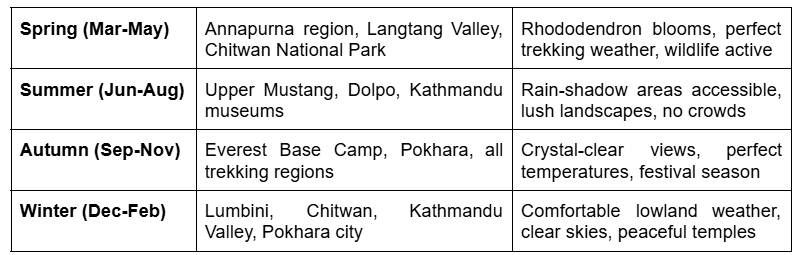
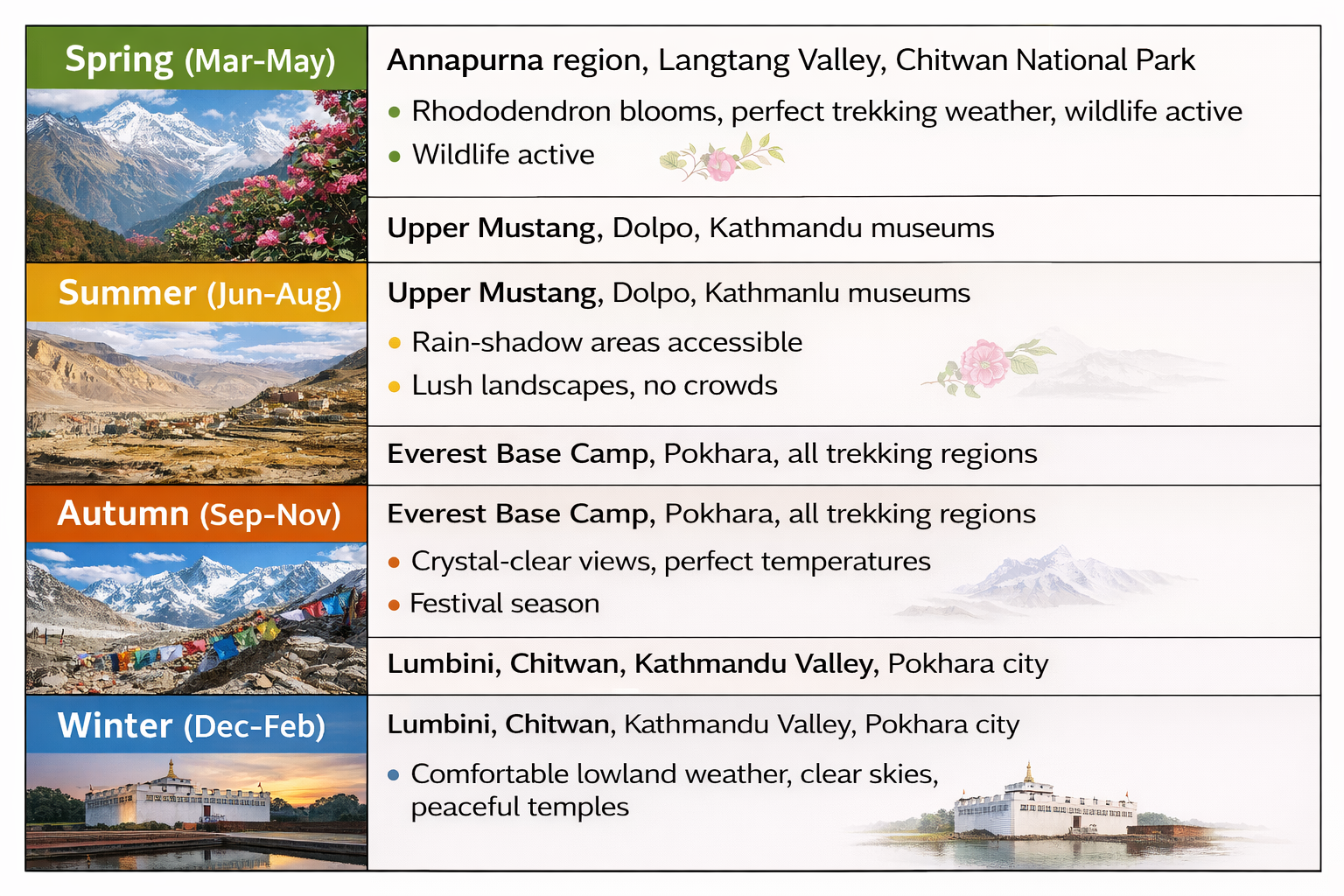
Spring: The region around Annapurna becomes picturesque as rhododendron forests begin to bloom along the trekking routes. Chitwan National Park offers the best opportunities to view wildlife as animals emerge from winter shelters.
Summer:The upper Mustang and Dolpo areas receive little monsoon rain and are, therefore, wonderful places to visit.
Autumn: Everest Base Camp trek promises perfect conditions, good weather, and the best mountain views of the year. Pokhara boasts amazing Annapurna views mirrored beautifully in Phewa Lake.
Winter: Lumbini is pleasant for visiting the birthplace of the Buddha, Chitwan safaris are enjoyable while avoiding the summer sun, and heritage sites in Kathmandu are peaceful without crowds.
Best Things to Do in Nepal by Month
- Trekking (Best: Oct-Nov, Mar-Apr): All major trails, including Everest Base Camp, Annapurna Circuit, Annapurna Base Camp, Langtang Valley, and Manaslu Circuit, are best experienced during these two periods, as the weather is very good.
- Wildlife Safari (Best: Oct-Nov, Feb-Apr):Chitwan and Bardia National Parks offer the best wildlife safari during the moderate vegetation growth, as wildlife is drawn to water sources. One can spot Bengal Tigers, One-Horned Rhinos, Elephants, and many species of birds.
- Cultural Tours (Best Sept-Nov, Feb-April): Visit UNESCO World Heritage Sites in Kathmandu valley, Lumbini, and Chitwan. The September-to-November festival season offers an unparalleled opportunity for cultural immersion.
- Adventure Sports (Best: Oct-Apr):Adventure activities like paragliding from Pokhara, rafting on the Trishuli and Bhote Kosi rivers, bungee jumping, zip lines, and mountain biking thrive only in the dry seasons.
- Photography (Best Time: Oct-Nov, Mar-Apr): Ideal conditions for capturing the mountains, with crystal-clear skies. Photography opportunities are high around the time of the Dashain or Tihar festivals.
When Do Tourists Visit Nepal Most?
Peak Season (October-November): These are the months with the highest tourist numbers, as Hop Nepal handles 40-50% of annual trek bookings during these 8 weeks. Hotels in Pokhara and the Everest region, as well as tea houses, fill up, and reservations have to be made well in advance. About 30% of Nepal's annual international visitors come only during October.
Shoulder Season Advantages (March to April, and September): During these months, the weather is 80-90% as good as in peak season, yet there are 40-60% fewer tourists. The best times of travel without the overwhelming feeling of crowds are the shoulder seasons, according to Hop Nepal. Accommodations are readily available, while prices remain 10-20% below peak-season levels.
Benefits during the Off-Season Periods: June to August and December to February offer authenticity in Nepal without the intrusion of tourism infrastructure on local culture. It also means accommodation costs can decrease by 30-40%, guides and porters are more available without any need for prior reservations, and you will often find yourself alone on the trekking trails and cultural sites. While the weather can give you a headache, it also offers some perks, such as authentic cultural interaction and saving a significant portion of your budget.
Conclusion: Choosing Your Perfect Nepal Travel Window
Such diversity is part of what makes it true that there really is no such thing as a "wrong" time to travel to Nepal, only different ones waiting to be discovered. While it is undeniable that October and November are the best months of the year for favorable weather and trekking conditions, each month offers opportunities that can be aligned with reality.
Spring turns the Himalayas into an almost botanical paradise, with rhododendrons covering the faces of entire mountains in bloom. Monsoon season's summer is less than hospitable to the conventional tourist but offers the intrepid traveler experiences of green beauty, thundering falls, unspoiled culture, and unique solitude, to be found among the crowded paths that throng the most popular routes the rest of the year. Winter affords views of crisp beauty from the Kathmandu valley and temple solitude with snow closure and biting cold well above treeline.
The trick to optimizing the experience in Nepal is to match the top three aspirations to the season's timing. For a mountain and guaranteed weather experience, one ought to consider visiting in October/November or March/April. If cultural experiences are paramount, one ought to seek out the main cultural events, such as Dashain and Tihar, during the autumn season. While the rainy season is a time of uncertainty, one may cut costs by 30-40 percent to experience authentic Nepali life.
Frequently Asked Questions
Q. What is the most recommended month to travel to Nepal?
A. The most preferred months to travel to Nepal are from October to mid-November, when there are clear mountain views, comfortable weather ranging from 10 to 20°C, and good conditions for trekking. These months coincide with major festivals of Dashain and Tihar in Nepal. March and April can also be alternative peak travel months when rhododendrons are in bloom and when the weather is good.
Q. When to avoid visiting Nepal?
A. June to August is the worst time to visit due to heavy monsoon rains, reduced views of the mountains, muddy mountain trails, and landslides on mountain highways. But the upper areas of Mustang Valley can still be accessed during the monsoon months, as prices drop by 30-40%.
Q. Is it a good idea to visit Nepal year-round?
A. Yes, as there can be some experiences gained each month that one can look forward to. Even though months like October-November and March-April offer some of the best opportunities for activities, months like January and June offer advantages of their own, depending on one's type.
Q. What is the cheapest month to visit Nepal?
A. July and August are considered the cheapest months to visit Nepal, as accommodation prices dip by 30-40%. January and February are alternative months that offer 20-30% discounts. June-August offers the steepest discounts for those willing to brave the monsoon weather.
Contact HOP Nepal for personalized booking assistance:
WhatsApp/Call: +977-1-5915380 | 9812193787 | 9706223203
Location: CTC Mall, 2nd Floor, Sundhara, Kathmandu, 44600, Nepal
Let our travel experts help you find the perfect option matching your budget, schedule, and travel preferences!