
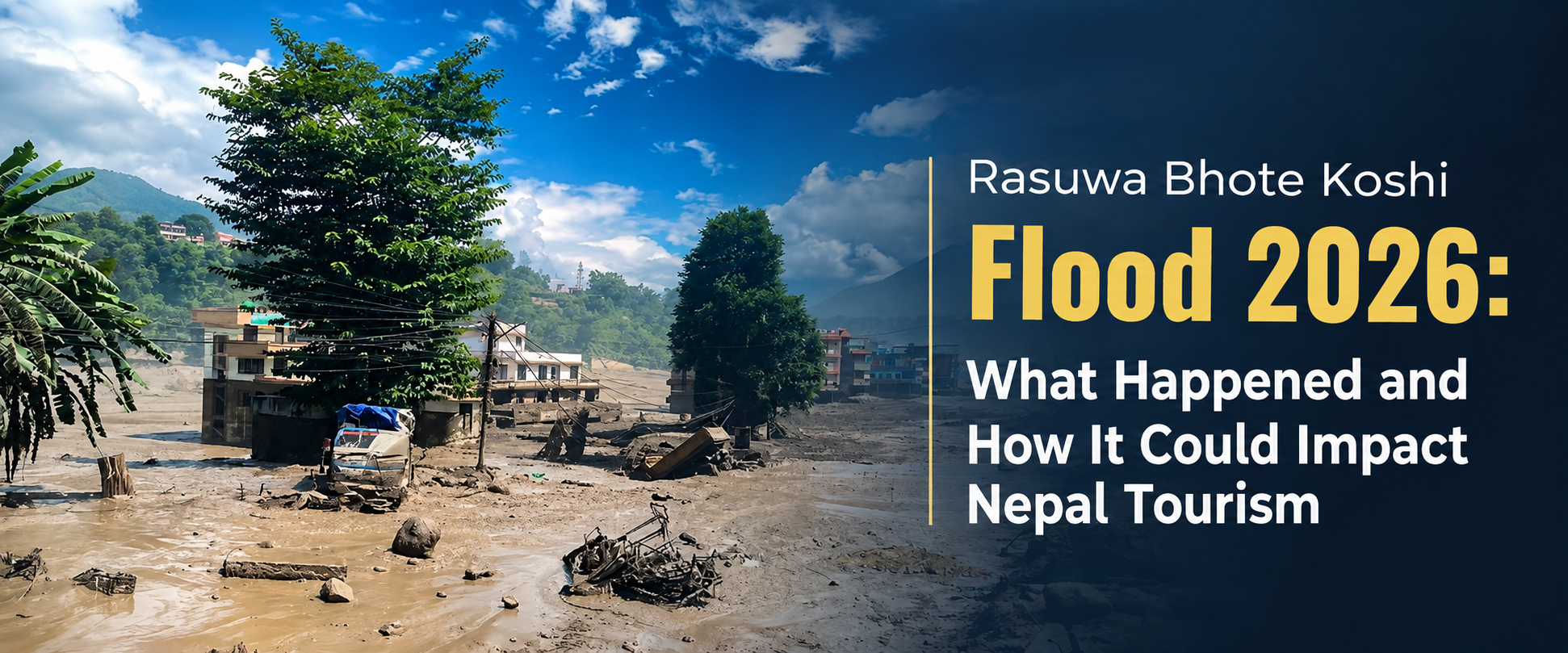
On Bhadra 10, 2083 (26 August 2026), a violent flash flood swept through the Bhote Koshi and Trishuli river system in Rasuwa and downstream districts. The disaster struck a part of Nepal that carries far more than local traffic: Rasuwa is a gateway to Langtang , Gosaikunda, the Tamang Heritage Trail, and the Rasuwagadhi-Kerung border route used by travellers heading towards Tibet and Kailash Mansarovar.
That tourism connection is important. Nepal Tourism Board describes Dhunche and Syabrubesi as key access points for the Langtang region, while Gosaikunda is one of Nepal’s major high-altitude pilgrimage destinations. The flood therefore affected not only settlements and infrastructure, but also trekkers, pilgrims, drivers, guides, hotel operators and foreign visitors moving through one of Nepal’s busiest mountain travel corridors.
The human toll remains the central story. Search and rescue teams have been working across Rasuwa , Nuwakot, Dhading, and other downstream areas, while authorities continue to reconcile lists of people who are safe, rescued, injured, missing, or still out of contact. Because these numbers have changed from one official update to the next, this article records the figures with their timestamps rather than presenting a running total as if it were final.
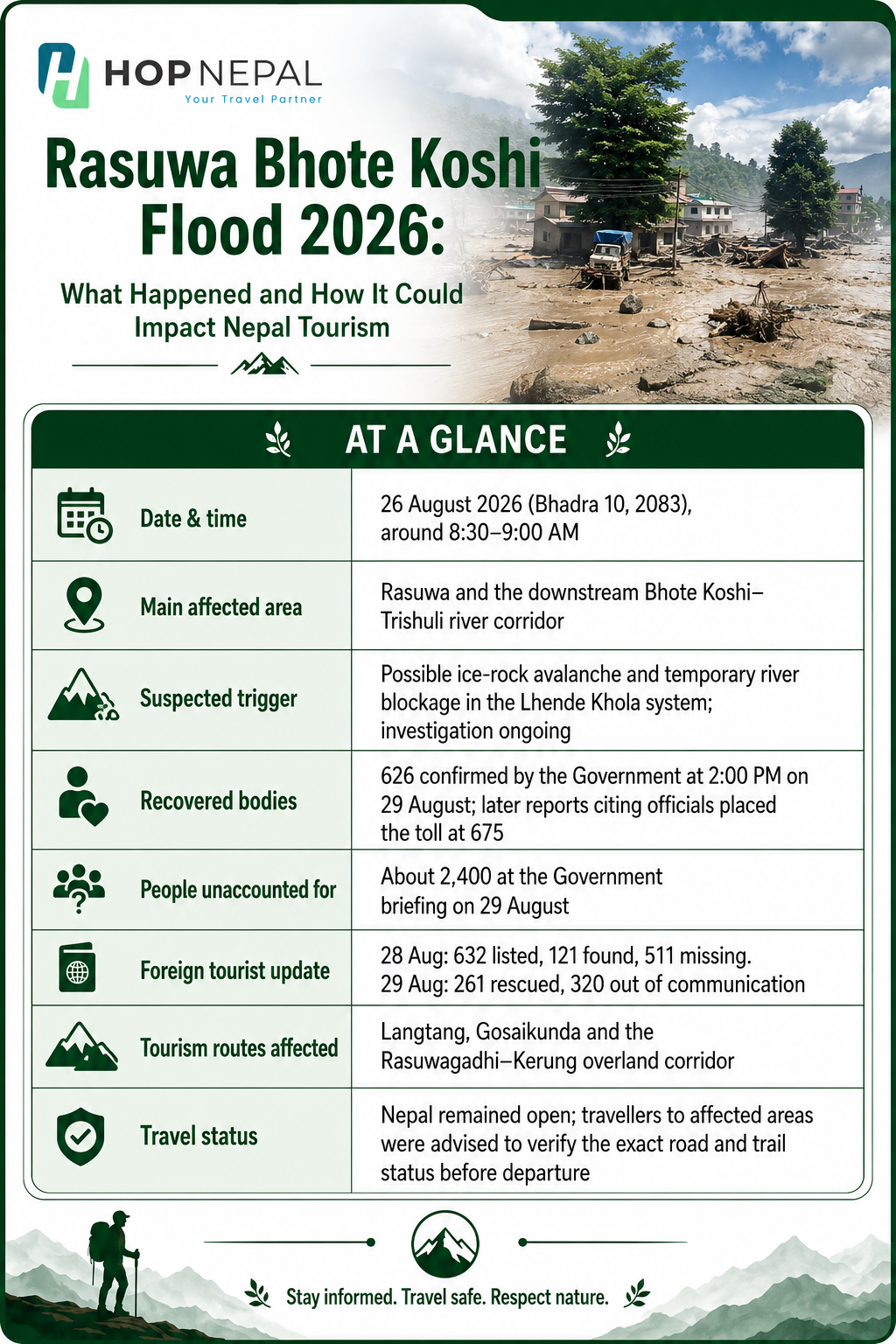
Rasuwa Bhote Koshi Flood 2026: Quick Facts
Where Did the Rasuwa Flood Happen?
Rasuwa sits north of Kathmandu along Nepal’s border with the Tibet Autonomous Region of China. The district contains several places closely tied to tourism, including Dhunche, Syabrubesi, Timure, Rasuwagadhi, and the wider Langtang National Park area.
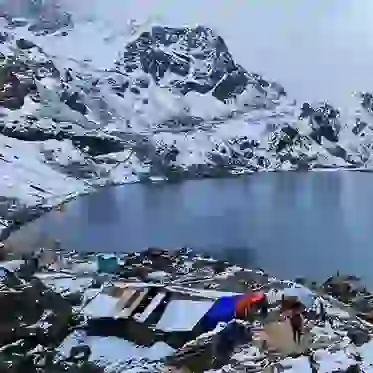
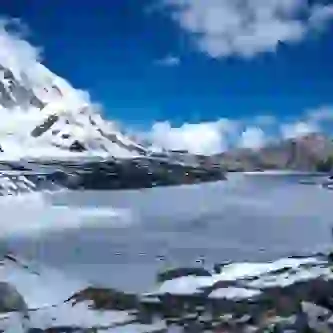
Nepal Tourism Board lists Langtang among Nepal’s traditional major trekking regions. Its own destination information notes that the Tamang Heritage Trail starts from Dhunche or Syabrubesi and passes through villages including Gatlang, Chilime, Thuman, Timure and Briddim. Gosaikunda , at about 4,380 metres, is also part of the Langtang trekking landscape and attracts large numbers of Hindu pilgrims around Janai Purnima.
This geography explains why a disaster in the Bhote Koshi-Trishuli corridor can quickly become a tourism emergency. Damage to a bridge or road well below a trekking trail can still cut off the normal approach, delay evacuation or leave travellers unable to return to Kathmandu on schedule.
What Time Did the Bhote Koshi Flood Occur?
Nepal Tourism Board ’s early situation update placed the flash flood at around 8:30 AM on Wednesday, 26 August 2026. ICIMOD reported that water levels in the Bhote Koshi basin began rising rapidly at around 9:00 AM. Taken together, the verified reports place the destructive surge in the 8:30-9:00 AM period.
The speed of the flood wave was one of the most striking features of the event. ICIMOD reported that the Trishuli River at Galchhi rose by as much as nine metres within 30 minutes, while the level at Malekhu increased by around seven metres over a similar period. A flood moving that quickly leaves very little time for people downstream to react once the surge is already in the river system.
Where Did the Flood Come From?
The precise trigger was still under investigation when this article was prepared. Early public discussion often described the flood simply as coming “from the Chinese side”, but the scientific picture is more complicated and should not be reduced to a single unverified claim.
ICIMOD ’s preliminary assessment said a large volume of ice and rock debris may have entered Lhende Khola, a tributary of the Bhote Koshi, after a high-altitude ice-rock avalanche. Researchers were also examining whether debris temporarily blocked a narrow section of the river before water, sediment and boulders were released downstream. ICIMOD stressed that the suspected trigger remained unconfirmed and that no causal link had been established between seismic activity recorded in the region and the flood.
For travellers and travel companies, the practical lesson is straightforward: Himalayan flood hazards can be cascading events. An avalanche, landslide, temporary river blockage and sudden release can combine within a short time, making real-time warnings and local instructions critical.
Rasuwa Flood Death Toll and Missing-Person Figures
The casualty count rose sharply as search teams recovered bodies from the main flood corridor and much farther downstream. On 28 August at 3:30 PM, the Government of Nepal reported that 538 bodies had been recovered. At a Ministry of Foreign Affairs briefing at 2:00 PM on 29 August, the figure had risen to 626, with about 2,400 people still unaccounted for and more than 4,450 rescued.
Later on 29 August, Reuters and other news organisations citing Nepali officials reported the recovered death toll had reached 675. The difference between updates does not mean earlier figures were wrong; it reflects an active recovery operation in which new bodies were being found and records were being checked continuously.
Important distinction
A person listed as missing, unaccounted for or out of communication is not automatically a confirmed fatality. Phone networks, damaged roads, group movements, cross-border travel and duplicate or incomplete records can all delay verification. Country-wise death figures for foreign nationals had not been published in a verified official tourism table at the time of writing.
Foreign Tourists: Country-Wise Missing List
The most detailed official country-by-country foreign national list available for this article was published by the Ministry of Foreign Affairs on 28 August 2026, using information from the National Disaster Risk Reduction and Management Authority and Nepal Tourism Board. At 3:30 PM that day, 632 people from 33 countries were on the tracking list: 121 had been found and 511 were still missing.
This table is a dated snapshot. It should not be read as the latest position for every nationality because later rescue and verification work reduced the overall number of foreign nationals out of communication to 320 by 6:00 PM on 29 August.
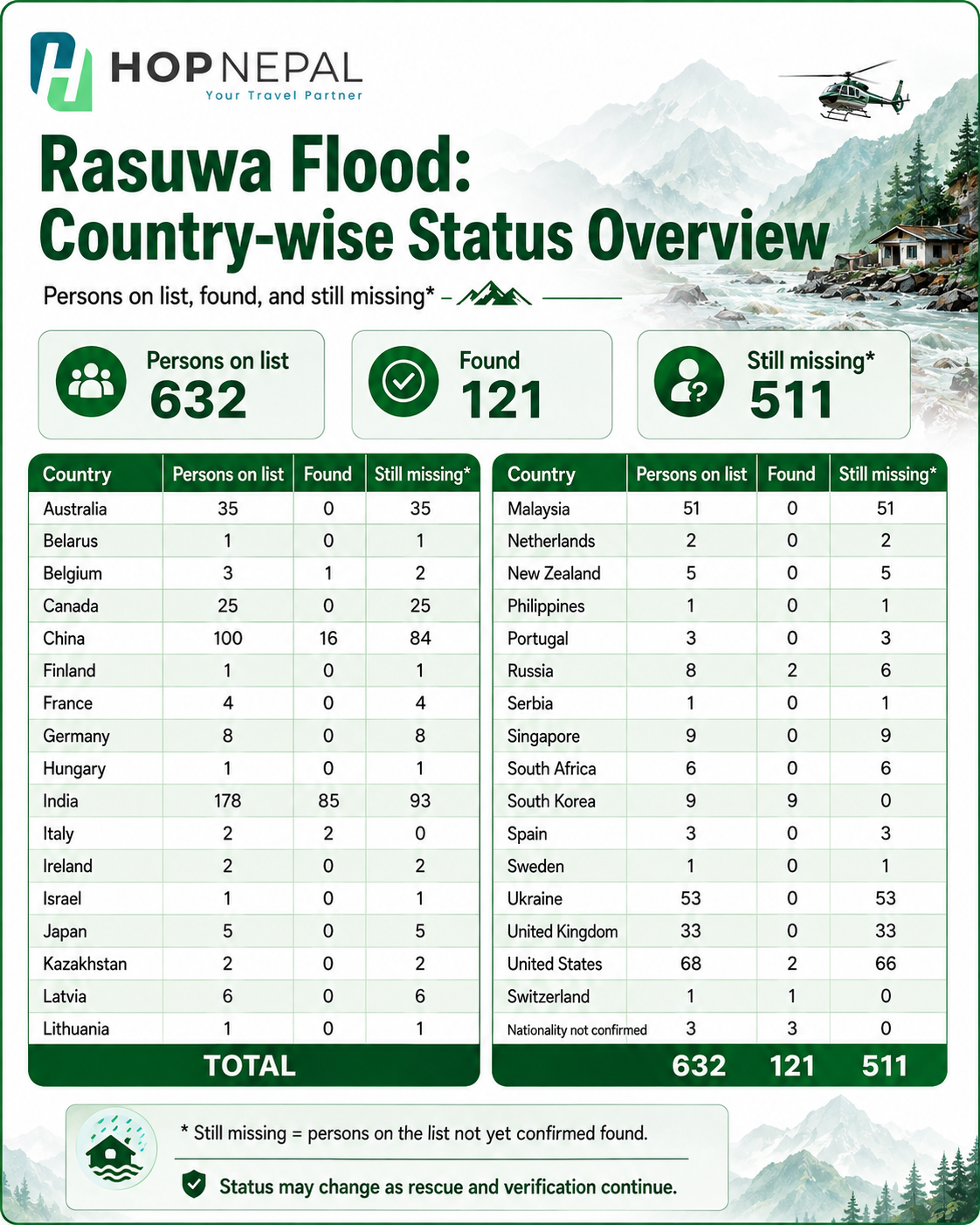
*Official snapshot at 3:30 PM NST on 28 August 2026. Source: Government of Nepal, Ministry of Foreign Affairs; data attributed to NDRRMA and Nepal Tourism Board. Later totals changed as more people were located.
What Changed in the Latest Foreign Tourist Update?
By 6:00 PM on 29 August, figures from the Tourist Police and NDRRMA, as reported through Nepal’s tourism response, showed that 261 foreign nationals and tourists had been rescued, while 320 remained out of contact. The rescued group included 167 Indians, 40 Chinese nationals, 8 Ukrainians, 4 Germans, 4 Maltese, 3 Americans, and smaller numbers from several other countries. Twenty-one rescued people had not yet had their nationality confirmed in that update.
The fall from 511 foreign nationals listed as missing on 28 August to 320 out of communication on 29 August shows why old screenshots and early lists should not be republished without a timestamp. In a fast-moving disaster, the date attached to a number is part of the fact.
Why Rasuwa Matters So Much to Nepal Tourism
Rasuwa is not a standalone tourism destination. It is part of a travel network connecting Kathmandu with trekking, pilgrimage and cross-border routes. Three tourism flows are especially relevant: Langtang trekking, the Gosaikunda pilgrimage, and overland travel through Rasuwagadhi towards Kerung in Tibet.
1. Langtang trekking
Langtang is one of Nepal’s established trekking regions, and access normally depends on the road journey north from Kathmandu to Dhunche or Syabrubesi. Even if a high mountain trail is physically intact, damaged approach roads, unstable slopes, closed bridges or restricted rescue zones can interrupt a trek before it begins.
2. Gosaikunda pilgrimage and trekking
Gosaikunda is a sacred lake at roughly 4,380 metres and receives a surge of pilgrims around Janai Purnima. Nepal Tourism Board states that the usual approach is to travel by road from Kathmandu to Dhunche, then continue on an uphill trek. The timing of the flood around this pilgrimage period meant a large number of travellers were already moving through Rasuwa.
3. Rasuwagadhi-Kerung and Tibet-bound travel
The Bhote Koshi corridor also supports cross-border movement towards Kerung. Disruption around Timure and Rasuwagadhi can therefore affect visitors whose final destination is Tibet or Kailash Mansarovar, including travellers who may not consider Rasuwa a destination.
Gosaikunda Route Update: NTB Issued an Alternative Return Route
One of the clearest signs of the tourism impact came from Nepal Tourism Board itself. Following the floods and associated risks in Rasuwa and Nuwakot, NTB issued an alternative return route for Gosaikunda trekkers and advised travellers to avoid the Dhunche route until further notice.
The alternative return direction published by NTB runs from Gosaikunda towards Suryakunda Pass, Phedi, Talu, Sisipu and Dupcheshwar before returning to Kathmandu. This does not mean every section of the wider Langtang region is closed. It means route advice was being changed in response to road and flood conditions, and trekkers should follow the latest local guidance rather than an itinerary printed before the disaster.
Travel takeaway
Do not treat “Langtang open” or “Langtang closed” as a single yes/no question. Check the exact approach road, trail section, bridge, overnight stop and return route for the date you plan to travel.
How Will the Rasuwa Bhote Koshi Flood Impact Tourism?
Short-term: cancellations, rerouting and uncertainty
The first impact is operational. Tour companies may need to postpone departures, reroute groups, add buffer days or move travellers to alternative destinations. Road conditions can change faster than a standard trekking itinerary, especially while heavy machinery, rescue teams and relief vehicles are using the same corridor.
Pressure on local tourism businesses
Hotels, tea houses, restaurants, guides, porters and drivers in Rasuwa depend on visitor movement. When access is interrupted, the loss of business is immediate. The recovery of tourism will therefore be closely tied to the recovery of roads, bridges, communications, and confidence in the route's safety.
A difficult start to the autumn travel build-up
The flood arrived weeks before Nepal’s main autumn trekking period. That makes the speed and quality of route assessment especially important. Travellers planning October and November departures are likely to ask more detailed questions about access, evacuation plans, insurance and alternative routes, even if their trip is several weeks away.
International perception: Rasuwa is not all of Nepal
Major disasters can create a second problem for tourism when overseas audiences assume the entire country is affected. The Government of Nepal stated in its 28 August update that Nepal remained open to international travellers and that only specific parts of the country had been affected. That distinction matters for destinations such as Pokhara, Annapurna, Everest, Lumbini and other areas outside the flood corridor.
Responsible travel communication should therefore do two things at once: be completely transparent about Rasuwa and other affected areas, while avoiding the inaccurate message that Nepal as a whole has shut down.
Long-term: mountain tourism needs stronger risk communication
The flood also raises a broader question for Himalayan tourism. Travellers increasingly need more than a weather forecast. They need information about upstream river conditions, landslide risk, glacial and ice-related hazards, road status and emergency communication. ICIMOD has highlighted the need for stronger real-time risk information and cross-border early-warning cooperation in areas where hazards can move downstream very quickly.
For trekking companies, practical resilience could include better group tracking, verified emergency contacts, route-specific contingency plans, documented turnaround rules, guide training and faster communication with families when a group temporarily loses phone service.
Is Nepal Still Open for Tourists?
Yes. The Government of Nepal stated that Nepal remained open to international travellers, while advising people to follow conditions in the affected districts. Travellers should not cancel a trip to a completely different part of Nepal solely because of the Rasuwa flood. They should, however, re-check any itinerary that uses Rasuwa, Nuwakot, Dhading or affected sections of the Trishuli corridor.
For a trek to Langtang or Gosaikunda, the correct question is not “Is Nepal safe?” but “What is the verified condition of my exact route today?” That is the level at which responsible travel decisions should be made.
What Travellers Should Do Before Going to Rasuwa, Langtang or Gosaikunda
Check the latest Nepal Tourism Board, NDRRMA, Nepal Police and local authority updates before departure.
Confirm the exact road and trail status with a registered trekking or tour operator on the day of travel.
Do not rely on an old Facebook post, TikTok video or screenshot for a current missing-person or route status update.
Avoid riverbanks, damaged bridges, fresh landslide zones and areas restricted for rescue or recovery work.
Keep buffer time in the itinerary because road diversions can make return journeys significantly longer.
Make sure the guide or tour leader has an emergency communication plan and knows the group’s next confirmed checkpoint.
For family enquiries involving a missing foreign national, use the Government of Nepal’s official emergency channels rather than unverified social media lists.
Emergency contacts published during the response
- Nepal Tourism Board toll-free emergency number: 1234
- Government emergency hotline: 1144
- Tourist Police: 9851289445
- Ministry of Foreign Affairs Emergency Control Room / WhatsApp: +977-9744441227, +977-9744441228 (7:00 AM-10:00 PM)
- Email: emergency@mofa.gov.np
What This Disaster Means for Nepal Tourism
The Rasuwa Bhote Koshi flood is first a human tragedy, not a tourism story. But tourism is part of the recovery because so many livelihoods in the region depend on safe movement of pilgrims, trekkers and cross-border travellers.
The strongest response from Nepal’s travel industry will be accurate information. That means publishing timestamps with statistics, separating confirmed deaths from missing-person lists, refusing to speculate about nationality-based fatalities, and being precise about which routes are affected. Trust is built faster by saying “this section is not yet verified” than by giving travellers a confident answer that later proves wrong.
When access is restored and authorities confirm routes are safe, the return of responsible tourism will help tea houses, hotels, drivers, guides, porters and local businesses rebuild. Until then, safety and verified information must take precedence over fixed itineraries.
Hop Nepal Travel Note
Hop Nepal encourages travellers to keep their plans flexible and to follow official instructions in flood-affected areas. Nepal remains open to tourism, but anyone travelling to Rasuwa, Langtang, Gosaikunda, or the Rasuwagadhi-Kerung corridor should check the latest route conditions before starting their journey. We will continue to prioritise traveller safety and update itineraries when local conditions require a change.
Frequently Asked Questions: Rasuwa Bhote Koshi Flood 2026
When did the Rasuwa Bhote Koshi flood happen?
The flash flood struck on Wednesday, 26 August 2026, which was Bhadra 10, 2083. Early tourism reports placed the event at around 8:30 AM, while ICIMOD reported a rapid rise in water level around 9:00 AM.
What caused the Rasuwa flood?
The final cause had not been confirmed at the time this article was prepared. ICIMOD said an ice-rock avalanche entering Lhende Khola was a suspected trigger, possibly followed by temporary river blockage and a sudden release of water, sediment and boulders. Investigations were continuing.
How many people died in the Rasuwa Bhote Koshi flood?
The number changed rapidly during recovery. The Government of Nepal reported 538 recovered bodies on 28 August and 626 by 2:00 PM on 29 August. Later reports citing officials placed the toll at 675 by late 29 August. These figures were still provisional because recovery and identification were ongoing.
How many people were still missing?
At the Government’s 29 August briefing, about 2,400 people were still unaccounted for. The number can change as people are located, duplicate reports are removed and recovered bodies are identified.
How many foreign tourists were affected?
The official 28 August country list contained 632 foreign nationals from 33 countries; 121 had been found and 511 were still missing at that time. By 6:00 PM on 29 August, a later Tourist Police/NDRRMA update said 261 foreign nationals had been rescued and 320 remained out of communication.
Which countries had missing nationals?
The 28 August government list included nationals of Australia, Belarus, Belgium, Canada, China, Finland, France, Germany, Hungary, India, Italy, Ireland, Israel, Japan, Kazakhstan, Latvia, Lithuania, Malaysia, the Netherlands, New Zealand, the Philippines, Portugal, Russia, Serbia, Singapore, South Africa, South Korea, Spain, Sweden, Ukraine, the United Kingdom, the United States and Switzerland, plus three people whose nationality had not yet been confirmed.
Does “missing” mean the person has died?
No. Missing, unaccounted for and out of communication are not the same as confirmed dead. People can lose contact due to damaged mobile networks, road closures, evacuations, group movement, or incomplete records. Fatalities should only be reported when officially confirmed.
Is the Gosaikunda route affected?
Yes, travel arrangements were affected. Nepal Tourism Board issued an alternative return route for Gosaikunda trekkers and advised avoiding the Dhunche route until further notice. Travellers should check the latest NTB and local authority advice before using either route.
Is the Langtang trek closed?
There was no basis for treating the entire Langtang region as one simple open-or-closed zone. Access depends on the condition of the road to Dhunche or Syabrubesi, specific trail sections, bridges, landslides and local restrictions. Confirm the exact route before departure.
Is Nepal still safe to visit after the Rasuwa flood?
Nepal remains open to international tourists. The Government of Nepal stated that only specific parts of the country were affected. Travellers going to unaffected destinations should follow normal travel checks, while anyone heading towards the flood-affected districts should verify local road, weather and safety conditions.
Will the flood affect Kailash Mansarovar or Tibet tours?
It can affect overland itineraries that use the Rasuwagadhi-Kerung corridor. Border access, road damage and local restrictions may require delays or route changes. Travellers should confirm the current border and road situation with their operator before departure.
How could this flood affect Nepal tourism in the coming months?
The biggest near-term effects are likely to be route changes, temporary cancellations, slower road access and increased concern about safety in Rasuwa. Longer-term, the event is likely to increase demand for better early warnings, contingency planning, and clearer communication in Himalayan tourism. It does not mean tourism across Nepal has stopped.