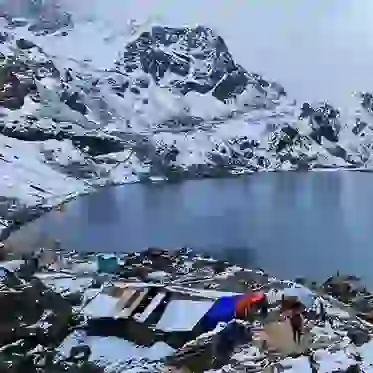

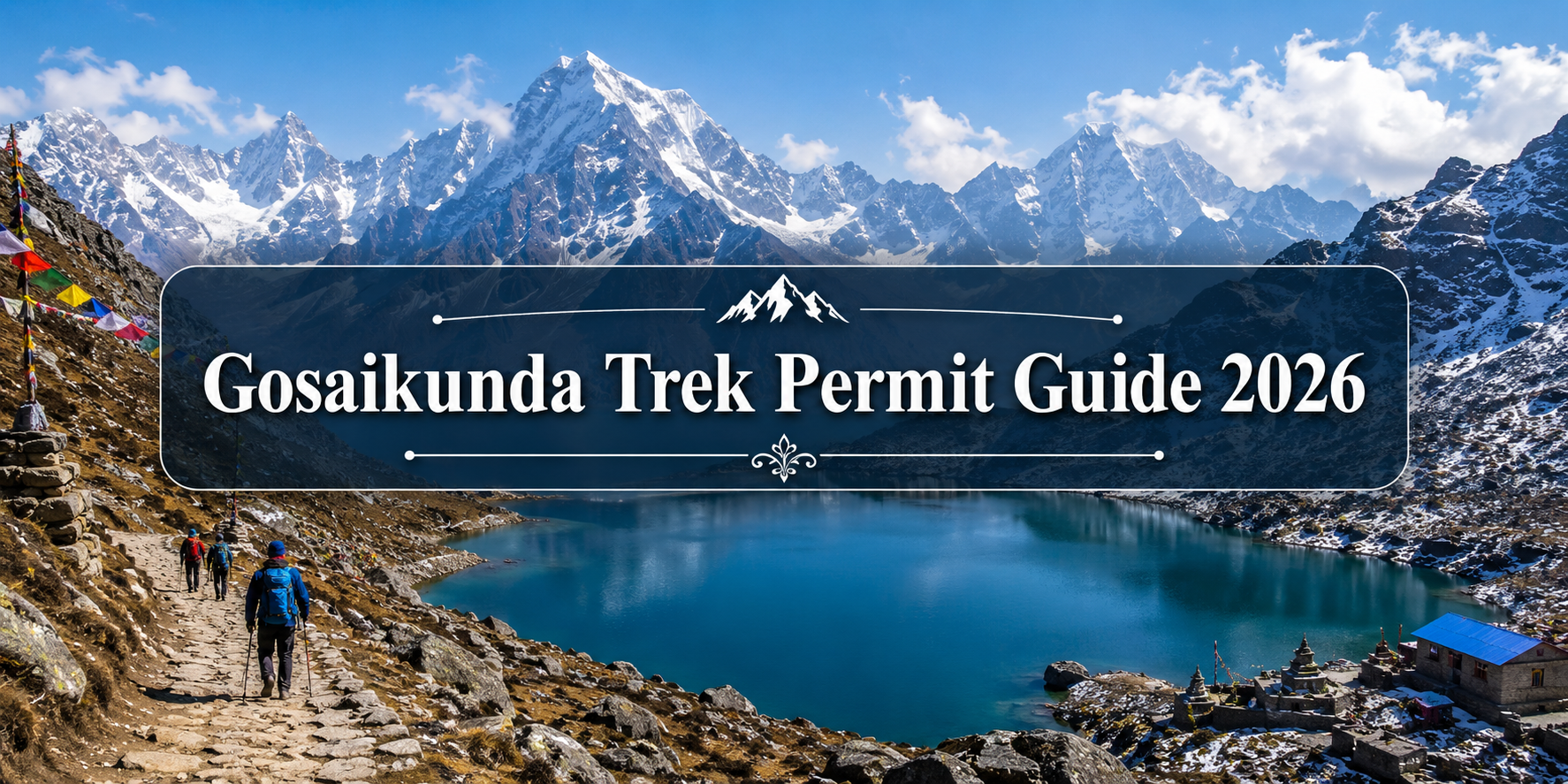
There is a lake sitting at 4,380 metres in the Langtang Himalayas that most of the world has never heard of, and yet every August it draws over 30,000 people to its shores in a single night.
No marketing campaign created that. No travel influencer discovered it. Gosaikunda has been pulling people up its steep trails for centuries, long before Nepal appeared on anyone's bucket list, because the lake carries the kind of weight that does not need advertising. According to Hindu mythology, Lord Shiva struck this mountainside with his trident after drinking the world's poison, and the holy water that surged from the rock formed the lake. For Hindus and Buddhists across Nepal and India, a bath in those icy waters is not a travel experience. It is something far older than that.
For trekkers, Gosaikunda is a remarkable discovery of a different kind. It is accessible from Kathmandu without a flight. It combines genuine high-altitude Himalayan scenery with a cultural and spiritual depth that more famous routes rarely achieve. It can be completed in seven to eight days. And in 2026, with trail infrastructure steadily improving across the Langtang region, it is arguably the most underrated trek in all of Nepal.
Here is everything you need to plan it properly.
What is Gosaikunda and Why Does It Matter?
Gosaikunda Lake sits inside Langtang National Park at an altitude of 4,380 metres, roughly 140 kilometres north of Kathmandu. It belongs to a glacial basin scattered with over 100 lakes of varying sizes, each carrying its own spiritual name and significance. The main lake is the centrepiece, but pilgrims and trekkers also visit Bhairav Kund, Saraswati Kund, Surya Kund, Ram Spring, and dozens of smaller sacred pools nearby.
The mythology surrounding the lake is among the most resonant in all of Hindu tradition. During the great churning of the cosmic ocean, a deadly poison called Halahala emerged that threatened to destroy all existence. Shiva drank the poison to protect the world, holding it in his throat. His throat turned blue, earning him the name Neelkanth, the Blue-Throated One. Weakened by the venom, he struck the ground with his trident at this high Himalayan spot, releasing a spring of water to cool himself. That spring became Gosaikunda. Pilgrims who bathe here believe they are washing away spiritual impurities in waters literally consecrated by Shiva's sacrifice.
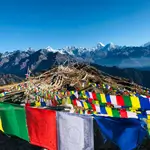
For Buddhists, the lake holds equal significance. Nearby monasteries, prayer flags, and chortens mark the landscape with centuries of devotional practice. The trails to Gosaikunda are lined with both Hindu shrines and Buddhist stupas, a meeting of traditions that feels entirely natural in the Nepali mountains.
This dual significance makes Gosaikunda genuinely unlike anywhere else in the Himalayas.
Gosaikunda Trek Permit Requirements for 2026
The Gosaikunda trek requires two permits, both straightforward to obtain before setting off from Kathmandu.
The first is the Langtang National Park Entry Permit. This covers all trails within the national park boundaries, including the complete Gosaikunda route. The permit fee for 2026 is NPR 3,000 for foreign nationals (approximately USD 22). It can be obtained at the Department of National Parks and Wildlife Conservation offices in Kathmandu or at the park entry checkpoint near Dhunche. Carry the original permit at all times, as checkpoints along the trail verify it regularly.
The second is the TIMS Card (Trekkers' Information Management System). The TIMS card registers your trek for safety monitoring, which matters considerably in remote mountain terrain. The current fee is NPR 2,000 for individual trekkers at 2026 rates. It is obtainable from Nepal Tourism Board offices in Kathmandu at Bhrikutimandap, or through a registered trekking agency. Unlike some restricted trekking regions in Nepal, Gosaikunda does not require a special restricted area permit, which keeps the overall permit cost genuinely affordable.
Both permits must be on your person at all times during the trek. Checkpoints at multiple points on the route scan them, and trekkers without permits face fines and may be turned back. Arranging both in Kathmandu the day before departure is the smoothest approach.
What is Janai Purnima and Should You Trek During It?
Janai Purnima falls on the full moon of the Nepali month of Shrawan, which corresponds to late July or early August in the Gregorian calendar. It is one of the most important festivals in the Hindu calendar, particularly for high-caste Hindu men who change their sacred thread (janai) on this day as an act of spiritual renewal.
At Gosaikunda, Janai Purnima becomes something extraordinary. Over 30,000 pilgrims, Hindu devotees, Jhankri (traditional shamans), families carrying children, elderly pilgrims who have made this climb every year for decades, ascend to the lake for a single night of prayer, bathing, and ritual. The lakeshore becomes one of the most intense religious gatherings in Nepal. Fires burn through the night. Drums echo across the water. The sound of thousands of voices rising over a glacial lake at 4,380 metres is a genuinely unforgettable experience that no brochure can adequately convey.
The practical reality of trekking during Janai Purnima requires honest planning, though. Teahouses along the route fill completely, sometimes months in advance. Trail conditions during monsoon can be slippery and leech-heavy on lower sections. Some accommodation becomes improvised, such as shared attic spaces and communal sleeping rooms, as the usual capacity is entirely overwhelmed. The experience is vivid, communal, and deeply human, but it demands flexibility and advanced preparation.
For trekkers whose primary goal is the festival, book accommodation on the route at least two to three months ahead and arrange your trip through a registered agency such as Hop Nepal that has established relationships with teahouse owners. For those who want Gosaikunda's spiritual atmosphere without the monsoon trail conditions, late September and October deliver extraordinary clarity, cooler temperatures, and the lake in its post-monsoon state of deep, mirror-still blue.
Gosaikunda Trek Itinerary: 7 Days from Kathmandu
Day 1: Kathmandu to Dhunche by Road
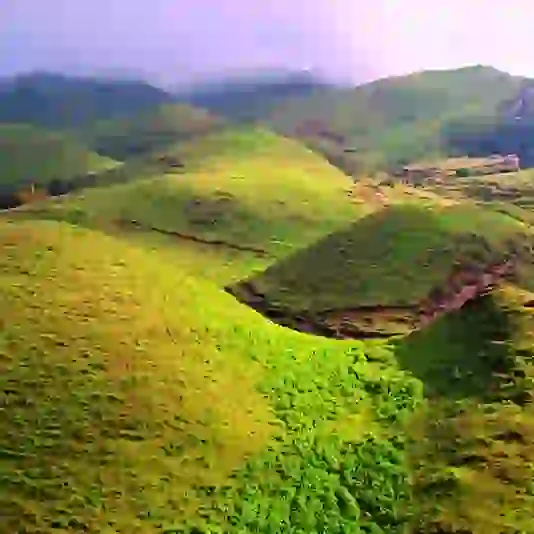
The journey to the trailhead starts with a six to seven-hour drive from Kathmandu to Dhunche at 1,950 metres, the main gateway town for both the Langtang Valley and Gosaikunda treks. The road winds through terraced hillsides, Gurung and Tamang villages, and along the Trishuli River valley. Dhunche itself is a quiet mountain town with good teahouse accommodation and a cold, clear atmosphere that signals immediately that you have left the city behind.
Day 2: Dhunche to Chandanbari (3,250 metres)
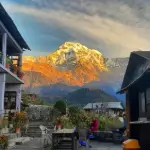
The first day of walking climbs steeply through rhododendron and oak forest from Dhunche, passing through Deurali and Dimsa before reaching the higher settlement of Chandanbari. The trail is well-marked and physical, gaining roughly 1,300 metres of elevation over five to six hours. Views of Ganesh Himal and the upper Langtang peaks begin to open through the trees.
Day 3: Chandanbari to Gosaikunda via Lauribina La Pass (4,610 metres)
This is the defining day of the trek and the most demanding one. The trail ascends through Cholangpati and Lauribinayak, passing Shiva temples and Buddhist chortens as the forest gives way to open alpine terrain. The Lauribina La Pass at 4,610 metres is the highest point of the entire route, and the views from the pass across the Himalayan ranges are exceptional on a clear day. The descent to Gosaikunda Lake follows the pass, and the moment the lake appears below you, cobalt blue against grey rock under an open sky, is one of those moments that stays with trekkers long after they return home.
Day 4: Gosaikunda Rest and Exploration Day
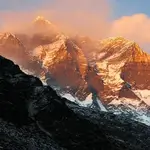
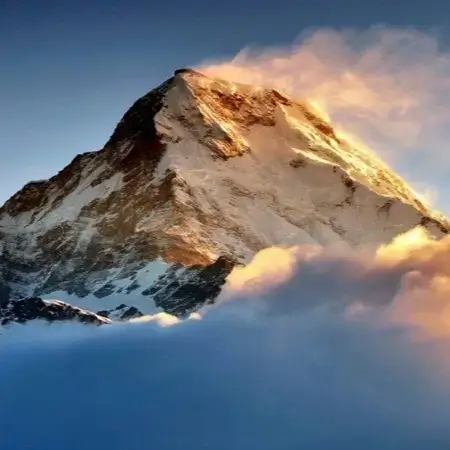
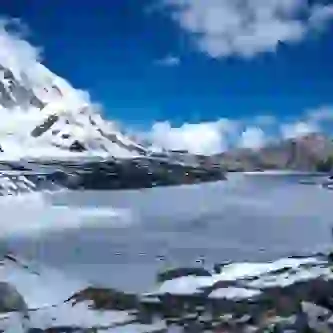
A full day at the lake allows proper acclimatisation at altitude and time to explore the surrounding sacred lakes. Bhairav Kund, Saraswati Kund, and Surya Kund are all within two to three hours of the main lake. On a clear morning, the surrounding peaks of Langtang Lirung, Ganesh Himal, and Manaslu are reflected perfectly in the still water. The atmosphere at Gosaikunda has a quietness that feels earned rather than simply found.
Day 5: Gosaikunda to Lauribinayak
The descent from the lake retraces the upper portion of the route back toward Lauribinayak for an overnight rest before the longer descent.
Day 6: Lauribinayak to Dhunche
A full descent day returning through Chandanbari and the forested lower trail back to Dhunche. The legs feel the accumulated kilometres by now, but the forests are beautiful and the descent carries a specific satisfaction that the climb never quite does.
Day 7: Drive from Dhunche to Kathmandu
The return road journey brings you back to Kathmandu in six to seven hours, typically arriving by late afternoon.
Extending the Trek: Langtang Valley and Helambu Options
The Gosaikunda route connects naturally with both the Langtang Valley and the Helambu region, giving trekkers more time for genuinely compelling extension options.
Adding the Langtang Valley before Gosaikunda creates a 14- to 17-day combined route that is one of the most culturally and scenically rewarding treks in Nepal. You travel through Tamang villages, Kyanjin Gompa, yak pastures, and glacial terrain in the Langtang Valley before crossing into the Gosaikunda section via the high ridges. The full Langtang Gosaikunda Helambu circuit, which continues from Gosaikunda eastward through the Helambu region back toward Kathmandu, covers nearly every major landscape type Nepal offers and rivals the Annapurna Circuit for sheer variety.
For those with limited time, the standalone seven-day Gosaikunda itinerary above is a complete and deeply satisfying journey in its own right.
Practical Tips for the Gosaikunda Trek
Altitude management matters here just as on any high Himalayan route. Gosaikunda's Lauribina La Pass sits at 4,610 metres, high enough that acclimatisation days are not optional but essential. Move slowly on the ascent day, drink consistently, and take the rest day at the lake seriously.
A sleeping bag rated to at least minus 10 degrees Celsius is necessary for nights near the lake, even during the warmer trekking months. Temperatures drop sharply after sunset at 4,300 metres regardless of season. Teahouse blankets are available but rarely sufficient on their own at altitude.
Pack a headlamp, trekking poles for the steep descent from Lauribina La, a first aid kit with altitude sickness medication, water purification tablets, and high-calorie snacks for the pass day when teahouses are sparse.
For the Janai Purnima festival trek specifically, bring cash in small denominations as the usual card payment infrastructure along the upper trail becomes entirely overwhelmed during festival season. Pre-booking all accommodation through a registered agency is not a luxury but a practical necessity.
Conclusion
Gosaikunda is not a trail that competes with Everest Base Camp or the Annapurna Circuit for fame. It does not need to. It occupies a completely different space in Nepal's trekking landscape, a place where mythology, mountain scenery, and living religious traditions converge along a seven-day route that starts with a bus ride from Kathmandu and ends at one of the most spiritually significant lakes in the Himalayas.
Whether you come during Janai Purnima to witness 30,000 pilgrims bathing under a full moon, or during the quiet clarity of October when the lake reflects the peaks without a ripple, Gosaikunda delivers something that the more well-trodden routes rarely can: the feeling that you found something real.
Hop Nepal has been arranging Gosaikunda treks, Langtang Valley itineraries, and full pilgrimage packages since 2017. The team handles permits, teahouse bookings, licensed guides, and all logistics, so your only job is to show up and walk.
Explore Gosaikunda and Langtang trek packages at Hop Nepal.
Frequently Asked Questions
How do I get a permit for the Gosaikunda trek?
The Gosaikunda trek requires two permits: a Langtang National Park Entry Permit (NPR 3,000 for foreign nationals at 2026 rates) and a TIMS Card (NPR 2,000). Both are obtainable at the Nepal Tourism Board offices in Kathmandu at Bhrikutimandap, at the Department of National Parks and Wildlife Conservation offices, or through any registered trekking agency. Arranging both in Kathmandu before departure is recommended. No restricted-area permit is required for Gosaikunda, which keeps overall costs significantly lower than for treks like Upper Mustang or Manaslu.
Is Gosaikunda open during Janai Purnima?
Yes, Gosaikunda is fully open during Janai Purnima and this is when it attracts its largest crowds, with over 30,000 pilgrims ascending to the lake during the full moon of Shrawan (late July to early August). The festival is an extraordinary cultural experience, but requires advance planning. Teahouses along the route are fully operational, trail conditions are monsoon-affected, with some slippery sections and leeches on lower paths, and accommodation becomes communal and improvised at higher elevations. Please book all accommodation two to three months in advance and travel with a registered agency.
What is the best time to visit Gosaikunda?
The best trekking seasons are spring (March to May) and autumn (September to November). Spring brings rhododendron forests in full bloom and clear pre-monsoon views. Autumn delivers the sharpest, most reliable mountain visibility of the year with crisp post-monsoon skies. Janai Purnima in late July or August is the festival window and carries both exceptional cultural significance and monsoon trail conditions. Winter (December to February) is cold and the Lauribina La Pass can close under heavy snow, making it suitable only for experienced cold-weather trekkers.
What is the significance of Gosaikunda for Hindu pilgrims?
Gosaikunda is one of the most sacred pilgrimage sites in Nepal for Hindus. According to mythology, Lord Shiva struck the mountainside with his trident at this location after drinking the cosmic poison Halahala to save the world, and the holy water that emerged formed the lake. Bathing in Gosaikunda is believed to cleanse spiritual impurities and confer blessings. The Trishuli River, one of Nepal's major rivers, originates from Gosaikunda. The festival of Janai Purnima, during which Hindu men change their sacred thread as an act of spiritual renewal, draws tens of thousands of devotees to the lake annually.
Can I combine Gosaikunda with the Langtang Valley trek?
Yes, and it is one of the most rewarding combinations available in the Langtang region. The full Langtang Gosaikunda circuit takes approximately 14 to 17 days and covers Langtang Valley, Kyanjin Gompa, the Gosaikunda lakes, and optionally extends through the Helambu region back to Kathmandu. The same two permits cover the entire combined route. This circuit rivals the Annapurna Circuit for cultural and scenic variety and remains significantly less crowded than the major routes in the Everest and Annapurna regions.