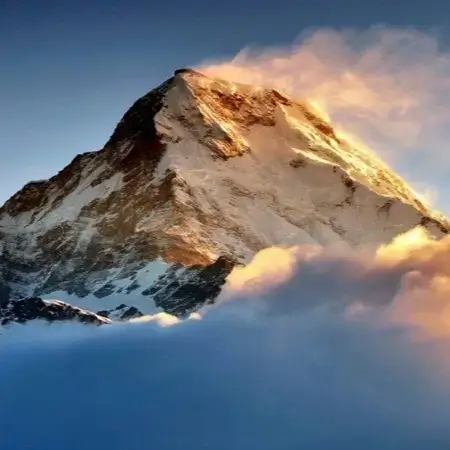

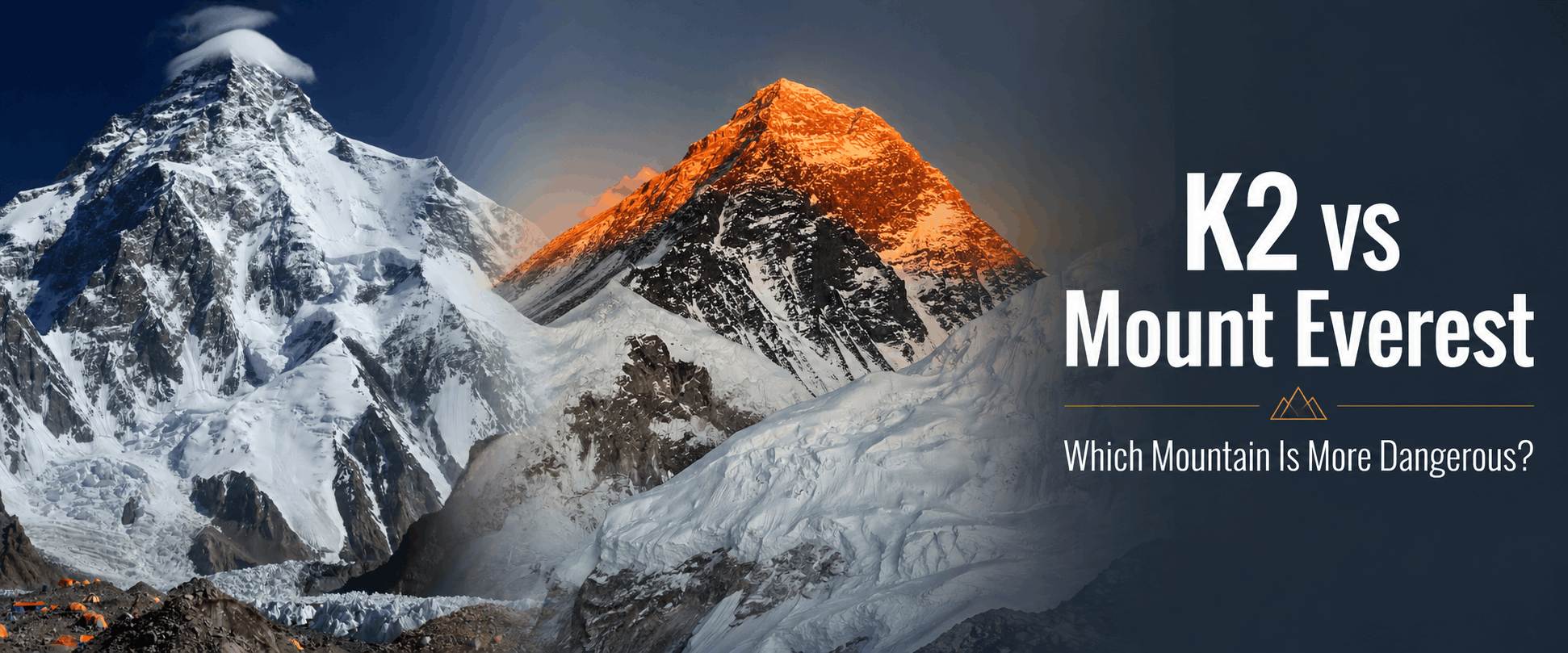
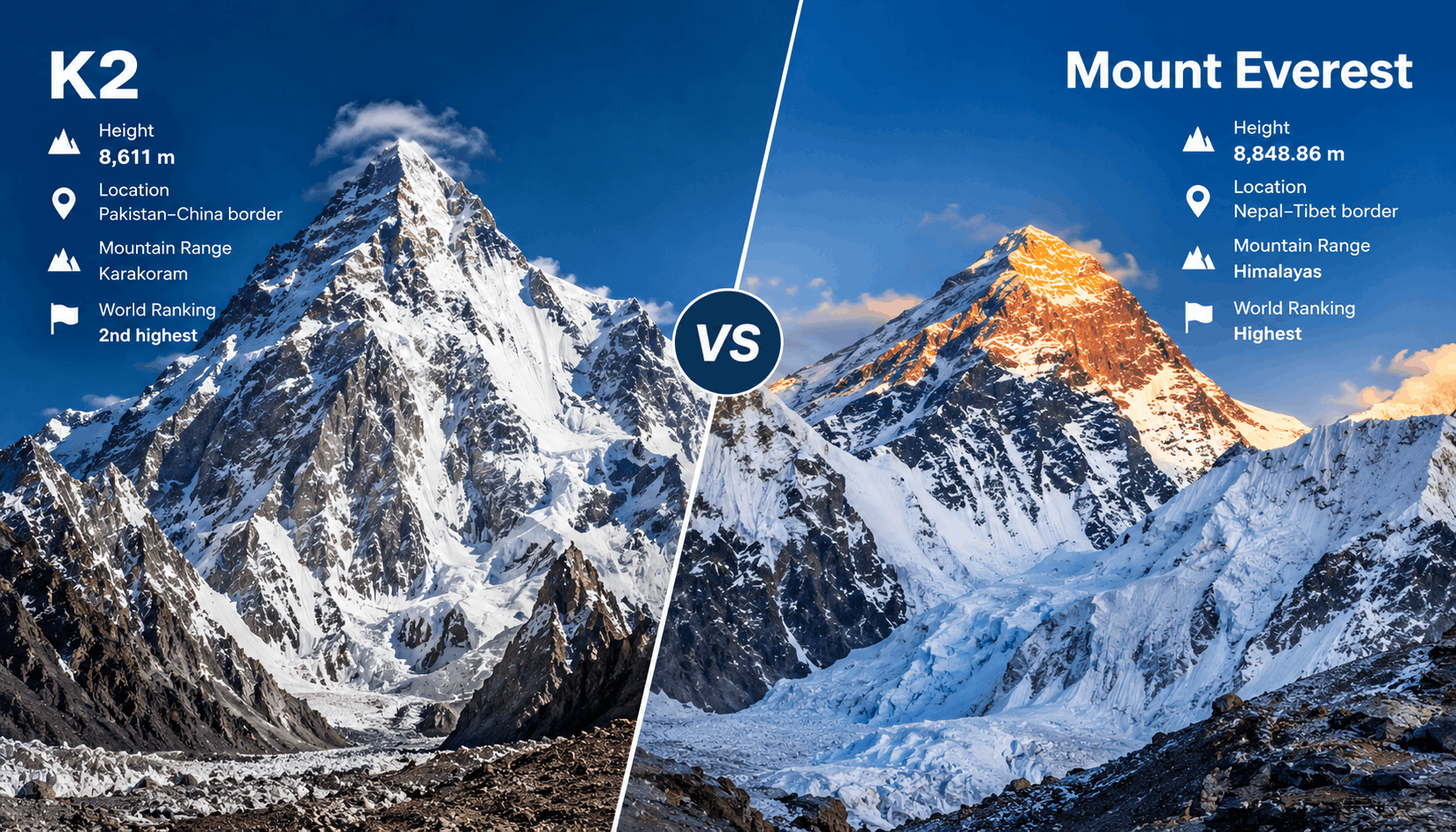
Mount Everest and K2 are the two highest mountains on Earth, but height alone does not determine how dangerous a mountain is. Mount Everest stands at 8,848.86 metres (29,031.69 ft), which makes it the highest mountain in the world. It lies in the Himalayas on the Nepal–China border. K2 reaches 8,611 metres (28,251 ft) and is the world's second-highest mountain, located in the Karakoram Range on the Pakistan–China border.
This means Everest is roughly 238 metres higher than K2, yet K2 has historically presented a substantially greater climbing risk. The difference comes from the nature of the mountains themselves. Everest's normal routes are extremely demanding because of altitude, cold, crevasses, avalanches and prolonged exposure above 8,000 metres. K2 adds much steeper, more technical climbing, rock and ice sections, frequent rockfalls, avalanche exposure, and extremely limited margins for error.
Records compiled using Himalayan Database figures show 13,737 recorded Everest summits and 339 deaths between 1922 and the end of 2025. K2 has historically had a much higher death-to-summit ratio. Modern improvements and a rise in successful ascents have reduced the often-quoted historical figure of roughly one death for every four summits. Recent compilations through 2025 place K2's cumulative death-to-summit ratio at roughly 10%, although totals vary between datasets.
A death-to-summit ratio is not the same thing as saying an individual climber has that exact percentage chance of dying. Repeat summits, unsuccessful attempts, guides and support climbers all affect the statistics. Still, the large difference supports K2's reputation as the more hazardous technical mountaineering objective.
K2 vs Mount Everest: The Ultimate Comparison
- Height: Mount Everest: 8,848.86 m
- K2: 8,611 m
- World Ranking: Mount Everest: Highest Mountain
- K2: Second-highest mountain
- Mountain Range: Mount Everest: Himalayas
- K2: Karakoram
- Location: Mount Everest: Nepal–Tibet border
- K2: Pakistan–China border
- Main Challenge: Mount Everest: Extreme altitude
- K2: Technical climbing + altitude
- Popular Climbing Route: Mount Everest: Southeast Ridge / North Ridge
- K2: Abruzzi Spur
- Commercial Expeditions: Mount Everest: Highly established
- K2: Increasing, but more limited
- Weather: Mount Everest: Extremely severe
- K2: Particularly unpredictable
- Technical Difficulty: Mount Everest: Extreme, but comparatively less technical on normal routes
- K2: Very high
- Rescue & Infrastructure: Mount Everest: More developed
- K2: More limited and remote
- Overall Danger: Mount Everest: Extremely dangerous
- K2: Generally considered more dangerous
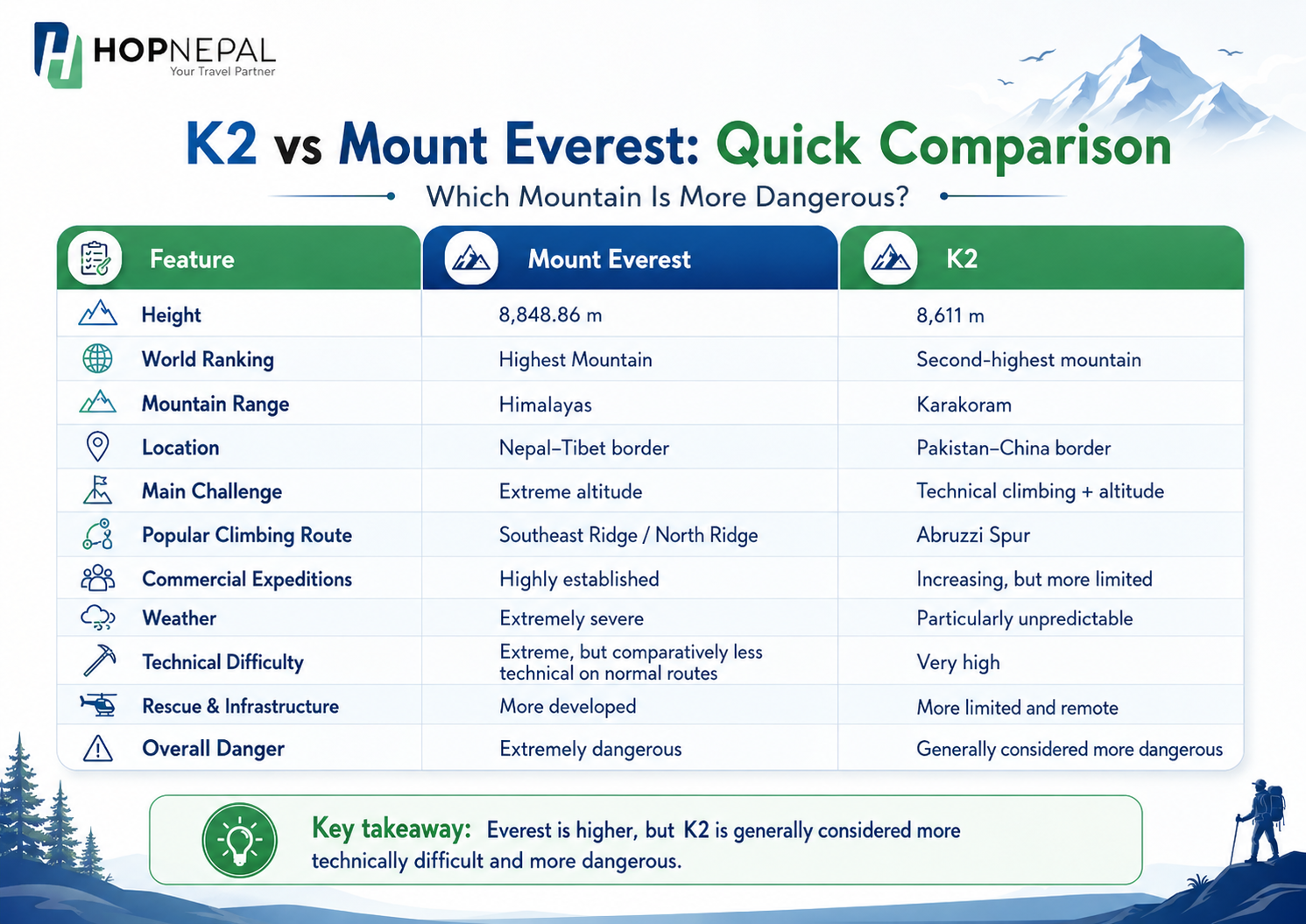
Mount Everest rises on the Nepal–Tibet border in the Himalayas, while K2 stands in the Karakoram and reaches 8,611 metres. In the context of elite mountaineering, the UIAA has described K2 as an exceptionally difficult mountain, while Everest's danger is heavily influenced by its extreme altitude and the number of people attempting it.
Is K2 More Dangerous Than Everest?
Yes, for an individual climber attempting the standard route, K2 is generally considered more dangerous than Everest.
That does not mean Everest is safe. Climbing Everest remains an extremely serious undertaking in an environment where a relatively minor problem can become life-threatening.
The difference is that Everest’s commonly used routes are comparatively well established. Commercial expeditions generally benefit from fixed ropes, high-altitude camps, professional guides, Sherpa support, detailed weather forecasts and extensive expedition infrastructure. K2 offers far less margin for error.
Climbers must negotiate sustained sections of steep snow, rock, and ice while operating at extreme altitudes. Falling rocks, avalanches, unstable ice, exposure, and sudden weather changes can quickly turn a summit attempt into an emergency.
Recent K2 seasons continue to demonstrate these dangers. In August 2025, Chinese climber Guan Jing died after being struck by falling rock while descending K2, one day after reaching the summit.
K2 vs Everest Height: Which Mountain Is Taller?
The answer is that Mount Everest is taller than K2.
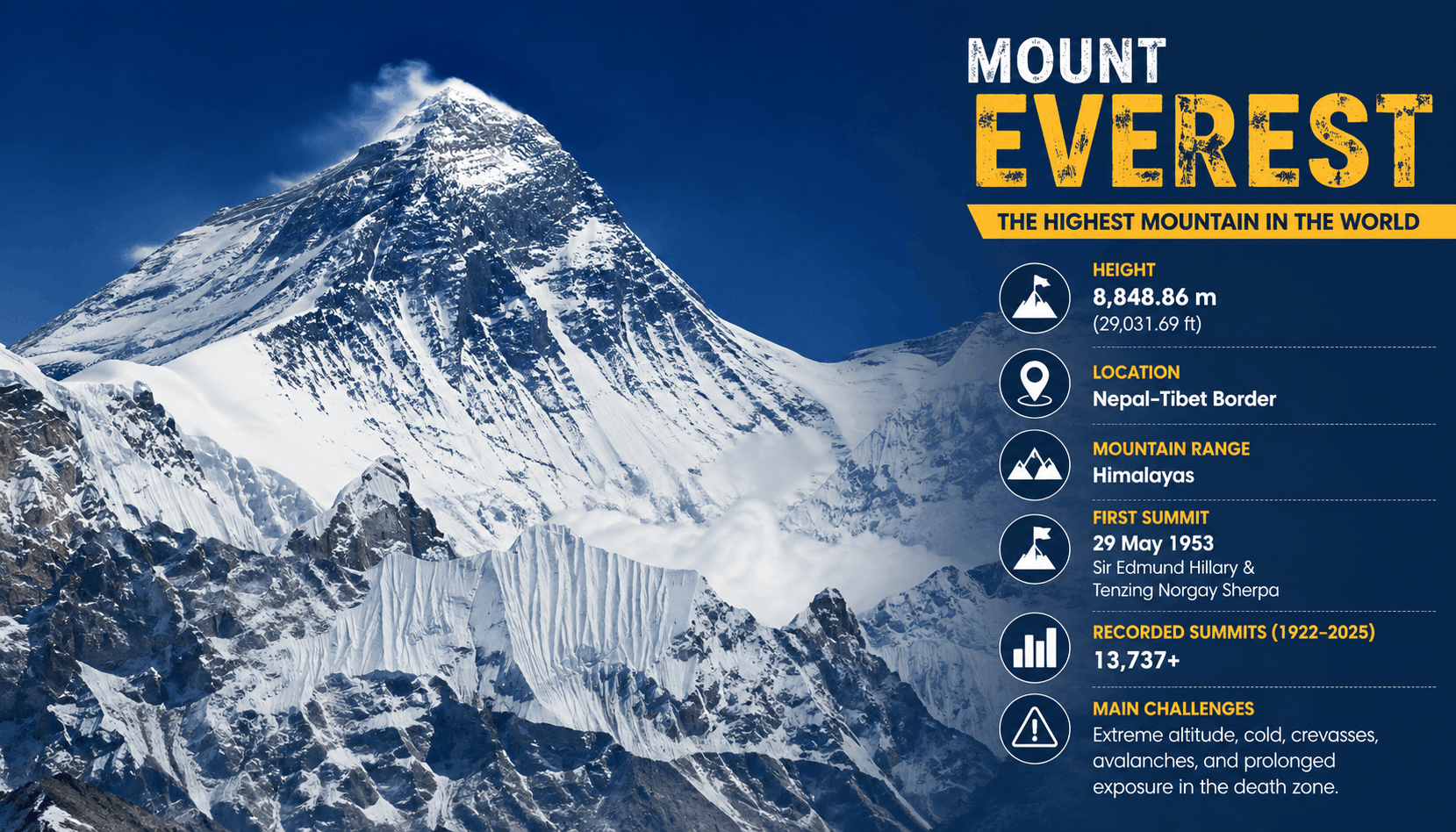
Mount Everest Height
8,848.86 metres (29,031.7 feet)
Everest is the highest point above sea level on Earth and is located in the Himalayas along the border between Nepal and Tibet.
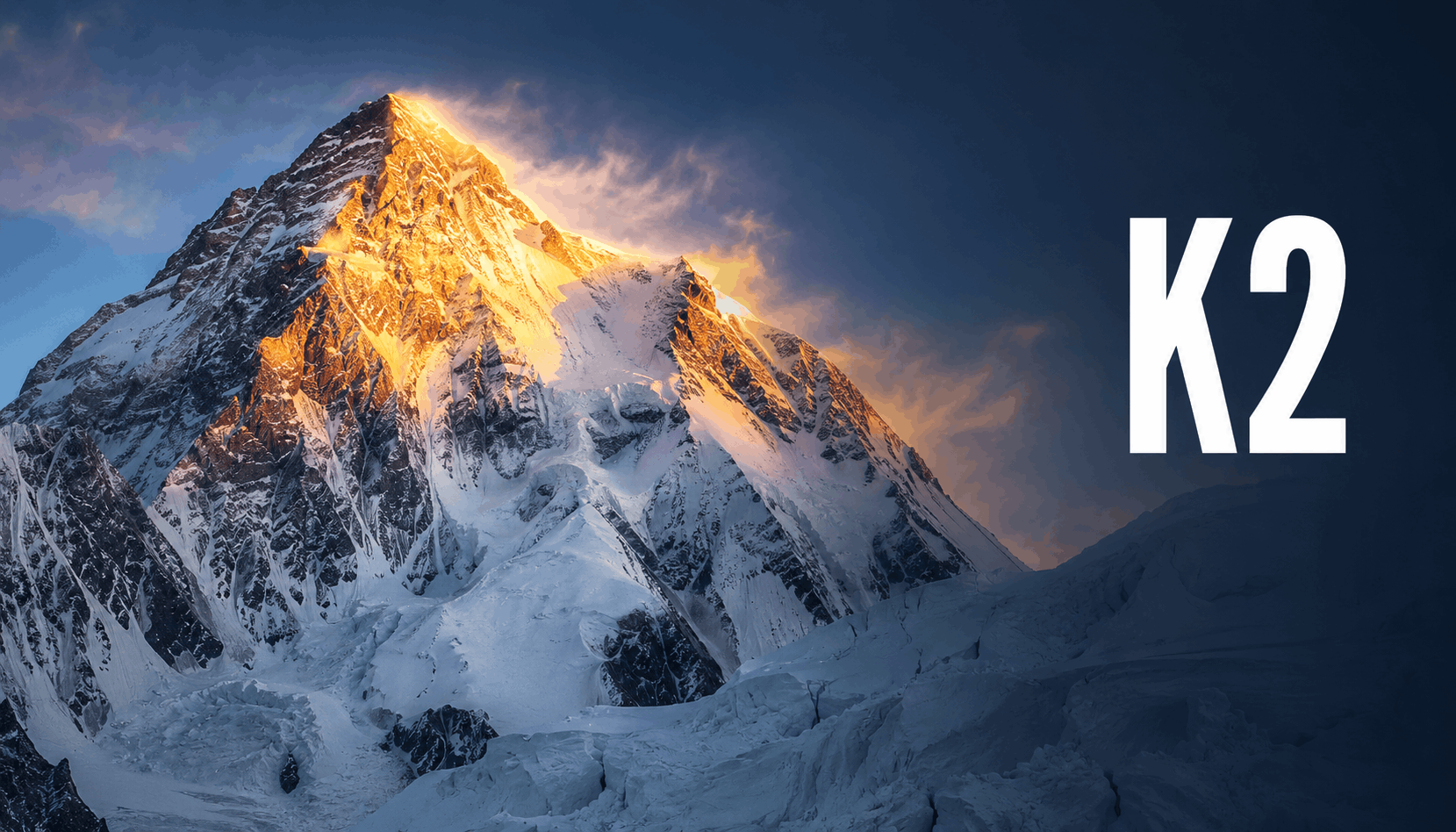
K2 Height
8,611 metres (28,251 feet)
K2 is the world's second-highest mountain and lies in the Karakoram Range. The difference between the two summits is approximately 238 metres.
Although that difference may seem small, above 8,000 metres every additional metre matters. Both summits lie within what mountaineers commonly call the death zone, where oxygen levels are insufficient to sustain the human body normally for prolonged periods.
However, height alone does not determine the difficulty of climbing a mountain.
K2 demonstrates this perfectly. Despite being lower than Everest, its terrain and climbing conditions are considerably more technical.
Why Is K2 Harder to Climb Than Everest?
K2's reputation does not come from one single obstacle. Its difficulty results from several dangers occurring together.
K2 Has Steeper and More Technical Terrain
One of the biggest differences in the K2 vs Mount Everest difficulty comparison is the steepness of the terrain.
Everest certainly contains steep, dangerous sections, including the Khumbu Icefall and Lhotse Face on the Nepal route. However, climbers can spend significant portions of the route moving over snow and glacier terrain. K2 requires more sustained technical climbing.
Its standard Abruzzi Spur includes steep snow, ice and mixed rock sections. Climbers need strong technical mountaineering skills to carry out those movements at altitudes where the body and brain receive very little oxygen. Physical exhaustion makes technical climbing even more dangerous.
K2 Has the Bottleneck
Perhaps the most famous section of K2 is the Bottleneck. Situated high on the mountain, the Bottleneck is a steep couloir that must be crossed beneath huge hanging ice formations.
The danger is not simply the steepness. Climbers can be exposed to falling ice, avalanches and serac collapse while already operating at extreme altitude. Passing this section successfully does not eliminate the danger, as climbers must normally cross it again on the descent.
This combination of terrain and objective hazards is one of the main reasons K2 is regarded with such respect among experienced mountaineers.
Weather on K2 vs Everest
Weather can decide whether an expedition succeeds or ends in retreat. Both mountains experience extreme winds, freezing temperatures, and rapidly changing conditions, but K2 is particularly notorious for unstable weather and short summit windows.
K2's position within the Karakoram exposes climbers to severe storms that can develop rapidly and remain for extended periods.
During the 2024 K2 season, unstable weather delayed progress and prevented teams from establishing higher camps as planned. In 2025, difficult route conditions and persistent rockfalls again affected summit attempts and descents, underscoring how narrow the window for a safe summit attempt can become. Everest also experiences extremely dangerous weather.
However, decades of expedition experience, improved forecasting and an established climbing season make weather planning somewhat more predictable than on K2. Neither mountain should ever be underestimated, even with a favourable forecast.
The Death Zone on Everest and K2
Both Everest and K2 rise above 8,000 metres, placing their highest sections inside the death zone.
At these elevations, atmospheric pressure is dramatically lower than at sea level, reducing the oxygen available to the human body.
Climbers can experience:
- extreme exhaustion
- impaired judgement
- loss of coordination
- dehydration
- frostbite
- hypothermia
- high-altitude cerebral oedema
- high-altitude pulmonary oedema
Even simple tasks become difficult.
The longer someone remains at extreme altitude, the greater the physiological stress.
This is particularly relevant when comparing Everest and K2 because K2 often demands complicated technical movements at precisely the altitude where climbers are becoming physically and mentally weaker.
Supplemental oxygen is therefore an important factor in high-altitude mountaineering. UIAA medical guidance notes evidence showing substantially greater mortality risk among climbers attempting peaks such as Everest and K2 without supplementary oxygen.
K2 Death Rate vs Everest: What Do the Numbers Really Mean?
You may have encountered claims that K2 has a 25% death rate, or that historically one climber died for every four people who reached the summit. That figure comes from older death-to-summit comparisons and should not be interpreted as meaning that every climber attempting K2 has a one-in-four chance of dying.
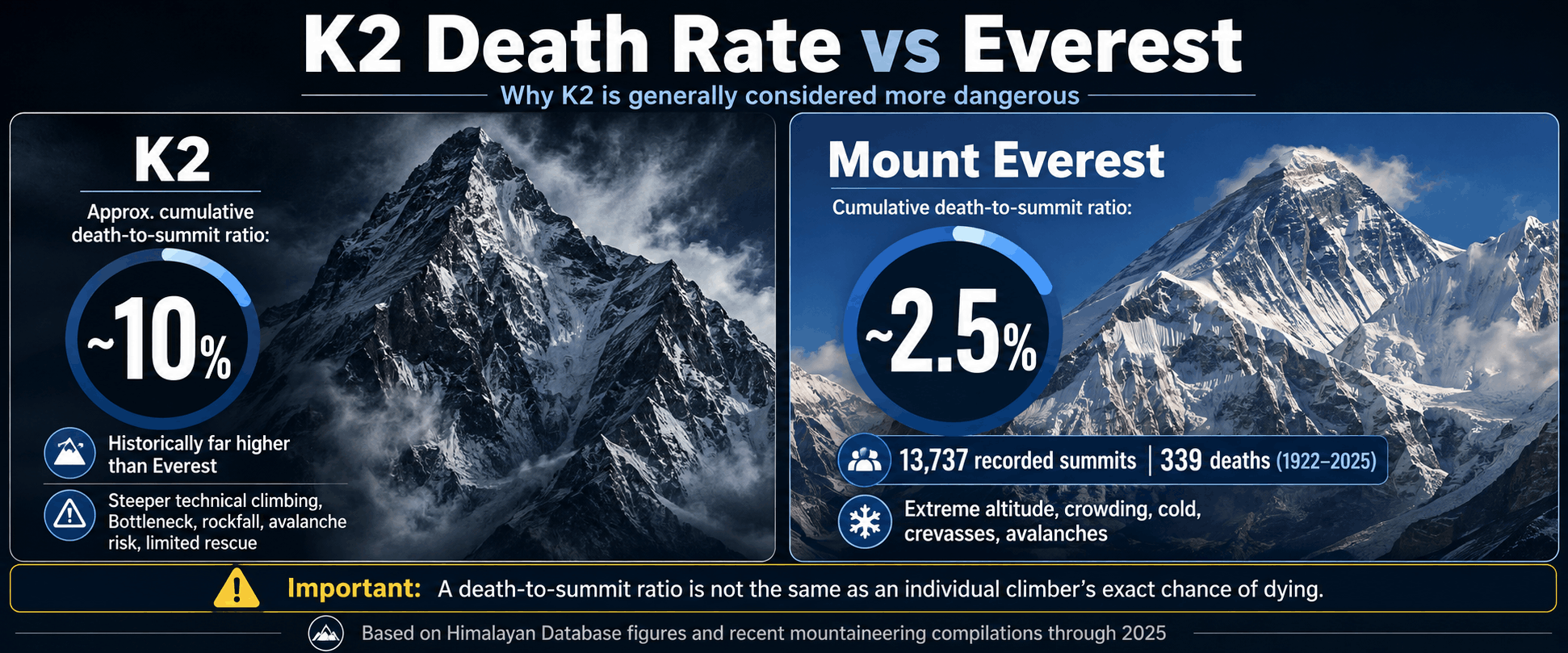
According to statistics compiled from the Himalayan Database, Mount Everest recorded 13,737 summit ascents and 339 deaths between 1922 and the end of 2025. That produces a simple cumulative death-to-summit ratio of about 2.5 %, or roughly one recorded death for every 41 summit ascents. However, the same dataset calculates Everest's normalised death rate differently because it considers climbing participation rather than simply dividing deaths by summits.
Historical ratios can also change significantly as:
- more climbers attempt the mountain;
- equipment improves;
- weather forecasting improves;
- commercial expeditions increase;
- fixed-rope systems improve;
- supplemental oxygen becomes more common;
- rescue and communication technology develops.
The changing Everest numbers demonstrate this clearly. In 2025 alone, 852 Everest summit ascents were recorded from the Nepal and Tibet sides combined, while five deaths were recorded that season, all on the Nepal side.
K2 has also experienced a rapid increase in successful ascents. In 2023, 112 climbers reached K2's summit and one fatality was recorded, a level of summit activity that would have been extraordinary during earlier decades of K2 climbing. This growth in successful commercial expeditions is one reason K2's historic death-to-summit ratio has fallen.
That does not mean K2 has become easier than Everest. K2 is generally considered more dangerous than Mount Everest.
Why Have More People Died on Everest?
If K2 is more dangerous, why does Everest have more recorded deaths? The main reason is exposure and climbing volume.
Thousands more climbers have attempted Everest over its history. Modern Everest seasons can involve hundreds of permitted climbers plus guides and high-altitude support staff.
Nepal issued 494 foreign-climber permits for Everest during the 2026 spring season. Modern expedition infrastructure has made the mountain more accessible to qualified commercial expedition clients, although overcrowding itself can introduce additional danger. K2, by comparison, attracts substantially fewer climbers.
Therefore:
Total deaths do not automatically tell us which mountain is more dangerous for each climber. The type of climbing, technical difficulty, objective hazards, and the probability of a successful rescue must also be considered.
Is Everest Easier Than K2?
Everest is comparatively easier than K2 via their standard routes, but describing Everest as "easy" would be misleading.
A successful Everest expedition still requires:
- excellent physical conditioning;
- proper acclimatisation;
- previous high-altitude experience;
- mountaineering skills;
- mental resilience;
- weeks of preparation;
- appropriate equipment;
- professional expedition support.
Above 8,000 metres, a failure in equipment, health, judgement or weather assessment can become fatal.
In 2026, experienced Everest guide Kenton Cool also emphasised the importance of expedition operators properly assessing climbers' experience and preparation, despite improvements in equipment, weather forecasting and professional mountain support.
Is K2 Harder to Climb Without Oxygen?
Climbing either Everest or K2 without supplementary oxygen dramatically increases the challenge.
K2 without bottled oxygen is considered an elite-level mountaineering objective because climbers must combine advanced technical movements with the severe physiological effects of hypoxia.
The challenge is not simply reaching the summit.
A climber must also retain enough energy, concentration and coordination to descend technical terrain safely.
This is why experienced mountaineers often repeat an important principle:
The summit is only halfway.
Many mountaineering accidents occur during descent, when climbers are exhausted, dehydrated and physically depleted.
Rescue on Everest vs K2
Another major factor affecting mountain danger is how things go when something goes wrong.
Rescue on Everest
Everest benefits from a highly developed expedition ecosystem.
Depending on altitude, weather and circumstances, climbers may have access to:
- established camps;
- Sherpa rescue teams;
- expedition doctors;
- radio and satellite communication;
- helicopter evacuation at lower elevations;
- organised climbing operators;
- detailed weather forecasting.
Rescue at extreme altitudes remains exceptionally difficult and sometimes impossible, but Everest has more infrastructure to support an emergency response.
Rescue on K2
K2 is considerably more remote. Its terrain makes evacuation more difficult, and severe weather can prevent helicopters from operating even at comparatively lower elevations.
In August 2025, adverse weather grounded helicopter flights during the initial recovery effort after Guan Jing was killed by falling rock while descending K2, requiring a mountaineering team to continue the recovery on foot.
At high altitude, climbers may need to depend heavily on their own team and nearby expeditions.
This limited margin for rescue adds another layer to K2's overall danger.
Everest Crowding vs K2 Isolation
The two mountains also present very different human risks.
Everest: Too Many Climbers
Everest's popularity can sometimes create congestion during narrow summit windows.
When many climbers attempt the summit simultaneously, delays can occur at technical sections.
Waiting at extreme altitude means using more supplemental oxygen and spending additional time in freezing, low-oxygen conditions.
On 20 May 2026, a record 274 climbers reached the summit of Everest from the Nepal side in a single day, again highlighting concerns surrounding congestion and climber experience.
K2: Too Few Resources
K2 has almost the opposite problem.
There may be fewer climbers available to help during an emergency, fewer established resources and fewer opportunities for outside assistance.
In mountaineering, isolation can be just as dangerous as congestion.
Why Is K2 Called the Savage Mountain?
K2 is widely known as the "Savage Mountain".
The nickname has remained closely associated with the peak because of its steepness, storms, technical climbing and history of serious accidents.
Unlike Everest, where climbers following the standard commercial route benefit from an increasingly developed expedition system, K2 continues to leave climbers with very little margin for error.
Strong climbers can prepare carefully and still be forced to turn around because of conditions beyond their control. That unpredictability forms a major part of K2's reputation.
K2 vs Everest: Which Requires More Experience?
K2 generally requires a higher level of technical climbing experience.
An Everest climber should already possess considerable mountaineering and high-altitude experience. Yet large commercial operators can provide extensive logistical support on the normal route.
A K2 expedition demands greater independence and stronger technical competence. Previous experience on 7,000-metre peaks, and preferably 8,000-metre peaks, excellent rope skills, ice-climbing ability, and confidence on steep mixed terrain are particularly important.
K2 is not considered a suitable first 8,000-metre peak.
Has K2 Become Safer?
Modern equipment, fixed ropes, communication systems, weather forecasting, supplemental oxygen and stronger commercial expedition support have increased opportunities for successful K2 ascents.
But the mountain itself has not become easier. Rockfall, steep terrain, avalanches, unstable ice, extreme altitude and severe weather remain.
The 2025 climbing season provided a reminder that even climbers who successfully reach K2’s summit may encounter major dangers during their descent. Technology can help mountaineers manage risk. It cannot eliminate it.
K2 vs Everest: Which Is More Dangerous?
When all factors are considered, K2 is generally more dangerous than Mount Everest. Everest is higher, but K2 is generally more technically difficult and dangerous.
Everest is especially dangerous because of:
- greater altitude;
- the Khumbu Icefall;
- extreme cold;
- altitude sickness;
- avalanches;
- crevasses;
- exhaustion;
- summit-day congestion;
- prolonged exposure above 8,000 metres.
K2 is especially dangerous because of:
- sustained technical climbing;
- steeper terrain;
- rockfall;
- avalanches;
- unstable ice and seracs;
- the Bottleneck;
- unpredictable weather;
- shorter summit windows;
- difficult descent;
- remote location;
- limited rescue possibilities.
The difference is therefore not simply about which mountain has recorded more deaths. It is about the combination of risks a climber must manage during an individual ascent.
Final Verdict: Is K2 or Everest More Dangerous?
So, which mountain is more dangerous: K2 or Everest?
K2 is generally considered the more dangerous and difficult mountain to climb.
Mount Everest is 237.86 metres higher and exposes climbers to some of the harshest high-altitude conditions on Earth. However, its standard routes have more developed expedition infrastructure and are comparatively less technically demanding.
K2 combines extreme altitude with steep, technical terrain, rockfalls, avalanches, unpredictable weather, difficult summit and descent sections, and limited rescue opportunities.
That combination gives climbers far less room for mistakes.
Everest may be the highest mountain in the world, but K2 remains one of mountaineering's most formidable challenges.
For travellers who dream of seeing Everest without attempting its dangerous summit, trekking the Everest region offers an unforgettable way to experience the Himalayas while leaving extreme mountaineering to highly experienced climbers.
Frequently Asked Questions About K2 vs Everest
Which is more dangerous, K2 or Everest?
K2 is generally considered more dangerous because it involves more sustained technical climbing, steeper terrain, rockfalls, avalanche exposure, unstable weather, and fewer rescue opportunities. Everest is higher but has more established climbing infrastructure.
Is K2 harder to climb than Everest?
Yes. K2's standard climbing route is generally regarded as more technically difficult than Everest's standard routes. Climbers must negotiate steep rock, snow and ice at extreme altitude.
Is K2 higher than Mount Everest?
No. Mount Everest is higher. Everest stands at 8,848.86 metres, while K2 reaches 8,611 metres.
Why is K2 so dangerous?
K2 is dangerous because of its steep terrain, technical climbing sections, avalanches, rockfall, seracs, unpredictable weather, extreme altitude, difficult descent and remote location.
Why is K2 called the Savage Mountain?
K2 earned the nickname because of its formidable terrain, severe weather and difficult climbing conditions. The name reflects the mountain's long-standing reputation among mountaineers as an exceptionally demanding peak.
Which has more deaths, Everest or K2?
Everest has recorded more deaths in absolute numbers, largely because vastly more people have climbed or attempted it. Comparing total deaths alone therefore does not accurately measure the individual risk of climbing the two mountains.
Can beginners climb K2?
No. K2 requires advanced mountaineering ability and extensive high-altitude experience. It should only be attempted by experienced climbers with strong technical skills and appropriate expedition support.
Can beginners climb Mount Everest?
Everest should not be treated as a beginner mountain either. Although commercial expedition support is extensive, climbers should have substantial mountaineering, high-altitude and expedition experience before attempting the summit.
Is Everest Base Camp dangerous?
Everest Base Camp trekking is far less dangerous than climbing Everest, but it is still a high-altitude trek. Altitude sickness, weather, cold and physical exhaustion are important considerations, so gradual acclimatisation and appropriate preparation are essential.