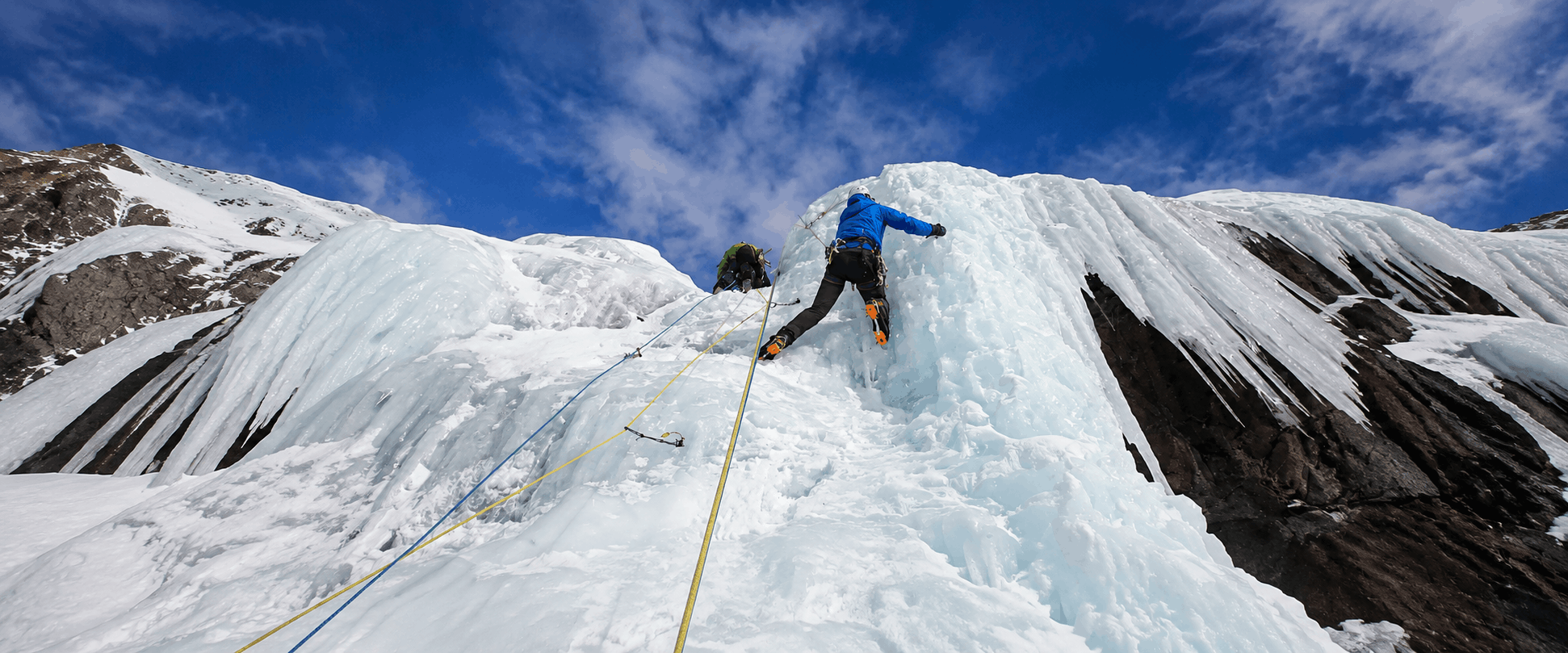
The Khumbu Icefall is one of the most dangerous and dramatic sections on the route to Mount Everest from Nepal’s southern side. Located just above Everest Base Camp, at an altitude of 5,486m on Nepal’s slopes, this frozen maze of ice towers and moving glacial blocks is one of the first major challenges for climbers attempting to summit Everest via the South Col route.
The Khumbu Icefall is beautiful, but it is also unstable. The ice is constantly moving and cracking. Huge ice blocks called seracs can collapse without warning, deep crevasses can open beneath snow bridges, and the route may need to be adjusted several times during the climbing seasons. This is why the Khumbu Icefall is often described as one of the dangerous areas on Everest’s route.
The Khumbu Icefall has been a crucial part of the history of Mount Everest climbing. Many historic climbers made their way to Everest from this region. It is where Sir Edmund Hillary and Tenzing Norgay encountered their early obstacles during their successful summit of Mount Everest in 1953.
What is Khumbu Icefall?
The Khumbu Icefall is like a frozen river that is slowly moving downhill. But unlike a normal river, it is made up of ice. As the glacier moves, the ice breaks, shifts, and collapses, creating a dangerous landscape filled with crevasses, seracs, and uneven ice formations.
It is located between Everest Base Camp and Camp I. This section forms where the glacier moves down a steep slope, breaking into giant blocks of ice, deep cracks and unstable towers.
For climbers, crossing the Khumbu Icefall is one of the first technical challenges after leaving Everest Base Camp. It is not just physically demanding; it is mentally challenging as well because the terrain is unpredictable.
Where is Khumbu Icefall Located?
The Khumbu Icefall is located on the southern side of Mount Everest in Nepal. It sits between Everest Base Camp and Camp I. It is located at an altitude of about 5,486 meters above sea level.
For trekkers going only to Everest Base Camp, the Khumbu Icefall is an important visual highlight. Trekkers can see the icefall area from Everest Base Camp, but do not enter the technical climbing route.
Khumbu Icefall Temperature By Season
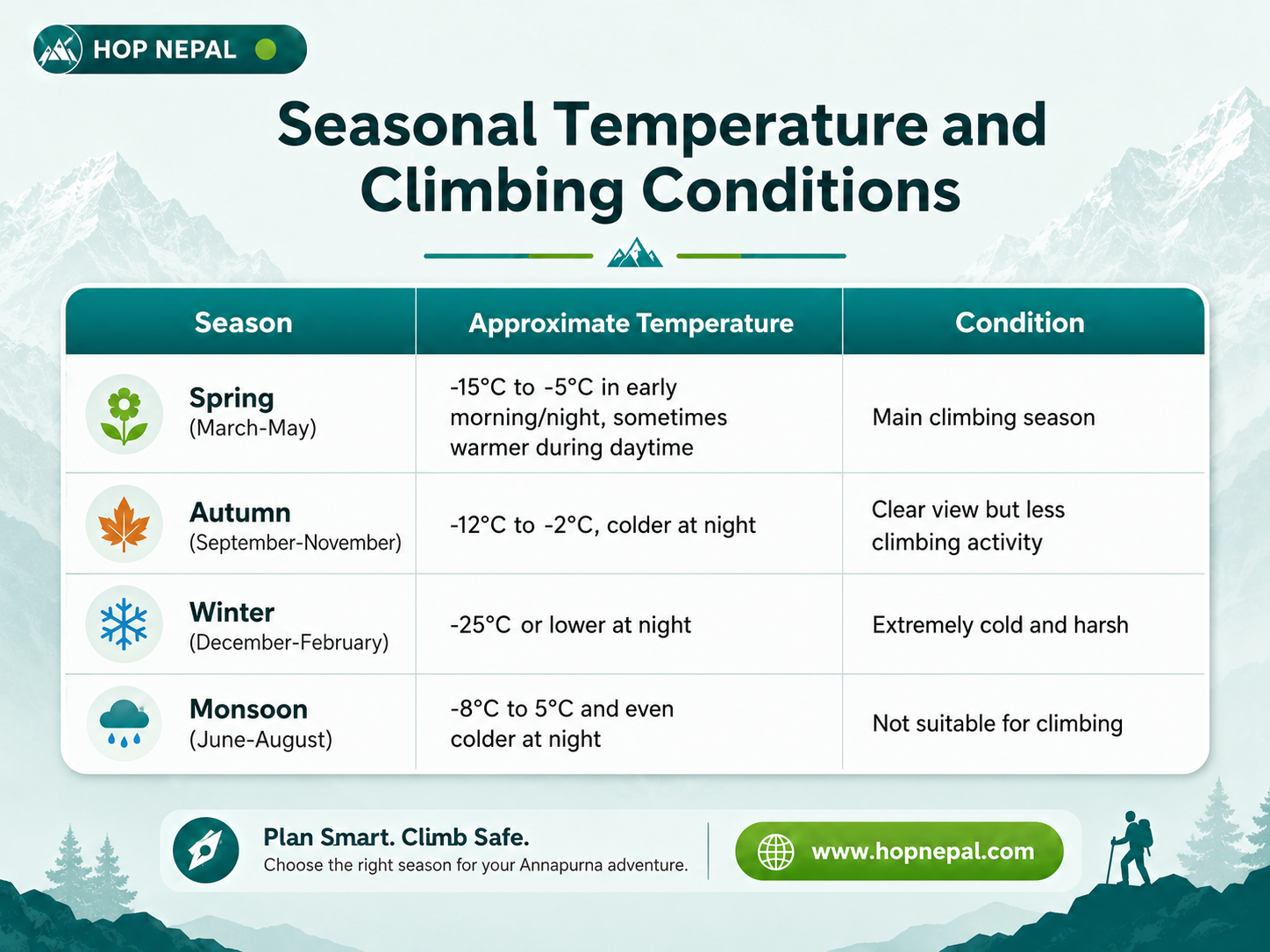
The temperature in the Khumbu Icefall is extremely cold because it lies above Everest Base Camp at a high altitude, between roughly 5,300 meters and 6,000 meters. The temperature can change quickly depending on the season, time, wind, sunlight and weather conditions.
Why is Khumbu Icefall so dangerous?
The Khumbu Icefall is dangerous because it is a frozen river that keeps moving; the ice breaks down and collapses, and the weather in this region is unpredictable, posing challenges to both the mental and physical health of climbers.
Crevasses: Deep Cracks in the Ice
One of the biggest dangers in the Khumbu Icefall is the presence of crevasses. Crevasses are deep cracks in the glacier. Some are visible, while others may be hidden under snow.
These hidden crevasses are especially dangerous because they can appear to be normal snow-covered ground from the surface. If a snow bridge is weak, a climber can fall through it.
Seracs: Giant Towers of Ice
Seracs are large blocks or towers of ice that form in glacier areas. In the Khumbu Icefall, seracs can be massive and unstable. They stand like frozen buildings, but they can collapse suddenly due to movement, changes in temperature or pressure within the glacier.
This is one reason climbers try to move through the Icefall quickly and avoid spending unnecessary time in exposed areas.
Four Facts About Khumbu Icefall
The Khumbu Icefall is one of the most famous and dangerous sections of Mount Everest’s climbing route. The death rate at the Khumbu Icefall is 25% of all deaths on the Nepal side of Everest.
Four Facts of Khumbu Icefall are listed below:
- Khumbu Icefall is often described as a Living Ice Maze
- Giant Ice Tower is one of the most dangerous things in Khumbu Icefall
- In Khumbu Icefall, some Crevasses can be Super Deep
- Khumbu Icefall is often described as a Frozen Wonderland because of its dramatic ice formation, blue glacier wall and deep cracks along the moving glacier
Living Ice maze
The Khumbu Icefall is often described as a living ice maze because it is not a fixed or stable route. Unlike a normal mountain trail, the path through the Icefall can change within hours or days. This frozen maze is filled with towering ice blocks, deep crevasses, snow bridges, ladders and unstable seracs.
Giant Ice Towers: Seracs in the Khumbu Icefall
Giant ice towers, also known as seracs, are one of the most dangerous things in the Khumbu Icefall. These massive blocks of ice stand like frozen buildings inside the glacier, creating a dramatic but highly unstable landscape on Everest’s route.
Deep Crevasses and Snow Bridges
In the Khumbu Icefall, some crevasses can be extremely deep and wide, making them one of the most dangerous obstacles between Everest Base Camp and Camp I.
It is a moving glacier where the ground can crack, shift, or collapse without warning. Even experienced climbers treat this section with full concentration.
Frozen Wonderland
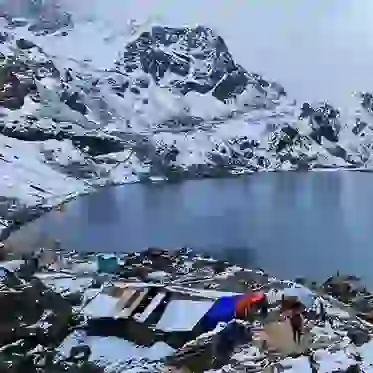
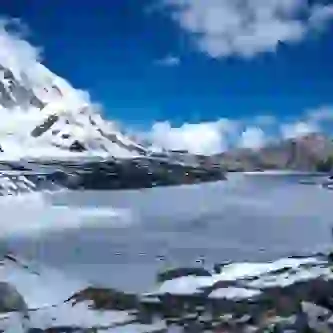
Despite all of the dangers, Khumbu Icefall is breathtakingly beautiful. It is often described as a frozen wonderland because of its dramatic ice formations, blue glacier walls, snow-covered towers, and deep cracks across the moving glacier.
How do Climbers Cross Khumbu Icefall?
Climbers cross the Khumbu Icefall with the help of fixed ropes, ladders, crampons, helmets, harnesses, and experienced support. This section is not a normal trekking path. It is a technical climbing route filled with deep crevasses, unstable ice towers, snow bridges, and constantly moving glacier blocks.
Before climbers attempt to cross the Icefall, the route is usually prepared by skilled
Sherpa climbers known as Icefall Doctors, because the Khumbu Icefall is always moving, the route may need to be repaired or changed several times during the climbing season.
Khumbu Icefall Safety Tips for Climbers
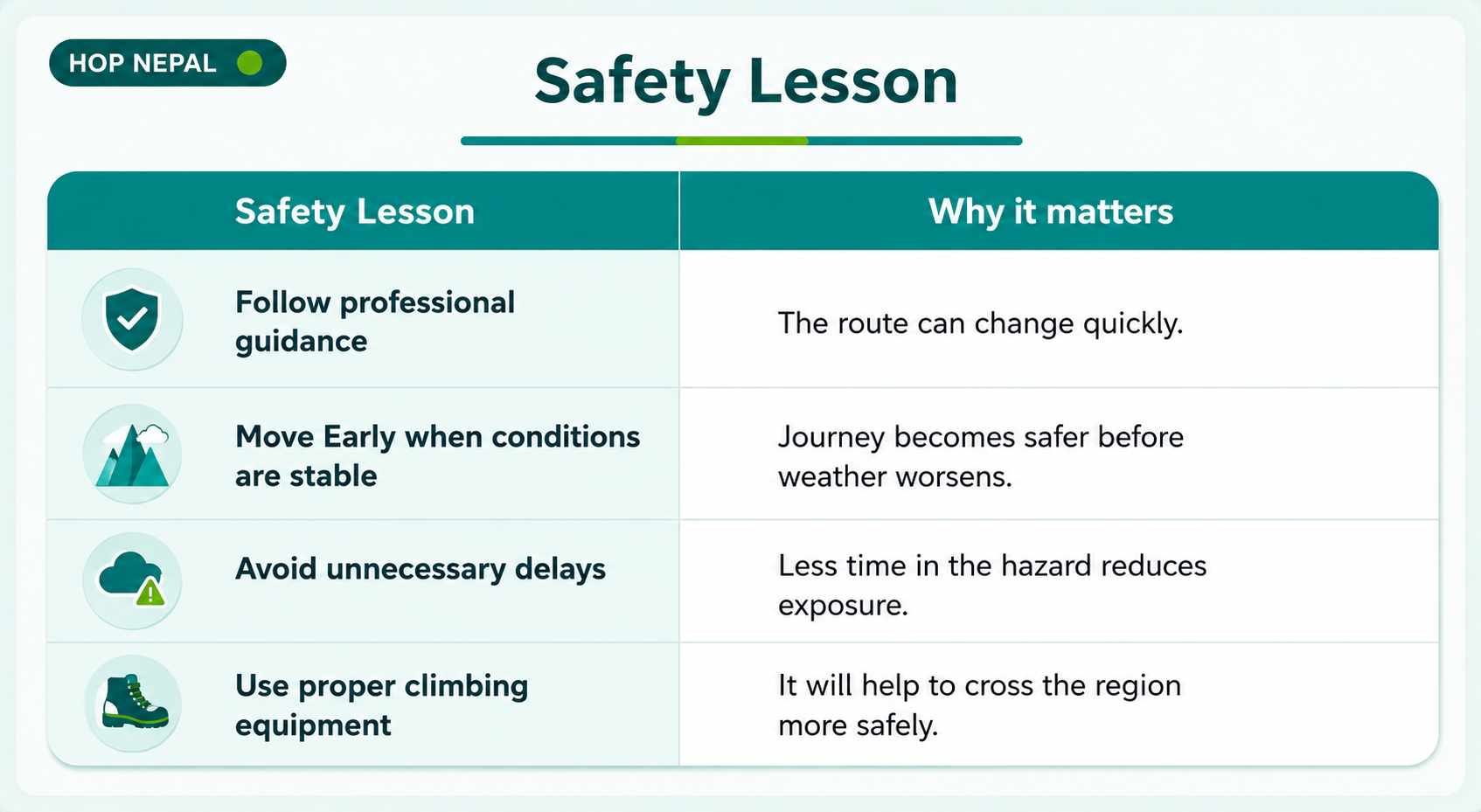
The Khumbu Icefall teaches an important lesson: the mountains must be respected. No matter how experienced a climber is, nature is always more powerful. Trekkers should always follow their guide’s instructions for their safety.
Important safety measures include;
 lusion
The Khumbu Icefall is one of the most dangerous yet fascinating areas on Everest’s route. It is a moving maze of ice, crevasses, ladders and towering seracs. For climbers, crossing the Icefall is one of the first serious tests on the journey towards the summit of Everest.
For Everest Base Camp trekkers, the Khumbu Icefall is not something to cross but something to understand and respect. It represents the raw power of the Himalayas and the serious risks faced by climbers and Sherpa teams on Everest.
If you are planning an Everest Base Camp Trek or Everest region trip, contact Hop Nepal. We can help you with itinerary planning, permits, guides, accommodation, flights and complete trekking support for a safe and memorable Himalayan experience.
FAQs of Khumbu Icefall
Do Everest Base Camp Trekkers cross Khumbu Icefall?
No, Everest Base Camp trekkers do not cross Khumbu Icefall. The Khumbu Icefall lies between Everest Base Camp and Camp I.
Why is Khumbu Icefall Important?
The Khumbu Icefall is very important when climbing Mount Everest. It is the main obstacle that arises while climbing Mount Everest.
Why is Khumbu Icefall called Frozen Wonderland?
The Khumbu Icefall is called a frozen wonderland because it is filled with dramatic ice formations, blue glacier walls, snow-covered towers, and deep crevasses. However, despite its beauty, it is extremely dangerous.
How Long is Khumbu Icefall?
Khumbu Icefall is about 2 kilometers long from Everest Base Camp to Camp I. Although it is not a long distance, it is a very dangerous glacier.
How was Khumbu Icefall Formed?
The Khumbu Glacier, from the Western Cwm area, created the Khumbu Icefall. As the glacier moves and the slope changes, the ice breaks, forming large crevasses and seracs.
Do I need a permit for Khumbu Icefall?
Yes, passing through Khumbu Icefall requires an official Mount Everest Permit .