



Overview
Trip Overview
Ama Yangri is the hidden jewel of the Helambu region. This place is a heaven for all local and international tourists who like to travel in the wonderful, rich hilly region of Nepal . So, for those who enjoy the wildness and want to be one with nature, the Ama Yangri trek is the best choice. This trek is as popular as the Poon Hill trek because the view here is quite similar to the Poon Hill view. Ama Yangri is located approximately 90 km from the capital city of Kathmandu .
The Ama Yangri trek was once highly underrated and rarely visited. However, nowadays it has been one of the most popular and best short trek destinations near Kathmandu. Ama Yangri Peak is an excellent trekking destination in the Helambu region. Ama Yangri peak is also considered the most prominent peak in the Kathmandu Valley, which sits at around 3371 meters. The famed peak is also considered the guardian deity of the Helambhu region. Ama Yangri is the name that combines the Nepalese words Ama, meaning mother, and Yangri, meaning goddess. Locals believe that the peak safeguards all the close surrounding areas from dreadful natural disasters and ever-vigilant evil spirits.
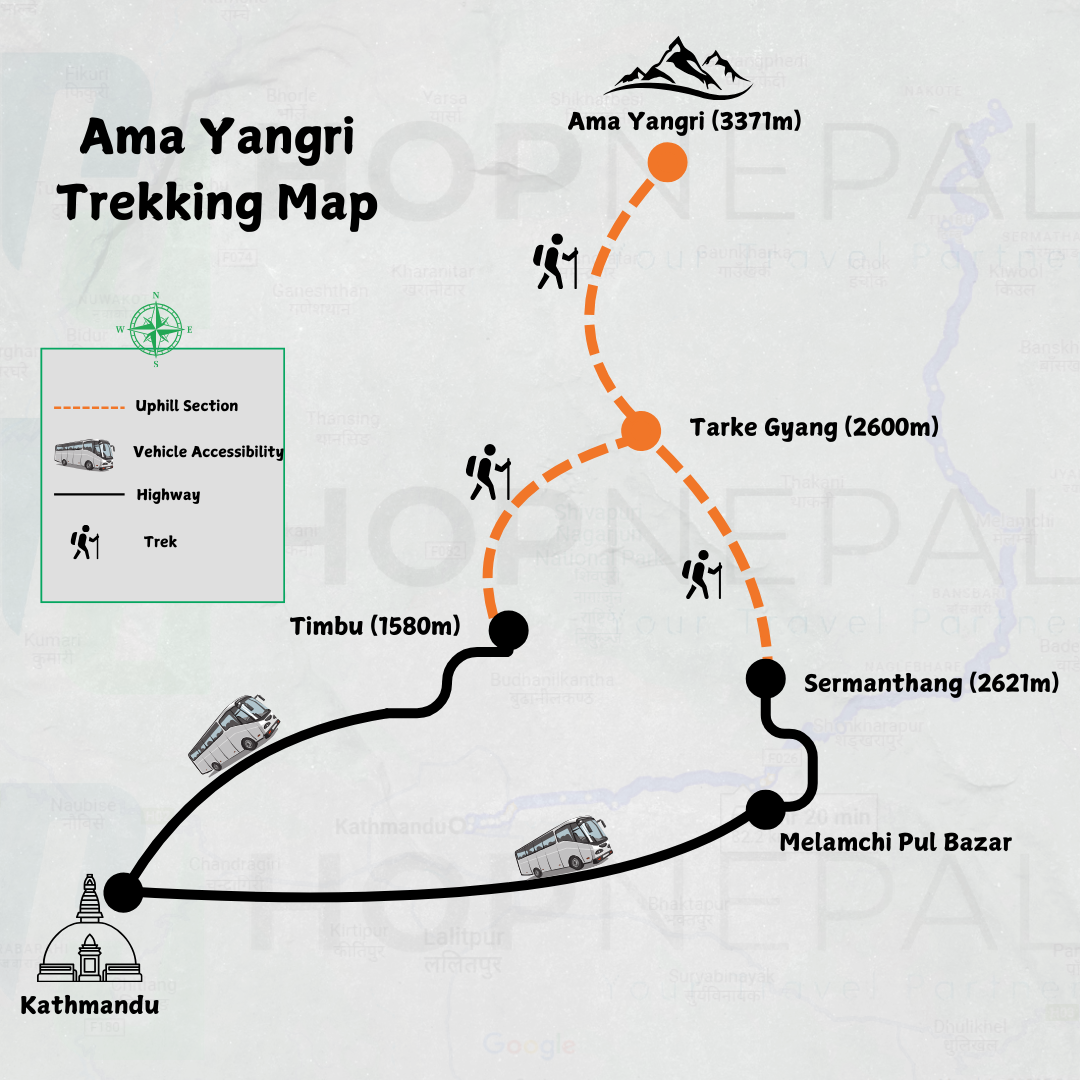
Ama Yangri Peak Trek Map
The Ama Yangri Peak trek map follows a beautiful and serene path toward your destination capturing the natural beauty of the nature and wildlife.
Brief Introduction to the Ama Yangri Trek
The great Ama Yangri Trek starts from the small village settlement of Melamchi. The journey from Kathmandu to Melamchi is itself a fine Ama Yangri trekking experience. As you go down the Melamchi River, you will go through the lovely and scenic village of Tarangmarang. The drive offers stunning views of the terraced fields and neighboring peaks. Upon reaching Timbu, the Ama Yangri trek ascends through dense rhododendron forests, accompanied by the enchanting chirps of local bird species.
Encounters with Age-old Cultures and Extraordinary Village Life
During the Ama Yangri trek, Trekkers go through traditional Tamang and Sherpa settlements adorned with many revered monasteries (Gumba) and prayer flags. You can visit many monasteries during your journey to Ama Yangri. The main monasteries in this region are Kakani, Tarkeghyang, Melamchi Ghyang Monastery, Sermathang Monastery, and Yolmo Takpachenling Monasteries, which call this region home.
Major Historical Background
Ancient Times: At times, the Hyolmo, an ethnic group with roots in Tibet, had lived in Helambu for centuries. They have maintained their cultural identity and religious practices.
Buddhist Influence: This region also has several old stupas and monasteries, some dating back several hundred years. Such religious sites play a central role in the spiritual landscape of Ama Yangri, attracting several trekkers and pilgrims.
Religious Site: Ama Yangri is a fine pilgrimage destination, especially at the yearly festival celebrated with pomp by the local Hyolmo community. At Ama Yangri Trek, paying your respects to the Ama Yangri deity is also a wise option while venturing into their domain.
Modern Times at Ama Yangri
Tourism: In recent recorded times, Ama Yangri Peak trek has gained tremendous popularity among trekkers, locals, and visitors alike. The trek to the marvellous Ama Yangri offers splendid views of the Himalayas, including the Langtang and Ganesh Himal mountain ranges.
Conservation Plans: Many plans and dedicated efforts have been made to sustain and preserve the entire natural and cultural identity of the Ama Yangri region. The initiatives aim to protect the environment, support sustainable, ever-improving tourism, and help maintain the area's fantastic and rare cultural heritage.
Interconnected Treks through Nepal’s Ama Yangri Region
The Ama Yangri trek in Nepal is deeply connected to several other famous trekking routes in the region. It is situated near the Ganjala Pass and Tilman Pass of the Betan area trek; it offers challenging terrain for several trekking enthusiasts. The trek also includes the popular Helambu Gosaikunda trek, known for its majestic mountain scenery and deeply rooted in religious significance. These trails also collectively offer a rich mix of natural beauty and cultural encounters, making the whole area a great destination for adventurers seeking both a physical challenge and spiritual enlightenment amid Nepal’s awe-inspiring, mesmerising Himalayan landscapes. Visitors and trekkers will not be disappointed with what the Ama Yangri trek offers.
Challenges and Rewards of Ama Yangri Trekking
While the Ama Yangri Trek is not at all challenging, it generally leaves trekkers with an unspoiled, soothing feeling and an impressive sense of achievement. The journey involves hiking for 5-6 hours daily, navigating a wide range of terrain from alpine meadows to rugged trails. Trekkers are also advised to rest gradually, acclimate during the tour, and carry essential gear, including sturdy trekking boots and layers for weather changes.
Ideal Time to go to the Ama Yangri Peak Trek
The optimal time to start the Ama Yangri trek is in spring (May to June) and autumn (September to December). During these months, the Ama Yangri weather is mild, offering clear blue-filled skies and excellent visibility through the Himalayan peaks. Spring showcases blooming rhododendrons, while autumn offers the full foliage, enhancing the trekking experience.
TOP TREK MOMENTS
Highlights
DAY BY DAY
Detailed Itinerary
Day 1
Day 2
WHAT'S INCLUDED
Detailed Inclusions
- Lunch*2 (veg)
- Breakfast*1
- Dinner*1 (non veg)
- Transportation via Scorpio 4wd
- Accommodation on sharing basis
- Driver as a guide or Guide team
WHAT'S EXCLUDED
Detailed Exclusions
- Items of one's own nature.
- Personal Expenses
ESSENTIAL TREK INFO
Good to Know
- Strong and quality shoes
- Necessary food items such as food, water, dark chocolate and energy drinks
- Down jackets and windcheaters, especially in winter times
- 1 litre of water per person
- Tents, sleeping bags, blankets, etc, when you are camping in this area
- Knife, torch, matchstick.