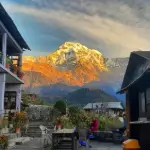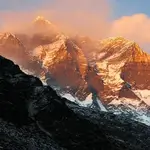
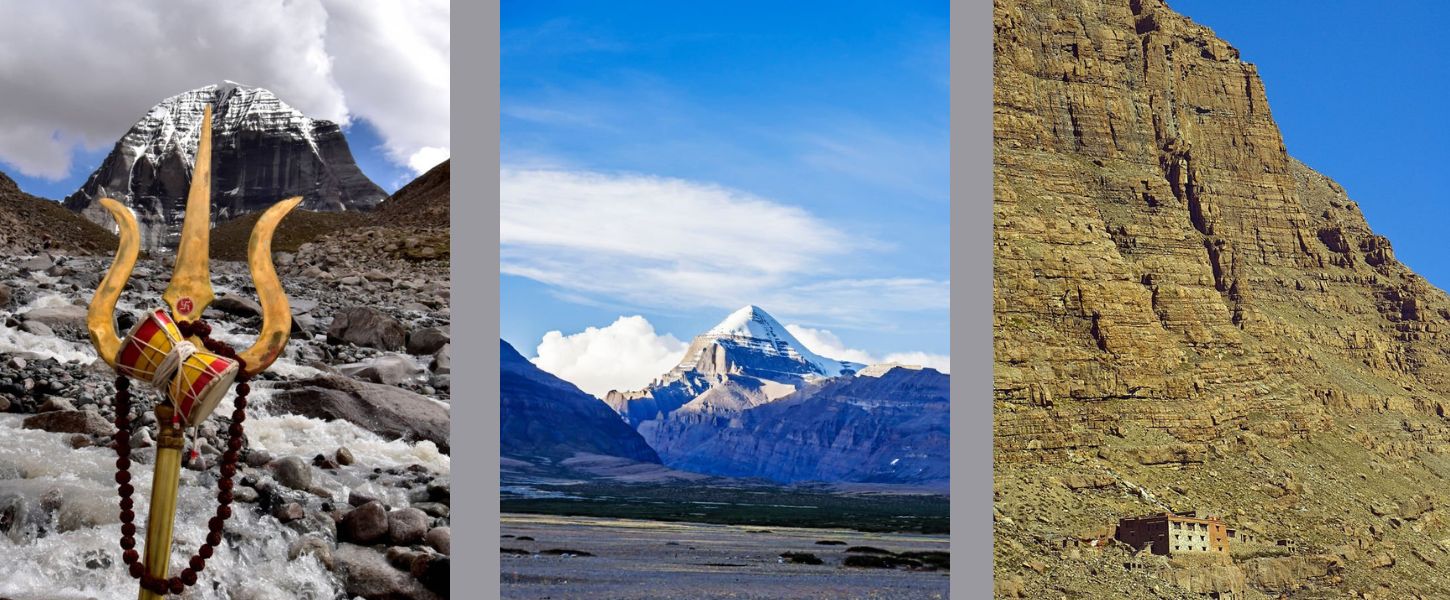
Mount Kailash is one of the most mysterious mountains in the world. It’s a fascinating pilgrimage that has captivated researchers and explorers for thousands of years. It is situated in the Tibet Autonomous Region of China, close to the borders with Nepal and India. This 6,638-meter (21,778-foot) mountain is considered the most sacred in the world. Mount Kailash is not among the world's highest mountains. What makes Mount Kailash so special cannot be easily quantified because it is the heavenly residence of Lord Shiva in Hindu mythology, the Buddhist mandala, the place of enlightenment in Jainism, and the spiritual center of the ancient Bon religion. Four of the most powerful rivers in Asia flow from its slopes, sustaining billions of people on the continent.
Mount Kailash has never been climbed despite opportunities. It remains off-limits by government decree and religious respect. This mountain generates stories of unexplained phenomena from rapid aging to time distortions, and maintains its position as one of the world's greatest unsolved mysteries. This guide examines the fascinating intersection of science, spirituality, and mystery surrounding this extraordinary peak.
Why Is Mount Kailash So Special?
Spiritual Importance
- Sacred in Hinduism: Mount Kailash is considered the permanent residence of Lord Shiva and Goddess Parvati. In Hindu mythology, Lord Shiva is believed to be in a state of permanent meditation atop Mount Kailash, keeping the universe in balance. It is the desire of millions of Hindu devotees to perform the Kailash Kora at least once in their lifetime.
- Sacred in Buddhism: In Tibetan Buddhism, Mount Kailash is identified as Mount Meru. It is the center of the Buddhist world. Mount Kailash is also associated with the deity of supreme bliss, Demchok (Chakrasamvara). It is believed that circumambulating Mount Kailash destroys negative karma and helps attain enlightenment quickly.
- Significance in Jainism: Jains consider Mount Kailash to be Ashtapada, where Rishabhadeva, the first Tirthankara, attained liberation. This makes it the most sacred pilgrimage site in Jain cosmology.
- Ancient Bon Religion: The ancient Bon religion of Tibet considers Mount Kailash to be the Nine-Story Swastika Mountain. This represents the source of all religious power and the residence of the sky goddess Sipaimen.
This rare occurrence of four major world religions independently pointing to the same distant mountain as being of utmost religious significance generates an unprecedented spiritual force of attraction.
The Sacred Kora (Circumambulation)
The Kailash Kora is a 52 km trek around Mount Kailash. The trek involves high-altitude terrain with the highest point at 5,630 meters (Dolma La Pass). The trekking route can be completed in three days by most devotees, while some devotees take weeks to complete it through full-body prostrations. One circuit is thought to wash away all the sins of the present life. Completing 108 circuits is believed to bring instant enlightenment and liberation from the cycle of rebirth, though this is a rare achievement due to the physical requirements and time involved. The number 108 is of great importance, as it is believed that doing 108 circuits will bring instant enlightenment.
9 Interesting Facts About Mount Kailash
1. Perfect Pyramid Shape
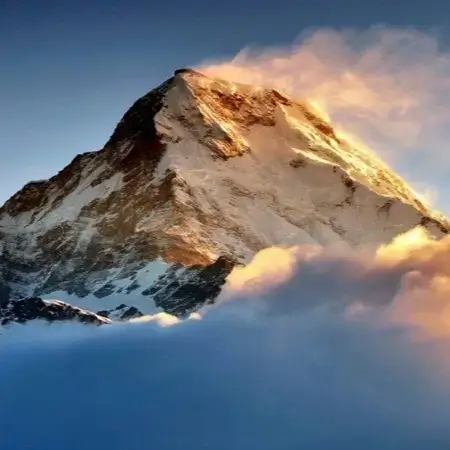
Mount Kailash has a four-sided pyramid structure that appears geometrically perfect. The faces aligned remarkably close to cardinal directions. Geologists explain this structure as a unique erosion pattern on stratified sedimentary rock, though the precision continues to fascinate observers.
2. Four Major Rivers Originate Nearby
Mount Kailash is the source of the Indus, Brahmaputra, Sutlej, and Karnali rivers and sustains over 1 billion people in Asia. For this reason, Mount Kailash has earned the name of the water tower of Asia.
3. Exact Compass Alignment
The four faces of Mount Kailash align precisely with north-south and east-west directions. While some people claim it is an artificial construction, geologists attribute it to formation along cardinal-direction fault lines combined with symmetric erosion.
4. Center of the World
Ancient cosmologies identify Mount Kailash as the axis mundi, the center of the universe. Remarkably, the mountain sits approximately 6,666 kilometers from Stonehenge and the North Pole, and 13,332 kilometers from the South Pole. This creates an intriguing numerical pattern where believers see it as evidence of sacred geometry.
Mysterious & Strange Facts About Mount Kailash
5. The Unclimbed Mountain
Mount Kailash remains virgin territory and has never been successfully climbed despite being technically moderate at 6,638 meters. All major religions strictly prohibit climbing, considering summit attempts sacrilege. The Chinese government officially banned climbing in the 1980s to respect religious sentiments. In 2001, Spanish mountaineer Jesus Martinez was granted permission to trek to Mount Kailash, but he declined. He stated that it would be disrespectful to believers worldwide. His decision exemplifies the powerful hold Mount Kailash maintains over human consciousness.
6. Rapid Aging Mystery
Pilgrims report that going near the mountain dramatically accelerated physical aging. People and devotees reported hair and nails growing extraordinarily fast within days. Visible signs of aging appear quickly, and unusual fatigue is felt. Some describe hair growing several centimeters during their 3-day Kora. Scientists state that all of the faster aging reports to altitude effects, physical exertion, harsh conditions, and psychological factors. But we still do not have any controlled studies documenting actual accelerated aging, and we dismiss the claims as anecdotal experiences coloured by the mountain's mystical reputation.
7. The Swastika Shadow Phenomenon
During certain seasons, snow patterns on Mount Kailash's faces remarkably resemble a swastika. It is an ancient sacred symbol in Hindu, Buddhist, and Jain traditions. This reinforces believers' conviction of divine significance. But sceptics explain it as pareidolia and selective observation.
8. Time Distortion Stories
The pilgrims often report distorted time perception, in which they feel hours passing in minutes or vice versa, malfunctioning clocks, experiences of missing time, and deep states of time suspension. These are explained by scientists as cognitive effects of altitude, intense physical exertion, and meditative practices.
Scientific Facts About Mount Kailash
9. Geological Formation
Mount Kailash is part of the Gangdise Shan (Kailash Range). It was formed 30 to 50 million years ago as a result of the collision between the Indian plate and the Eurasian plate. Unlike the other mountains in the region, Mount Kailash is composed of stratified sedimentary conglomerate rocks, such as sandstone and limestone.
Why It Looks Like a Pyramid
The pyramid form is a result of erosion that has been occurring for millions of years on this peculiar geological formation. The sedimentary layers formed horizontal planes of natural fracture points for erosion, with the softer rock eroding faster than the harder rock, thus forming edges and faces. The mountain's orientation along the cardinal fault lines and symmetrical erosion explain the impossible precision.
River Origins
The Indus River originates in glaciers around Mount Kailash and drains into Pakistan. The Brahmaputra, also known as the Yarlung Tsangpo, flows through Tibet and into India and Bangladesh. The Sutlej River originates in Lake Rakshastal, while the Karnali River flows through Nepal to drain into the Ganges.
Myths and Facts About Mount Kailash

Why Is Mount Kailash Unclimbable?
Mount Kailash remains unclimbed primarily due to religious prohibitions across all associated faiths, which consider summit attempts sacrilege. The Chinese government officially banned climbing since the 1980s, respecting devotees' sentiments. While technically climbable at moderate difficulty, the mountain's spiritual significance overrides conquest ambitions. Even non-religious mountaineers refuse to climb out of respect for its universal sacred status.
Has Anyone Climbed Mount Kailash?
No, there isn’t any documented successful summit that exists in recorded history. Several accomplished mountaineers received permission to summit, but they declined, including Reinhold Messner and Jesus Martinez (2001). They stated that climbing would offend religious sensibilities worldwide. China's official policy prohibits climbing, with permits issued only for pilgrimage circumambulation, enjoying widespread international support from mountaineering organizations.
What Is Inside Mount Kailash?
- Geologically, the interior of Mount Kailash contains sedimentary rocks from ancient seabeds, broken rock formations from tectonic movements, and the same conglomerate material found on its surface.
- In Buddhist and Hindu mythology, Shambhala is described as a secret land of enlightened beings hidden within sacred mountains. Others believe that Mount Kailash is the gateway to a realm where highly advanced spiritual adepts reside in eternal bliss and where ancient wisdom is preserved.
- Spiritually: To the believer, the inside contains more than mere physical matter. It represents divine awareness, the cosmic center of creation, and ultimate reality that can only be accessed through inner spiritual awareness.
The Mount Kailash Mystery Explained
The reason for the perpetual enigma of Mount Kailash has to do with the combination of the following factors:
- The exceptional geographical properties of the mountain where it consists of the pyramidal shape, sources of rivers, and alignment with cardinal points.
- Its deep spiritual meaning.
- The psychological factor of altitude and anticipation.
- The limited accessibility of research stems from its sacred status.
The mountain's mysterious reputation draws spiritual seekers, adventure tourists, scientists, and curious visitors. Instead of diminishing interest, scientific explanations coexist with spiritual beliefs, offering a complex understanding of both scientific inquiry and spiritual reverence. To comprehend Mount Kailash, one must be able to distinguish between religious beliefs rooted in tradition and spiritual experience, as opposed to scientific evidence based on observation and testing. The mystery remains because some questions lie beyond the realm of scientific response. Why does this mountain evoke universal reverence?
Conclusion
Mount Kailash is the most intriguing meeting point of spirituality, science, and mystery on the planet. The spiritual significance of Mount Kailash in Hinduism, Buddhism, Jainism, and Bon cultures attracts millions of devotees every year. This proves the spiritual power of the mountain that can cross any boundaries. The scientific interest in the geological uniqueness of Mount Kailash, its pyramid structure, alignment with the eight cardinal points, and the source of Asian rivers adds to its spiritual significance. Whereas many mysteries are explained by rational scientific inquiry, some questions do not have easy answers. Why has this mountain never been climbed when the technical skill exists? Why do the pilgrims always have these experiences that are so profound? These are questions that tap into human consciousness and experiences that are beyond the realm of science. The key to understanding Mount Kailash lies in balancing scientific curiosity with a deep respect for the spiritual traditions that have revered this mountain for so many centuries. Mount Kailash teaches us that sometimes the greatest secrets lie in the partial answers to those questions, and that the greatest compassion is found in respecting the beliefs of others, even if we do not share them ourselves. Mount Kailash will no doubt continue to be an unclimbed mountain for many years to come.
Frequently Asked Questions
What is special about Mount Kailash?
Mount Kailash is considered the most sacred mountain in four religions: Hinduism, Buddhism, Jainism, and Bon. The mountain is considered Lord Shiva's home. Its distinctive pyramid shape aligned with the cardinal directions, its position as a source region for four major Asian rivers that support over 1 billion people, and its status as the world's only major unclimbed peak confer unique spiritual, geographical, and mysterious significance.
Why is Mount Kailash unclimbable?
Mount Kailash remains unclimbed due to religious prohibitions that consider summit attempts sacrilege. The official Chinese government ban, in place since the 1980s, respects religious sentiments, and the ethical refusal by mountaineers to desecrate such a universally sacred site. While technically climbable at moderate difficulty, the spiritual significance overrides conquest ambitions.
Has anyone climbed Mount Kailash?
No documented successful summit has ever occurred in history. Accomplished mountaineers, including Reinhold Messner and Jesus Martinez (2001), refused permission, stating that climbing would offend billions of believers. China prohibits all climbing attempts and issues permits only for pilgrimage.
What is inside Mount Kailash?
Geologically, it is known to have sedimentary rocks from ancient seabeds. Mythologically, it is linked with Shambhala, the hidden land of the enlightened. Spiritually, it symbolizes divine consciousness and ultimate reality that can be realized, not explored.
Is Mount Kailash really a pyramid?
Mount Kailash has a very symmetrical pyramid structure with its four sides facing the cardinal directions, but this is a natural geological formation. This is because Mount Kailash has a pyramid structure that resulted from erosion on layered sedimentary rocks. This is not a man-made or alien-made structure.
Why is Mount Kailash considered mysterious?
The mystique of Mount Kailash lies in the fact that it has never been scaled, although there have been opportunities to do so, because of its alleged ability to distort time, and age rapidly, its flawless pyramid structure aligned with the cardinal points, swastika patterns in the snow, its significance to four religions, and its role as the source of four major rivers. While the answers to its scientific properties lie in geology and psychology, its universal spiritual significance is linked to human consciousness.