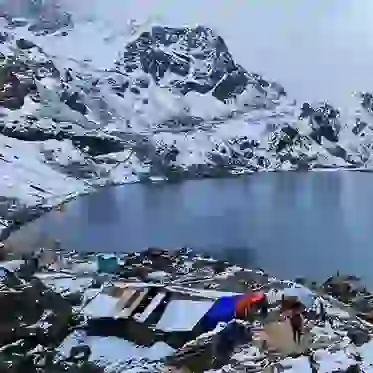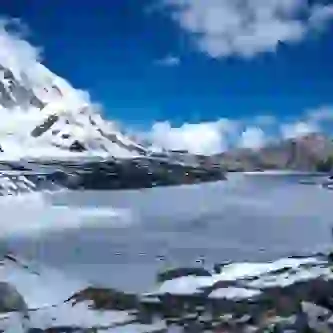
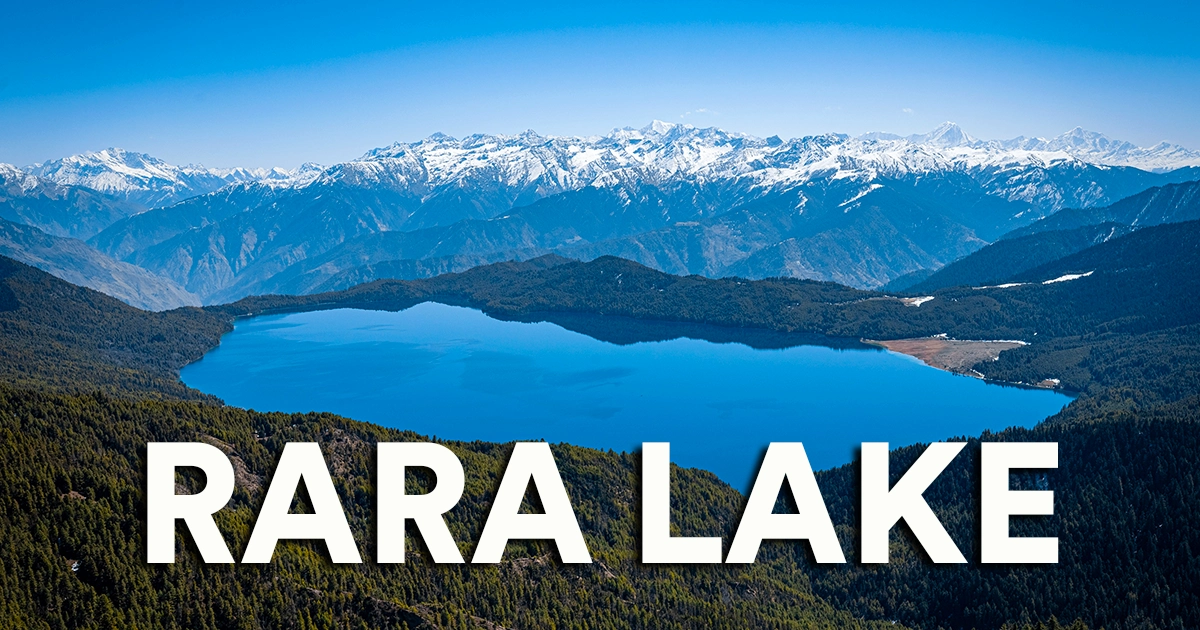
Are you planning to visit the largest and most pristine alpine lake in Nepal in 2026? Before embarking on a trek, it is important to know the cost of a Rara Lake permit. It is important for budgeting and ensuring that you have the right documents for your trek to this isolated Himalayan gem. Rara Lake, at 2,990 meters, is located in the far northwestern corner of Nepal and offers a unique natural experience with its crystal-clear blue waters and pine and juniper forests.
Rara National Park preserves its pristine wilderness state by regulating tourism and requiring permits. Permit costs vary significantly by nationality, with separate rates for foreign nationals, SAARC nationals, Indian tourists, and Nepalese citizens. The cost of permits supports the important conservation work that protects the unique ecosystem of Rara, home to red pandas, musk deer, Himalayan black bears, and over 250 bird species.
This complete guide for 2026 will detail the specific permit fees for each nationality group, where to procure the permits, and how to apply, as well as insider advice on visiting this breathtaking national park. Whether you are setting out on a long trek around the lake or a shorter journey to experience the famous beauty of Rara, you will have the information you need to ensure a smooth planning process for your Himalayan adventure.
What Is the Rara Lake Permit?
The Rara Lake permit is your official permission to visit and explore Rara National Park. It is a very important protected area in Nepal from an ecological perspective. The Department of National Parks and Wildlife Conservation, a part of the Ministry of Forests and Environment in Nepal, is responsible for administering this permit.
Location Within Rara National Park
Rara Lake forms the centerpiece of Rara National Park, though the protected area extends well beyond the lakeshore, encompassing surrounding forests, ridges, and watersheds. The permit allows access to all areas of the park, including hiking trails around the lake, viewpoints such as Murma Top and Chuchemara Peak, designated camping areas, visitor centers, and wildlife viewing areas.
What Permits Support
Your permit fee supports vital park management functions, including environmental protection activities that help shield Rara’s special alpine ecosystem from destruction. Community development activities provide employment and development benefits to the people of Mugu, who are originally from the area that is now the park. Facility maintenance ensures that trails, bridges, signs, toilets, and other visitor facilities remain functional despite the harsh Himalayan climate. Wildlife conservation helps protect endangered species from poaching.
The remuneration of park rangers, conservation officers, and support staff is mainly dependent on permit revenue. This is important for the conservation of Rara. Without this steady income from permits, it would be difficult to maintain this protected area in such a remote location, as the government's conservation budget is limited.
Mandatory for All Visitors
Whether you are staying for three hours or three days, you will need to have valid permits with you. This applies to foreigners, SAARC nationals, Indians, and Nepalis. There are, however, exemptions for government officials on official business, researchers with special permits, and local residents in their designated areas.
Permits can be verified at the park's entry points and by park rangers during their rounds. Trekking without permits leads to fines, expulsion from the park, and a ban on trekking in Nepal's protected areas.
Why Permits Are Required
Rara National Park operates under a rigorous conservation management system that requires all visitors to obtain entry permits before entering the protected area. The entry permits have several essential functions that play a critical role in supporting conservation efforts by funding anti-poaching activities, waste management infrastructure, and habitat conservation. Community development projects benefit surrounding villages by providing employment, improving infrastructure, and ensuring sustainable tourism. Infrastructure maintenance ensures that trails, viewpoints, campsites, and visitor centers are usable and safe. Conservation projects protect threatened species and assess the health of ecosystems through research.
The income raised directly finances these projects, and the contribution of every visitor is therefore vital to the continued conservation of Rara. The cost is relatively low, making it possible to carry out conservation activities in such a remote region, where visitor numbers are lower than at other popular sites, such as Everest or Annapurna.
Costs Vary by Nationality
Nepal has a tiered system of permit costs in all national parks. This is a balance between generating tourist revenue, fostering cooperation, and protecting citizens' access rights. Foreigners are charged standard international tariffs, which contribute to most of the conservation efforts. Citizens of SAARC nations are charged reduced rates to facilitate South Asian regional tourism and cultural exchanges. Citizens of Nepal pay minimal rates to recognize their rights while still contributing to park management.
This design ensures that Rara National Park is open to all economic classes while raising funds for conservation through international tourism.
Who Needs a Rara Lake Permit?
Knowledge of permit fees for different nationalities will help you understand the costs and requirements that apply to you.
Rara Lake Permit For Foreigners
All foreign nationals, excluding the citizens of countries outside the SAARC region, require entry permits to Rara National Park, irrespective of the duration and purpose of the visit. This applies to tourists, researchers, adventure seekers, and anyone else who enters the park boundaries for any reason.
Foreign permits are issued for a specific period corresponding to your visit, although most visitors receive permits for the entire duration of their trek or visit. Extensions are rarely needed since most itineraries fall within the standard permit validity period.
Rara Lake Permit For SAARC Nationals
Citizens of member countries of the South Asian Association for Regional Cooperation (SAARC) are offered reduced permit fees to encourage regional tourism. The member nations of SAARC are Bangladesh, Bhutan, India, Maldives, Pakistan, Sri Lanka, and Afghanistan.
The passports of member nations must be valid at the time SAARC nationals acquire permits. The reduced permit fees are automatically applied after verification of nationality without the need for separate applications or documentation.
Rara Lake Permit For Indian Citizens
Indian citizens, being members of SAARC, have the same permit system as other SAARC nations without any special treatment or classification. Indian visitors constitute a significant share of SAARC tourists to Rara, given their geographical proximity, strong cultural connections, and established tourism ties between Nepal and India.
Indian nationals present Indian passports during the permit application process and automatically receive SAARC rates. There is no need for any further documents beyond the permit requirements.
Rara Lake Permit For Nepali Citizens
Nepali nationals pay very low permit charges in recognition of their citizenship rights, although they still pay a token amount for conservation. Residents of the Mugu District may receive special permits to enter the park for resource collection or cultural events in specific areas, though they must also have the proper documents.
Instead, Nepalese citizens present citizenship certificates in place of passports when applying for permits, with applications processed in the same manner as for foreigners and SAARC nationals.
Rara Lake Permit Cost by Nationality

All costs below use the 2026 budget planning exchange rate. Actual NPR amounts paid may vary slightly with daily exchange rate fluctuations.
Rara Lake Permit Cost for Foreign Nationals
Foreign visitors are charged global standard rates for entry permits to Rara National Park.
Rara National Park Entry Permit:
- The permit costs NPR 3,000 or approximately $21.
- The permit is valid for the entire duration of the visit within the park.
- A single entry permit covers all park areas and trails.
Total Estimated Cost for Foreigners:
- Total permit cost is NPR 3,000, or approximately $21.
- The permit covers complete park entry requirements.
- No additional permits or fees are required.
This small charge is among the lowest entry fees to a national park in Nepal. Given Rara's inaccessibility, it receives fewer visitors than the Sagarmatha or Annapurna conservation areas.
Rara Lake Permit Cost for SAARC Nationals
Citizens of SAARC countries receive 50% discounts on Rara National Park entry permits.
Rara National Park Entry Permit:
- The permit costs NPR 1,500 or approximately $10.
- SAARC enjoys a 50% discount compared to foreign nationals.
- SAARC also receives the same validity and access as standard permits.
Total Estimated Cost for SAARC Nationals:
- Total permit cost is NPR 1,500, or approximately $10.
- This represents significant savings which encourage regional visitation.
- This permit covers all park entry requirements.
SAARC nationals get a discount of NPR 1,500 or around $10. This helps make Rara more accessible to South Asians.
Rara Lake Permit Cost for Indian Citizens
Indian nationals pay the same fees as other SAARC nations. There are no special provisions or requirements for Indian nationals.
Rara National Park Entry Permit:
- The permit costs NPR 1,500 or approximately $10.
- Indians get the same permit validity and access as all SAARC nationals.
Total Estimated Cost for Indian Citizens:
- Total permit cost is NPR 1,500, or approximately $10.
- Once you verify your passport, you are automatically eligible for a SAARC discount.
- From this permit, you can get a complete park entry process.
Indian tourists are an increasingly important part of Rara tourism, drawn by the lake's natural beauty, the relatively low SAARC rates, and the existing tourist infrastructure linking Indian cities to Nepalgunj.
Rara Lake Permit Cost for Nepali Citizens
The fee is minimal, and it is paid by Nepali citizens as a way of recognizing their rights to citizenship while making small contributions to the conservation of Rara.
Rara National Park Entry Permit:
- Total permit cost is NPR 100, or approximately $1.
- Nepali citizens enjoy a nominal fee.
- Nepali citizens get the same park access as all other permit holders.
Total Estimated Cost for Nepali Citizens:
- Total permit cost is NPR 100, or approximately $1.
- Nepali citizens enjoy 97% savings compared to other foreign nationals.
- This permit makes national parks accessible to all Nepali citizens
The minimal fee ensures that Nepali citizens can access their own heritage without financial cost while still making small contributions to the conservation of Rara.
Rara Lake Permit Cost Table
This comprehensive table provides a quick reference for all nationality categories:
NationalityPermit Fee (NPR)Approx (USD)Savings vs Foreign RateForeigners3,000$21-SAARC Nationals1,500$1050% ($11 saved)Indian Citizens1,500$1050% ($11 saved)Nepali Citizens100$197% ($20 saved)
What the Permit Includes
Your Rara National Park permit offers full access and helps to facilitate important services:
- Legal Entry Authorization: Authorized entry and exploration of all public areas within the boundaries of Rara National Park, including the shoreline of the lake, surrounding forests, viewpoints, and trails.
- Trail and Viewpoint Access: Unlimited use of all trails, including the 12km lake circumference trail, Murma Top viewpoint at 3,710m, Chuchemara Peak at 4,087m trail, forest trails, and camping areas along approved trails.
- Conservation Support: Direct support for conservation efforts, including anti-poaching patrols, habitat restoration projects, waste management infrastructure, water quality analysis, and wildlife research projects studying red pandas, musk deer, and bird species.
- Community Programs: Support for Mugu communities, including employment as guides and porters, training initiatives to develop sustainable tourism practices, infrastructure development for the benefit of both visitors and locals, and cultural preservation projects to maintain local traditions.
- Infrastructure Maintenance: Funding for trail maintenance and upgrades, bridge building and maintenance, signage and navigation infrastructure, toilet and sanitation facilities, visitor centers and information services, and emergency response services.
Where to Get Your Rara Lake Permit
Obtaining permits requires visiting official offices or park entry points, with options depending on your route and timing.
Kathmandu: Nepal Tourism Board / National Park Offices
Nepal Tourism Board Office:
- Location: Bhrikuti Mandap, Kathmandu
- Working Days: Sunday to Friday
- Office Timing:9 AM to 5 PM (Friday: 9 AM to 3 PM)
- Processing Time: Same day with complete documentation
Many Rara trekkers get their permits in Kathmandu before flying to Nepalgunj, so that the paperwork is in order before reaching areas where office closures or delays might affect the process.
Department of National Parks Office:
- It is an alternative location for permit processing in Kathmandu.
- The Department of National Parks Office has similar hours and processing times.
- It accepts applications for all Nepal national parks.
Local: Rara National Park Entrance Gates
Gamgadhi / Talcha Entry Points:
- Park entry checkpoints where permits can be obtained.
- It operates daily during daylight.
- The timing is typically 8 AM to 5 PM.
- It is subject to staffing and weather conditions.
Getting permits at the entrance of the park is possible, but comes with risks of the office being closed on weekends, holidays, or due to a lack of staff in this remote region. Weather conditions, especially during monsoon or winter seasons, may affect staffing and operations.
Registered Trekking/Tour Agencies
The best way is to organize the permits through licensed trekking agencies that specialize in remote areas of Nepal.
Agency Services Include:
- Full permit application and processing.
- Preparation and submission of documents.
- Payment of permit fees on your behalf.
- Arrangements with the tourism board and park authorities.
- Delivery of permits to your hotel.
The cost of this convenience is a minimal service fee charged by the agencies. It is well worth avoiding potential problems with obtaining permits in Kathmandu or at the park's entry points. Due to the remoteness of Rara and the complicated access logistics, the services of the agencies are essential to ensure that all documents are in order and that there are no delays.
Required Documents
When obtaining permits, provide:
- Valid passport with at least 6 months' validity, with Nepal entry visa for foreigners and SAARC nationals.
- A citizenship card is required for Nepali citizens.
- 2 to 4 recent colour passport-size photographs.
- Completed permit application form, which is available at the offices.
- Exact permit fee in Nepali rupees.
The process of obtaining the permit is quite easy with complete documentation and takes anywhere from 30 minutes to 2 hours, depending on queue sizes during peak seasons.
Tips for Rara Lake Visitors
Buy Permits in Kathmandu
Process permits at the Nepal Tourism Board office in Kathmandu before traveling to Nepalgunj or flying to Talcha/Jumla airports. This prevents potential delays caused by office closures, staff shortages, or documentation issues in remote areas, where resolving problems is difficult and time-consuming.
Carry Permits at All Times
Keep permits accessible and protected from the elements throughout your Rara visit. Park rangers check permits at entry points and may also ask for them during trail checks. The permits are protected from rain and moisture, which is prevalent in the Himalayas by laminating them or using waterproof pouches.
Permits Support Conservation
Just remember that your small permit fee supports critical conservation efforts to protect Rara's special ecosystem and natural beauty. Please adhere to park rules, including not littering, not approaching wildlife, and camping only in designated areas.
Combine with Guide Packages
You must hire an experienced local guide due to Rara's inaccessibility, the potential for harsh weather, and the lack of infrastructure. Many tour operators provide full packages that include permits, domestic flights, lodging, meals, and guide services, making planning for this challenging destination easier.
Frequently Asked Questions
How much does a Rara Lake permit cost?
Rara Lake permit costs vary by nationality. Foreign nationals pay NPR 3,000 (approximately $21) for entry permits to Rara National Park. SAARC nationals, including Indian nationals, pay NPR 1,500 (about USD $10) with a 50% discount. Nepali citizens pay NPR 100 or about $1. The above charges cover entry to the park, including the lake, trails, viewpoints, and camping sites, for the duration of your stay.
Do SAARC nationals get a discount on Rara Lake permits?
Yes, SAARC citizens receive a 50% discount on entry permits to Rara National Park. They have to pay only NPR 1,500, which is 50% off the original price of NPR 3,000. This is a discount of about $11 compared to what foreign nationals pay. This discount is automatically applied when a passport from a SAARC member state is presented. This is a great way to encourage tourism in South Asia.
Can I get the Rara Lake permit at the park entrance?
Yes, permits can be obtained from the Rara National Park entrance gates near Gamgadhi or Talcha, but this method is fraught with risks. The offices for park entry are open during daylight hours but close on weekends and holidays, or when staffing is short, which is common in such areas. Inclement weather, especially during the monsoon or winter seasons, may also cause delays. It is highly recommended that you obtain permits from Kathmandu before leaving to avoid potential delays that could affect your well-planned Rara itinerary. Permits are usually processed by the Nepal Tourism Board in Kathmandu or by trekking agencies.
Are permits required for day visitors to Rara Lake?
Yes, all visitors must have entry permits to Rara National Park. This applies to all visitors, regardless of length of stay. Even if you are visiting the lake for a few hours rather than trekking for several days, the entry permit cost will be the same. There are no day visitor or short stay entry permits. All visitors pay the same amount, regardless of the length of stay, which can range from three hours to three days.
Can trekking agencies arrange Rara Lake permits?
Yes, registered trekking companies can facilitate permits for Rara National Park on your behalf. This is the most recommended way for most trekkers. The companies will handle the entire process: preparing the documents, submitting them to the Nepal Tourism Board or the concerned park authority, paying the fees, obtaining the permits, and delivering them to you. Due to the inaccessibility of Rara National Park and the need for domestic flights, overland travel, and planning, it is always better to have the permits processed by trekking companies to avoid the risk of delays on your trip.