
Quick Answer: Guide and Porter Cost in Nepal
Trekking guides and porters are two of the most important decisions you will make when planning a Nepal trek and most people research the trails extensively but give almost no thought to the people who will actually make or break the experience. Here is the short version before the full breakdown:
- Guide and porter costs in Nepal depend on the trekking region, experience level, season, and whether you hire through an agency or independently
- Guide porter service in Nepal covers everything from navigation and safety to carrying your gear across high-altitude terrain
- Tipping guides and porters in Nepal is expected, genuinely deserved, and should be budgeted from the very start
- Some trekking routes in Nepal now legally require a licensed guide without exception
- Knowing how much to tip the guide and porter in Nepal before you leave Kathmandu saves awkwardness at the end of the trek
The full picture is below and it covers everything you need before you hire anyone.
Why Trekkers Hire Guide and Porter Services in Nepal
There is a version of trekking in Nepal where you download a map, pack your own bag, and figure everything out as you go. Some people do it that way and have a perfectly fine time. But talk to anyone who has trekked with a good local guide and then tried it solo afterwards, and they will tell you straight up that the two experiences are genuinely not comparable.
Nepal's mountain trails are not like hiking paths in Europe or North America, where every junction has a clear signpost and mobile coverage handles the gaps. The terrain is remote, the altitude is high, the permit system is complex, and the cultural context requires years of local knowledge to navigate properly. A good guide brings all of that every single day of your trek. A good porter carries 20 kilograms of your gear up a 4,000-meter pass so that when you reach camp, you still have the energy to appreciate where you actually are instead of collapsing on the nearest bench.
Both roles matter enormously and understanding what each one does and what each one costs is exactly where proper planning starts.
The Role of a Trekking Guide in Nepal
A trekking guide in Nepal does considerably more than point you in the right direction when the trail forks. The navigation part is real and important, particularly on routes where the path is less defined or where poor weather makes it genuinely easy to end up somewhere unintended. But that is honestly the most basic part of what a good guide brings to a trek.
Route planning and daily pacing decisions are something experienced guides manage instinctively based on years of watching trekkers at every fitness level hit the same walls at the same points on the same trails. When your guide says, "Rest here for 20 minutes," that recommendation comes from watching hundreds of people push through that moment and regret it 2 hours later at altitude.
Safety and altitude management is where the value of guide cost in Nepal becomes most concrete. Recognizing early signs of altitude sickness, knowing when to push forward and when descending is the only sensible call, having relationships with teahouse owners along the route who can communicate by radio when something goes wrong: these are not skills you replicate with a guidebook app. Permit management, logistics with teahouses, communication with locals who may speak limited English, and the cultural context that transforms a mountain walk into an actual experience of Sherpa or Gurung life all come standard with a good guide.
The Role of a Porter in Nepal
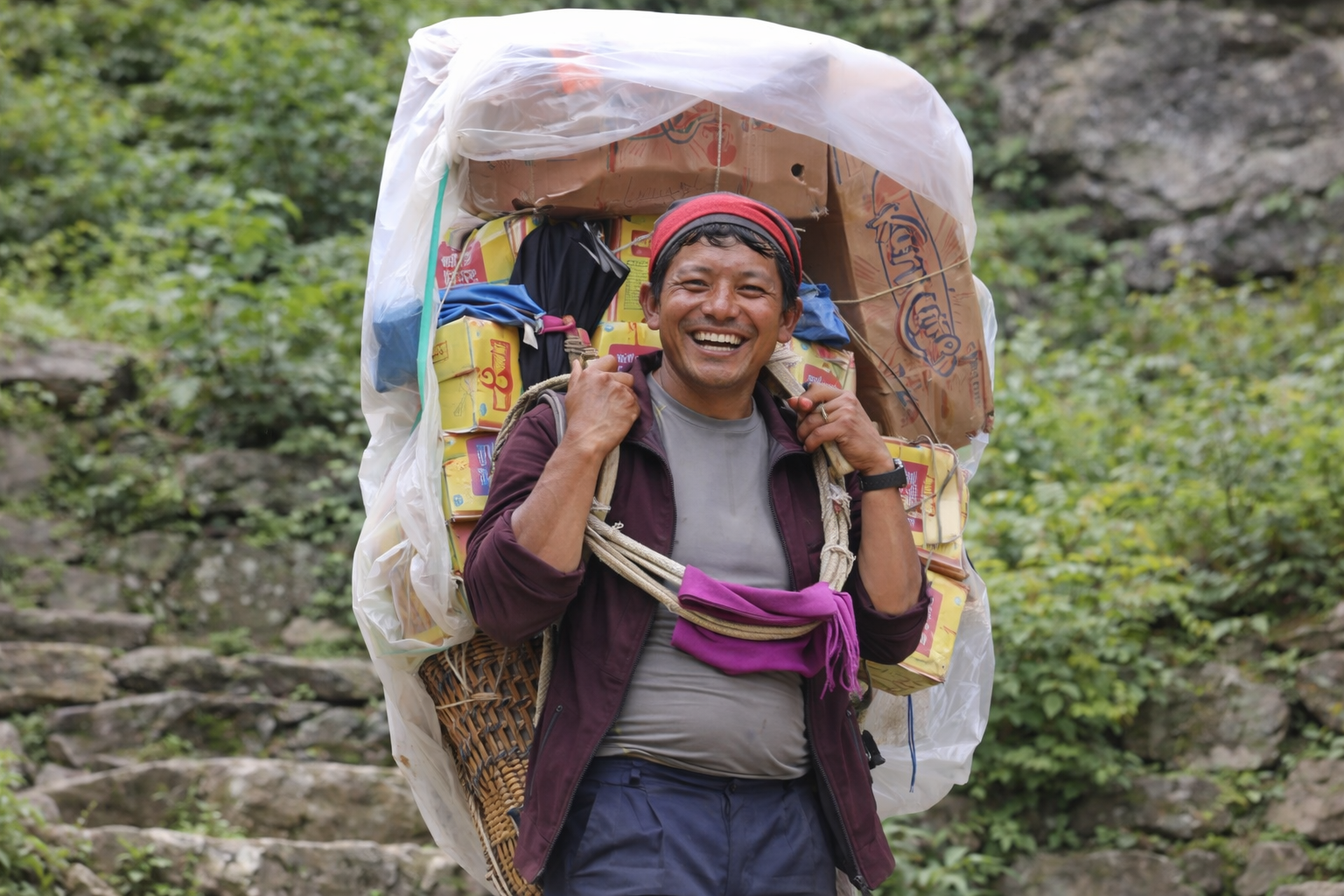
A porter's job is straightforward in description and genuinely significant in practice. They carry your main trekking bag so you walk the trail with only a small daypack holding water, snacks, a rain jacket, and your camera. The difference between walking at altitude with 8 kilograms on your back versus 20 kilograms is not just comfort. It is often the difference between arriving at the end of a hard day feeling tired but functional and arriving completely depleted with nothing left for the morning.
On high-altitude treks like Everest Base Camp or the Annapurna Circuit, where you are covering serious distances at serious elevation across multiple consecutive days, the cumulative effect of a heavy pack compounds in ways that sneak up on trekkers who did not anticipate it. People who use guide porter service in Nepal consistently manage altitude better, enjoy the scenery more, take better photographs, and finish their treks in considerably better physical shape than those who carry everything themselves. It is one of the most cost-effective investments in the entire Nepal trekking budget.
How Much Does a Guide Cost in Nepal?
The guide cost in Nepal is shaped by several factors worth understanding before you start comparing quotes from different operators.
Factors That Affect Guide Pricing
The trekking region matters because routes in restricted areas or genuinely remote terrain command higher daily rates than standard popular trails. A guide working in the Everest region or Upper Mustang faces different logistical demands and more complex permits than someone working in the lower Annapurna foothills. Experience and certification level matter considerably. A government-licensed guide who has completed formal training and built years of high-altitude experience on specific routes is entitled to a higher daily rate than someone newer to the profession. Peak season demand during spring and autumn pushes rates upward across the board. An agency versus independent hire affects the total cost structure in ways that the hiring section below addresses.
What Is Typically Included in Guide Fees
When you hire through a reputable agency, the guide's accommodation and meals along the trail are included in the fee. The daily rate covers their professional services throughout the trekking day. Transportation to and from the trailhead is generally included in agency packages. When hiring, the cost structure is independent, but each component is negotiated directly.
- Everest Region: 35 to 50 USD
- Annapurna Region: 30 to 45 USD
- Langtang Region: 28 to 40 USD
- Restricted Areas: (Mustang, Dolpo): 50 to 70 USD
How Much Does a Porter Cost in Nepal?
Nepal trekking porter costs are simpler than guide pricing because the primary variables are load weight, route difficulty, and duration, rather than the certification and experience factors that apply to guides.
What Influences Porter Cost
The trekking route and its physical demands affect daily porter rates: carrying loads on technically demanding terrain or at very high altitude commands higher rates than on lower, easier routes. Load weight is a factor and there are ethical standards around this that responsible trekkers genuinely need to know. A porter should not be asked to carry more than 25 to 30 kilograms, regardless of what they are willing to accept at the moment. Region and accessibility matter because reaching certain trailheads requires additional travel time and cost for porters coming from Kathmandu or regional centers.
- Everest Region: 20 to 28 USD
- Annapurna Region: 18 to 25 USD
- Langtang Region: 16 to 22 USD
- Restricted Areas: 25 to 35 USD
Guide vs Porter: What Is the Actual Difference?
This question comes up constantly from first-time trekkers and the confusion is understandable because the two roles overlap in some ways while being entirely distinct in others.
A guide is responsible for your safety, navigation, and the overall management of your trek from start to finish. They speak English, understand altitude and its risks, hold the permits, communicate with teahouse owners along the route, and make the judgment calls that keep a difficult day manageable rather than letting it become a genuine emergency. You cannot replace a guide with a porter and you cannot replace a porter with a guide. They are different jobs done by people with different training and different responsibilities.
A porter's responsibility is your gear and your physical burden on the trail. Most porters do not speak fluent English and their role is not navigation or safety management. They carry, they move reliably between established points on the route, and they free up your physical and mental capacity to actually experience the trek rather than just endure it.
When You Need a Guide
You need a guide on any technically demanding high-altitude route, on any restricted-area trek where one is legally required, on any route where you are unfamiliar with the terrain and trail markings, and, genuinely, on any multi-day trek in Nepal if this is your first time in the country. The safety argument alone justifies the guide cost in Nepal on routes like Everest Base Camp or the Annapurna Circuit, where altitude sickness can develop quickly and remotely.
When You Need a Porter
You need a porter whenever your total pack weight exceeds about 10 kilograms on a multi-day trek at altitude. That number sounds conservative until you are on day seven of a ten-day trek and your shoulders have been under load for six consecutive days above 4,000 meters. Porters matter most on treks where daily distances and elevation gains are significant enough that conserving energy is a genuine strategic consideration rather than just a comfort preference.
When Trekkers Hire Both
Most experienced trekkers on major Nepal routes hire both a guide and a porter, or hire a guide-porter who can manage both roles on less demanding, shorter routes. On routes like Everest Base Camp and the Annapurna Circuit, having a dedicated guide and porter is the most common arrangement among trekkers who have done their research before arriving in Kathmandu.
Guide and Porter Cost in Nepal by Trekking Region
Everest Region
The Everest region commands some of the highest guide and porter rates in Nepal for entirely straightforward reasons. The altitude is serious, the logistics are complex, the permit system requires active management, and the guides working this region have typically invested years building the specific knowledge and relationships the route demands. Everest Base Camp guide costs sit at the higher end of the Nepal trekking spectrum and are worth every rupee when the person leading you actually knows the route and its demands.
Annapurna Region
The Annapurna Circuit and Annapurna Base Camp are two of Nepal's most popular trekking routes and the guide porter service in Nepal market here is well-established and competitive. Rates run slightly lower than the Everest region in most cases and there are more options for finding experienced independent guides through local agencies based in Pokhara, which is the natural gateway city for all Annapurna treks.
Langtang Region
Langtang sits close to Kathmandu and the routes here are shorter and lower-altitude than Everest or Annapurna in most cases. Guide and porter rates reflect that relative accessibility and the overall cost of a supported Langtang trek is lower than comparable supported treks in the other major regions. For first-time Nepal trekkers who want to understand how guide porter service in Nepal actually works before committing to a longer route, Langtang is an excellent learning territory.
Restricted Area Treks
Upper Mustang, Dolpo, Manaslu, and other restricted-area routes require special permits and, by regulation, must be undertaken with a registered guide. Daily rates in these regions are higher than in standard trekking areas because the permits are more complex, the regions are more remote, and specialist knowledge is required, all of which justify the premium. If you are heading to any restricted area in Nepal, budget accordingly and hire through a registered agency with specific documented experience on that particular route.
What Is Actually Included in Guide and Porter Fees?
Understanding what is covered in the daily rate versus what requires separate accounting helps avoid confusion when comparing quotes from different agencies or independent operators.
Guide fees through a reputable agency typically cover the guide's accommodation in teahouses along the route, their meals throughout the trekking days, their transportation to and from the trailhead, and their professional services throughout each trekking day. Their insurance coverage should be included, though this is worth verifying explicitly before signing anything.
Porter fees similarly cover their accommodation and meals along the route, as well as their daily carrying services. Equipment is where trekkers sometimes make mistakes that reflect poorly on their ethical standards. If a porter does not have adequate cold-weather gear for the altitude and conditions of your specific route, ensuring they are properly equipped is your responsibility as the trekking client. This is not optional and not something to look the other way on.
Agency service charges are added to the guide and porter daily rates when you book through an agency rather than hiring independently. That charge covers the organization, vetting, and management of the staff alongside the formal accountability structure that independent hires do not provide in the same way.
Do You Need a Guide for Trekking in Nepal?
Nepal updated its trekking regulations and guides are now required for most trekking routes in the country for foreign nationals. This is not a technicality enforced inconsistently. Checkpoints along major trekking routes verify permits and documentation and trekkers without proper arrangements face genuine complications that can derail an entire trip.
Beyond the legal side, the practical safety argument for having a guide on any serious Nepal trek is compelling enough to stand entirely on its own merits. The mountains are not forgiving of poor decisions made without local knowledge and the guide cost in Nepal relative to the overall investment in a trekking trip is small enough that the risk-to-value calculation points clearly in one direction every single time.
How Much to Tip a Guide and Porter in Nepal
Knowing how much to tip a guide and porter in Nepal before you leave home is one of those practical details that most trekking content covers superficially and then moves on quickly. It deserves more than that.
Tipping is not optional in any meaningful sense. It is culturally expected; it is how guides and porters supplement their base daily rates, which reflect the competitive local market, and anyone who has spent real time in Nepal working alongside local trekking staff understands that tips represent a genuinely significant portion of what these people take home at the end of a season.
The general expectation for how much to tip a guide in Nepal runs from around USD 5 to 10 per day per trekking client as a reasonable baseline, with more appropriate for exceptional service, particularly demanding routes, or guides who went genuinely above and beyond during difficult moments on the trail. Porter tipping in Nepal typically ranges from USD 3 to 6 per day per client, depending on the load carried, route difficulty, and trek duration.
Tips are given at the end of the trek in most cases rather than distributed day by day. Cash in Nepali rupees is strongly preferred over foreign currency. A brief, genuine acknowledgment of the specific things your guide or porter did well during the trek carries personal weight that goes beyond the money itself, though both matter and neither replaces the other.
Budget the tipping cost from the very beginning of your trip planning, rather than treating it as an afterthought, you figure out on the last day. On a 14-day Everest Base Camp trek with one guide and one porter, the tipping amount adds up to a meaningful sum and should be in your budget from day one rather than coming as a surprise.
Benefits of Hiring Guide Porter Service in Nepal
The safety benefit in remote mountain terrain is the most significant and the least negotiable part of the case for guide porter service in Nepal. A guide who knows the route, recognizes altitude symptoms early, and has real relationships with support networks along the trail is the difference between a medical situation being managed well and one escalating because nobody present knew what to do or who to contact.
The cultural and local knowledge dimension is genuinely difficult to appreciate fully until you have experienced a trek both with and without a knowledgeable local guide. The stories behind the monasteries, the significance of specific prayer flag arrangements, the relationships between villages along the route, the food recommendations that never appear in any published guidebook: all of it comes alive with a good guide in a way that independent trekking simply cannot match,h regardless of how much research you did before leaving home.
The reduced physical burden from a porter is straightforward in concept, but its cumulative effect on a multi-week trek is more significant than most first-time trekkers anticipate. Walking at high altitude is demanding enough without carrying 20 kilograms on your back every single day. A porter does not make the trek easier in a way that diminishes the achievement. It makes it more sustainable, more enjoyable, and considerably better for your physical wellbeing across a journey that demands a lot from your body over many consecutive days.
Should You Hire a Guide, Porter, or Both?
For short treks of three to four days on well-marked lower-altitude routes, a guide alone, without a separate porter, is a reasonable arrangement, particularly for fit, experienced hikers who are comfortable carrying their own pack for shorter periods at moderate elevation.
For high-altitude treks on routes like Everest Base Camp, the Annapurna Circuit, or any route consistently above 4,500 meters, hiring both a guide and a porter is the arrangement that experienced Nepal trekkers most often recommend. The guide manages safety and navigation while the porter handles the physical load. The combination delivers the best overall experience and the most sensible safety margin.
For first-time trekkers in Nepal, regardless of route length or altitude, hiring a guide is non-negotiable for both safety and experience. Adding a porter depends on fitness level, pack weight, and the demands of the specific route, but when genuinely in doubt, the porter is worth the daily cost without question.
For solo trekkers, the guide becomes even more important because the informal safety net that a group naturally provides does not exist when you are travelling alone. A solo trekker with a good guide is significantly safer and better supported than one without, regardless of prior experience level.
Tips for Hiring a Guide or Porter in Nepal
Hiring through a registered Kathmandu or Pokhara-based trekking agency provides accountability, properly vetted staff, formal insurance arrangements, and a real point of contact if anything goes wrong during the trek. For first-time Nepal trekkers, this is the most sensible option, even if it costs slightly more than an independent arrangement.
Hiring independently is a legitimate option for experienced Nepal trekkers who know the system and have reliable local contacts. The cost is often lower because agency service charges are removed from the equation, but the vetting responsibility lies entirely with the trekker, and insurance arrangements must be confirmed explicitly and in writing.
Checking a guide's license and certification is not optional, regardless of how they are hired. Licensed guides in Nepal are registered with the Nepal government and carry documentation that can be verified on request. Ensuring proper insurance coverage for both guides and porters before the trek begins is an ethical and practical obligation that every trekker hiring local staff needs to take seriously, rather than assuming it is handled without checking.
Final Thoughts on Guide and Porter Cost in Nepal
The money spent on proper guide porter service in Nepal is among the best-spent money in the entire trek budget. Not because the regulations increasingly require it, though they do. Not simply because it is convenient, though it genuinely is. But because the people you hire as your guide and porter are the ones who determine whether your Nepal trek is a logistics exercise you got through or an actual experience in one of the most extraordinary places on Earth that stays with you permanently.
Understand the guide cost in Nepal before you arrive. Budget properly for tipping the guide and porter in Nepal from day one, rather than on the last night of the trek. Hire experienced licensed professionals through reputable operators. Pay fair rates. Ensure your porter has adequate gear for the conditions of your specific route. And treat the people walking the mountain alongside you with the respect that skilled professionals in genuinely demanding work deserve.
Do all of that and the guide and porter cost in Nepal becomes one of the most worthwhile investments in your entire travel life.
Frequently Asked Questions (FAQs)
How much does a trekking guide cost in Nepal?
Daily guide cost in Nepal ranges from around USD 28 to 70, depending on the trekking region, the guide's experience and certification level, and whether you hire through an agency or independently. Restricted-area routes and high-altitude regions like Everest sit at the upper end of that range. Agency packages include the guide's accommodation, meals, and transportation, all included in the overall quoted rate.
How much does a porter cost in Nepal?
Nepal trekking porter costs generally range from USD 16 to 35 per day, depending on the region, route difficulty, and load weight. Restricted area routes sit at the higher end. The porter's accommodation and meals along the route are covered within the daily rate structure, whether you hire through an agency or independently.
Do I need a guide for trekking in Nepal?
Yes, for most routes under the current Nepal trekking regulations. All restricted area treks legally require a registered guide. Beyond the legal requirement, the safety and experience arguments for having a local guide on any serious multi-day Nepal trek are compelling enough that most experienced travelers treat it as non-negotiable regardless of what the specific regulations say.
What is included in guide and porter fees?
Standard guide and porter fees cover their daily professional services, accommodation and meals along the trekking route, and transportation to and from the trailhead. Agency packages include a service charge in addition to daily rates. Knowing how much to tip a guide and porter in Nepal is separate from the fee structure and should be budgeted as a genuine expected cost from the beginning of your trip planning.
Should I hire both a guide and a porter?
For high-altitude treks of a week or more, yes, without much hesitation. The guide manages your safety and navigation while the porter handles your gear load across demanding consecutive days at altitude. The combination of guide and porter delivers the best overall experience and the most sensible safety margin on routes that genuinely ask a lot from your body and your decision-making over multiple weeks.