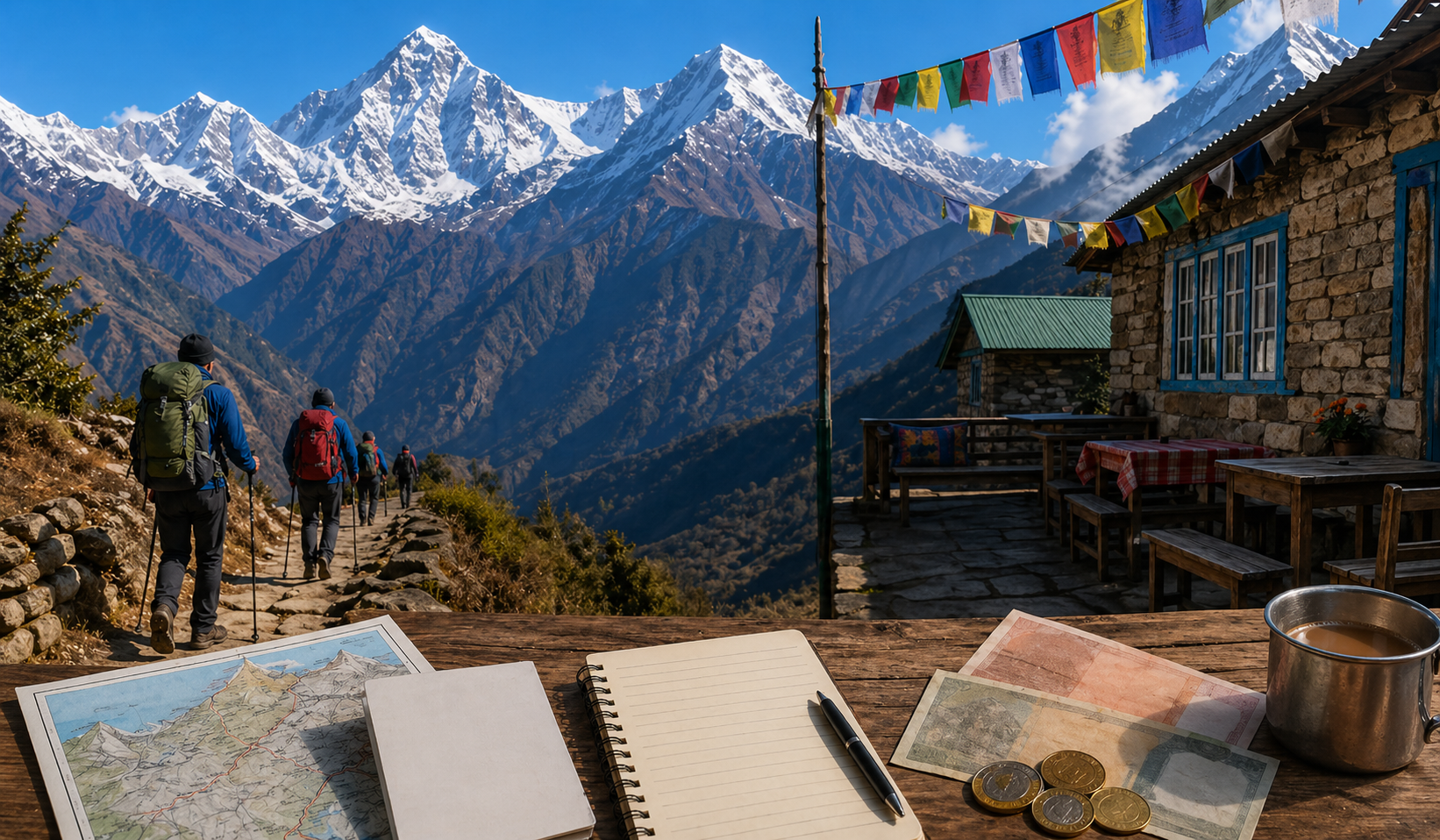
Nepal is one of the most popular trekking destinations. Nepal offers numerous beautiful trekking destinations that attract tourists from around the world. Beautiful destinations are not the only factor attracting travellers to trek in Nepal; the treks are also budget-friendly.
Trekking in Nepal doesn’t require a fortune. Some travellers might spend NPR 10,000+ or USD $100+ daily on luxurious lodge treks. But it is possible to go on an adventurous trek and experience the rich culture on a budget for just NPR 700-1500 for Nepali and USD $15-30 per day for foreigners. The difference is not what you see; it is in knowing where to save money without sacrificing safety, enjoying and experiencing the authentic mountain.
This comprehensive guide reveals insider strategies, practical hacks, and cost-cutting techniques for budget-conscious trekkers exploring Nepal’s mountains. You will learn where you can save and where you should not cut costs.
Quick Summary:
- Daily Budget: NPR 700 to 1500 or USD $15 to $30 for budget trekking
- Biggest Saving: Transport by bus rather than flight, simple, energy-rich food like dal bhat, and sharing a guide and porter.
- Best budget Routes: Poon Hill, Lantang, Helambu
- Hidden costs to avoid: Hot showers (USD $3-4 or NPR 300-500), bottled water (USD $2-4 or NPR 200-500), WiFi (USD $3-5 or NPR 300-600)
- Pro Tip: Book trekking trips with local agencies like Hop Nepal, as international operators can overcharge.
Understanding Nepal Trekking Costs: Where Your Money Goes
You must understand the trekking budget before learning how to save on your journey. The typical trek budget in Nepal depends on several factors. They include factors such as:
- Permits: Permits must be taken to go on trekking journeys. It is non-negotiable government fees funding conservation. Annapurna Conservation Area Permit (ACAP) or par entry permits can typically cost around NPR 3,000 ($20.26) for foreigners, NPR 1,000 for SAARC nationals, and NPR 100 for Nepali citizens. TIMS are optional and are not mandatory. The TIMS card costs NPR 2,000 for foreigners and NPR 1,000 for SAARC nationals. You cannot avoid this cost, but choosing routes with lower permit costs might help.
- Accommodation: While travelling, you might find various affordable teahouses which cost around NPR 1000-12000 (USD $10-15). If you want to upgrade to lodges with attached bathrooms, it might cost around NPR 2000-3000 (USD $20-30). If you want to travel on a budget, you can choose teahouses to stay in.
- Food: Meals can be controlled and more affordable while travelling in Nepal. You should choose simple yet energy-providing food, such as dal bhat, which often comes with unlimited refills of dal and bhat, along with select veggies. This meal might cost around NPR 200-500 (USD $3-5). Some of the western meals might be found, and they cost much more, around NPR 800-100 (USD $8-10) per meal.
- Guide and Porter: Hiring guides and porters is optional for most routes but highly recommended for safety and cultural insight. Solo hiring might cost NPR 2500-3500 (USD $25-35) per day for a guide and NPR 1500-2500 (USD $15-20) per day for porters. Sharing among 2-4 trekkers reduces per-person cost dramatically.
- Transportation: Costs may vary widely depending on the route. Based on the Annapurna region, transportation might cost around NPR 1,000-2,000 (USD $10-20). Everest flights can cost NPR 40,000-50,000 (USD $360-440) per person for one flight. Choosing road transport can save thousands of rupees.
- Extras: Some of the extra costs include hot showers, battery charging, WiFi, bottled water, snacks, tips, etc. These might not cost much, but they could be the source that goes over budget. By the end of the trek, the cost of these extras might range from NPR 5000 to 15,000 (USD $50-150) on average for a 10-day trek if unchecked.
You must understand these breakdowns properly, which helps you see where the significant savings lie.
Some of the Hacks to Save Cost While Travelling
Hack 1: Choose Road Accessible Treks
This hack helps eliminate the expense of domestic flights. Travelling by road is really cheap, which helps in saving thousands of rupees.
Nepal’s most famous trekking destination, Everest Base Camp, requires flights to Lukla. It costs NRP 20,000 - 25,000 (USD $180-220) per person for a one-way flight. If you are travelling as a couple, it might cost around NPR 75,000-90,000 (USD $720-880) for a two-way flight to reach the trailhead. Similarly, Langtang Valley is just 7-8 hours from Kathmandu, which costs 600-1000 (USD $6-10) to reach there by local bus. Annapurna trek is also one of the famous destinations that starts from Pokhara. One can reach the destination in just NPR 1200 - 1700 (USD $10-15) from Kathmandu.
Best Road-Accessible Budget Treks:
- Langtang Valley: To reach Langtang Valley, you can take a local bus from Kathmandu to Syuabrubesi, which takes NPR 600 to 1000 (USD $6-10). After reaching, you can start a spectacular 7-10-day trek that features beautiful glaciers, Tibetan culture, and dramatic mountain scenery rivalling Everest views.
- Ghorepani Poon Hill: You can take a tourist bus from Kathmandu to Pokhara, which costs around NPR 1200 to 1700 (USD $10-15). After reaching Pokhara, you can again take a local bus to Nayapul, which costs around NPR 500 (USD $5). By this, you can get access to Nepal’s most budget-friendly classic trek with sunrise Himalayan panoramas.
- Helambu Circuit: You can reach the trailhead in just 2-3 hours from Kathmandu. You must reach Sundarijal, which costs NPR 50-100 (USD $0.5-1) by bus. You can start this cultural trek through Sherpa and Tamang villages with moderate mountain views.
- Lower Mustang: A flight to Jomsom can range from NPR 12,000 - 15,000 ($110-140). You can get an overlay access via the Annapurna Circuit or the Beni-Jomsom jeep, which might cost around NPR 3,000 to 4,000 (USD $30-40), enabling a budget approach to this unique high-desert region.
Transportation helps save money; it might be used for other things to enjoy while on a journey, such as food, accommodation, permits, and a guide.
Hack 2: Master the Dal Bhat Strategy
Having dal and bhat for meals can help reduce food costs by 40-60%, provide more energy and nutrition, and help you feel fuller.
Dal Bhat is one of Nepal’s staple dishes, which includes rice, lentil soup, seasonal vegetable curry, and pickles. It comes with unlimited refills while just costing NPR 300-600 (USD $4-6). If you order a single dal bhat, you get 2-3 servings of rice and dal, keeping you full for hours.
You can also have western menu items like pizza, pasta, or a burger, which costs around NPR 400-1500 (USD $4-12), offering no refills and less nutrition.
How you should have your meals in your budget:
- Breakfast: Porridge or eggs are acceptable, which cost around NPR 300-500 (USD $3-4), but Tibetan bread with jam saves money, which costs around NPR 300 (USD $3)
- Lunch: Dal bhat is the best option and is recommended, as it comes with the most refills before afternoon trekking.
- Dinner: Dal and bhat again for the same reason as above.
By having these simple meals, you can save around NPR 1000-1500 (USD $10-15) instead of having the western food.
Different lodges and teahouses prepare dal bhat differently with their own style, due to which you will not feel monotonous while having dal bhat. These meals deliver complete protein, complex carbohydrates, which are essential for trekking energy, vegetables for vitamins, and fermented pickles for digestion.
Hack 3: Share Guide and Porter Costs
If you go trekking with a partner or group, it helps in splitting the professional support costs among 2-4 trekkers. It reduces the individual expenses by 50-75%.
The Math:
- If you are travelling solo with a guide, it might cost you NPR 3000-4000 (USD $30-35) per day on average.
- If you are with a partner, the cost cuts down to NPR 1500-2000 (USD $15-17) per day.
- If you are in a group of four, your cost cuts down to NPR 750-1000 (USD $7.5-10) per day.
How can you find trek partners:
- You can find your partner in Facebook groups such as Nepal Trekking and Backpackers Group, Budget Trekking in Nepal, and Solo Female Travellers.
- If you book a package through a travel agency and there are other travellers going on a trek on a similar date, you can request to share a guide with them to reduce the cost.
- In some budget hotels in Kathmandu and Pokhara, you get to see notice boards where trekkers post seeking a trek partner.
Hack 4: Trek During Shoulder Season
If you travel between the peak and off-season, the guide rate is low. Accommodations often offer discounts, and you will have more negotiating power during this time.
When to go:
- March: As the winter season ends, the weather improves. During the day, the temperature stays warm, but at night it gets really cold. During this time, rhododendrons begin to bloom at the lower elevations. This is not a peak season, so guide charges stay at the lower end. Some lodges and teahouses may also offer discounts to compete for early-season business.
- Early June: This is the time that is right before the monsoon arrives. Earlier this month. It offers decent weather at heavily discounted rates. Guides are desperate for work right before the monsoon starts. So, they accept the minimal rates during this time. Lodges and teahouses also offer heavy discounts of 20-30%.
- Early September: During this time of the month, the monsoon will be on the verge of ending. The weather improves rapidly during this time, but the guide's charges remain minimal. The countryside remains lush green from monsoon rains, providing an excellent value window.
- Late November / Early December: This is when the autumn season ends and the peak tourist season begins. The crowds thin as winter slowly approaches. Temperature drops during this time of month, but it remains manageable at lower elevations. Guides reduce their prices, and lodges/teahouses compete for fewer trekkers, creating an opportunity for negotiation.
When you go during non-off-season or non-peak seasons, you can negotiate everything. You can request discounts at the lodges and teahouses. You can also book at the last minute for the best deals. With these dates and routes, you stay flexible.
Hack 5: Rent Gear Instead of Buying
Renting the gear helps you avoid purchasing the expensive equipment which you will rarely use again.
What to rent in Kathmandu / Pokhara
Thamel (Kathmandu) and Lakeside (Pokhara) Rental Shops:
Sleeping Bags: NPR 200-300 (USD $1-2) per day
- -10°C rated: NPR 200 (USD $1) per day
- -20°C rated: NPR 300 (USD $1.5) per day
- Weekly rate: NPR 700-1200 (USD $7-10) per week
Down Jackets: NPR 200-300 (USD $1-2) per day
- Basic synthetic: NPR 200 (USD $1) per day
- Quality down: NPR 300-400 (USD $1.5-2) per day
Trekking Poles: NPR 100-200 (USD $0.5-1) per day
- Pair for week: NPR 400-700 (USD $3-6) per week
Backpacks (60 to 70 litres): NPR 150-300 per day
- Large packs: NPR 800-1500 (USD $7-12 per week)
Other Rentable Gear:
- Gaiters: NPR 75 (USD $0.5) per day
- Crampons: NPR 250-400 (USD $2-3) per day
- Headlamps: NPR 75-150 (USD $0.5-1) per day
- Rain gear: NPR 150-300 (USD $1-2) per day
Before renting the gears, you must inspect them before accepting them. If you are renting multiple items, you must ask for 10-20% off.
You should buy hiking boots which must fit you perfectly, socks, base layers, and innerwear. And you can rent everything else, including sleeping bags, jackets, backpacks, poles, and rain gear.
Hack 6: Stay in a Basic Tea House
Staying in a basic teahouse and accepting their simpler accommodations in exchange helps reduce extra costs. Below are some of the teahouse categories:
Basic Tea House (NPR 300-650 or USD $3-5 per night)
- Simple room with twin beds and thin mattresses
- Shared bathrooms with generally squat toilets
- No heating
- Communal solar charging
- Basic but clean and adequate
Upgraded Lodge (NPR 1000-1500 or USD $8-12 per night)
- Better mattresses, sometimes with pillows
- Attach western toilets
- Hot shower with extra cost
- Room Heating
- Better dining hall
Premium Lodge (NPR 1750-3000 or USD $15-25 per night)
- Comfortable beds with good linens
- Reliably hot showers
- Heated rooms
- WiFi included
- Fancier food options
If you are trekking all day, you might arrive at the teahouse or lodge late in the afternoon. You might have dinner with minimal socialisation, sleep, wake up early, have breakfast, and trek. You barely spend 7-9 hours in the room, mostly sleeping. Paying extra for comfort and upgrading the hotel room barely matters, since you are exhausted from hiking.
You must bring sleeping liners, an inflatable pillow, and headlamps. These small investments transform the basic lodges into perfectly adequate accommodations.
What not to Cheap Out on
- Travel Insurance: It is mandatory and highly recommended for trekking at higher altitudes. The insurance must include medical evacuation up to 5,000 meters, and if you do not have insurance, you might have to pay around NPR 5,00,000-15,00,000 or USD $5,000-15,000. This is the reason why insurance is non-negotiable.
- Proper Boots: If you do not have comfortable, well-fitting boots, you might get blisters and foot injuries at the end of the trek. You must invest in quality, broken-in bots. This is where foot health matters more than money.
- Emergency Funds: You must have funds to reserve for helicopter evacuation deposits, emergency equipment replacement, or itinerary changes due to weather or health.
- Guide on Unfamiliar Routes: You must save or bring some funds for guides to help you get past unfamiliar routes. It is not worth much compared to being lost, injured, or missing critical weather changes.
- Altitude Medication: Diamox is an altitude medication that helps prevent trekkers and travellers from developing potentially fatal altitude sickness.
Conclusion
A big budget is not required for trekking in Nepal; you only need smart planning. By choosing road-accessible routes instead of taking a flight, eating local food like dal and bhat instead of western foods, sharing guides and porters, trekking in shoulder seasons, renting gear, and staying in basic teahouses, you can experience the Himalayas' beauty and authenticity to the fullest while being on a minimal budget.
You must never cut costs on essentials, including insurance, proper boots, safety equipment, or emergency funds. You must spend wisely while trekking, where it matters. You will find that Nepal’s most unforgettable mountain experiences are also the most affordable.
Frequently Asked Questions (FAQs)
Q. Can I really trek in Nepal for $20 per day?
A. Yes, it is possible to trek in USD $20 per day if you trek independently on routes such as Poon Hill or Helambu, stay in basic teahouses, have basic and local meals such as dal and bhat, avoid extra cost, and bring your own gear.
Q. Is Budget trekking safe?
A. Yes, budget trekking is absolutely safe if you book a trek with a trusted travel agent, carry proper insurance, and do not skip any safety essentials while hiring guides on challenging routes.
Q. What is the absolute cheapest trek?
A. One of the cheapest treks includes Ghorepani Poon Hill (4-5 days) and Helambu (5-7 days). These destinations are within budget while you experience a beautiful, adventurous journey.
Q. Should I book before arriving in Nepal?
A. Yes, we recommend booking in advance with a good travel agency, but you can also arrange budget treks after arrival during the shoulder seasons. If you are trekking in peak season, you must absolutely book in advance.