
Quick Answer: What Is the Lobuche Peak and EBC Combo?
People who find this page already know they want more than a standard trek. They have done the research on Everest Base Camp, they know what that involves, and now they are asking whether climbing an actual Himalayan peak on the same trip is realistic. Here is the honest answer upfront:
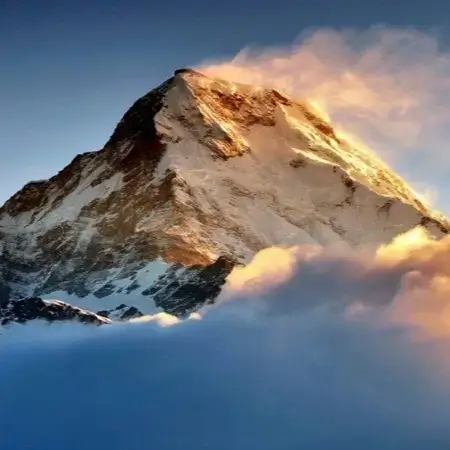
The Lobuche Peak and Everest Base Camp combo is a 16 to 20 day adventure that combines the classic EBC trek with a technical ascent of Lobuche East at 6,119 meters. It is one of the most popular introductions to Himalayan mountaineering available because the EBC approach provides natural gradual acclimatization before the climbing phase begins. Here is what the combo involves:
- Total duration: 16 to 20 days from Kathmandu to Kathmandu
- Maximum altitude: 6,119 meters at the Lobuche East summit
- Difficulty level: Challenging, requiring basic mountaineering skills
- Best suited for: Fit trekkers ready to transition into peak climbing
- Permits required: Sagarmatha National Park, TIMS card, and Lobuche Peak climbing permit
Everything about the route, the climbing section, the cost, the permits, and what preparation actually looks like is below.
What Makes the Lobuche Peak and EBC Combo Worth Choosing
Most trekkers who have done their research understand what Everest Base Camp involves. Fourteen days, 5,364 meters, no technical climbing required, one of the most spectacular walking routes on Earth. The Lobuche Peak combo takes everything that makes EBC extraordinary and adds a genuine summit above 6,000 meters on top of it.
The reason this particular combination works so well is not just logistical convenience. The EBC approach through Namche Bazaar, Dingboche, and Lobuche village is one of the most naturally paced acclimatization routes in the Himalaya. By the time trekkers reach the climbing phase they have spent nearly two weeks building altitude tolerance through the very terrain that surrounds the peak. Their bodies have adapted gradually rather than being pushed directly into a 6,000-meter climb from a low starting point.
For trekkers who have always wanted to stand on a genuine Himalayan summit but lack prior mountaineering experience, Lobuche East is the most accessible technical peak in the Everest region. The fixed ropes on the steeper sections, the relatively straightforward glacier approach, and the presence of experienced climbing guides throughout the ascent make it achievable for motivated first-time climbers who prepare specifically for the technical demands.
Day by Day: Complete Lobuche Peak and EBC Combo Itinerary
Days 1 to 3: Arrival and Lukla Flight
Day one is Kathmandu arrival, permit arrangement, and gear check. Most operators run a full briefing on day one covering the itinerary, the climbing section, equipment, and what to expect at altitude above 5,000 meters. Day two involves the flight from Kathmandu or Ramechhap to Lukla at 2,860 meters, followed by the first trekking stage to Phakding at 2,610 meters. A relatively easy three to four hour opening day that gives your body a gentle introduction to Khumbu terrain. Day three covers Phakding to Namche Bazaar at 3,440 meters, the steep climb that signals the beginning of serious trekking and the first real test of cardiovascular capacity at altitude.
Days 4 to 8: Namche Bazaar and Acclimatization
The acclimatization day at Namche on day four is genuinely non-negotiable regardless of how strong you feel on arrival. The standard acclimatization hike to the Everest View Hotel above town gives you your first clear sightline to the summit pyramid and your body a meaningful altitude stimulus followed by the sleep-low recovery that acclimatization physiology demands. Days five through eight continue the approach through Tengboche, Dingboche, with a second acclimatization day at Dingboche before pushing to Lobuche village. This section of the route passes through increasingly dramatic alpine terrain with Ama Dablam dominating the skyline through the middle sections.
Days 9 to 12: Everest Base Camp Phase
The approach to Everest Base Camp via Gorak Shep is the emotional center of the entire itinerary for most participants. Gorak Shep sits at 5,164 meters and from here the trail continues to Base Camp at 5,364 meters and up Kalapathar at 5,644 meters for what is widely considered the finest accessible view of Everest's summit in the region. By this point in the itinerary trekkers have accumulated nearly two weeks of progressive altitude exposure. The physiology is as prepared for the climbing phase as it can be made through gradual ascent alone.
Days 13 to 16: Lobuche Peak Climbing Phase
This is where the itinerary transitions from trekking to mountaineering and where the preparation invested before departure becomes the most tangible.
Day thirteen involves moving to Lobuche Base Camp at approximately 4,940 meters, which sits very close to Lobuche village on the main EBC trail. The short approach to base camp gives the climbing team time to review equipment, practice crampon fitting, and run through ice axe technique with the climbing guide before the higher camp push.
Day fourteen is the move to Lobuche High Camp at around 5,600 meters. The route to high camp involves glacier travel and moderate technical terrain that introduces the climbing mechanics that the summit push demands. This is where crampons, harnesses, and ice axe come into active use for the first time and where the difference between people who practiced their technique before departure and those who did not becomes immediately apparent.
Day fifteen is summit day. Departure from high camp happens in the predawn darkness, typically between 2 and 3 AM, to ensure the climbing team reaches the technical ridge sections in the coldest and most stable conditions of the day before the mountain's characteristic afternoon weather deterioration begins. The route to the summit at 6,119 meters involves fixed rope sections on steeper ground, a glacier crossing, and the final exposed ridge that delivers what most climbers describe as the most physically and emotionally demanding two hours of their entire trekking and climbing career.
Standing on Lobuche East with the Everest massif directly in front of you and the entire Khumbu spread out below is an experience that very few people adequately prepare themselves to describe before doing it. Day sixteen is the descent to Lobuche village and the beginning of the return journey.
Days 17 to 20: Descent and Return to Kathmandu
The return follows the ascent route back through Dingboche, Namche Bazaar, and Phakding to Lukla. Most itineraries allow two to three days for the descent which is faster than the ascent but harder on knees and joints after the accumulated demands of nearly three weeks on the trail. The Lukla flight back to Kathmandu on day nineteen or twenty closes the itinerary and most operators arrange a celebratory dinner in Thamel that evening.
Difficulty Level: Trekking Portion vs Climbing Portion
EBC Trek Portion
The trekking portion of this itinerary carries the same moderate to challenging difficulty rating as the standard EBC trek. No technical skills are required for anything up to and including Kalapathar. The altitude is the primary challenge and the daily walking demands are within reach for any trekker who has prepared specifically across a proper training program.
Lobuche East Climbing Portion
The climbing portion is a genuinely different category of experience. Lobuche East requires the use of crampons on icy terrain, an ice axe for balance and arrest technique, a harness and ascender for the fixed rope sections, and the mental composure to operate competently on exposed steep ground above 5,500 meters at 3 AM in subfreezing temperatures.
This does not mean it requires years of mountaineering training. It means it requires specific technical preparation that goes beyond trekking fitness. Climbers who take an introductory mountaineering skills course before departure, practice crampon and ice axe technique on accessible local terrain, and arrive with a genuine understanding of rope systems and glacier travel are well-positioned for a successful summit attempt with a good climbing guide.
Who Is This Itinerary Actually Suited For
Fit trekkers who have completed at least one multi-day Himalayan trek previously and want to take the next step into actual peak climbing. Motivated beginners with no prior Himalayan experience who are willing to invest in both a rigorous fitness preparation program and basic technical skills training before departure. People for whom the EBC trek alone no longer represents a sufficient challenge and who want an objective that requires genuinely new skills rather than just more walking.
This combination is not suitable for trekkers who want a non-technical experience, for people with no interest in developing mountaineering skills, or for anyone who views the climbing portion as simply more difficult trekking rather than a genuinely different type of mountain activity.
Permits Required for Lobuche Peak and EBC Combo
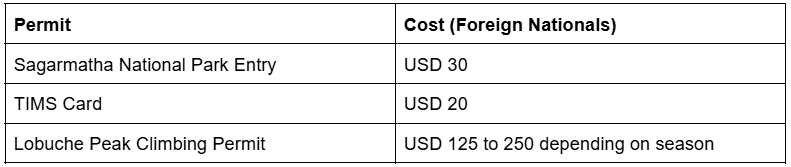
The Lobuche Peak climbing permit is issued by the Nepal Mountaineering Association and must be arranged before the climbing phase begins. Most organized packages handle all permit procurement as part of the service but this should always be confirmed explicitly before booking. The climbing permit cost varies between spring and autumn seasons and between group and individual climber arrangements.
Cost of the Lobuche Peak and EBC Combo Trek
Package Cost Overview
A fully organized Lobuche Peak and EBC combo package through a reputable Kathmandu-based operator covering all permits, licensed trekking and climbing guide, porter service, teahouse accommodation for the trekking phase, base and high camp accommodation for the climbing phase, all meals on the trail, and Lukla domestic flights typically runs between USD 2,800 and 4,500 per person. The range reflects variation in group size, guide experience level, accommodation quality choices, and the specific inclusions of each operator's package structure.
Additional Costs to Budget For
Gear rental for climbing equipment including crampons, ice axe, harness, helmet, and high-altitude sleeping bag if not personally owned runs approximately USD 150 to 300 for the climbing phase depending on which items are rented rather than owned. Tips for the trekking guide, climbing guide, and porters should be budgeted separately at approximately USD 150 to 250 total for the full itinerary. Personal expenses on the trail including electronics charging, hot showers, Wi-Fi access, and extra drinks add USD 15 to 25 per day beyond the package inclusions.
Gear and Equipment: What You Actually Need
Trekking Gear for the EBC Portion
The standard EBC trekking gear list applies fully. Waterproof trekking boots with strong ankle support that are broken in before departure, layered clothing covering base, insulation, and waterproof outer layers, trekking poles, headlamp with spare batteries, and a daypack carrying water, snacks, and essential daily items while the main bag travels with the porter.
Climbing Gear for the Lobuche East Summit
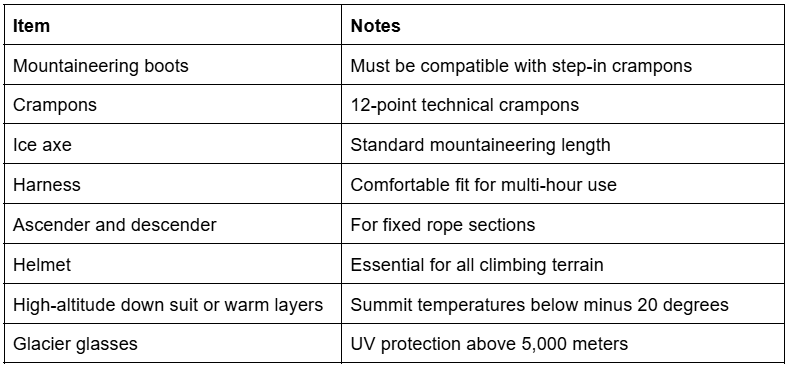
Most operators in Kathmandu offer climbing gear rental for items not personally owned. Renting crampons, ice axes, and harness rather than purchasing for a single expedition is standard practice among first-time Himalayan climbers and makes financial sense unless further mountaineering trips are planned in subsequent seasons.
Best Time to Do the Lobuche Peak and EBC Combo
Spring from March through May is the most popular season for this combination because it aligns with the main Everest climbing window. Stable weather patterns, clear visibility across the upper mountain, and firm consolidated snow on Lobuche's upper slopes make April the peak of the spring climbing window. The mountain is busier than autumn during spring but the conditions are typically excellent for the summit push.
Autumn from late September through November is the second strong option. Post-monsoon atmosphere clarity delivers sharper mountain views than spring across the Khumbu region and the cooler temperatures that build through October and November create good snow conditions on the upper mountain. The trail is at peak traffic in October which makes teahouse booking important to arrange in advance.
Safety and Risks Worth Understanding
Altitude sickness above 6,000 meters is a genuine risk for anyone regardless of prior acclimatization. The summit day push from high camp at 5,600 meters to the summit at 6,119 meters involves a rapid altitude gain in conditions where the body has no further time to adapt. Knowing the symptoms of serious altitude sickness and having an honest pre-agreed protocol with your climbing guide for descending immediately if those symptoms appear is a non-negotiable safety foundation.
Weather on Lobuche East can change rapidly in ways that require turning back even when the summit is close. The most experienced climbing guides on this mountain know which weather signals require an immediate retreat and following their judgment without debate is part of what makes the combination of a reputable guide and a well-prepared climber the safety formula that works.
The technical terrain on the upper mountain including the fixed rope sections and the exposed summit ridge requires the crampon and ice axe competence that specific pre-departure training builds. Arriving without having practiced these skills is not a manageable gap that enthusiasm bridges on the mountain.
Final Verdict: Is the Lobuche Peak and EBC Combo Right for You?
If you have done an EBC trek or similar multi-day Himalayan trek before and you are ready for a genuine next step that requires new skills rather than just more walking, this combination is one of the best Himalayan adventures available to non-professional mountaineers.
If you are a motivated first-timer who is willing to invest in both serious fitness preparation and actual technical skills training before departure, and you are realistic about what climbing above 6,000 meters demands from your body and your judgment, this is achievable and genuinely extraordinary.
If you want a non-technical experience or you are looking for the EBC trek with some extra altitude without the climbing component, this is not the right itinerary. The Kalapathar summit at 5,644 meters or the three passes trek are better fits for trekkers seeking greater challenge without technical climbing.
The Lobuche Peak and EBC combination is one of the finest ways to transition from Himalayan trekking into actual mountaineering. The acclimatization advantage of the EBC approach, the accessible technical demands of Lobuche East, and the specific satisfaction of standing on a 6,000-meter summit in the Khumbu make this a trip that trekkers-turned-climbers consistently describe as the most significant outdoor experience of their lives.
Prepare properly. Hire an experienced climbing guide. Respect the mountain. And go.
Frequently Asked Questions (FAQs)
Can beginners climb Lobuche Peak?
Beginners with no prior mountaineering experience can attempt Lobuche East if they complete a specific technical skills preparation program before departure covering crampon use, ice axe technique, and basic rope systems. A highly experienced licensed climbing guide throughout the ascent is essential. Beginners with only trekking preparation and no technical skills training are not ready for the climbing portion of this itinerary.
How hard is Lobuche Peak compared to other Himalayan peaks?
Lobuche East is classified as one of the more accessible technical peaks in Nepal at 6,119 meters. It is harder than non-technical trekking peaks and easier than serious technical objectives like Island Peak's steeper variants or anything above 6,500 meters. The fixed ropes on the upper sections make it manageable for motivated first-time climbers with proper preparation.
Do I need climbing experience for Lobuche Peak?
Prior roped climbing or mountaineering experience is genuinely helpful but not strictly required if you complete a technical skills course before departure. What you cannot arrive without is practical familiarity with crampons, ice axe use, and ascending fixed ropes. These skills need to be practiced before you reach High Camp because the mountain is not a suitable place to learn them from scratch.
How long does the full Lobuche Peak and EBC combo take?
The standard itinerary runs 16 to 20 days from arrival in Kathmandu to return including Lukla flights, the full EBC approach, the climbing phase at Lobuche, and the descent. Some operators offer shorter versions that compress the descent but 18 days is the most common and most comfortable duration for completing the full itinerary without rushing critical acclimatization stages.
Is Lobuche Peak safe for first-time Himalayan climbers?
With a licensed and experienced climbing guide, specific pre-departure technical preparation, and honest respect for the altitude and weather conditions, Lobuche East has a good safety record among properly prepared first-time Himalayan climbers. The risks are real and should be understood clearly before departure. They are manageable with preparation and good judgment. They are not manageable with enthusiasm alone.