
ACAP Fees, TIMS Rules, Documents & Lower Mustang Trek Permit Guide
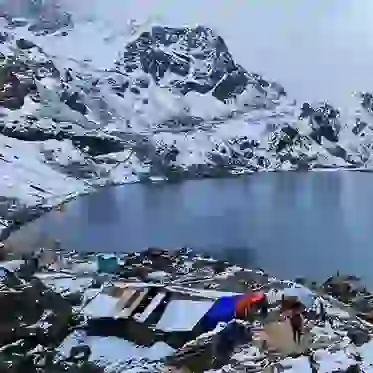
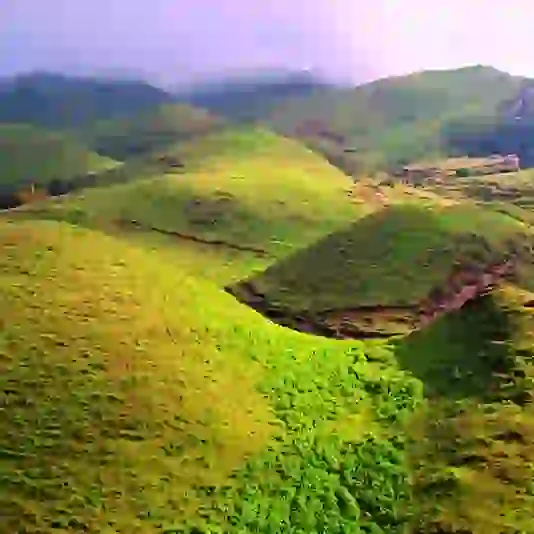
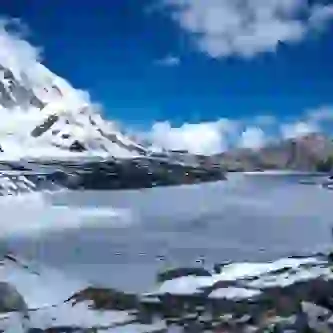
Lower Mustang is located in Nepal’s Gandaki Province. It is a stunning high-altitude destination known for its strong Tibetan Buddhist and Bon cultural influences. Lower Mustang lies between the Tibetan Plateau to the north and the high Himalayan mountains to the south.
Before planning a Lower Mustang trek, you must understand the Lower Mustang permit and cost requirements to prevent confusion and unnecessary expenses. Lower Mustang encompasses Kagbeni, Jomsom and many surrounding valleys, offering beautiful Himalayan scenery, Tibetan Buddhist culture and dramatic high-desert landscapes. However, Upper Mustang’s higher costs and restrictions make it more challenging to visit.
This guide explains the Lower Mustang permit costs for Nepali, Indian, SAARC, non-SAARC, and other foreign travellers, along with the required documents, the online application process, permit validity, and current TIMS requirements for 2026.
Quick Summary: Lower Mustang Permit Cost 2026
- Lower Mustang lies within the Annapurna Conservation Area, so ACAP is the main permit for the standard Lower Mustang trek.
- Lower Mustang permit cost for Nepali citizens: NPR 100 per person per entry.
- Lower Mustang permit cost for Indian citizens: NPR 1,000 per person per entry under the SAARC category.
- Lower Mustang permit cost for SAARC nationals: NPR 1,000 per person per entry.
- Lower Mustang permit cost for non-SAARC foreigners: NPR 3,000 per person per entry.
- Children below 10 years are exempt from the NTNC conservation-area entry fee.
- A standard Jomsom–Muktinath or Lower Mustang itinerary is not listed by NTB as a standalone mandatory TIMS route.
- If your itinerary joins a route on NTB’s mandatory TIMS list, the TIMS fee is NPR 1,000 for SAARC nationals and NPR 2,000 for other foreign nationals.
- ACAP can be arranged through the official NTNC ePermit system or an authorised Entry Permit Counter.
- NTNC permits are single-entry, non-transferable and non-refundable.
Do You Need a Permit for Lower Mustang?
Yes, a permit is required to trek in Lower Mustang. The special permit for Lower Mustang is not needed, but the standard Annapurna Conservation Area Permit (ACAP) is required. Lower Mustang does not require the expensive restricted-area permit that Upper Mustang demands.
The exact permit requirement may change if your itinerary extends beyond the standard Lower Mustang route into a designated restricted area. For this reason, the itinerary matters more than the general destination name. Travellers planning side trips or extensions should confirm the route with the Department of Immigration or a Government-registered trekking agency.
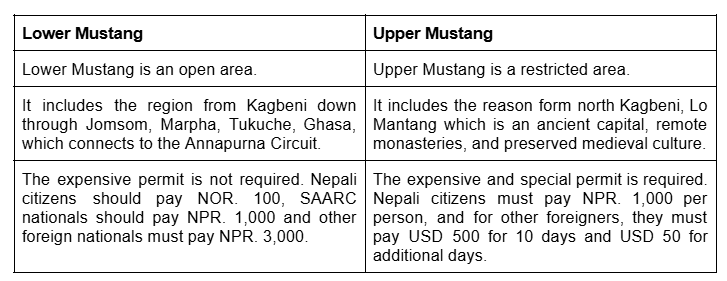
Lower Mustang VS Upper Mustang
Why Understanding the Two Permits Matters
Many trekkers confuse Upper Mustang with Lower Mustang, even though their permit requirements and costs differ. This is why some travellers unnecessarily budget for expensive restricted-area permits. If you only want to explore Lower Mustang, including Jomsom, Marpha, Kagbeni and the surrounding areas, without entering a designated restricted area, then a basic Annapurna Conservation Area Permit (ACAP) is generally the main permit required. Exploring only Lower Mustang can therefore help you save significantly.
Why Permits are Required
Lower Mustang lies within the Annapurna Conservation Area. It is Nepal’s largest protected area, which is approximately 7,629 sq km. ACAP fees fund trail maintenance, wildlife conservation, community development, environmental education, waste management and emergency rescue operations.
The areas covered in a standard Lower Mustang itinerary include:
- Jomsom: The district headquarters of Mustang and home to an airport.
- Kagbeni: A historic village and an important gateway in the Mustang region.
- Marpha: A famous traditional village known for its apples and local apple products.
- Muktinath: A sacred pilgrimage site at an altitude of about 3,800 m.
- Lubra, Jharkot and Lupra: Traditional cultural villages in the Lower Mustang region.
Permits Required for Lower Mustang Trek
ACAP Permit (Annapurna Conservation Area Permit)
An ACAP Permit (Annapurna Conservation Area Permit) is required for travellers entering the Annapurna Conservation Area, including Lower Mustang. The fee varies by nationality, while children below 10 years are exempt from the conservation-area entry fee.
The permit is issued for a single entry and should cover your stated trip through the conservation area. Once you exit, you will need a new permit to re-enter.
The Annapurna Conservation Area Permit covers travel within the Annapurna Conservation Area, including routes such as Annapurna Base Camp, Annapurna Circuit, Poon Hill, Mardi Himal and Lower Mustang. Some routes within or adjoining the conservation area may require additional permits, so always check the exact itinerary.
You should carry the permit throughout the trek and show it at authorised checkpoints when requested. The permit remains valid for the permitted trip and single entry.
TIMS Card
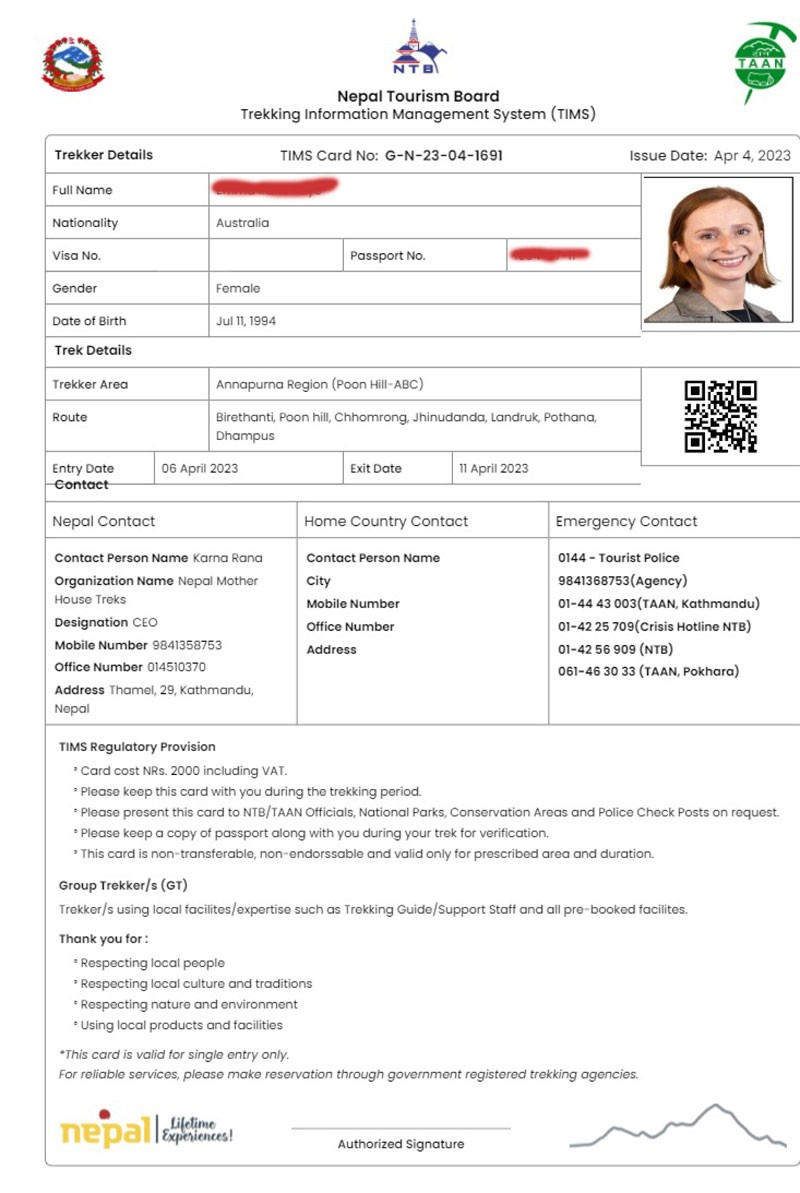
A TIMS card is a Trekkers’ Information Management System card. Under the current Nepal Tourism Board rules, TIMS is required for specified trekking routes rather than for every trek in Nepal.
For a standard Lower Mustang or Jomsom–Muktinath itinerary, TIMS is not listed as a standalone mandatory requirement. However, if your Lower Mustang trip is combined with a route covered by the current TIMS rules, a TIMS card and licensed guide requirements may apply.
Current TIMS fees when the route requires it:
- SAARC nationals: NPR 1,000 per person
- Non-SAARC foreign nationals: NPR 2,000 per person
For routes where TIMS is mandatory, the card is arranged through a Government-registered trekking agency. Always check your exact itinerary before travelling.
Do You Need a Guide for the Lower Mustang Trek?
For a standard Lower Mustang itinerary that is not on NTB’s mandatory TIMS route list, the revised TIMS rule does not automatically create the same guide requirement that applies to listed routes. However, travellers should confirm the exact trail before departure, especially when combining Lower Mustang with longer Annapurna or restricted-area itineraries.
Even where a guide is not compulsory, a licensed local guide can add value through route planning, weather decisions, local cultural knowledge, transport coordination and emergency support.
Lower Mustang Permit Cost
Lower Mustang permits are priced differently for Nepali citizens, SAARC nationals and other foreigners.
Lower Mustang Permit Cost for Nepali Citizens
The Lower Mustang permit cost for Nepali citizens is NPR 100 per person per entry. This is the current entry fee for the Annapurna Conservation Area. Children below 10 years are exempt from the conservation-area entry fee.
Annapurna Conservation Area Permit (ACAP): NPR 100
Total standard Lower Mustang permit cost: NPR 100
Required Documents:
- Nepali citizenship certificate or valid identification
- Recent photograph if required for the selected application method
- Application details
Processing Time: The permit can generally be processed on the same day. Online processing follows successful submission and payment, while counter waiting times can vary.
Lower Mustang Permit Cost For Foreigners
The cost of the Lower Mustang permit for foreigners varies by nationality. Indian and other SAARC nationals pay a lower ACAP fee than non-SAARC foreign travellers.
Lower Mustang Permit Cost for Indian Citizens
The Lower Mustang permit cost for Indian citizens is NPR 1,000 per person for the Annapurna Conservation Area Permit (ACAP), as Indian travellers fall under the SAARC category.
If your exact itinerary is on a route where TIMS is required, the current SAARC TIMS fee is NPR 1,000 per person.
Lower Mustang Permit Cost for SAARC Nationals
The Lower Mustang permit cost for SAARC nationals is NPR 1,000 per person for ACAP. India is included in the SAARC fee category.
Annapurna Conservation Area Permit (ACAP): NPR 1,000
TIMS if the exact route requires it: NPR 1,000
Standard Lower Mustang permit total: NPR 1,000
Required Documents:
- Passport or accepted identification
- Recent photograph if required for the selected application method
- Proof of nationality
- Application details
Lower Mustang Permit Cost for Non-SAARC Foreigners
The Lower Mustang permit cost for non-SAARC foreign travellers is NPR 3,000 per person for ACAP.
Annapurna Conservation Area Permit (ACAP): NPR 3,000
TIMS if the exact route requires it: NPR 2,000
Standard Lower Mustang permit total: NPR 3,000
Required Documents:
- Passport with a valid Nepal visa
- Recent photograph if required for the selected application method
- Application details
Payment: The official NTNC ePermit system supports online card payment. Counter payment is generally made in Nepali rupees. Online payment may include a payment-gateway charge.
Lower Mustang Permit Cost Comparison Table
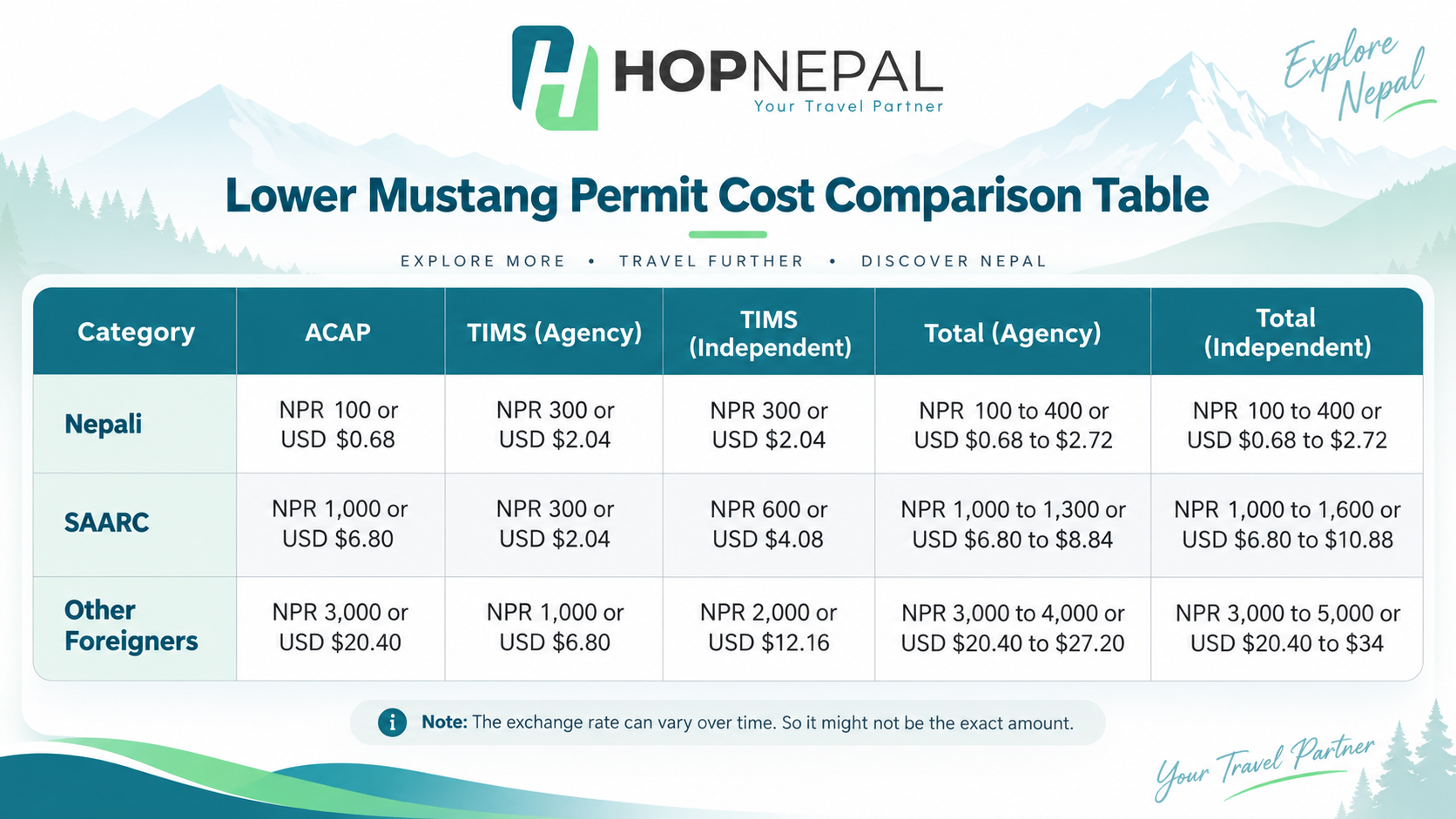
Note: Exchange rates can vary over time, so converted amounts may not be exact.
Where to Get Lower Mustang Permits
You can get a Lower Mustang permit online through the official NTNC ePermit system or from an authorised permit counter. Common options are mentioned below:
Kathmandu Permit Offices
Nepal Tourism Board:
- Location: Pradarshani Marg, Kathmandu
- Services: Permit and trekking-information services
- Processing: Usually same day, depending on the application method and counter workload
- Note: Check current official office hours before visiting
TAAN Office:
- Location: Bhrikutimandap, Kathmandu
- Services: TIMS-related services for routes where TIMS is required
- Note: Check current office hours and route requirements before visiting
Pokhara Permit Office for Lower Mustang
Tourist Service Centre:
- Location: Damside, Pokhara
- Services: Permit and trekking-information services
- Advantage: It is convenient for Pokhara-start treks
- Note: Check current official office hours before visiting
Through Registered Agencies
You can also explore Hop Nepal’s Nepal trekking permit guides for related routes. Using a registered trekking agency can make the process easier by helping you confirm your exact route and current permit requirements.
- Less time spent handling permit paperwork
- Assistance with the necessary documentation
- Up-to-date knowledge of permit regulations
- Permit support combined with trek logistics
- TIMS arrangement when your exact route requires it
You normally need to provide the identification and travel details required for the permit application. The agency can then assist with the remaining steps of the process.
How to Get a Lower Mustang Permit Online
- Go to the official NTNC ePermit website.
- Choose the Annapurna Conservation Area Project (ACAP) and the relevant trekking region.
- Enter your personal details, travel dates and emergency-contact information.
- Upload the required photograph when using the online-payment option.
- Pay the ACAP fee online using the supported payment method.
- Download or retrieve your permit after it has been processed, and keep a printable copy for the trek.
Online payment: NTNC currently states that a 2.9% payment-gateway charge applies to online payments.
Getting the Lower Mustang Permit at a Counter
- Complete the permit application and prepare your identification details.
- Visit an authorised NTNC Entry Permit Counter.
- Present your passport or other accepted identification.
- Pay the permit fee in cash.
- Collect the permit before starting the trek.
Counter payment: NTNC states that no additional payment-gateway charge applies to counter payment.
Documents Required for the Lower Mustang Permit
- Valid passport for foreign travellers
- Accepted identity document for Nepali or eligible Indian applicants
- Recent photograph when required for the selected online application method
- Personal details including full name, nationality and date of birth
- Travel dates and intended trekking region
- Emergency contact details and an address in Nepal
- Guide or porter details if applicable to your trip
Lower Mustang Permit Validity and Rules
- The conservation-area permit is issued for a single entry.
- The permit is non-transferable and non-refundable.
- Carry the permit during the trek and show it when requested by authorised personnel.
- Children below 10 years are exempt from the Annapurna Conservation Area entry fee.
- NTNC advises obtaining the permit before the trek; permits issued at a check-post can attract double fees.
- Additional permissions may be required if the itinerary enters a designated restricted area.
- Permit and route rules can change, so recheck official sources close to departure.
How Long Does It Take to Get the Permit?
The permit can generally be processed on the same day. Online processing depends on successful submission and payment, while counter waiting times vary depending on visitor numbers and workload.
Process
- Prepare your identification and travel details
- Complete the application form
- Submit the required details and payment
- Receive the permit after successful processing
Peak Season for Lower Mustang
The peak trekking seasons generally run from October to November and March to April. Permit counters can be busier during these periods, so applying online in advance or allowing extra time at the counter is recommended.
Common Lower Mustang Permit Mistakes to Avoid
- Using an old blog post instead of the current official ACAP fee.
- Assuming every Mustang itinerary uses the same permit.
- Adding a TIMS fee automatically without checking the exact trekking route.
- Waiting until a check-post to arrange the ACAP permit.
- Entering passport or nationality details incorrectly on a non-refundable permit.
- Forgetting that Indian travellers use the SAARC ACAP rate.
- Assuming a standard Lower Mustang itinerary and a restricted-area itinerary have identical rules.
Frequently Asked Questions (FAQs)
How much is the Lower Mustang permit cost in 2026?
The current ACAP fee is NPR 100 for Nepali citizens, NPR 1,000 for SAARC nationals and NPR 3,000 for other foreign nationals. Children below 10 are free.
What is the cost of the Lower Mustang permit for Nepali citizens?
The Lower Mustang permit cost for Nepali citizens is NPR 100 per person per entry for ACAP.
What is the cost of the Lower Mustang permit for Indian citizens?
The Lower Mustang permit cost for Indian citizens is NPR 1,000 per person per entry because Indian travellers fall under the SAARC fee category.
What is the cost of the Lower Mustang permit for SAARC nationals?
The Lower Mustang permit cost for SAARC nationals is NPR 1,000 per person per entry for ACAP.
What is the cost of the Lower Mustang permit for non-SAARC foreigners?
The Lower Mustang permit cost for non-SAARC foreign travellers is NPR 3,000 per person per entry for ACAP.
Is there a separate Lower Mustang trek permit?
The main Lower Mustang trekking permit for a standard itinerary is ACAP because Lower Mustang lies within the Annapurna Conservation Area.
Is TIMS required for the Lower Mustang trek?
Not automatically for every Lower Mustang itinerary. TIMS is mandatory on specific routes listed by Nepal Tourism Board. Check the exact route before travel.
How much is TIMS if my route requires it?
The current TIMS fee is NPR 1,000 for SAARC nationals and NPR 2,000 for other foreign nationals on routes where the revised TIMS system applies.
Can I apply for a Lower Mustang permit online?
Yes. NTNC operates an official ePermit system for conservation-area permits.
Are Lower Mustang permit fees refundable?
No. NTNC states that the permit is non-refundable and non-transferable.
Do children need a Lower Mustang permit?
Children below 10 years are exempt from the Annapurna Conservation Area entry fee.
Can I trek Lower Mustang without a guide?
For a standard Lower Mustang itinerary not covered by NTB’s mandatory TIMS route list, the revised TIMS rule does not automatically impose the same licensed-guide requirement. Always confirm the exact route before departure.
Is an Upper Mustang permit required for Lower Mustang?
No additional restricted-area permit is required for a standard Lower Mustang itinerary that stays outside designated restricted territory. For places such as Jomsom, Muktinath, Marpha and Kagbeni, ACAP is generally the main permit, costing NPR 100 to NPR 3,000 depending on nationality.
Conclusion
Lower Mustang is one of Nepal’s most popular, beautiful and rewarding destinations. If you are planning the full journey, see our 7-day Lower Mustang trek guide. It offers dramatic landscapes rich in Tibetan influences and includes iconic places such as Jomsom, Marpha, Muktinath and Kagbeni.
For 2026, the permit for Lower Mustang is simple, affordable and traveller-friendly for a standard itinerary. The main permit is the ACAP (Annapurna Conservation Area Permit). The Lower Mustang permit cost varies by nationality: Nepali citizens pay NPR 100, Indian and other SAARC nationals pay NPR 1,000, and non-SAARC foreign nationals pay NPR 3,000. A TIMS card is only required when the exact trekking route falls under the current TIMS rules.
Before travelling to the Lower Mustang region, note that permit requirements may change if your itinerary includes a designated restricted area. Always check the exact route rather than relying only on a simple north-or-south boundary description.
You can arrange the permit through the official online system, authorised counters in Kathmandu or Pokhara, or with help from a registered trekking agency. The fees paid support conservation and community-based management within the Annapurna region.
Related Hop Nepal Guides
- Nepal Trekking & Climbing Permit Guides
- North Annapurna Base Camp Trek Cost & Permits 2026
- Manaslu Circuit Trek Permit Guide