
Last Updated: June 2026
Reviewed By: Hop Nepal Trekking Team
Topic: Everest overcrowding, summit traffic, Everest Base Camp trekking and mountain safety
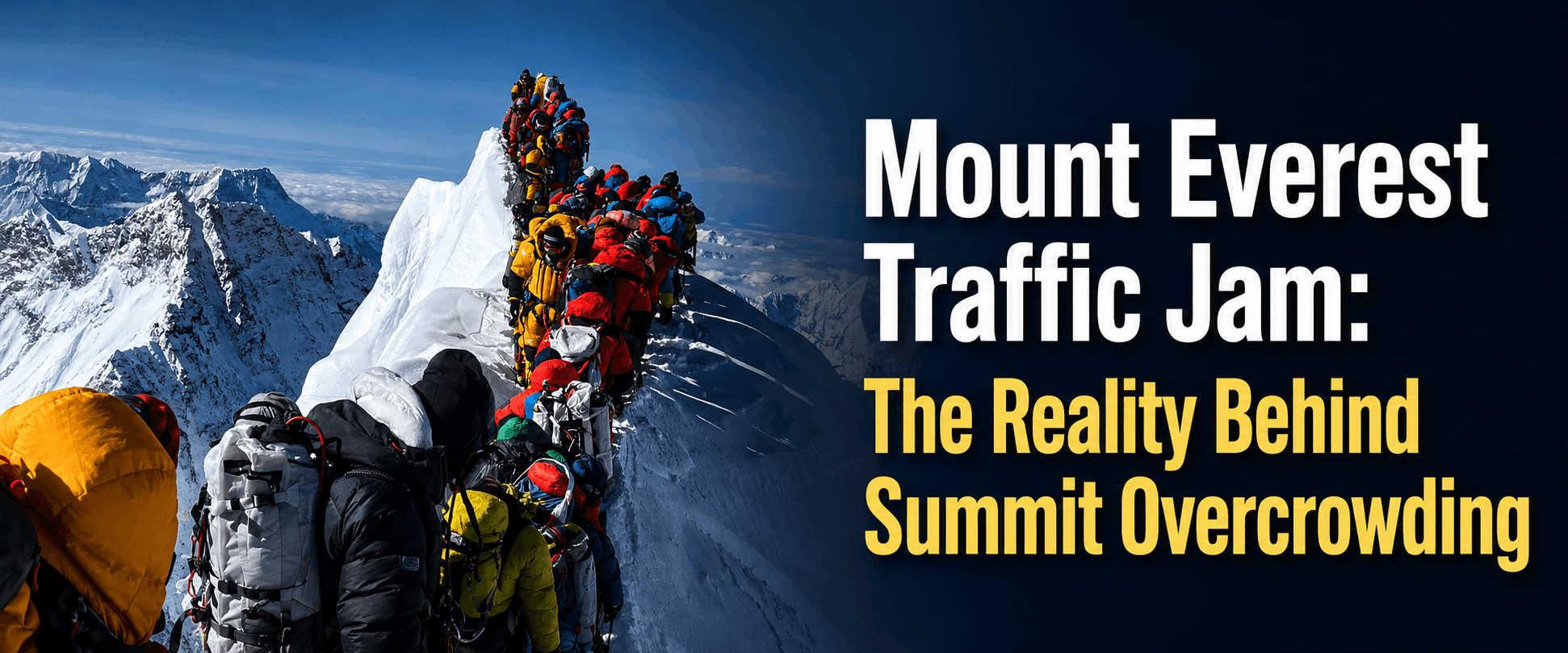
In 2019, a viral photo by climber Nirmal Purja showed a long line of climbers near the Everest summit, bringing global attention to overcrowding on Everest.
The Mount Everest traffic jam is not only a Nepal travel story. It is a global mountaineering issue discussed by climbers, travellers, safety experts, news media and adventure lovers around the world. The problem shows how extreme ambition, commercial expeditions, limited weather windows and high-altitude risk can come together on the world’s highest mountain.
Imagine yourself standing at one of the highest points on Earth, 29,000 feet above sea level, where it is difficult to breathe and your oxygen level is dangerously low. Right in front of you, mountaineers are moving up very slowly, one after another. Behind you, more climbers are coming up the mountain, all hoping to reach the top before bad weather arrives.
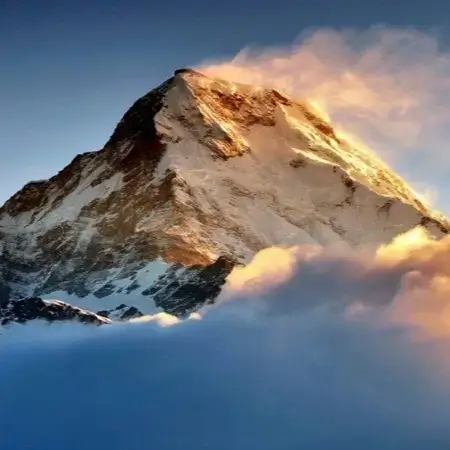
Mount Everest is the dream destination for climbers around the world. Standing at 8,848.86 meters, it is not only the highest mountain on Earth but also one of the most powerful symbols of human courage, patience and ambition. To understand its geography better, you can also read Hop Nepal’s guide on Where is Mount Everest Located?
Every year, hundreds of climbers travel to Nepal with one goal: to stand on the top of the world. But behind the inspiring summit photos lies another reality many people do not fully understand. During peak climbing season, Mount Everest can become heavily crowded, especially near the final summit route. Long lines of climbers waiting in the death zone have become known as the “Everest traffic jam”.
Who This Article Is For” Before “What Is the Everest Traffic Jam?
This guide is written for international readers who want to understand why queues happen on Mount Everest, how dangerous they can be, and how summit overcrowding is different from trekking to Everest Base Camp. Whether you are researching Everest from Australia, the United States, the United Kingdom, India, Europe or Nepal, this article explains the issue in simple and practical terms.
The Everest traffic jam refers to long queues of climbers waiting on the upper sections of Mount Everest during summit attempts. These queues usually form when many expedition teams try to reach the summit during the same short weather window.
These perilous queues often occur in the “death zone,” the region above 8,000 meters where the human body cannot survive for long due to oxygen shortage. Mountaineers attach themselves to fixed ropes and move forward gradually, sometimes waiting for hours in freezing weather. As an oxygen bottle nears empty, each delay becomes more dangerous.
It becomes harder to breathe, the body gets weaker, and exposed skin faces a higher risk of frostbite. In such harsh conditions, an Everest traffic jam is not just a delay; it can become life-threatening.
Where Does the Everest Traffic Jam Happen?
Everest traffic jams usually happen above Camp IV on the South Col route, especially on narrow and exposed sections close to the summit. Climbers often move one by one on fixed ropes, so even a small delay can slow down the entire line.
Most climbers attempt the summit in spring, especially in May, because this period usually offers better weather compared to other seasons. When a safe weather window opens, many teams move upward simultaneously. Since the upper route is narrow and exposed, climbers often have to move in a single line.
Why Does Mount Everest Get So Crowded?
Everest overcrowding happens for several reasons. The biggest reason is the limited number of suitable summit days. Even though the climbing season may last several weeks, only a few days may have weather calm enough for a summit push. Another reason is the growing popularity of Everest, as climbing the world’s highest peak has become a major personal goal for many people.
- Limited weather windows
- Too many climbing permits
- Geography creates bottlenecks
- Technical sections slow everyone down
Limited Weather Windows
The weather on Mount Everest is extremely unpredictable, especially near the summit. High winds, snowfall, low visibility and freezing temperatures can stop summit attempts for several days. The problem begins when the safe weather window is very short. If only one or two days are considered suitable for climbing, many expedition teams move towards the summit at the same time. This sudden rush creates pressure on the route and increases the chance of long queues in the death zone.
For trekkers, weather also plays an important role. Before planning a journey to the Everest region, it is helpful to check the best time to trek Everest Base Camp so you can avoid poor conditions and enjoy better mountain views.
Too Many Climbing Permits
One of the major reasons behind Everest overcrowding is the high number of climbing permits issued during the spring season. In the past, climbers could obtain a Nepal-side Everest permit by paying the required fee, which made the mountain more accessible to commercial expedition groups and international climbers.
Every climber also travels with support staff, including guides and high-altitude workers. This means the actual number of people on the route becomes much higher than the number of climbing permits alone.
Geography Creates Bottlenecks
Mount Everest is not a wide open path where climbers can move freely in all directions. The summit route includes narrow ridges, steep slopes, fixed ropes, exposed sections and limited passing space. In many places, climbers must move one by one.
Narrow sections near the summit, including famous areas such as the Hillary Step on Mount Everest, are one reason climbers often move slowly in a single line. If one climber slows down, struggles, changes oxygen, or needs assistance, everyone behind them may be delayed.
Technical Sections Slow Everyone Down
Some parts of the Everest summit route require more focus, balance and careful movement. Climbers must clip into fixed ropes, manage oxygen, watch their footing and move through steep or exposed areas. These technical sections slow down the entire line because safety takes precedence over speed.
Lower on the route, the Khumbu Icefall is another dangerous section of Everest’s climbing route, known for crevasses, ladders and moving ice. When climbers have different experience levels, the pace becomes uneven, and delays become more likely.
The Famous 2019 Everest Traffic Jam
The Everest traffic jam became globally famous in 2019 when photos of long queues near the summit shocked people worldwide. The image showed climbers standing in line on a narrow ridge high above the clouds.
That season raised serious questions about overcrowding, climber experience, permit numbers, expedition management and safety on the mountain. Many people began asking whether too many climbers were being allowed on Everest at the same time.
The 2019 season became a turning point in the public discussion about Everest. It showed that the danger was not only the mountain itself, but also the pressure created when too many people try to reach the summit during a short period.
Is the Mount Everest Traffic Jam Dangerous?
Yes, Everest traffic jams can be extremely dangerous because they usually happen in the highest and most unforgiving part of the mountain. At normal altitude, waiting in a line may only feel frustrating. On Everest, especially above 8,000 meters, every delay can increase the risk.
The biggest danger is time. Climbers have limited energy, oxygen, and strength to complete both the summit push and the descent. If they are forced to wait for hours in freezing conditions, they continue to weaken while their oxygen supply slowly decreases.
Long queues can also increase the chance of frostbite, exhaustion, altitude sickness, confusion and poor decision-making. The danger of the death zone is also reflected in tragic Everest stories such as Green Boots on Mount Everest , which remind climbers how serious high-altitude conditions can be.
Another major risk is the descent. Many people focus on reaching the summit, but coming back down safely is often the harder part. If a climber spends too much time waiting before reaching the top, they may have less oxygen, less energy and less daylight for the return journey. This can make the descent more dangerous than the climb itself.
This is why an Everest traffic jam is not just an issue of overcrowding. It is a serious safety concern that can turn a summit dream into a life-threatening situation.
Everest Traffic Jam vs Everest Base Camp Crowd
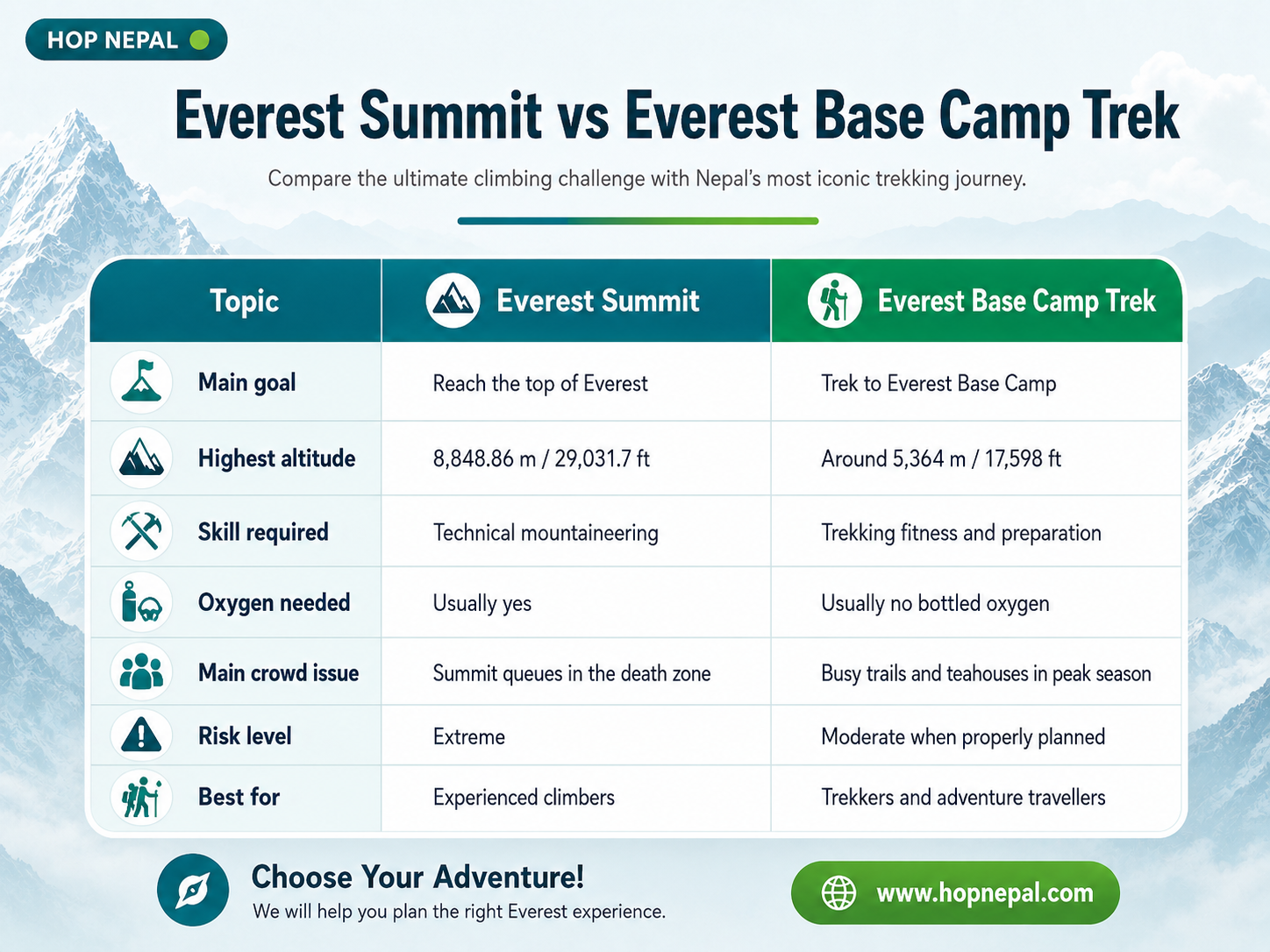
Everest summit overcrowding and Everest Base Camp crowding are very different. The traffic jam near the summit happens in the death zone and involves technical climbing, fixed ropes, oxygen use and extreme altitude risk. Everest Base Camp, on the other hand, is a trekking destination and does not require technical mountaineering skills.
During peak trekking seasons, Everest Base Camp can feel busy, especially in spring and autumn. However, this is not the same as waiting in a summit queue above 8,000 metres. With proper acclimatisation, rest days, suitable pacing and experienced guide support, the Everest Base Camp Trek is a much safer and more practical way for travellers to experience the Everest region.
How Can Everest Overcrowding Be Reduced?
Reducing Everest overcrowding is not simple because the problem involves weather, permits, expedition management, climber experience and route safety. However, better planning can reduce some of the risks.
- Improving expedition coordination during summit windows
- Encouraging climbers to have proper high-altitude experience before attempting Everest
- Managing fixed rope systems and route movement more efficiently
- Following strict turnaround times, including the 2 PM rule
- Avoiding unnecessary summit pushes when weather windows are too short or crowded
The goal should not only be to help more people reach the summit, but to help climbers return safely. On Everest, success is not just standing on the top; success is coming back alive.
Final Thoughts
The Everest traffic jam is not just a story about too many people on a mountain. It is a story about ambition, risk, nature and responsibility. Mount Everest will always attract dreamers, climbers and travellers from around the world. But reaching, or even approaching, Everest should be done with respect, preparation and awareness.
The mountain teaches patience, humility and the importance of knowing when to move forward and when to turn back.
If you want to experience the Everest region safely, plan your journey with Hop Nepal. You can book our 12 Days Everest Base Camp Trek or Everest Base Camp Trek 14 Days package with trusted local guides, permit support, accommodation arrangements and complete trekking assistance. For travellers who want to see Everest without trekking, the Everest mountain flight from Kathmandu is also a comfortable option.
FAQs
1. Where Does the Everest Traffic Jam Happen?
Queues often form above Camp IV on the South Col route, especially near narrow and exposed sections close to the summit.
2. Is Everest Base Camp Also Overcrowded Like the Summit?
Yes, Everest Base Camp can get crowded during peak trekking seasons, but it is very different from the overcrowding at the summit. The 12 Days Everest Base Camp Trek does not enter the death zone or require technical climbing, making it a safer way to experience the Everest region.
3. What Is the 2 PM Rule on Everest?
The 2 PM rule means any climber who has not reached the summit by 2:00 PM should turn back immediately, no matter how close they are. This rule helps climbers save enough oxygen, energy and daylight for the descent.
4. Can Beginners Do the Everest Base Camp Trek?
Yes, beginners with good fitness, proper preparation and acclimatisation can complete the Everest Base Camp Trek with experienced guides. However, it is important to understand the Everest Base Camp trek difficulty before booking.
5. Is the Everest Traffic Jam the Same as Everest Tourism?
No. Everest traffic jam usually refers to summit queues in the death zone, while Everest tourism includes trekking, mountain flights, helicopter tours and cultural journeys in the Everest region. Trekking and mountain flights are different from technical Everest climbing.