
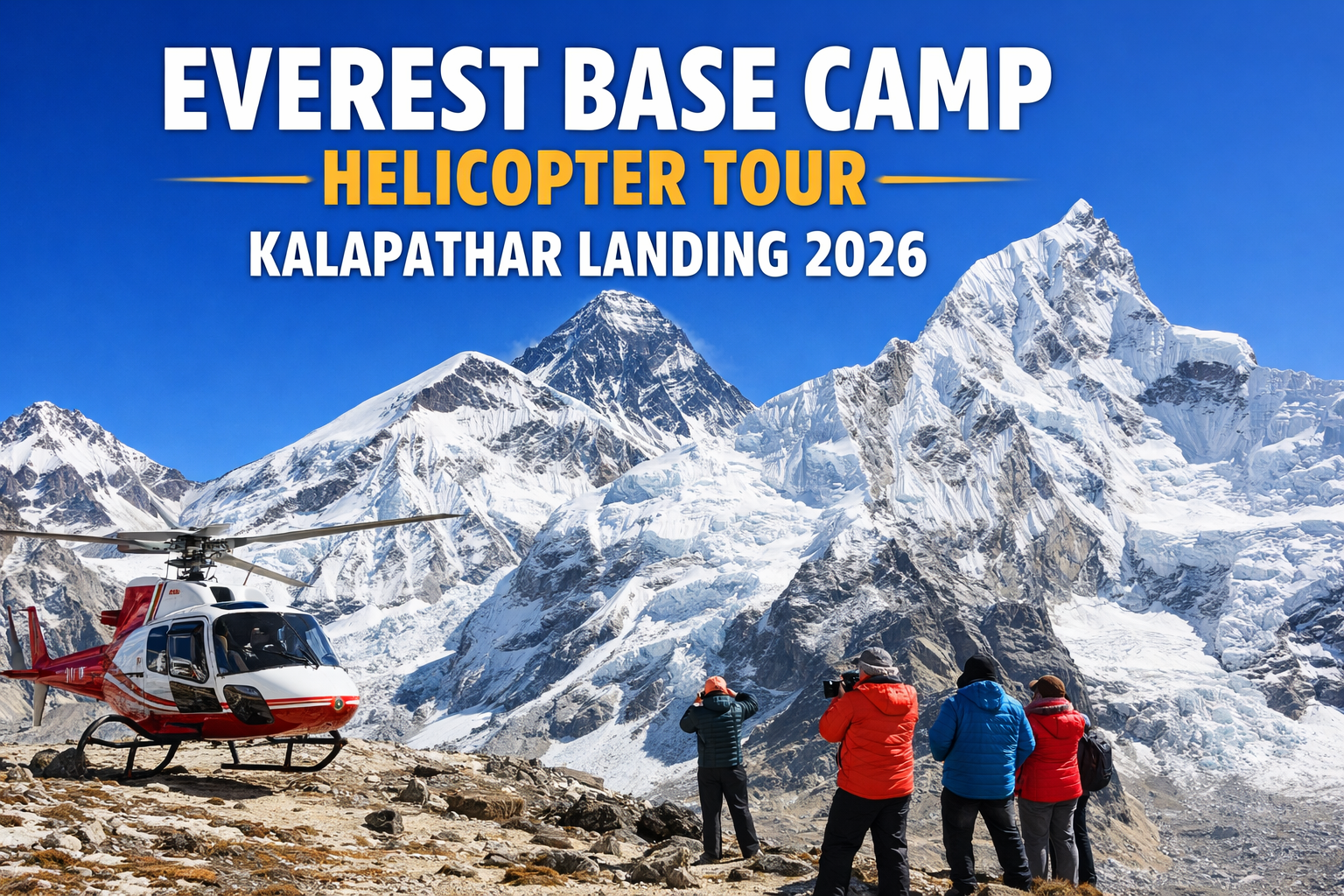
Every year, thousands of travellers from Australia, USA, UK, and Canada choose Nepal for the unforgettable Everest Helicopter Tour. This incredible journey offers a rare chance to witness Mount Everest and the surrounding Himalayan giants in comfort and style, with very little time. For those seeking luxury, adventure, and unforgettable mountain views, the Everest Helicopter Tour has become one of Nepal’s most popular travel experiences.
Quick Answer
The Everest Base Camp Helicopter Tour with Kalapathar landing is the fastest and most luxurious way to experience Mount Everest without spending two weeks on a trekking trail. Here is what the experience covers:
- Scenic helicopter flight from Kathmandu through the Everest region
- Aerial flyover of Everest Base Camp and the Khumbu Glacier
- Landing at Kalapathar at 5,545 meters for panoramic Everest views
- Breakfast stop at the iconic Hotel Everest View near Namche Bazaar
- Return helicopter flight to Kathmandu
The full route breakdown, price structure by nationality, and everything else worth knowing before booking is covered below.
Introduction: Everest in a Morning, No Trail Required
Here is something most people do not realize until they start researching Nepal travel properly. You do not have to spend 14 days walking through the Himalayas to stand near Everest and feel the full weight of what it means to be that close to the highest mountain on Earth.
The Everest Base Camp Helicopter Tour with Kalapathar landing changes the entire equation. You leave Kathmandu before sunrise, fly through valleys that most people only ever see in documentaries, land at 5,545 meters with Everest filling the sky directly above you, eat breakfast at a hotel with arguably the finest mountain view anywhere in Nepal, and you are back in Kathmandu before most tourists have finished their second cup of coffee.
The whole experience runs between four and six hours. It requires no prior trekking experience, no weeks of physical preparation, and no high-altitude acclimatization schedule. What it does require is an early alarm, warm clothing, and a camera with a fully charged battery because the images you bring back from that Kalapathar landing will not look like anything else in your travel collection.
This guide covers the complete Everest Base Camp Helicopter Tour experience in 2026, including the full route, the Kalapathar landing in detail, pricing by nationality, the best season to fly, and an honest comparison with the classic trek so you can decide which version of the Everest experience is right for you.
What is the Everest Base Camp Helicopter Tour?
The Everest Base Camp Helicopter Tour is a premium scenic flight operation that takes passengers from Kathmandu into the heart of the Khumbu region, over the most iconic landmarks in Himalayan trekking, and back again within a single morning. It combines stunning aerial views of the entire Everest landscape with a physical landing at Kalapathar, the highest and most dramatic viewpoint accessible to non-technical visitors anywhere in the Everest region.
A Genuine Luxury Alternative to the Trek
The word luxury gets thrown around carelessly in travel marketing, but it actually applies here in a meaningful way. The Everest Base Camp trek is one of the world's great experiences, but it is also genuinely demanding. It requires two weeks away from work and family, a body capable of handling 130 kilometers at extreme altitude, and the mental stamina to push through difficult days when the combination of thin air, cold weather, and physical fatigue tests everything you have.
The helicopter tour asks none of that from you. It delivers the Everest region from an aerial perspective that trekkers never see, a landing at a viewpoint that takes walkers nearly two weeks to reach on foot, and a breakfast stop at a hotel where the dining room window frames Everest, Ama Dablam, and Lhotse simultaneously. That is not a lesser version of seeing Everest. It is a different version that stands entirely on its own.
Why Travelers Choose the Helicopter Tour Over the Trek
People book this tour for genuinely different reasons and all of them make complete sense. Some are visiting Nepal on a short business or holiday schedule with only two or three days available outside Kathmandu. Some are older travelers or people managing health conditions that make high-altitude trekking inadvisable. Some are passionate photographers who want the aerial perspective for their work. Some have already completed the trek and want to see the same landscape from above. Some are traveling with family members who are trekking and want to meet them in the mountains for a day. The helicopter tour works for all of these situations without requiring anyone to explain their reason for choosing it.
The Everest Base Camp Helicopter Tour Route
The flight route itself is one of the things that makes this experience extraordinary beyond just the landing. You are not simply being transported to a viewpoint and back. The entire journey from Kathmandu to Kalapathar and back is a continuous series of views that most people spend their entire lives never seeing.
Full Route from Kathmandu to Kalapathar and Back
The standard Everest Base Camp helicopter tour follows this sequence. Departure from Tribhuvan International Airport in Kathmandu in the early morning, typically between 6 and 7 AM to take advantage of stable pre-noon mountain weather. The flight heads northeast through the Khumbu Valley with the landscape rising dramatically from the lower hills around Kathmandu to the high ridgelines of the Solukhumbu district within the first thirty minutes.
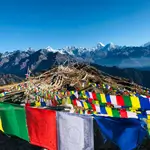
The Lukla Airport flyover comes early in the route and gives passengers a clear view of the famous short tilted runway that serves as the gateway to the Everest region for trekkers. Continuing northeast, the Sherpa villages of the Khumbu region appear below, the monasteries and prayer flag clusters that define the landscape of this part of Nepal visible even from the air. The Khumbu Glacier comes into view as the helicopter approaches the upper valley, its surface a complex pattern of ice and rock that stretches for kilometers below the flight path.
The Everest Base Camp flyover follows, with the actual expedition camp area visible on the lateral moraine beside the glacier and the Khumbu Icefall rising dramatically above it toward the Western Cwm. This is the moment most passengers press against the window and go quiet because the scale of what they are looking at becomes genuinely apparent. After the Base Camp flyover the helicopter descends toward Kalapathar for the landing. The return journey follows a similar route with a stop at the Everest View Hotel near Namche Bazaar before the final leg back to Kathmandu.
The Kalapathar Landing: Why This is the Moment Everyone Remembers
Ask anyone who has done the Everest Base Camp Helicopter Tour what the highlight was and the answer is almost always the same. Not the takeoff from Kathmandu. Not the aerial views of the glacier. The landing at Kalapathar.
Why Kalapathar is the Best Viewpoint in the Entire Everest Region
Kalapathar sits at 5,545 meters above sea level, which places it higher than Everest Base Camp itself at 5,364 meters. That additional elevation matters because it changes what you can see and how you see it. From Base Camp, the surrounding ridgelines and the mass of the glacier limit the direct sightline to Everest's summit. The mountain is present and powerful but not fully visible in the way that most people imagine when they picture standing near Everest.
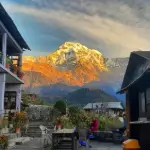
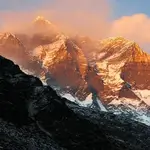
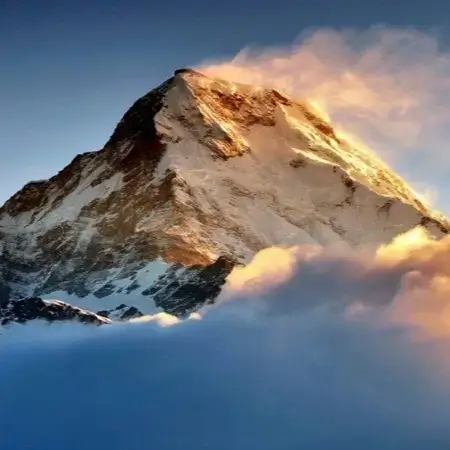
From Kalapathar the view is completely unobstructed. The south face and summit pyramid of Everest rise directly in front of you with Lhotse, the fourth highest mountain in the world, immediately beside it and Nuptse forming the dramatic western wall of the valley. The entire Everest massif is laid out in front of you at eye level in a way that makes every photograph from this spot look like it was taken by a professional photographer with perfect conditions regardless of who is holding the camera.
What Actually Happens During the Landing
The helicopter sets down on the rocky ground at Kalapathar and passengers have typically 10 to 20 minutes on the ground depending on weather conditions and the operational schedule for that flight. That window is enough to step out, feel the cold and the thin air, walk a short distance from the landing point, and take the photographs that will become some of the most significant images in your travel archive.
The air at 5,545 meters contains considerably less oxygen than at sea level and passengers who have not been at altitude before may notice they feel slightly breathless or lightheaded within the first few minutes. This is entirely normal at this elevation and the short landing duration is partly designed with this in mind. Most people find the feeling manageable and unremarkable within the context of the overall experience. The helicopter crew briefs passengers before departure and the pilots are experienced in managing high-altitude operations safely.
Everest Base Camp Helicopter Tour Price
Pricing for the Everest Base Camp Helicopter Tour depends on several factors that are worth understanding clearly before you start comparing packages from different Kathmandu operators.
What Drives the Price
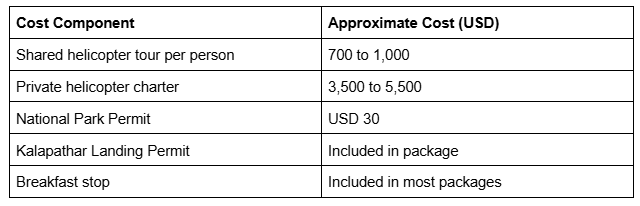
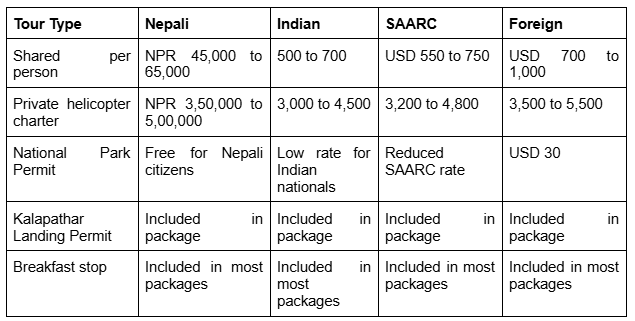
Nationality affects permit fee structures in the same way it does for trekking in the Everest region, with Nepali citizens, Indian nationals, SAARC travelers, and international visitors from outside the region all sitting in different pricing tiers. Whether you book a shared group flight or a private charter makes the most significant difference to per-person cost, with private charters offering complete scheduling flexibility and an exclusive experience at a considerably higher price point. Seasonal demand during spring and autumn peak windows pushes prices higher than shoulder or off-season periods. Landing permit fees for Kalapathar and aviation charges specific to high-altitude mountain flying also form part of the base cost of every tour package.
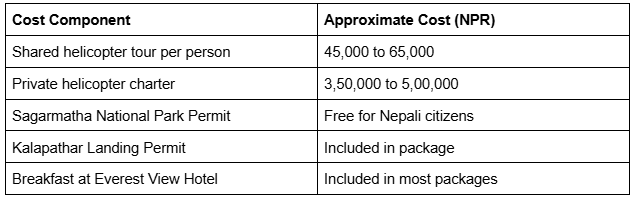
Everest Base Camp Helicopter Tour Price for Nepali Citizens
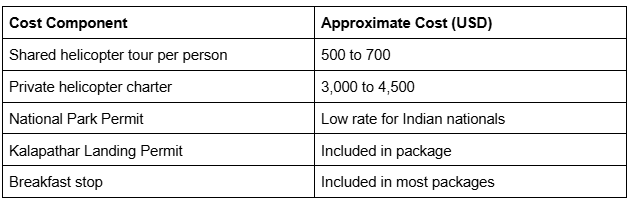
Everest Base Camp Helicopter Tour Price for Indian Citizens
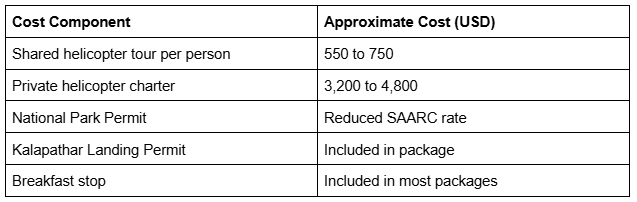
Everest Base Camp Helicopter Tour Price for SAARC Nationals
Everest Base Camp Helicopter Tour Price for Foreign Travelers
Complete Price Comparison by Nationality
The Full Day-by-Day Itinerary
The Everest Base Camp Helicopter Tour is a single-day experience and the itinerary is tightly structured around morning weather windows in the Everest region.
Early morning departure from Kathmandu between 6 and 7 AM is standard across all operators because Himalayan weather is most stable and visibility is clearest in the first half of the day.
The scenic flight through the Khumbu Valley takes passengers over Lukla, the Sherpa villages of the middle Khumbu, and up toward the high peaks as the landscape transforms dramatically with every kilometer of altitude gained.
The Everest Base Camp flyover follows, with the expedition area and the Khumbu Icefall clearly visible below the flight path. The Kalapathar landing is the centrepiece of the itinerary, with 10 to 20 minutes on the ground at 5,545 meters for photography and the direct Everest experience. Descent to the Everest View Hotel near Namche Bazaar follows for a breakfast stop with what many people genuinely consider the finest mountain-facing dining view in Nepal.
The return flight to Kathmandu completes the itinerary with passengers typically back at the airport before midday.
Best Time for the Everest Base Camp Helicopter Tour
Spring from March through May and autumn from late September through November are the two best periods for this tour without any meaningful debate between them.
Spring offers warming temperatures, stable weather patterns, and exceptionally clear visibility over the high peaks, particularly during April and early May before pre-monsoon clouds start building on the southern faces of the mountains. The landscape at lower elevations is green and the rhododendron forests visible from the air during the flight add a layer of visual richness to the experience that winter and autumn cannot match.
Autumn sits slightly above spring for most operators and experienced travelers because the post-monsoon atmosphere is the cleanest and clearest of any season. The skies from September through November are a shade of blue that is genuinely difficult to describe to anyone who has not seen the Himalayas from the air at this time of year, and October in particular delivers conditions that make every photograph from the Kalapathar landing look extraordinary.
Winter flights between December and February happen on clear days but the unpredictability of weather in the Everest region during winter means cancellations are more frequent than in the main seasons. Monsoon season from June through August is not suitable for this tour. Persistent cloud cover makes scenic Himalayan flying unreliable for the majority of the season and the entire visual experience the tour is built around becomes impossible to deliver consistently.
Everest Base Camp Helicopter Tour Versus the Trek
This comparison is worth addressing directly because it comes up in almost every conversation about both options.
The trek gives you something the helicopter genuinely cannot replicate: two weeks of moving through the landscape at ground level, the physical accumulation of altitude earned on foot, deep immersion in Sherpa culture across a series of villages and monasteries, and the specific emotional weight of arriving somewhere genuinely difficult under your own power. If you have the time and the physical capacity for it, the trek is the fuller version of the Everest experience.
The helicopter gives you something the trek cannot deliver at all: the aerial perspective of the entire Khumbu Valley from above, Everest in a single morning rather than two weeks, accessibility for people who cannot physically or logistically commit to the trek, and the Kalapathar landing experience without the 12-day approach march required to reach it on foot. These are not trade-offs that make the helicopter tour lesser than the trek. They make it different in ways that are genuinely valuable for a specific kind of traveler.
Who Should Book the Everest Helicopter Tour
The Everest Base Camp Helicopter Tour is the right choice for travelers visiting Nepal on a schedule that leaves fewer than five days outside Kathmandu. It is also ideal for older travelers or those managing health conditions that make sustained high-altitude exertion inadvisable, for photographers who want the aerial perspective and Kalapathar light conditions for their work, for luxury travelers who want the Everest experience on their terms, and for anyone traveling with trekkers who wants to join them in the mountains for a single extraordinary day before returning to the city.
Safety on Everest Helicopter Flights
Helicopter operations in the Everest region are conducted by pilots with extensive records in high-altitude mountain flying. Weather is monitored continuously before and during all flights and operators reschedule without hesitation when conditions do not meet safety standards. Helicopter weight limits are enforced strictly and passengers are weighed before departure to ensure proper load management for mountain operations. The defined time window at Kalapathar is itself a safety consideration, keeping ground time at extreme altitude within a manageable range for passengers who have arrived there without gradual acclimatization.
What to Pack for the Tour
Warm layers are essential for the Kalapathar landing regardless of the season because temperatures at 5,545 meters are cold year-round and wind chill during even a brief outdoor stop is significant. UV-protective sunglasses matter at this altitude where sun intensity is considerably stronger than at sea level. A camera or phone with fully charged batteries is worth preparing carefully since cold temperatures drain batteries faster than most people expect. Comfortable clothing that allows easy movement during the ground stop makes the experience more enjoyable. A small water bottle is worth carrying for hydration during the flight and landing.
Final Thoughts
For the right traveler it is not even a close question.
Standing at Kalapathar with Everest directly in front of you at 5,545 meters, having left Kathmandu less than two hours earlier, is one of those travel moments that recalibrates your understanding of what is actually possible in a single morning. The aerial views during the flight are extraordinary in their own right. The breakfast stop at the Everest View Hotel with the four highest peaks on Earth visible through the dining room window is the kind of thing people mention in travel conversations for years afterward.
Book the version with the Kalapathar landing rather than a flyover-only package. Choose a reputable Kathmandu operator with experienced mountain pilots and clear safety protocols. Fly in spring or autumn for the best visibility conditions. Bring warm layers and a camera that is fully ready before you board.
The Everest Base Camp Helicopter Tour is not a shortcut to seeing Everest. It is its own complete experience of one of the most extraordinary places on Earth, delivered in a way that is accessible to people for whom the two-week trek is simply not the right option right now. And for those people, it delivers everything it promises and then some.
Frequently Asked Questions (FAQs)
Q. How much does the Everest Base Camp Helicopter Tour cost?
Shared helicopter tours for foreign nationals typically run between USD 700 and 1,000 per person. Private charters range from USD 3,500 to 5,500 for the full helicopter. Nepali citizens and Indian nationals access lower rates through domestic and regional pricing structures. All standard packages include the Kalapathar landing, relevant permits, and breakfast at the Everest View Hotel.
Q. Is there a landing at Everest Base Camp itself?
The helicopter does not land at Everest Base Camp. The landing happens at Kalapathar which sits at 5,545 meters and is actually higher than Base Camp. Kalapathar also delivers a significantly superior view of Everest because the sightlines are completely unobstructed in a way that they are not from Base Camp itself.
Q. Why is Kalapathar the landing point rather than Base Camp?
Kalapathar offers the best unobstructed panoramic view of Everest's summit and the south face of any accessible point in the region. From Base Camp, the surrounding terrain limits the direct view of the mountain. Kalapathar sits above that terrain and delivers the full visual impact of Everest, Lhotse, and Nuptse simultaneously. Every reputable operator uses Kalapathar as the landing point for exactly this reason.
Q. How long does the full Everest helicopter tour take?
The complete tour from Kathmandu departure to Kathmandu return runs between four and six hours depending on the package structure, breakfast stop duration, and weather conditions affecting the flight schedule on the day. Passengers are typically back at Tribhuvan Airport before noon.
Q. Can Nepali citizens take the Everest helicopter tour?
Yes. Nepali citizens access the tour at domestic pricing with no national park permit fee and favorable aviation pricing compared to international visitors. Shared helicopter options make the experience accessible at a significantly lower per-person cost than what foreign nationals pay for the equivalent package.