

Most travellers assume the best time to visit Nepal is October, when the skies are postcard-perfect and every teahouse is packed. What they miss is May, the month when the rhododendrons are still burning red in the upper forests, the Himalayan trails are lush and green, crowds have thinned considerably from the April peak, and the mountains are still visible in the clear morning light before afternoon clouds roll in from the south. May is not a compromise. For the right kind of traveller, it is actually the best month Nepal has to offer. The short version: May falls in Nepal's pre-monsoon season. Temperatures are warm but manageable, trail conditions are excellent, rhododendrons are still blooming at higher elevations, and the country has a particular vibrancy, half-charged with the energy of spring, half-bracing for the monsoon, that feels uniquely alive. The days are long, the accommodation is available, and the price pressure that accompanies peak April has already begun to ease. Here is where to go and what to expect.
Nepal Weather in May: What You Actually Need to Know
Understanding May weather in Nepal requires thinking in altitude bands rather than a single national forecast. In Kathmandu and the lower valleys, May is warm and occasionally humid, with daytime temperatures between 22 and 32 degrees Celsius. Mornings are clear and comfortable. Afternoons can bring haze and the occasional short shower, particularly toward the end of the month as the monsoon front begins its northern advance. Evenings cool down quickly and remain pleasant.
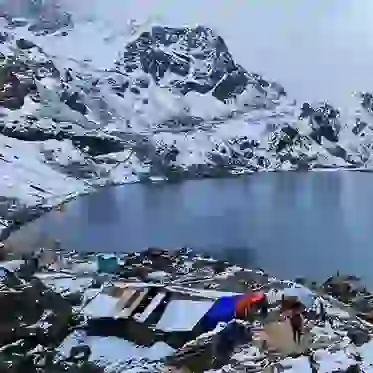
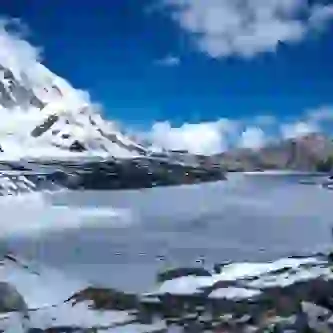
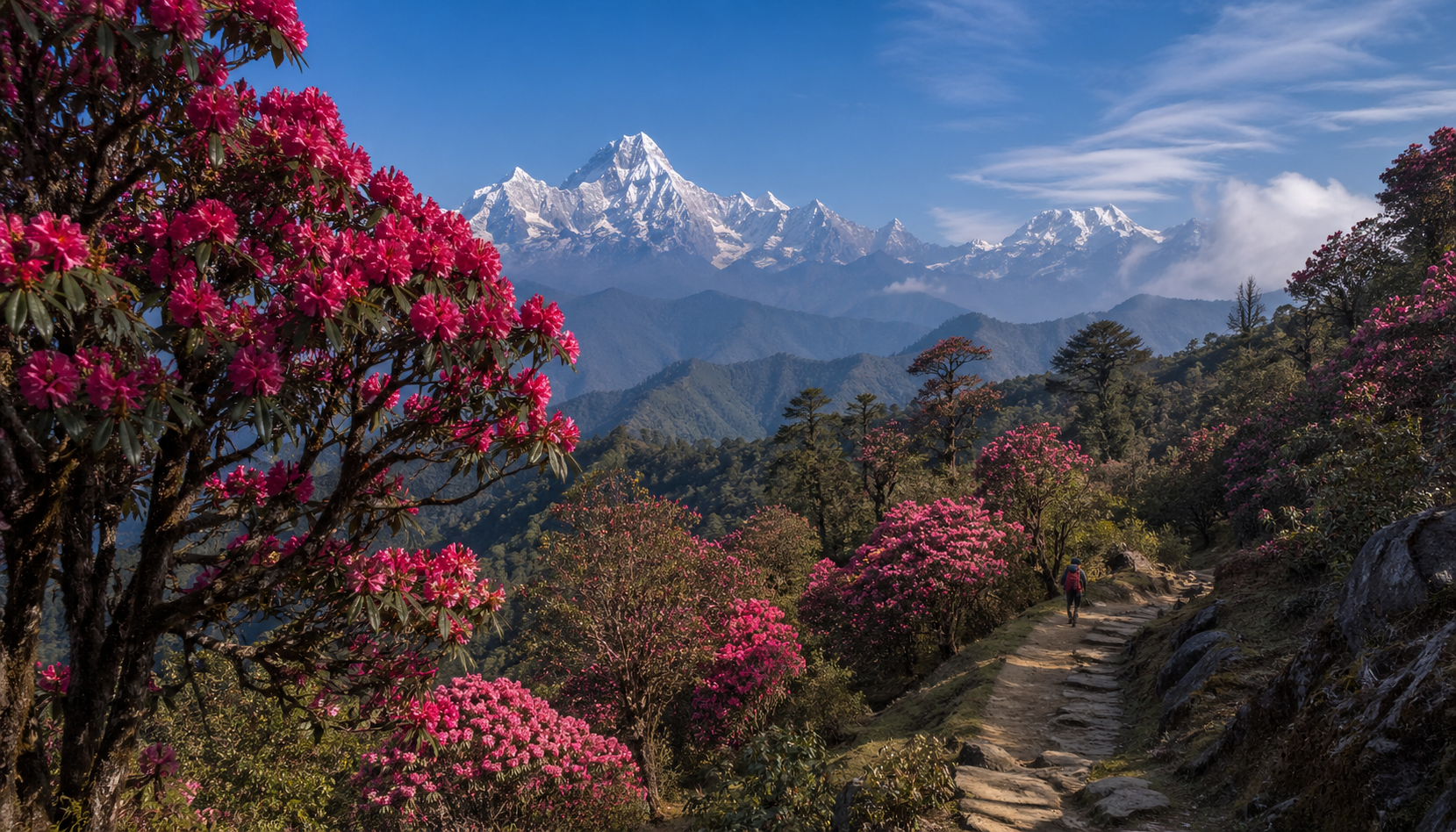
In the mid-hills and on popular trekking routes between 2,000 and 3,500 metres, conditions are ideal. Daytime temperatures range from 15 to 22 degrees Celsius, nights drop to around 5 to 10 degrees, and mornings are reliably clear, with excellent mountain visibility. This is the altitude band where May genuinely outperforms almost every other month for sheer comfort on the trail. Above 4,000 metres, at base camps and high passes, temperatures stay between 0 and 10 degrees during the day and can dip to -3 or lower at night. High passes carry some residual snow from winter, though significantly less than in January through March.
The critical rule for May high-altitude trekking is to get an early start. Mountain views in May are best before noon. By mid-afternoon, clouds build from the valleys below and wrap the upper ridges, though they rarely bring serious rain until very late in the month. The practical takeaway: plan your high-altitude days around early starts, your rest days around afternoons, and pack both a light t-shirt and a warm down layer for the same day.
Kathmandu Valley in May
Kathmandu in May is warmer and less frenetic than during the October and March to April peak season, which makes it a genuinely enjoyable city to explore rather than simply pass through on the way to a trailhead. The UNESCO World Heritage Sites, Pashupatinath, Boudhanath, Swayambhunath, and the three Durbar Squares of Kathmandu, Bhaktapur, and Patan, carry the same historical weight they always do, but the crowds at the most visited sites are noticeably thinner in May.
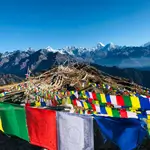
Bhaktapur, in particular, is worth a full day in May. The ancient city's medieval courtyards, carved wooden windows, and pottery squares feel genuinely unhurried, unlike during October's tourist peak. Buddha Jayanti, the festival celebrating the birth, enlightenment, and passing of Siddhartha Gautama, falls in May on the full moon of Baisakh. Boudhanath Stupa becomes the focal point for enormous peaceful gatherings of Tibetan Buddhists from across Nepal, with butter lamps, prayer flags, and circumambulation processions that continue through the night. If your May trip overlaps with Buddha Jayanti, make Boudhanath a full evening rather than a quick stop.
The Kathmandu Valley is also excellent for day hikes in May. Nagarkot and Changu Narayan offer short but rewarding walks with views of the Himalayas. Shivapuri National Park, on the northern edge of Kathmandu, has good rhododendron forest trails that are beautiful in early May, before the higher blooms fade.
Pokhara in May
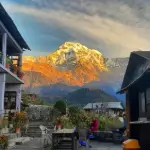
Pokhara in May is warm and green, set against the Annapurna range in a way that makes the lakeside feel almost too picturesque to be real. Phewa Lake carries the reflection of Machapuchare (Fishtail Mountain) on calm mornings, the kind of image that travel photographers wait days for and May sometimes delivers on an ordinary Tuesday. Paragliding over the Pokhara Valley in May is a particular experience. The thermals are strong, the views of the Annapurna range are unobstructed in the morning, and the green hills below give the flight a lush, alive quality that the drier winter months cannot match. Most operators run flights until early afternoon before winds pick up. Pokhara is also the natural base for three of Nepal's best short treks in May.
The Australian Camp and Dhampus day hike is accessible to complete beginners and delivers Annapurna panoramas for minimal effort. The Sarangkot sunrise walk is a Pokhara classic that remains deeply worth doing regardless of how many times it appears in every Nepal travel guide ever written. And for those with a few extra days, Mardi Himal is one of the finest short treks in the country and hits its green-season stride beautifully in May.
Best Trekking Destinations in Nepal in May
Annapurna Region
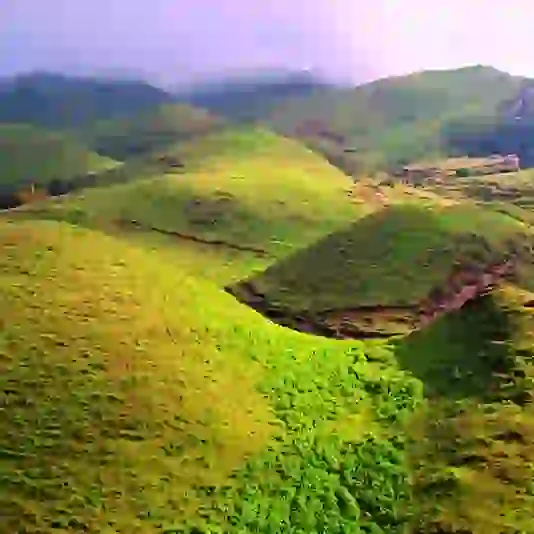
May is genuinely outstanding in the Annapurna region and remains so throughout the first three weeks, before pre-monsoon conditions become more persistent. The Annapurna Base Camp trek can be completed comfortably in 10 to 13 days and offers views of the famous amphitheatre of peaks at 4,130 metres, surrounded by Annapurna I, Annapurna South, Machapuchare, and Hiunchuli. Rhododendron forests between Ulleri and Tadapani are still vivid in early May at higher elevations, and the trail carries a green richness from the warming air that the drier months simply do not have. The Annapurna Circuit is also excellent in May.
The Thorong La Pass at 5,416 metres has significantly less snow than in February or March, increasing the crossing's success rate and making the exposed sections less committing. Wildflowers bloom in red, blue, and yellow through the lower valleys. The teahouses are open and well-stocked, and by mid-May the trail is noticeably quieter than it was in April. With long daylight hours and reliable morning clarity, May is arguably the Circuit's second-best month after October. Mardi Himal is the May hidden gem of the Annapurna region. This short five-to-seven-day trek climbs to 4,500 metres with close-up views of Machapuchare and Annapurna South, moving through dense rhododendron and oak forests in the lower sections. It requires no restricted permits, offers teahouse accommodation throughout, and delivers mountain scenery that rivals that of routes twice as long.
Everest Region
The Everest region is still excellent in early to mid-May. One of May's specific advantages here is that summit expeditions are active on Everest and other high peaks through early May, and the base camp area carries a particular energy during the expedition season. Colourful tent camps, mountaineers in full technical gear, and the distant sound of helicopters threading through the valleys give the lower trail a charged atmosphere that the post-monsoon season never quite replicates. Lukla flights are more reliable in May than during the monsoon season, and the trail from Lukla to Namche and beyond is clear and well-maintained. The key timing note: aim to reach higher elevations by early May rather than late May, when afternoon clouds become more persistent and the occasional pre-monsoon precipitation can affect visibility above 5,000 metres.
Langtang Valley
Langtang in May is a consistent pleasure. Just three hours from Kathmandu by road, the valley is lush and warm at lower elevations while still carrying proper alpine character above 3,000 metres. The trail through rhododendron and pine forests from Syabrubesi is at its greenest, and the views of Langtang Lirung and the surrounding peaks from Kyanjin Gompa are clear in the mornings. Langtang in May is also significantly quieter than the Annapurna and Everest regions, which gives the whole experience a more intimate character. Wildlife sightings of red pandas and Himalayan tahr are more common in the warm season when animals move to lower pastures.
Upper Mustang
Upper Mustang deserves a special mention for May travellers. Because it sits in the rain shadow of the Annapurna and Dhaulagiri ranges, Upper Mustang is largely unaffected by the pre-monsoon conditions that bring afternoon clouds to other regions. Many skies over the Mustang plateau are crystal clear, the desert canyon landscapes are at their most vivid, and the apple orchards in villages like Marpha are in full blossom. The restricted area permit at USD 500 makes this a premium choice, but for those with the budget and the curiosity, May is one of the finest months of the year to walk the ancient trade routes of the Lo kingdom.
Cultural Experiences Worth Planning Around in May
Beyond the trails, May offers two cultural windows that reward deliberate timing. Buddha Jayanti at Boudhanath, already mentioned, is the most significant Buddhist festival in Nepal's calendar and falls in May each year. For anyone with an interest in Tibetan Buddhism, an evening at Boudhanath during Buddha Jayanti is unforgettable. The Ubhauli festival of the Rai and Limbu communities of eastern Nepal also falls in May and marks the beginning of the agricultural season with music, traditional dress, and communal feasting. If your trip extends into the Koshi hills or the Solu-Khumbu lowlands, Ubhauli adds a dimension of living cultural tradition that the standard tourist circuit does not touch.
A Practical May Itinerary for Nepal
7 days: Culture and short trek
Three days in Kathmandu Valley covering heritage sites and day hikes, followed by four days on the Ghorepani Poon Hill Trek from Pokhara. This itinerary works for first-time visitors and covers both the cultural and mountain sides of Nepal without demanding serious trekking fitness.
10 days: Pokhara and Annapurna
Two days in Kathmandu, one day in Pokhara, and seven days on the Mardi Himal or Annapurna Base Camp trek. This is the May sweet spot for travellers who want a proper mountain experience with manageable logistics.
14 days: Everest region
Two days in Kathmandu, a flight to Lukla, and ten days on the Everest Base Camp route with a return flight from Lukla. Plan to begin by the first week of May for the best combination of clear skies, expedition atmosphere at base camp, and fully open trails.
Is May a Good Time to Visit Nepal?
Yes, with honest expectations. May is excellent for high-altitude trekking, particularly in the first three weeks. It is good for cultural travel in Kathmandu and Pokhara at any time of year. It rewards early starts in the mountains and flexible afternoon plans. It offers noticeably lower prices and thinner crowds than March and April at the same destinations. The only genuine challenge is that late May, particularly after the 20th, sees pre-monsoon conditions strengthen. Afternoon clouds build earlier and linger longer above 3,000 metres. For high passes and base camps, early to mid-May is the better window. For cultural travel, wildlife, and lower-elevation trekking, all of May works well.
Conclusion
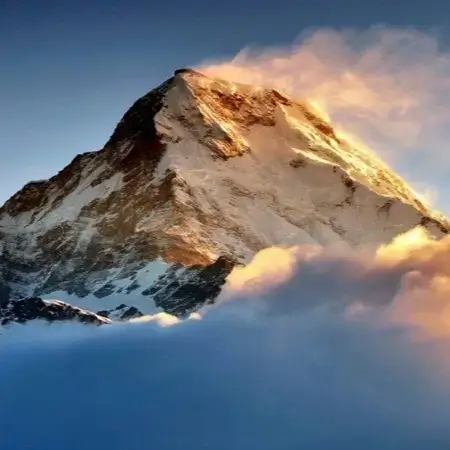
Nepal in May is the honest traveller's secret. The crowds of April have moved on, the prices have eased, the trails are green and open, and the mountains are still there every morning doing exactly what they always do, sitting above the clouds in absolute silence, waiting for whoever makes the effort to reach them. Whether you come for the base camp experience, the Kathmandu heritage sites, the lakeside calm of Pokhara, or the medieval desert kingdom of Upper Mustang, May offers a Nepal that feels less staged and more real than any peak-season itinerary can. Hop Nepal has been helping travellers plan trips to Nepal since 2017. From May trekking packages to cultural heritage tours and verified accommodation across every region, the team handles the logistics, so your only job is to experience it. Explore May travel packages and trekking itineraries on Hop Nepal .
Frequently Asked Questions
Is May a good time to visit Nepal?
Yes. May is one of Nepal's best months for high-altitude trekking and cultural travel. It falls in the pre-monsoon spring season, offering warm temperatures, lush green landscapes, and clear mountain views in the mornings. Crowds are lower and prices more manageable than in the peak April season. The first three weeks of May are particularly good for high-altitude routes. Late May sees pre-monsoon clouds build more persistently in the afternoons above 3,000 metres, though this rarely affects morning treks or cultural itineraries.
What are the best places to visit in Nepal in May?
The Annapurna region is the standout destination for May trekking, with the Annapurna Base Camp trek, Mardi Himal, and the Annapurna Circuit all in excellent condition. The Everest region is great in early to mid-May, with active summit expeditions adding a unique atmosphere at base camp. Langtang Valley is green, quiet, and underrated in May. Kathmandu Valley and Pokhara are enjoyable for cultural and leisure travel throughout the month. Upper Mustang is exceptional in May due to its rain-shadow location and clear skies.
What is the weather like in Nepal in May?
Nepal's May weather varies significantly by altitude. Kathmandu and lower valleys see daytime temperatures between 22 and 32 degrees Celsius with clear mornings and occasional afternoon haze. Mid-altitude trekking routes between 2,000 and 3,500 metres are ideal, with daytime highs of 15 to 22 degrees Celsius and clear morning skies. Above 4,000 metres, temperatures range from 0 to 10 degrees Celsius during the day. Afternoon clouds are common at all elevations, so early starts are recommended for the best mountain views.
Which treks are best in Nepal in May?
The Annapurna Circuit and Annapurna Base Camp treks are excellent in May, with high success rates at the Thorong La Pass and the ABC sanctuary. Mardi Himal is a standout short trek for May travellers. The Everest Base Camp trek works well in early to mid-May. Langtang Valley is a consistently good option throughout the month. Upper Mustang is ideal in May due to its rain-shadow weather pattern. All major trails are fully open and well-staffed with teahouse accommodation through May.
What festivals happen in Nepal in May?
Buddha Jayanti, the festival commemorating the birth, enlightenment, and passing of Siddhartha Gautama, is the major May festival. It falls on the full moon of Baisakh and centres on Boudhanath Stupa in Kathmandu, with thousands of Tibetan Buddhists gathering for butter lamp ceremonies and circumambulation processions. The Ubhauli festival of the Rai and Limbu communities of eastern Nepal also falls in May, celebrating the beginning of the agricultural season with traditional music, dance, and communal feasts.