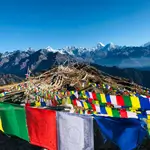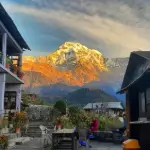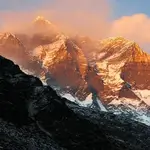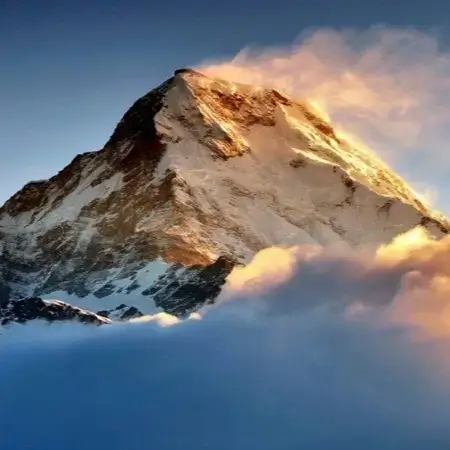

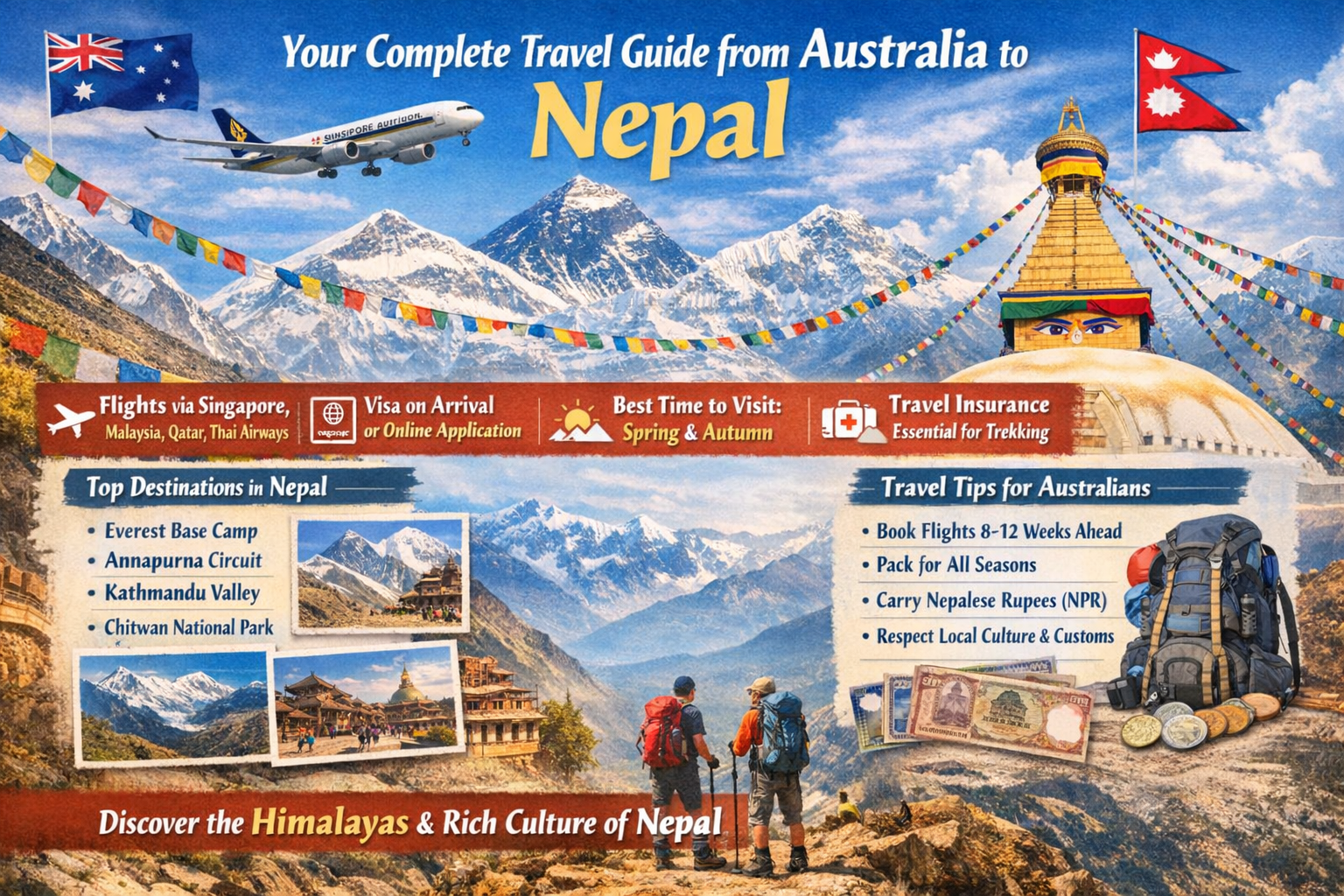
Nepal has a way of getting under your skin. One moment you are standing at a sunrise viewpoint watching the Himalayas glow amber and gold, and the next you are navigating a maze of incense-soaked temple courtyards in Kathmandu. For Australian travellers, this extraordinary country is more accessible than most people realise, and it rewards every type of explorer generously.
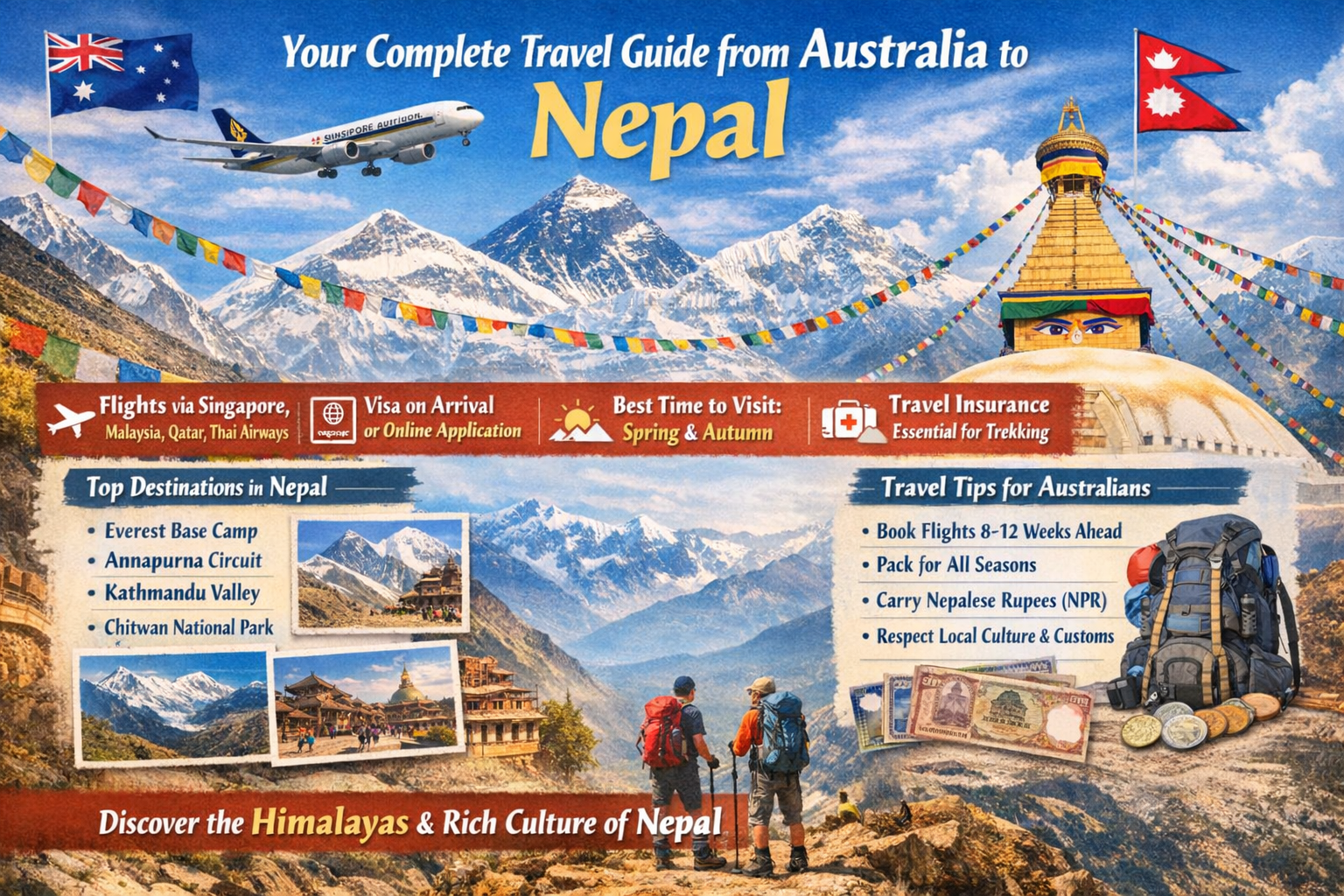
This guide covers the practical side of planning a Nepal trip from Australia: how to get there, visa requirements, the best time to visit, where to go, and how to make the most of every single day on the ground.
Planning Your Nepal Trip from Australia
Flights and Travel Logistics
There are currently no direct flights between Australia and Kathmandu. All routes require one stopover, but connections are frequent, well-timed, and operated by some of the world's leading airlines.
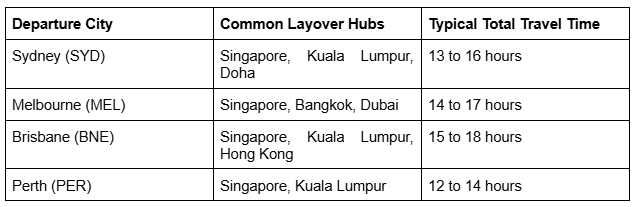
Singapore Airlines via Changi Airport is a favourite among Australian travellers heading to Kathmandu, largely because of Changi's world-class transit facilities and short layover windows. Malaysia Airlines, Qatar Airways, Thai Airways, and Air India are also popular options, depending on your budget and departure city.
Smart booking tips to keep in mind
- Book 8 to 12 weeks ahead if you are travelling during peak trekking season (March to May or September to November)
- Midweek flights are noticeably cheaper than weekend departures on most routes
- Use Hop Nepal Flights Page price alerts to catch fare drops on your preferred itinerary
- Your arrival airport is Tribhuvan International Airport (IATA: KTM) in Kathmandu
Visa and Entry Requirements
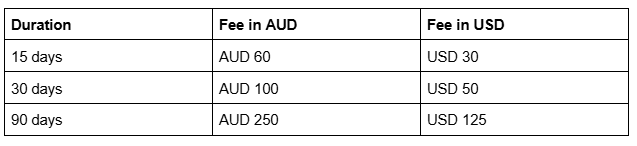
Australian passport holders can obtain a Nepal Tourist Visa in two ways: online through Nepal's official Department of Immigration portal before departure, or on arrival at Tribhuvan International Airport.
Tourist Visa fees:
Documents required at the point of entry:
- Valid Australian passport with a minimum of 6 months validity remaining
- Completed visa application form (available online or at the airport)
- Two recent passport-sized photographs
- Visa fee in cash (USD, AUD, and other major currencies are accepted)
- Confirmed return flight and hotel booking details
Applying online before you fly saves considerable time in the airport immigration queue, which can stretch long during peak-season arrivals.
Best Time to Visit Nepal from Australia
Nepal has four distinct seasons, but two stand out as ideal travel windows.
Spring (March to May)
Spring is the single most popular trekking season. Rhododendrons bloom across the hillsides, skies stay clear, and temperatures at altitude are cold but very manageable. This is also peak Everest Base Camp climbing season, so trails are lively and accommodation books out fast.
Autumn (September to November)
Autumn is considered by many experienced trekkers to be Nepal's finest season. The monsoon has just cleared the air, visibility is razor sharp, and the trails glow with fresh post-rain greenery. October is widely regarded as the single best month to visit Nepal.
Monsoon (June to August)
Monsoon brings heavy rainfall, leeches on forest trails, and limited mountain views. However, rain-shadow regions like Upper Mustang and Dolpo remain dry and are actually best explored during this window.
Winter (December to February)
is cold at high altitude but surprisingly pleasant in Kathmandu and Pokhara. Crowds are thin, prices drop, and clear winter skies occasionally deliver some of the year's most breathtaking Himalayan views.
Travel Insurance and Health Tips
Nepal travel insurance is not optional. It is essential. Altitude sickness, trekking injuries, and emergency helicopter evacuations are real risks on the trail, and medical costs without adequate coverage can be severe.
Your policy must cover:
- High-altitude trekking above 4,000 metres (some standard policies cap at 3,000 metres, so read the fine print carefully)
- Emergency helicopter evacuation and mountain rescue
- Medical treatment and in-patient hospitalisation
- Trip cancellation, curtailment, and baggage loss
Vaccinations recommended for Nepal (consult your GP at least 6 to 8 weeks before travel):
- Hepatitis A and B
- Typhoid
- Tetanus, diphtheria, and pertussis
- Rabies (recommended for trekking in remote and rural areas)
- Japanese encephalitis (if visiting rural lowland areas during the monsoon season)
Altitude sickness, or Acute Mountain Sickness (AMS), is the most common health concern for trekkers. The golden rule is simple: ascend slowly, stay hydrated, and never push through symptoms. Acclimatisation days are built into most reputable trekking itineraries for a very good reason.
Top 20 Destinations in Nepal to Travel
Himalayan and Trekking Destinations
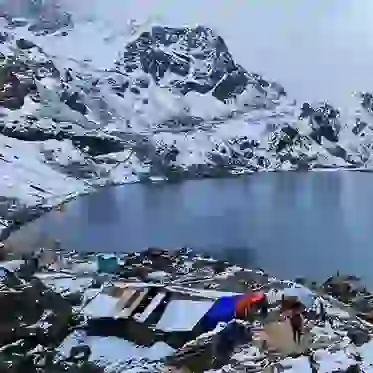
- Everest Region: Nepal's crown jewel. Trekking to Everest Base Camp (5,364m) remains one of the world's most iconic journeys. Beyond Base Camp, the Gokyo Lakes offer a quieter and arguably more scenic alternative, with turquoise glacial waters reflecting the faces of the world's highest peaks.
- Annapurna Region: The Annapurna massif delivers two legendary trails under one roof. Annapurna Base Camp (ABC) brings you face to face with the 8,091m summit of Annapurna I, while the Annapurna Circuit is a classic multi-week traverse crossing the Thorong La Pass at 5,416m. Both suit different fitness levels and time frames.
- Langtang Valley: Often called the "valley of glaciers," Langtang sits just north of Kathmandu and is far less crowded than Everest or Annapurna. The trail winds through Tamang villages, yak pastures, and dense rhododendron forests before opening into a spectacular glacial amphitheatre.
- Manaslu Region: The Manaslu Circuit is one of Nepal's most rewarding and under-visited treks. Circling the world's eighth-highest peak (8,163m), it combines dramatic mountain scenery with genuine cultural immersion in Tibetan-influenced villages. A restricted area permit adds a layer of exclusivity to the whole experience.
- Upper Mustang: a world apart. This former Himalayan kingdom, tucked behind the Annapurna and Dhaulagiri ranges, is a stark ochre-coloured plateau dotted with ancient cave monasteries and walled villages that feel completely removed from the modern world. A special restricted area permit is required to enter.
- Ghorepani and Poon Hill: For travellers with limited time, Ghorepani and the Poon Hill sunrise viewpoint (3,210m) offer Nepal trekking in concentrated form. This 4 to 5-day loop from Nayapul delivers panoramic views of Dhaulagiri, Annapurna South, and Machhapuchhre without the commitment of a longer trek.
- Yala Peak and Langtang Peaks: For those ready to step beyond trekking into mountaineering, Yala Peak (5,732m) in the Langtang region is an accessible and genuinely rewarding introduction to Himalayan summit climbing. No prior technical climbing experience is required, though basic crampon handling skills are helpful.
- Rara Lake: Rara is Nepal's largest lake and one of its most remote natural treasures. Sitting at 2,990m in the far northwest, the lake's deep cobalt-blue waters ringed by pine forests have a raw, untouched beauty that richly rewards the effort of getting there. Helicopter tours from Kathmandu are the fastest way in.
- Damodar Kunda: A sacred glacial lake cluster in the Upper Mustang region, revered in both Hindu and Buddhist traditions. The pilgrimage site is accessible primarily by helicopter, and the combination of spiritual significance and high-altitude Himalayan scenery makes it a profoundly unique destination.
Cultural and Spiritual Destinations
- Kathmandu Valley: Kathmandu Valley is home to seven UNESCO World Heritage Sites, including Pashupatinath Temple, Boudhanath Stupa, Swayambhunath (the Monkey Temple), and the Durbar Squares of Kathmandu, Patan, and Bhaktapur. No trip to Nepal is complete without at least three to four full days here.
- Bhaktapur: Bhaktapur is arguably the finest preserved medieval city in Nepal. Its car-free old town, intricate Newari woodcarving, pottery squares, and centuries-old festivals create a living museum atmosphere that many travellers find even more immersive than Kathmandu itself.
- Muktinath: Perched at 3,710m in the Mustang district, Muktinath is one of the most sacred pilgrimage sites in the entire Hindu-Buddhist world. The temple complex, with its 108 sacred water spouts and eternal flame fed by natural gas, draws devout pilgrims from Nepal, India, and Tibet every single year.
- Tamang Heritage: Trails. The Tamang Heritage Trail is a community-based trekking route that winds through traditional Tamang villages north of Kathmandu. Designed to keep tourism revenue within local communities, it offers a genuine cultural window into Tamang life that more commercialised routes simply cannot replicate.
Lakes, Adventure, and Scenic Spots
- Pokhara: Nepal's adventure capital and its most relaxed city, in equal measure. Sitting beside Phewa Lake with the full Annapurna range as its backdrop, Pokhara is both the launching pad for Annapurna treks and a world-class destination in its own right for paragliding, white-water rafting, zip-lining, and long lakeside evenings.
- Nagarkot: Nagarkot is a hill station just 32 kilometres east of Kathmandu, celebrated for one of the widest Himalayan panoramas anywhere in Nepal. On clear mornings, the view stretches from Dhaulagiri in the west all the way to Kanchenjunga in the east. It is a perfect overnight escape from the capital for an unforgettable sunrise.
- Phewa Lake: and Sarangkot Phewa Lake is Pokhara's glittering centrepiece, where early mornings produce near-perfect mirror reflections of Machhapuchhre (Fishtail Mountain). The ridge of Sarangkot above the lake is Nepal's paragliding capital and one of the finest places on earth to witness a full Himalayan sunrise.
Wildlife and Jungle Destinations
- Chitwan National Park: Chitwan is Nepal's original wildlife destination and a UNESCO World Heritage Site. The park is home to one-horned rhinos, Bengal tigers, gharial crocodiles, sloth bears, and over 500 bird species. Jeep safaris, elephant encounters at the breeding centre, and canoe rides on the Rapti River make Chitwan an absolute highlight.
- Bardia National Park: Bardia, in Nepal's far west, is Chitwan's wilder and far less visited sibling. Tiger sighting rates here are actually higher, the forest is deeper and denser, and the entire experience feels rawer and more adventurous. For serious wildlife enthusiasts, Bardia is often the more memorable of the two parks.
- Koshi Tappu Wildlife Reserve: Koshi Tappu, in the eastern Terai floodplains, is Nepal's premier birdwatching destination. The reserve protects over 500 bird species, including rare waterbirds and migratory species, and serves as a key stopover on the Central Asian Flyway. It is also the last refuge in Nepal of the wild water buffalo.
- Godawari and Phulchowki: Just 20 kilometres from Kathmandu, Godawari and the Phulchowki hill (2,762m) offer an accessible nature escape for birders and day hikers. Phulchowki is considered one of the richest birding sites in all of Nepal, with over 270 recorded species, including several rare high-altitude endemics.
Travel Tips for Australians Visiting Nepal
Local Transport and Getting Around
Domestic flights connect Kathmandu to Pokhara, Bharatpur (Chitwan), Lukla (Everest treks), Jomsom (Upper Mustang), and several other regional destinations. Buddha Air and Yeti Airlines operate most domestic routes reliably. For overland travel, tourist buses connect Kathmandu to Pokhara in roughly 6 to 7 hours and to Chitwan in around 4 to 5 hours. Taxis and app-based rideshare services like Pathao and inDrive operate reliably in both Kathmandu and Pokhara. For day trips around the Kathmandu Valley, hiring a private car and driver is both affordable and genuinely practical.
Currency and Payments
Nepal's official currency is the Nepali Rupee (NPR). As of March 2026, one Australian Dollar buys approximately 105.32 Nepali Rupees, making Nepal very affordable for Australians on almost any budget.
- ATMs are widely available in Kathmandu, Pokhara, and major trekking hubs, including Namche Bazaar and Besisahar
- Most mid-range and upscale hotels, restaurants, and trekking agencies accept Visa and Mastercard
- Beyond the main tourist centres, cash is king, so carry sufficient NPR before heading into the mountains
- Tipping is customary: NPR 200 to 500 per day for trekking guides and NPR 100 to 200 for porters is considered respectful and fair
Packing Essentials
For trekking and the Himalayan regions:
- Moisture-wicking base layers and insulating mid-layers (fleece or down)
- Waterproof and windproof outer shell jacket
- Sturdy, well broken-in trekking boots with solid ankle support
- Trekking poles (available for hire in Kathmandu and Pokhara)
- Sleeping bag rated to at least minus 10°C for high-altitude nights
- SPF 50 minimum sunscreen, UV-protective sunglasses, and a wide-brimmed hat
For Kathmandu, Pokhara, and the Terai:
- Lightweight, breathable clothing covering shoulders and knees for temple visits
- A compact rain jacket or travel umbrella if travelling during the monsoon months
Electronics and medications:
- Universal power adapter (Nepal uses Type C, D, and M plugs)
- Portable battery bank for charging on the trail
- Water purification tablets or a SteriPen for safe drinking water on remote routes
- Basic first aid kit including blister plasters, Diamox (altitude sickness medication, prescribed by your GP), and oral rehydration sachets
Safety and Cultural Etiquette
- Nepal consistently ranks among the safest countries in South Asia for foreign visitors, and Australian travellers are generally welcomed with genuine warmth and hospitality.
In temples and religious sites:
- Remove shoes before entering any temple or monastery
- Walk clockwise around stupas, chortens, and mani walls
- Ask permission respectfully before photographing religious ceremonies or local people
- Dress modestly, keeping shoulders and knees covered at sacred sites
On the trail:
- Never trek alone in remote or high-altitude areas; hire a licensed guide through a registered Nepalese trekking agency
- Register your trek with the relevant national park authorities and carry all required permits
- Follow Leave No Trace principles and prioritise locally owned teahouses and lodges to support the communities you pass through
Why You Should Visit Nepal
Eight of the world's fourteen peaks above 8,000 metres stand inside Nepal's borders. The country holds eight UNESCO World Heritage Sites. It is home to over 80 distinct ethnic groups, each with its own language, traditions, and festivals. Its landscapes span tropical jungles, subtropical forests, alpine meadows, and arctic glaciers, sometimes all within a single day of travel. For Australians specifically, Nepal offers something genuinely rare: extreme adventure and profound cultural depth in a country where the Australian dollar stretches very far, the logistics are well-established, and the people are among the most welcoming you will encounter anywhere on earth. Whether you are stepping onto a plane for your first international adventure or adding another chapter to a lifetime of travel, Nepal has something that will stay with you long after you land back in Sydney or Melbourne.
Conclusion
Nepal earns every superlative thrown at it. The Himalayas are as dramatic as the photographs suggest. The temples are as alive and sacred as the history books describe. The wildlife is as real and thrilling as any nature documentary makes it look. And the warmth of the Nepali people is something no travel guide can fully capture. From the moment your connecting flight descends into the Kathmandu Valley and you catch your first glimpse of snow-capped peaks through the cabin window, you will understand why so many travellers return to Nepal year after year without hesitation. Nepal is a journey that will leave you with memories you'll never forget. It is a mix of adventure, culture, and nature that makes it the perfect destination for every Australian traveller seeking something out of the ordinary. Just be sure to plan carefully and pack light. The rest will be taken care of by Nepal.
Frequently Asked Questions
Do Australians need a visa to visit Nepal?
Australian citizens do need a visa to enter Nepal. To get a Tourist Visa online, you must apply through the website of the Department of Immigration of Nepal before you leave your country. Alternatively, you may get it upon arrival at Tribhuvan International Airport in Kathmandu. The fee for a 30-day tourist visa will be AUD 60; for a 15-day visa, it will be AUD 100, and for a 90-day visa, it will be AUD 250.
What is the best time to visit Nepal?
The two peak seasons are Spring (March to May) and Autumn (September to November). October is considered the best month in the country, as it offers clear weather with no temperature fluctuations and excellent trekking conditions on all routes. Winter is considered a good off-season for city tourism in Kathmandu Valley and Pokhara, while Summer is recommended for visits to the rain shadow areas of Mustang.
Is Nepal safe for solo Australian travellers?
Nepal is considered a very safe destination for a solo Australian traveller, including solo women travellers. It has a well-established tourism infrastructure, a number of licensed trekking agencies, and a culture that is genuinely welcoming towards tourists. The essential precautions that you should take include making sure that you have a licensed guide if you are going into remote areas, making sure that you have copies of your passport and visa in a separate location, and making sure that you check the latest travel advisory on the Australian Government's Department of Foreign Affairs and Trade (DFAT) website, smartraveller.gov.au, before you travel.
What kind of clothing should I pack for Nepal?
Your packing list is heavily influenced by the activities you have planned. For trekking in the Himalayas, you will need moisture-wicking base layers, an insulating mid-layer (fleece or down), a waterproof outer layer, and trekking boots. A sleeping bag rated to minus 10°C is a must for nights spent at high altitudes. For Kathmandu, Pokhara, and cultural tours, you will need light clothing that covers your shoulders and knees.
Can I use my credit or debit card in Nepal?
Visa and Mastercard can be used at hotels, restaurants, and trekking companies in Kathmandu and Pokhara. ATMs can be found in both cities and in major trekking centres like Namche Bazaar. However, once you get further into the mountains for trekking, it is difficult to find ATMs. So, it is always a good idea to withdraw some Nepali Rupees before entering the mountains. There will be a small international transaction fee with Australian bank cards.