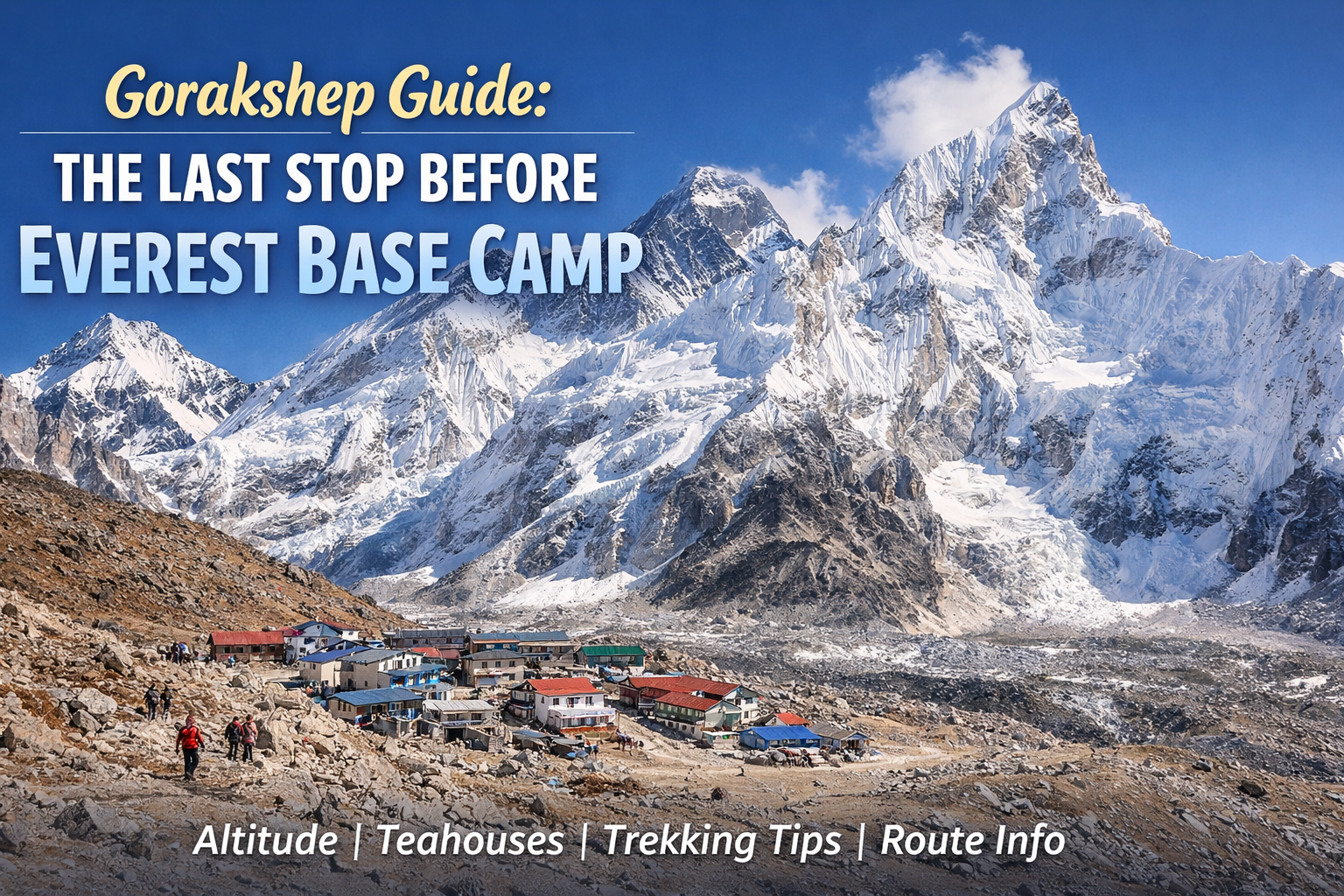
Gorakshep Nepal 2026: Complete Guide for Trekking, Weather & History
Most people have never heard of Gorakshep until they start planning the Everest Base Camp trek. And then suddenly it is everywhere: on forums, in travel blogs, in the itinerary their guide sends over. A tiny village at 5,164 meters above sea level that barely shows up on most maps.
But ask anyone who has actually been there and you will get the same answer every single time. Gorakshep changed something in them.
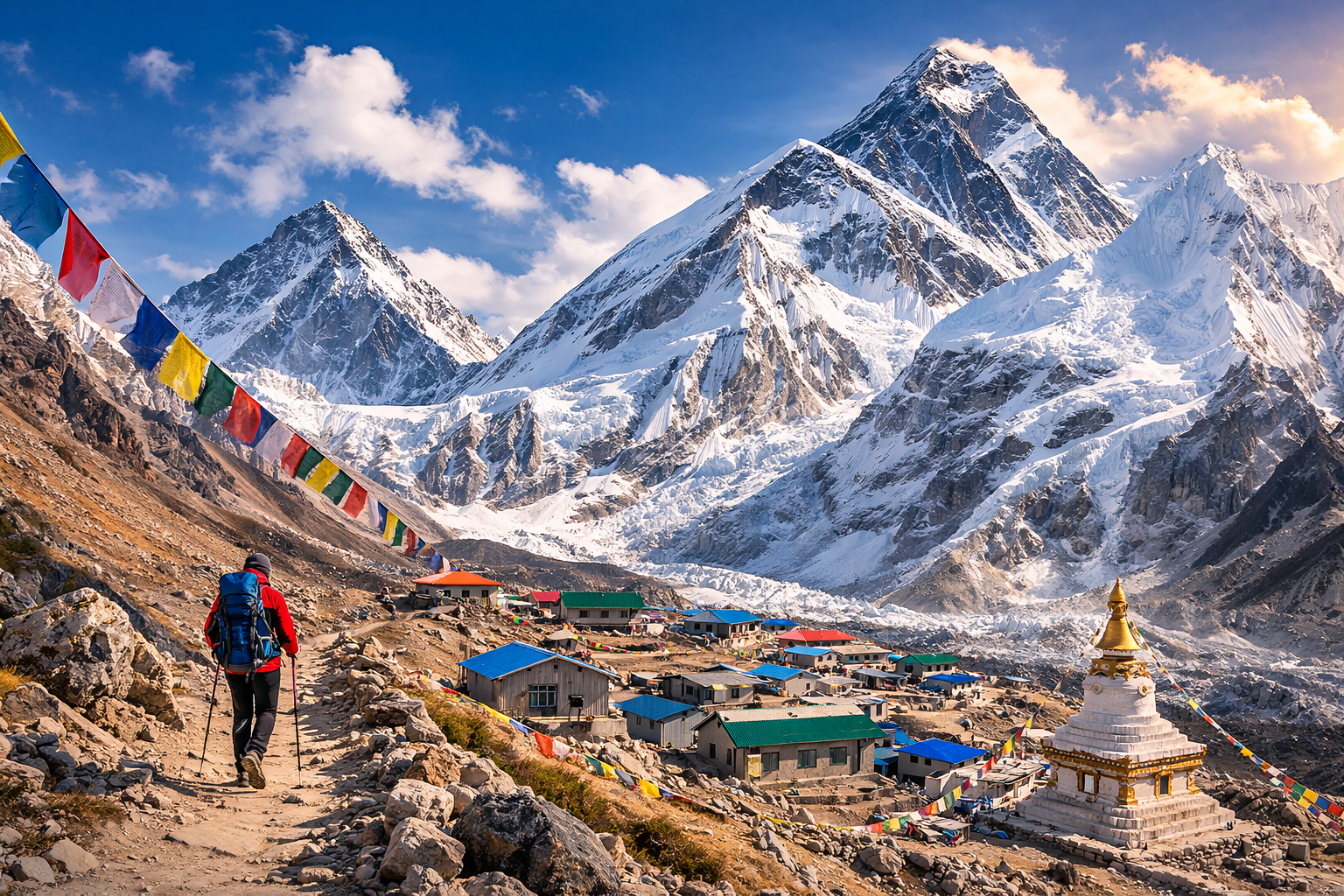
It is the last permanent settlement before Everest Base Camp. There are no luxury lodges here, no reliable hot water, and certainly no espresso. What there is, though, is the kind of raw mountain experience that most people only ever read about. The kind that gets under your skin and stays there for the rest of your life.
This guide covers everything a trekker heading to Gorakshep in Nepal needs to know before lacing up their boots. Weather patterns, altitude realities, historical background, trekking distances, accommodation, and the practical tips that actually make a difference on the trail. Read it end to end before you go. You will be glad you did.
Gorakshep Quick Facts (2026)
- Location & Elevation: Sagarmatha National Park, Khumbu Region, Nepal
- Altitude: 5,164m (16,942 feet)
- Oxygen Level: 50% of sea level
- Temperature: -30°C to +8°C (seasonal)
Trekking Logistics:
- Distance from Lukla: 65 km (8-10 walking days)
- Recommended total: 12-14 days (with acclimatization)
- Accommodation: Basic teahouses (no luxury)
- Permits: NPR 5,000 (~$35) total
Best Time to Visit:
- Spring: March-May (blooming rhododendrons)
- Autumn: September-November (clearest skies)
- Avoid: June-August (monsoon), Dec-Feb (extreme cold)
From Gorakshep:
- Everest Base Camp: 3.4 km (2-3 hours)
- Kala Patthar Summit: 1.5 km (1-2 hours climb)
- Last Permanent Settlement: Yes (before EBC)
Historical Significance:
- Used by the 1953 Hillary-Tenzing Expedition
- Staging camp for early Everest attempts
- Named "Gorak Shep" (Tibetan meaning: dead crow or sandy land)
Gorakshep: The Last Village Standing Before Everest Base Camp
Tucked inside the Khumbu region of northeastern Nepal, Gorakshep sits within Sagarmatha National Park, which is a UNESCO World Heritage Site. It is small, cold, and remote in a way that feels almost intentional, as if the mountain decided to keep this place just difficult enough to filter out anyone who is not truly committed to being there.
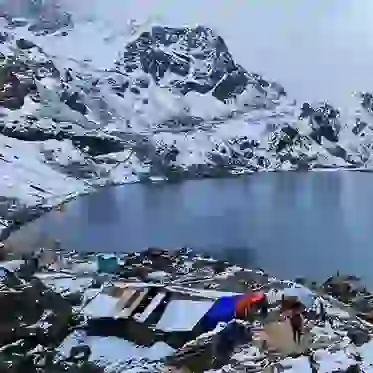
A few teahouses, some basic lodges, a frozen lakebed, and one of the most extraordinary views on the planet. That is Gorakshep in its entirety.
A Village Built on a Frozen Lakebed
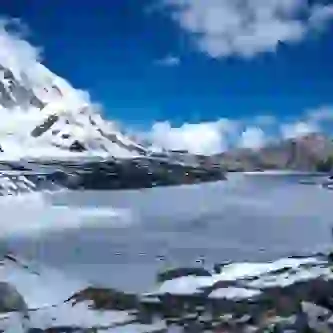
The name itself tells you something about the place. In Tibetan, "Gorak" means crow and "Shep" points to a sandy, barren stretch of land. Some people translate the full name as "dead crow," which sounds grim but makes complete sense when you are standing on the ancient glacial lakebed the village is built on. Flat, windswept, and completely exposed to the elements, it is the kind of ground that does not apologize for what it is.
A handful of teahouses have managed to set up shop here, and those simple buildings have become one of the most important overnight stops in all of Himalayan trekking. Thousands of people pass through every single year, most of them arriving exhausted and leaving transformed.
The Final Gateway to Everest Base Camp
Here is what makes Gorakshep, Nepal, feel different from every other stop on the trail. By the time you walk in, you have already spent 10 to 12 days getting there. You have crossed suspension bridges, climbed through rhododendron forests, pushed through glacial valleys, and felt your lungs work harder than they ever have. Gorakshep is where all of that effort finally lands.
You are not just in a village anymore. You are at the doorstep of the highest mountain on Earth, and even the air seems to know it.
The Village That Witnessed Everest's Greatest Moments
There is more history packed into Gorakshep than most people realize when they first arrive. The place looks modest, almost forgettable at first glance. But the ground you are walking on has been walked by some of the most consequential figures in the entire story of human exploration.
The Role Gorakshep Played in Early Everest Expeditions
Before the current Everest Base Camp position was established further up the Khumbu Glacier, the flat lakebed at Gorakshep served as the primary staging camp for early Everest climbing teams. The 1952 Swiss Expedition used it. So did the 1953 British Expedition under Colonel John Hunt, the one that put Sir Edmund Hillary and Tenzing Norgay Sherpa on top of the world on May 29th of that year.
Think about that for a moment. The men who pulled off the greatest mountaineering achievement in recorded history spent nights in this exact spot, staring up at the same mountain you are about to walk toward. That connection across time is something you feel in Gorakshep in a way that no museum exhibit could ever replicate.
Sherpa Heritage and the Soul of the Khumbu
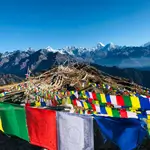
It would be impossible to talk about Gorakshep's history without spending real time on the Sherpa community that has shaped every inch of this landscape for centuries. Their culture runs deep here. Rooted in Tibetan Buddhism, it shows up in the prayer flags catching the wind between stone walls, in the mani stones etched with carefully inscribed sacred mantras, and in the quiet, unhurried way that local people move through a world most visitors find overwhelming.
Sherpas also carry a physiological advantage at altitude that scientists have been studying for decades, a genuine genetic adaptation to low-oxygen environments that developed over generations of living and working in the high Himalayas. When your guide moves up a steep section at altitude like it is nothing while you are gasping beside them, that is not a performance. That is biology shaped by centuries of mountain life.
Treat the culture you encounter here with genuine respect. It is not a backdrop for your photos. It is someone's home and heritage.
Gorakshep Altitude and Elevation: What 5,164 Meters Actually Does to Your Body
Nobody tells you exactly what the altitude feels like until you are in the middle of it. The numbers are easy enough to understand on paper. The physical reality is something else entirely, and you need to take it seriously before you ever step on a plane to Kathmandu.
How the Gorakshep Elevation Affects You Physically
At 5,164 meters, which works out to 16,942 feet above sea level, the air at Gorakshep contains roughly half the oxygen your body is used to at sea level. Half. That is not a minor inconvenience. That is a fundamental change in how every system in your body operates.
Tying your shoelaces can leave you breathing hard. Walking up a short set of teahouse stairs might require a pause at the top. Headaches show up without much warning. Sleep becomes fragmented and strange. Appetite drops off. None of these things means you are failing. They mean your body is doing exactly what bodies do at altitude, which is struggling to adapt to conditions it was never built for.
The Gorakshep altitude does not care how fit you are. Athletes, experienced hikers, and young healthy people all get hit. Respect that fact and you will be fine.
Acclimatization Tips That Actually Work at This Altitude
Acclimatization is not optional at Gorakshep elevation. It is the entire strategy. Get it right and the trek is one of the great experiences of your life. Get it wrong and you will be heading back down the mountain in a helicopter.
Here is what guides with decades of experience on this trail consistently recommend:
- Never push your sleeping altitude up by more than 300 to 500 meters per day once you are above 3,000 meters
- Build in full rest days at Namche Bazaar and Dingboche, not half days, full ones
- Use the climb high, sleep low approach whenever your itinerary gives you the option
- Drink three to four liters of water daily without exception and cut alcohol out completely while ascending
- Talk to a doctor before you leave about Diamox, which is acetazolamide, as a preventive option worth considering
The standard 14-day Everest Base Camp itinerary already has acclimatization built into its structure. Follow it as written.
Gorakshep Weather and Temperature: What Each Season Brings to the Himalayas
Gorakshep's weather has a personality of its own. It can be stunning and brutal within the same afternoon, and trekkers who underestimate it tend to have a much harder time than those who prepare for the worst and hope for the best.
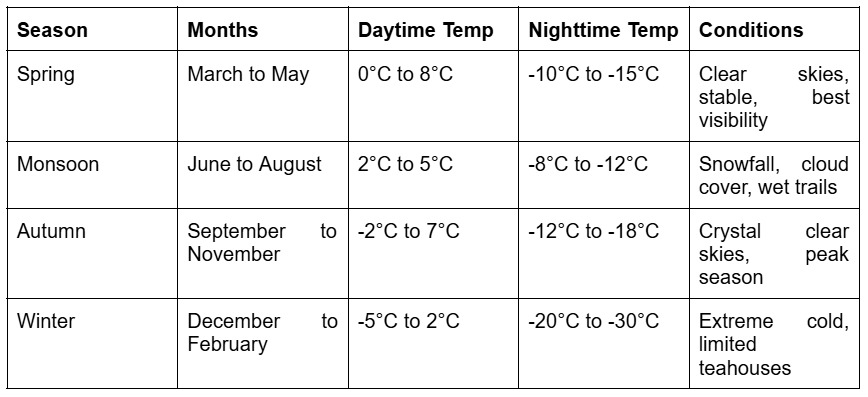
Season by Season Temperature Breakdown
What Trekkers Consistently Get Wrong About Gorakshep Temperature
The single biggest miscalculation trekkers make is not about the daytime cold. It is about how fast the temperature falls once the sun drops behind the ridgeline. A perfectly pleasant afternoon can turn into a minus-15-degree night in under an hour, and the shift happens faster than most people expect the first time they experience it.
Weather patterns at this altitude are also genuinely unpredictable. A clear blue morning is not a promise of a clear blue afternoon. Storms can move in with very little warning, turning visibility from perfect to near zero in an hour. Pack your full cold-weather kit every single day, regardless of what the sky looks like at breakfast.
Best Time to Visit Gorakshep: Picking the Season That Sets You Up for Success
Timing your trek correctly is one of the most important decisions you will make in the entire planning process. The season you choose affects everything from trail conditions and visibility to teahouse availability and how many other trekkers you will be sharing the route with.
Why Spring and Autumn Are the Two Best Windows
The best time to visit Gorakshep, according to virtually every experienced trekker and guide working in the Khumbu, is either spring, from March through May, or autumn, from late September through November.
Spring brings stable weather, blooming rhododendron forests on the lower trail sections, and mountain visibility that can be genuinely breathtaking on clear days. April and the first half of May are the sweet spots before pre-monsoon clouds start building. Autumn edges spring out for most serious trekkers because the monsoon season cleans the atmosphere completely, leaving behind skies that are sharper and bluer than almost anywhere else on Earth. October is the month most guides point to without hesitation when asked for a single recommendation. A Kala Patthar sunrise in October is the kind of thing people spend years talking about afterwards.
Off-Season Trekking: What You Are Actually Signing Up For
Winter, between December and February, is a different animal entirely. Temperatures regularly drop past minus twenty degrees Celsius at night, many teahouses operate on skeleton schedules or shut down completely, and frostbite becomes a genuine concern rather than a distant possibility. It is doable for very experienced trekkers with proper expedition-grade gear, but it is not recommended for most people.
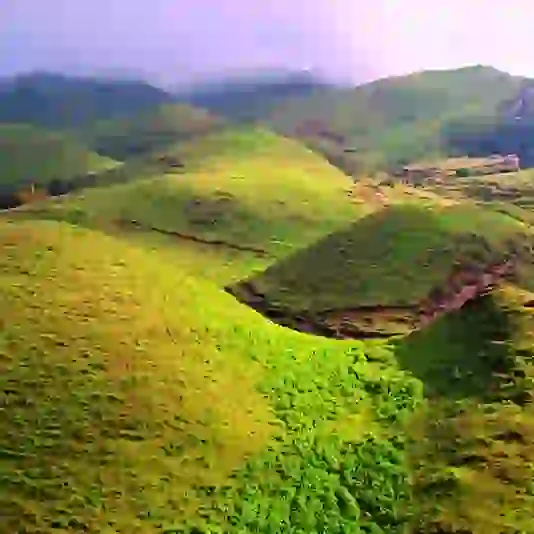
The monsoon window from June through August brings persistent rain and cloud cover at lower elevations, leeches below the treeline, and poor mountain visibility for much of the trek. The landscape turns dramatically green and beautiful below 4,000 meters, but most people are not trekking to Gorakshep to see green hills. Both off-season periods demand a level of experience and preparation that goes well beyond what a standard first-time trek requires.
Gorakshep Distance and Trekking Routes: How Far You Will Actually Walk to Get There
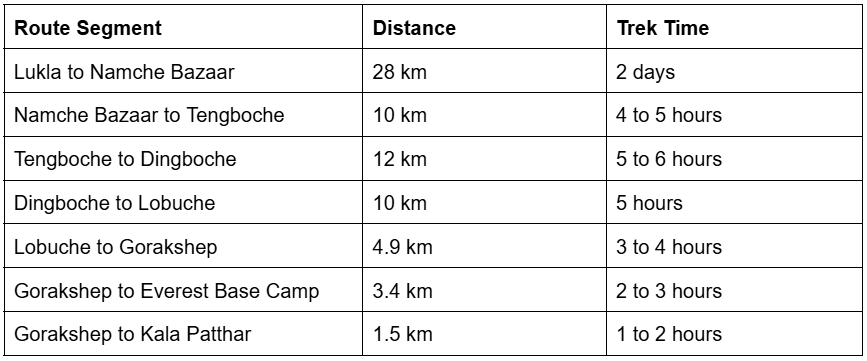
Understanding the actual distances to Gorakshep helps you build an itinerary grounded in reality rather than optimism. The classic route starts with a flight from Kathmandu to Lukla, then unfolds day by day through some of the most spectacular mountain terrain on the planet.
Distance and Time Breakdown From Lukla to Gorakshep
What First-Timers Need to Know About the Gorakshep Hike
The section from Lobuche to Gorakshep is short in distance but genuinely tough in execution. The trail crosses the lateral moraine of the Khumbu Glacier, which means uneven rocky terrain, significant elevation gain packed into a few kilometers, and oxygen levels that make the effort feel considerably harder than the numbers suggest. Trekkers who have handled everything up to this point comfortably often find this stretch surprisingly difficult.
Go slowly. Rest frequently. Drink more water than you think you need. The 14-day standard itinerary was built by people who know this terrain well, and the trekkers who try to compress it into 10 or 11 days to save money are the ones most likely to end up turning back before they reach their goal.
Trekking in Gorakshep: What the Experience Actually Feels Like on the Ground
No amount of reading fully prepares you for what trekking in Gorakshep actually feels like. By the time you get there you have spent nearly two weeks building toward this single point. The tiredness in your legs, the slight permanent headache, the way your breathing has become something you think about consciously rather than just doing, all of it comes together into an experience that is completely unlike anything else.
Accommodation and Food at Gorakshep
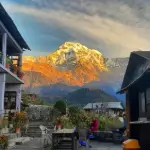
The teahouses here are simple and that simplicity is part of the appeal. Two beds per room, thin mattresses, shared bathrooms, and blankets that range from barely adequate to surprisingly warm, depending on which lodge you end up in. Some places offer hot showers for an extra fee but do not count on it. Electricity is limited and charging your devices will cost extra.
Food is carbohydrate-heavy and exactly what your body needs: dal bhat, noodle soup, porridge, eggs, pasta, and enough hot tea to keep you functioning. Eat more than you feel like eating because altitude suppresses appetite while simultaneously increasing the number of calories your body burns just to stay warm and keep moving.
Photography and the Kala Patthar Sunrise
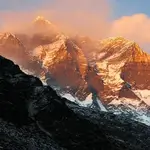
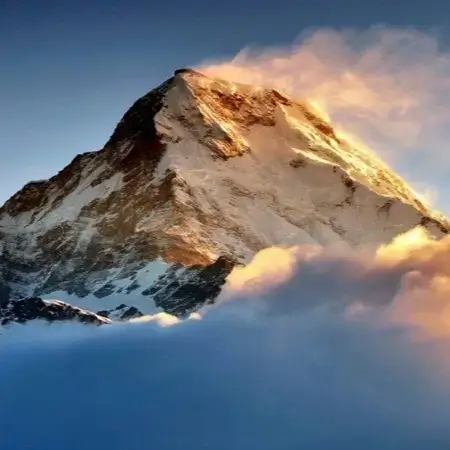
If you are even slightly interested in photography, set your alarm for 3:30 in the morning on your Kala Patthar day. Climb in the dark with your headlamp. Arrive at the 5,644-meter summit before the sun comes up and wait. When the first light of the morning hits Everest's summit pyramid directly above you, it is one of those moments where you forget completely about the cold, the altitude, and the fact that your toes stopped feeling warm an hour ago. Trekkers who have done it describe the experience years later with the same level of emotion as when they first tried to explain it.
Essential Tips for Visiting Gorakshep: Gear, Health, Culture and Food
Good preparation is what makes the difference between a trek that goes smoothly and one that becomes a survival story. Here is what to sort out before you go.
Gear You Should Not Leave Without
- Down jacket rated to at least minus 20°C
- Thermal base layers that wick moisture, cotton is genuinely dangerous at altitude
- Waterproof trekking boots with strong ankle support
- Trekking poles are particularly useful on glacier moraine
- Balaclava, proper gloves, and a warm hat for early morning climbs
- UV-protective sunglasses because snow blindness at altitude is a real risk
- Headlamp with fresh spare batteries
- Water purification tablets or a filter bottle you trust
Health, Culture and Food on the Trail
Watch your body carefully above 4,000 meters and be honest with yourself about symptoms. Never keep ascending if you are already experiencing headaches that are not responding to medication, loss of coordination, or persistent vomiting. Descent is not failure. It is smart decision-making.
On the cultural side, walk clockwise around every mani stone and chorten you encounter, ask before photographing local people, remove your shoes when entering teahouse dining areas if asked, and make an effort with basic Nepali phrases. Namaste and Dhanyabad, which means thank you, will earn you a level of genuine warmth from the people you meet that no amount of tipping can replicate.
For food and water, never drink anything untreated above Lukla. Boiled water from teahouses, sealed bottles, or your own filtered supply only. Dal bhat is your best friend on this trek. It is calorie-dense, easy to digest at altitude, and genuinely filling in a way that most other menu options simply are not.
Conclusion: Gorakshep is Waiting and 2026 is Your Year to Go
Here is the truth about Gorakshep that every single person who has been there will eventually tell you. The mountain does not care how prepared you are, how fit you are, or how many treks you have done before. It demands your full attention, your complete respect, and your willingness to slow down and let the place work on you at its own pace.
What you get in return is genuinely difficult to explain to people who have not experienced it. A clarity that comes from being in a place where everything is stripped back to its essentials. Where the air is cold and thin and honest. Where the mountain above you is so large and so permanent that your own problems seem appropriately small.
Plan around October or April. Respect the altitude process and never rush it. Pack properly, eat well, and treat the Sherpa culture that holds this entire world together with the genuine reverence it deserves.
Book your Lukla flights early because they fill up fast. Get your permits sorted before you leave Kathmandu. Commit to a 14-day itinerary and do not let anyone talk you into cutting corners on acclimatization days to save time or money.
Do all of that and Gorakshep will give you something back. The memory of standing at 5,164 meters with the roof of the world above you, knowing you walked every kilometer of the way to get there.
Frequently Asked Questions (FAQs)
Q. How long does it take to reach Gorakshep from Lukla?
Most trekkers reach Gorakshep in 8 to 10 days of actual walking from Lukla, but the total trip, including necessary acclimatization rest days, runs 12 to 14 days for the complete Everest Base Camp route. The walking distance from Lukla to Gorakshep is roughly 65 kilometers, broken into daily stages that get progressively more demanding as the altitude increases. Skipping or shortening acclimatization days to reach Gorakshep faster is one of the most common reasons trekkers have to turn back before completing the route.
Q. Is Gorakshep safe for beginner trekkers?
It is achievable for beginners who are genuinely fit, well-prepared, and realistic about what they are taking on, but it is not a beginner-friendly destination like many lower-altitude treks. The altitude, the cold, and the remoteness all require a level of preparation and self-awareness that goes beyond standard hiking experience. Hiring an experienced local guide, following a proper 14-day itinerary, training seriously in the months before the trip, and committing fully to acclimatization days are the factors that most consistently determine whether a first-timer succeeds.
Q. What permits do you need to trek to Gorakshep?
Two permits are required. The Sagarmatha National Park Entry Permit costs approximately 3,000 Nepali rupees for foreign nationals, and the Khumbu Pasang Lhamu Rural Municipality Entry Permit costs an additional 2,000 Nepali rupees. Both are checked at designated points along the trail and need to be carried with you at all times. They can be arranged in Kathmandu before you depart or at the checkpoint near Monjo on the trail itself.
Q. What is the difference between Gorakshep and Everest Base Camp?
Gorakshep is the last village on the trail, sitting at 5,164 meters with teahouses where trekkers stay overnight. Everest Base Camp is located approximately 3.4 kilometers further along the trail at around 5,364 meters and is not a permanent settlement. It is a seasonal camp used by mountaineering expeditions attempting to summit Everest, primarily active during spring and autumn climbing seasons. Most trekkers base themselves in Gorakshep and make day hikes to both Base Camp and Kala Patthar from there.